In the high-stakes world of retail advertising, the challenge for global brands is no longer just about selling a product; it is about selling a lifestyle—or, more specifically, the curated fantasy of one. IKEA, the Swedish furniture juggernaut, has mastered the art of the "aspirational" advertisement. For decades, its catalogues have showcased pristine, minimalist living spaces where every item has its place. However, the company’s latest Out-of-Home (OOH) campaign in Sweden has taken a radical departure from this polished perfection, opting instead for a gritty, transparent, and undeniably relatable approach to domestic life.
By replacing the traditional, glossy depictions of "perfect" homes with a series of interactive, provocative billboards, IKEA is inviting consumers to confront a universal truth: behind every serene, clutter-free living room lies a frantic, hidden struggle against the encroaching chaos of daily life.
The Anatomy of the Campaign: A Visual Paradox
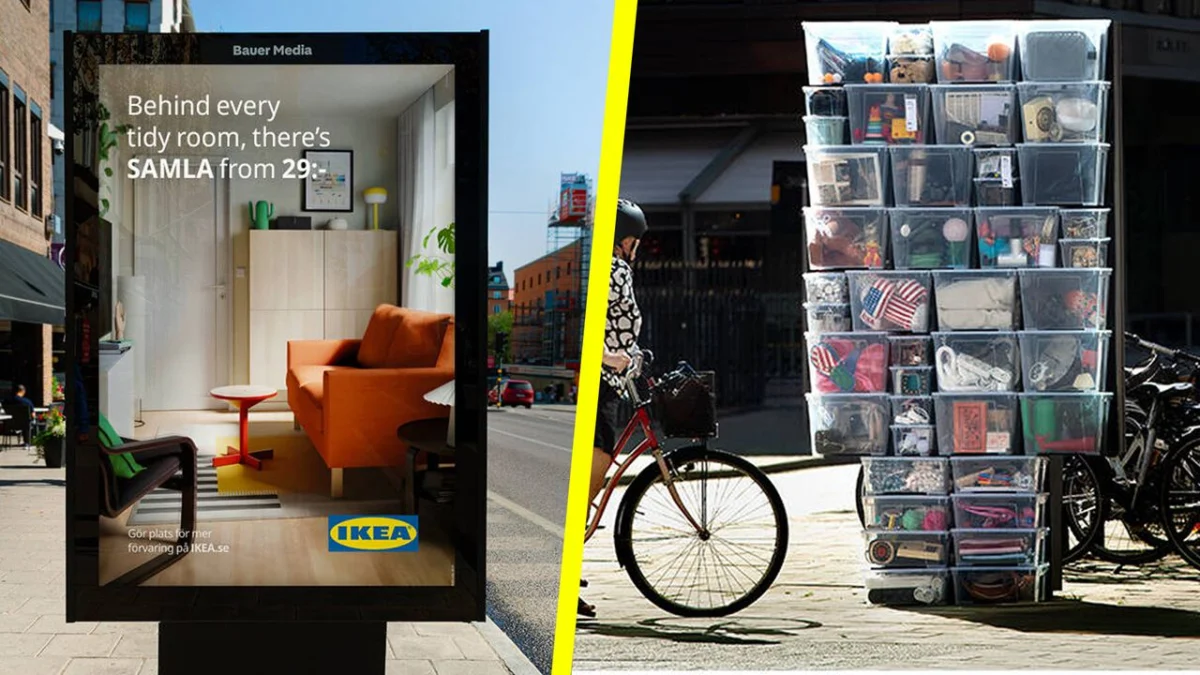
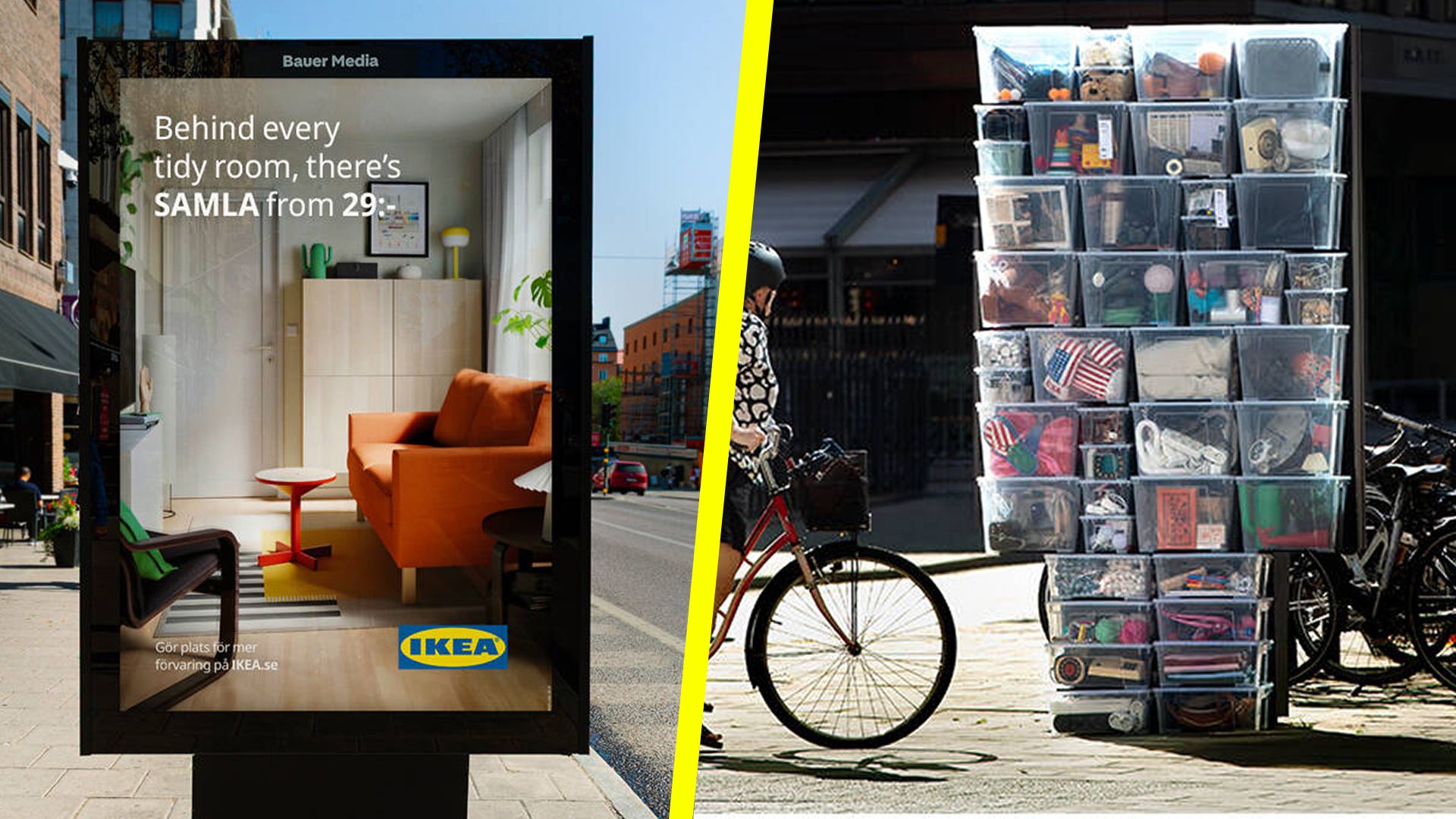
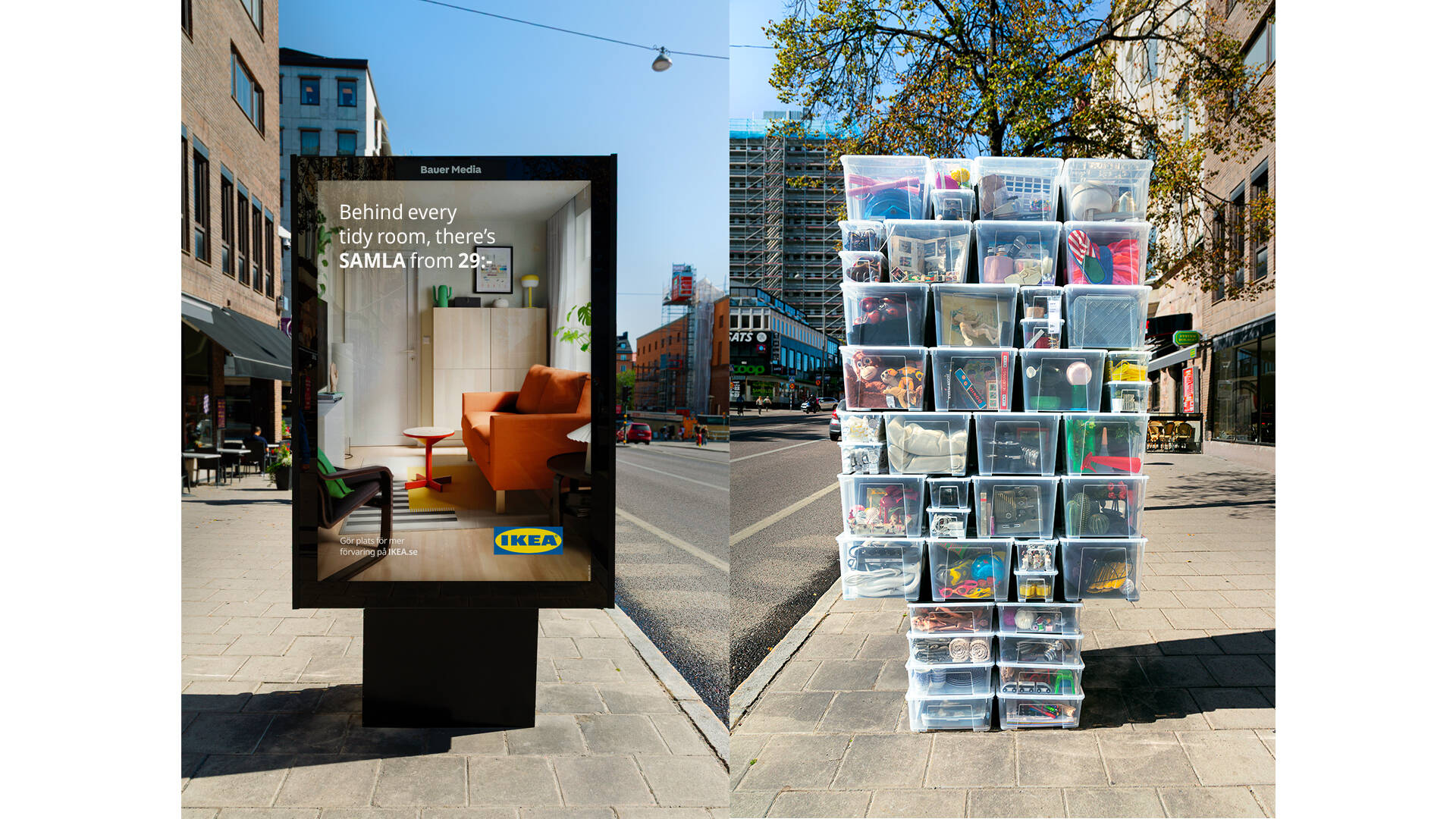
The campaign, developed in collaboration with the creative agency NoA Åkestam Holst, initially presents the viewer with a conventional billboard—the kind one might expect to see in a high-traffic urban center. These advertisements feature clean, static imagery of tidy, aspirational interiors. However, the "reveal" occurs when the passerby looks past the surface-level veneer.
Behind these street-level vitrines, the agency installed transparent displays stacked high with hundreds of IKEA’s signature "Samla" plastic storage boxes. Rather than being empty or staged with professional props, these containers were filled with the messy, unvarnished reality of a lived-in home. Viewers can spot a chaotic assortment of children’s toys, half-finished art projects, vintage records, tangled cables, and even the company’s viral "lonely monkey" plush toy.
The copy plastered on the front of these installations serves as the punchline to the entire endeavor: "Behind every tidy room, there’s a Samla." It is a masterclass in advertising honesty—a rare moment where a brand acknowledges the work required to maintain the very aesthetic they are known for selling.
Chronology of a Viral Pivot
IKEA’s marketing strategy has been anything but linear over the past few months. To understand the impact of this current campaign, one must look at the recent trajectory of their advertising efforts.
The Precursor: The Wicker Bench Furor
Only weeks before the launch of the "Samla" billboard campaign, IKEA found itself at the center of an unintentional viral storm. A photograph of a wicker bench, intended to showcase the brand’s natural aesthetic, was interpreted by many social media users as having a suggestive, "racy" silhouette. The incident sparked a massive surge in brand engagement, proving that IKEA’s minimalist designs are often subject to intense, albeit sometimes unpredictable, public scrutiny.
The Pivot: From Racy to Real
Following the unexpected attention from the wicker bench, the creative team at NoA Åkestam Holst sought a campaign that would redirect the conversation toward the brand’s core utility. By launching the Samla campaign, they shifted the narrative from "IKEA as a design aesthetic" to "IKEA as a domestic problem-solver."
The installation process was meticulous. By selecting high-traffic pedestrian areas in Sweden, the agency ensured that the juxtaposition of the "perfect" ad and the "messy" reality would be inescapable. The campaign launched in stages, with initial teasers on social media platforms leading to the physical reveal on city streets, creating a sense of anticipation that traditional static billboards often lack.
The Data Behind the Mess: Why 83%?
IKEA’s creative decisions are rarely made in a vacuum. The concept for the Samla campaign was born out of internal market research conducted across Sweden. The findings were stark: 83% of Swedish respondents admitted to having at least one room or area in their home that they found consistently difficult to keep tidy.
This data point became the bedrock of the campaign’s strategy. It identified a shared, universal pain point that transcends socioeconomic status. Whether one lives in a cramped city apartment or a sprawling suburban house, the "battle" against clutter is a constant, exhausting, and often overwhelming aspect of modern existence.
By quantifying the struggle, IKEA moved beyond merely selling a plastic bin. They positioned the Samla box as a tactical tool for reclaiming one’s peace of mind. The campaign serves as a validation of the consumer’s frustration; it tells the shopper, "You aren’t failing at adulthood; you are simply lacking the right system to manage the overflow of your life."
Perspectives from the Creative Frontlines
The campaign’s success lies in its willingness to show the "ugly" side of home ownership. Tiago Pinho, the Art Director at NoA Åkestam Holst, notes that the intention was never to mock the consumer, but to celebrate the reality of a busy life.
"The front of the billboards looks like any typical ad for home furnishing," Pinho explains. "But when you look again, there’s an honest twist. Everyday life is messy, then tidy, and then messy again. We think it’s nice to show both sides of the story."
This sentiment is echoed by Jonas Westberg, the marketing communications leader for IKEA Sweden. Westberg emphasizes that the campaign is designed to be "out-of-the-box" in both its execution and its messaging. "Keeping your home clean is always a battle, regardless of if it’s a small flat, a castle, or something in between," he says. "We wanted to remind people of our great storage boxes in a way that would stop people in their tracks."
By acknowledging that the "tidy home" is a dynamic, shifting state rather than a static goal, IKEA is effectively humanizing its brand.
The Implications of "Honest Advertising"
IKEA’s latest move carries significant weight for the broader advertising and design industries. In an era dominated by filtered Instagram lives and curated Pinterest boards, there is a growing consumer appetite for authenticity.
1. The Rise of "Reality-Based" Marketing
This campaign demonstrates that consumers are more likely to connect with a brand that acknowledges the complexities of their daily lives. By leaning into the "mess," IKEA isn’t just selling storage—they are selling empathy. It is a psychological play that positions the brand as a partner in the consumer’s struggle, rather than an unreachable standard-bearer of unattainable perfection.
2. The Evolution of OOH Installations
The era of the simple, flat billboard is waning. The most effective OOH campaigns are now those that offer an experience or a "stop-and-look" moment. By utilizing transparent, three-dimensional installations, IKEA has set a new bar for how brands can interact with urban space. The physical presence of the "mess" inside the display case adds a layer of depth—both literally and figuratively—that a two-dimensional image could never achieve.
3. Redefining Brand Authority
IKEA has long held authority in the furniture market, but this campaign solidifies their status as experts in domestic psychology. By addressing the emotional burden of mess—the stress of a cluttered space—they have elevated the Samla box from a commodity to an essential component of a stress-free environment.
Conclusion: A Blueprint for Future Engagement
As we look toward the future of retail marketing, IKEA’s "Behind every tidy room" campaign serves as a vital case study. It highlights the power of combining deep-seated data with high-concept creative execution. It proves that a brand does not need to hide its flaws or ignore the realities of its customers to be successful.
By inviting us to look behind the curtain, IKEA has not only cleaned up its own image after the recent "racy" bench controversy but has also successfully reframed its core value proposition. The campaign suggests that the secret to a happy home isn’t the absence of mess, but the presence of a solution. In a world that feels increasingly chaotic, perhaps there is comfort in knowing that, for 83% of us, the clutter is perfectly normal—and, with the right plastic crate, it is entirely manageable.
IKEA has succeeded in turning the mundane act of storage into a compelling narrative, proving once again that when you stop trying to be perfect and start being relatable, the audience is far more likely to take notice.