

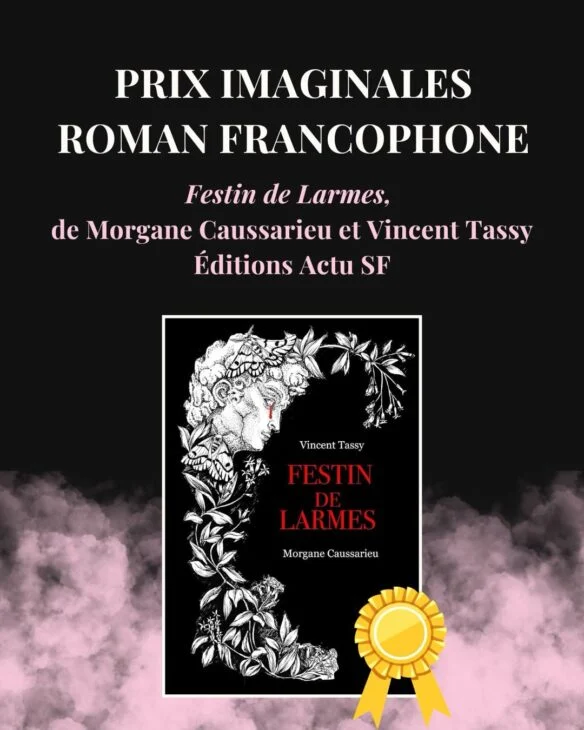
The heart of the speculative fiction world beat with renewed vigor on May 29, as the prestigious Prix Imaginales announced its 2026 laureates. Hosted amidst the charming, historic backdrop of Épinal, France, the annual festival once again served as the ultimate gathering place for authors, illustrators, publishers, and enthusiasts of the fantastic.
The Prix Imaginales stands as one of the most significant honors in the French-speaking literary world, dedicated specifically to celebrating works that push the boundaries of imagination—from high fantasy and magical realism to science fiction and speculative illustration. By recognizing excellence across six distinct categories, the festival reinforces its commitment to fostering creativity and acknowledging the diverse voices shaping modern genre fiction.
A Celebration of the Fantastic: Context and Significance
To understand the weight of the Prix Imaginales, one must look at the cultural ecosystem it inhabits. Unlike the Grand Prix de l’Imaginaire—which is often viewed as a more traditional academic or industry-standard benchmark—the Prix Imaginales is deeply tethered to the festival experience itself. It is a prize born of the community, for the community, held in the picturesque town of Épinal, which transforms into a hub of literary discourse for several days every year.
The 2026 edition of the awards was particularly notable for the breadth of submissions. As the genre continues to evolve, incorporating themes of climate anxiety, sociopolitical critique, and experimental storytelling, the jury faced the arduous task of narrowing down a field of exceptional talent. The awards serve not just as a pat on the back for the winners, but as a definitive reading list for fans of the fantastic, providing a curated selection of the most innovative works published in the French language over the past year.
Chronology: The Road to the May 29 Ceremony
The journey to the announcement on May 29 was a multi-month endeavor involving a rigorous selection process.
- Early Q1 2026 (The Longlist Phase): Publishers from across the Francophone world submitted works published in the previous calendar year. The committees for each of the six categories—comprised of literary critics, librarians, and genre experts—began the massive undertaking of reading, vetting, and deliberating on hundreds of entries.
- Mid-Spring 2026 (The Shortlist Announcement): As the Imaginales festival approached, the tension mounted with the unveiling of the shortlists. This stage of the process is critical, as it often sets the tone for the industry, highlighting emerging talent alongside established masters of the craft.
- May 29, 2026 (The Grand Reveal): The festival reached its crescendo in Épinal. The ceremony, held in the heart of the festival grounds, saw the culmination of the jury’s efforts. The atmosphere was one of camaraderie and professional respect, as the winners were finally unveiled before an audience of international guests and local readers.
The Categories: Honoring Excellence in the Imaginary
The Prix Imaginales is unique in its structural commitment to the "imaginary" in its broadest sense. By segmenting the awards into six specific categories, the organization ensures that no aspect of the creative process is overlooked.
Prix Imaginales du Roman Francophone
This category is the crown jewel of the event, focusing on French-language novels that define the cutting edge of fantasy. It rewards narrative depth, world-building, and the ability to craft compelling, original prose that resonates with the complexities of the human condition.
Prix Imaginales du Roman Étranger Traduit
In a globalized literary market, the ability to bring foreign voices to French readers is paramount. This category acknowledges both the original author and the translator—whose skill is often the bridge between cultures—for their contribution to the French literary landscape.
Prix Imaginales de la Jeunesse
Literature for young adults and children is often where the most daring genre experiments occur. By honoring works for younger readers, the festival acknowledges that the seeds of lifelong love for reading are sown in these pages.
Prix Imaginales de l’Album (3 to 6 Years)
The "picture book" category is a testament to the visual storytelling power of the genre. For the youngest readers, the marriage of art and narrative is essential, and this prize recognizes the creators who can make magic with only a handful of words and evocative imagery.
Prix Imaginales de l’Illustration
Fantasy is a visual medium as much as it is a literary one. This award celebrates the artists who bring monsters, landscapes, and impossible cities to life. Whether through digital mastery or traditional media, these illustrators define how we perceive the worlds we read about.

Prix Imaginales de la Bande Dessinée
The comic book and graphic novel category covers the widest ground, including science fiction, anticipation, and pure fantasy. Given the historical importance of the bande dessinée (BD) in French culture, this is perhaps the most competitive and closely watched category.
Official Responses and Industry Impact
In the wake of the announcements, reactions from the literary community have been overwhelmingly positive. The festival organizers, led by the festival’s artistic direction, emphasized the importance of maintaining a platform that values "the audacity of the imagination."
"The quality of this year’s winners is a testament to the health of the speculative genre in France," said a spokesperson for the Imaginales committee. "We are seeing authors who are not afraid to tackle difficult, real-world issues through the lens of the fantastic. Whether it is a graphic novel questioning the future of technology or a youth novel redefining traditional myths, the level of craftsmanship is at an all-time high."
Publishers have also expressed gratitude, noting that a win at the Prix Imaginales often provides a significant "bump" in sales and visibility for the authors, particularly for those in the independent and small-press sectors who rely on such accolades to break through the noise of the mainstream market.
Implications: The Future of Speculative Fiction
What do these awards mean for the broader industry?
First, the 2026 Prix Imaginales demonstrates a clear shift toward "genre-bending." The line between literary fiction and speculative fiction continues to blur, with more authors using the tools of fantasy to examine historical trauma, environmental crisis, and social identity. The winners this year were not chosen for their adherence to classic tropes, but for their ability to subvert them.
Second, the prominence of the Prix de l’Illustration and the Bande Dessinée categories highlights a crucial trend: the audience for speculative fiction is increasingly visual. In an era dominated by streaming services and high-end graphic media, the literary world is responding by elevating the status of visual artists to the same level as novelists.
Finally, the festival’s commitment to the French language—while simultaneously importing the best of foreign literature—creates a unique cultural dialogue. By honoring translated works, the Prix Imaginales ensures that the French reader remains an active participant in the global conversation of science fiction and fantasy, preventing the formation of a linguistic silo.
Conclusion: A Legacy of Wonder
As the curtains close on the 2026 festival in Épinal, the literary world looks forward to the impact these winning works will have on the public. A "Prix Imaginales" winner is more than just a book or a comic; it is a piece of cultural capital that encourages readers to look at the world differently.
Whether you are a devotee of dark fantasy, a student of the graphic novel, or a parent looking for the next great story to share with your children, the winners of the 2026 Prix Imaginales provide an essential map for your next literary journey. In an increasingly rational, data-driven world, the persistence and success of the Imaginales festival prove one thing above all else: the appetite for magic, wonder, and the "imaginary" is as strong as it has ever been.
As we look toward the 2027 cycle, the bar has been set exceptionally high. For now, we celebrate the laureates of 2026—the architects of our dreams and the cartographers of the impossible.











No comments yet. Be the first to join the conversation!