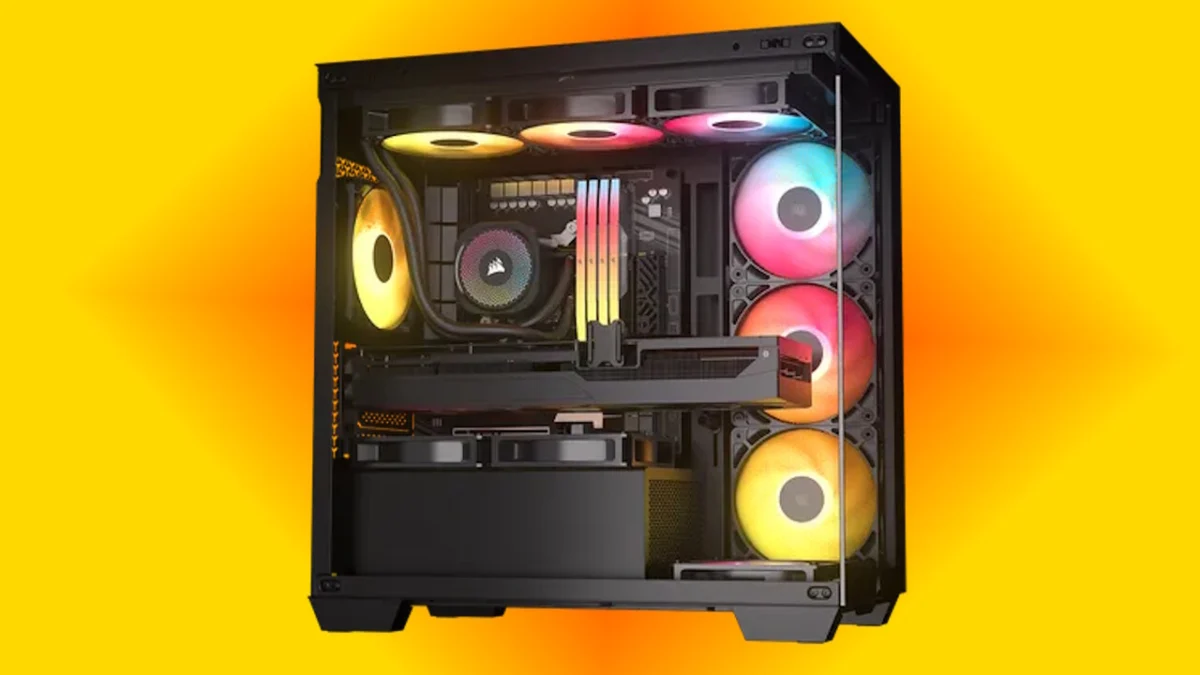
Corsair has officially unveiled its latest addition to the "glass-box" chassis market: the 2800X RS-R ARGB. By downsizing its popular 3500X mid-tower into a more compact Micro-ATX format, Corsair is targeting enthusiasts who crave the premium panoramic display aesthetic without the footprint—or the price tag—of a full-sized ATX tower. This release marks a strategic shift in Corsair’s case lineup, prioritizing efficiency and hardware compatibility in a world where compact builds are increasingly becoming the enthusiast standard.
Main Facts: A Smaller Footprint, A Smaller Price
The Corsair 2800X RS-R ARGB represents a direct "shrink-down" of the 3500X design language. While it loses roughly 10 liters of internal volume compared to its predecessor, it retains the essential "showcase" characteristics that define the series: extensive tempered glass paneling and a focus on clean, unobstructed views of internal components.
The most immediate benefit is the price point. With an MSRP of approximately €80, the 2800X positions itself as a highly competitive option for mid-range builds. Despite the reduction in size, Corsair has been meticulous in ensuring that users do not have to compromise on the core hardware ecosystem. Whether you are housing a high-end GPU or a massive air cooler, the 2800X is engineered to accommodate components that were previously thought to be the exclusive domain of larger chassis.
Chronology: The Evolution of the 3500X Series
To understand the 2800X, one must look at the trajectory of Corsair’s case design over the past 18 months.
- The Rise of the Panoramic Tower: The industry trend shifted sharply toward "fish-tank" style cases—towers featuring corner-less glass panels that maximize component visibility. Corsair entered this arena with the iCUE 3500X, which was praised for its balance of thermal performance and aesthetic appeal.
- Market Feedback: Following the launch of the 3500X, consumer feedback highlighted a demand for a version that could fit Micro-ATX motherboards more snugly, reducing the "dead space" often found when building compact systems in full-sized ATX towers.
- The 2800X Development: Engineers at Corsair worked to optimize the internal layout, removing redundant space while maintaining the structural integrity of the glass housing.
- Official Launch: The 2800X was officially listed for retail in both black and white colorways, signaling Corsair’s commitment to maintaining its aesthetic consistency across different form factors.
Supporting Data: Technical Specifications and Hardware Compatibility
The 2800X is a testament to clever engineering, managing to keep internal hardware support high while shrinking the outer shell.
Cooling and Airflow
Out of the box, the 2800X ships with three RS120-R PWM fans. These are not standard fans; they feature inverted rotors designed specifically to intake air through the side panel, pushing it directly across the motherboard and GPU. These fans operate in a range of 420 to 2100 RPM, providing a balance between silent operation and high-pressure cooling.
While the 2800X limits the use of 140mm fans and removes the side-mount 360mm radiator support found in the 3500X, it compensates by offering excellent roof ventilation. A 360mm radiator can still be mounted in the top position, ensuring that even AIO-cooled CPUs are well-supported.
Storage and Cable Management
In a move that reflects modern storage trends, Corsair has removed one of the two 3.5-inch drive bays. The industry consensus is that M.2 NVMe SSDs have rendered traditional mechanical drives largely obsolete in gaming-focused showcases. By removing the cage, Corsair has cleared up vital space behind the motherboard tray, which now serves as a dedicated mounting point for an iCUE Link hub. While users must purchase the hub separately, the inclusion of a dedicated mounting point simplifies the cable management process significantly—a crucial feature in a case where every wire is visible through the glass.
GPU and CPU Cooler Clearance
Perhaps the most impressive aspect of the 2800X is its lack of compromise regarding component size:

- GPU Support: The case accommodates graphics cards exceeding 400mm in length. A small, integrated support bracket is included to prevent "GPU sag," a common issue with today’s heavy, high-end cards.
- CPU Cooling: With 170mm of clearance, the 2800X is compatible with virtually every major high-end air cooler on the market, including the Thermalright Peerless Assassin 120 Vision and the oversized be quiet! Dark Rock Pro 6.
Official Responses and Strategic Positioning
Corsair’s messaging surrounding the 2800X emphasizes "accessibility." By lowering the barrier to entry to roughly €80, the company is attempting to capture the budget-conscious gamer who wants a professional-looking, "boutique" style build without the boutique price tag.
In internal briefings, representatives noted that the transition to the Micro-ATX format was not intended to limit the user, but rather to "concentrate the aesthetic." By reducing the volume, the internal components—which are often the most expensive part of a build—appear more substantial and fill the space better, creating a more visually cohesive "light show" once the RGB is active.
Implications for the PC Building Market
The launch of the 2800X has several implications for the broader PC building market:
1. The Death of the "Large Tower" Standard?
For years, the mid-tower was the default choice for most builders. However, with modern motherboards offering more integrated features, the need for massive ATX footprints is waning. The 2800X validates the trend that high-performance PCs can—and should—be smaller.
2. The Rise of the "Showcase" Budget Tier
Previously, the panoramic glass aesthetic was reserved for premium or enthusiast-grade cases. By bringing this design to the €80 price point, Corsair is forcing other manufacturers to re-evaluate their entry-level offerings. Consumers will no longer be satisfied with black, windowless steel boxes if a glass-clad, RGB-ready alternative is available at the same cost.
3. Focus on Ecosystem Integration
The requirement to purchase an iCUE Link hub separately highlights Corsair’s push toward a proprietary ecosystem. While the case provides the housing, the full experience—seamless, cable-minimized lighting and speed control—is locked behind their ecosystem. This is a common industry tactic, but it places the onus on the builder to weigh the cost of the case against the additional investment in the Corsair ecosystem.
Conclusion: Is the 2800X Right for You?
The Corsair 2800X RS-R ARGB is a masterclass in downsizing. It retains the signature look of its bigger brother while making smart, calculated compromises to fit a more compact, more affordable form factor.
For the builder looking to construct a high-performance machine that doesn’t dominate their entire desk, the 2800X is a compelling choice. It offers enough room for the largest GPUs and the tallest CPU coolers, provided you are willing to embrace the Micro-ATX standard and perhaps invest in a bit of cable management planning. With the market already listing the case in both black and white, and with a price point that undercuts the 3500X by nearly €30, it is poised to become a staple of the 2024-2025 custom PC building scene.
Whether you are a first-time builder or a veteran looking to downsize your current rig, the 2800X provides the perfect canvas to showcase your components, proving that when it comes to modern PC design, sometimes less really is more.