Asep Darmawan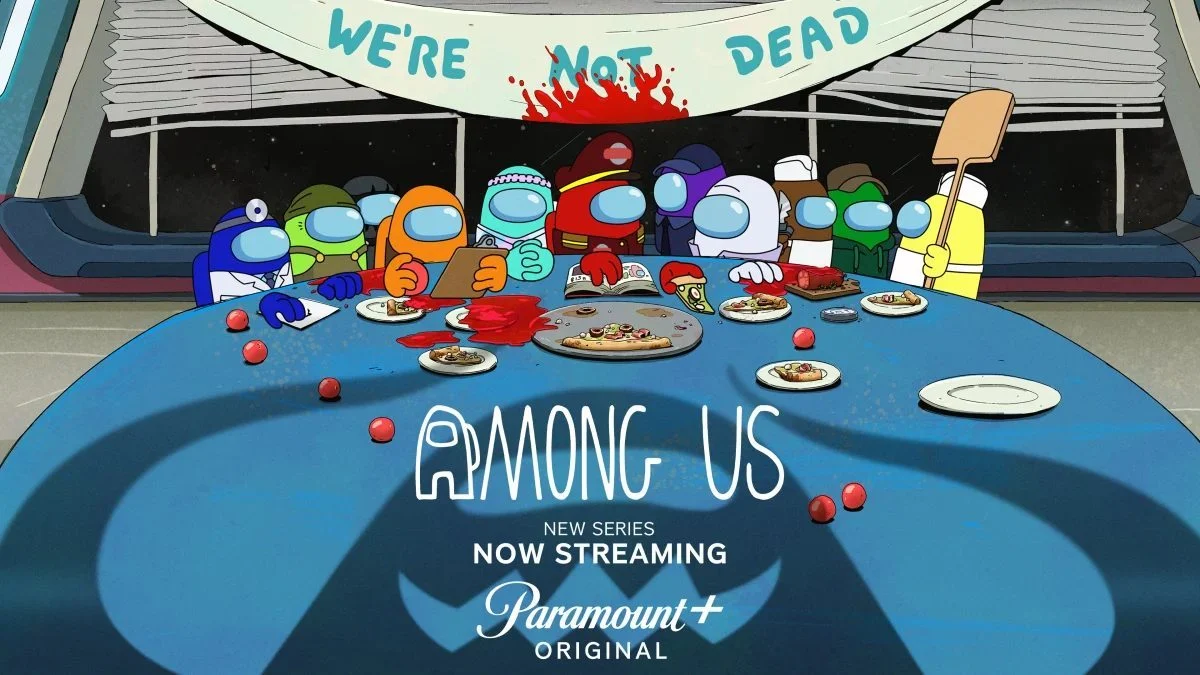
The social deduction phenomenon that defined the pandemic era has finally made its leap from mobile devices and consoles to the small screen. In a surprise announcement that has sent ripples of excitement through the gaming and animation communities, Paramount+ officially premiered the Among Us animated series on June 5. Marking a major milestone for Innersloth’s indie darling, the series has arrived not with a slow rollout, but with a full-season drop, making all ten episodes available to binge-watch immediately.
The Main Facts: A Galaxy of Deceit
The Among Us animated series serves as a direct, stylistic adaptation of the 2018 hit game. Set aboard a spacecraft tasked with transporting interstellar junk across the galaxy, the plot mirrors the core gameplay loop that made the original title a cultural touchstone: a group of monochromatic, bean-shaped crewmates must complete routine maintenance tasks while paranoia slowly dismantles their ranks.
The central conflict remains the same: among the dedicated crew, an Impostor hides in plain sight, systematically eliminating members of the crew while sabotaging the ship’s life-support systems. The series leans into the absurdist humor and high-stakes tension of the game, translating the "emergency meeting" mechanic into a narrative device that drives character conflict and, inevitably, betrayal.
The announcement was handled with theatrical flair during a global livestream event, where series stars Yvette Nicole Brown and Liv Hewson officially pulled back the curtain on the project. With the premiere now live on Paramount+, fans have been given their first comprehensive look at how the studio has translated the minimalist aesthetic of the game into a fully realized, episodic television narrative.
A Chronological Journey: From Indie Hit to Streaming Event
To understand the significance of this premiere, one must look at the turbulent and highly anticipated journey the project has taken.

2018–2020: The Rise of a Phenomenon
Among Us was released by Innersloth in 2018, but it did not achieve global notoriety until 2020. As the world went into lockdown, the game’s blend of communication, strategy, and "social engineering" made it the perfect digital substitute for social interaction. Its rise was unprecedented, moving from a niche indie title to a mainstream household name.
2022: The Greenlight
In early 2022, rumors began to circulate regarding a potential television adaptation. These were confirmed later that year when CBS Eye Animation Productions, in association with Innersloth, announced that a series was officially in development. The news was met with skepticism from some corners of the industry—how could a game with no dialogue and a simple aesthetic be stretched into a ten-episode series?
2023–2024: Casting and Teasers
The subsequent two years were marked by a slow drip-feed of information. Brief teaser trailers were released at major gaming conventions, showing off the signature art style and the unsettling, quiet dread that the show intended to capture. During this period, the production team began announcing a surprisingly high-profile voice cast, signaling that this was not a low-budget web series, but a prestige-level animation project.
June 2024: The Global Reveal
The culmination of this development cycle occurred on June 5, 2024. The surprise announcement that the series was not only ready but available to stream in its entirety caught the industry by surprise, bucking the current trend of weekly episode releases in favor of a "binge-drop" strategy.
Supporting Data: The Voice Talent Behind the Beans
One of the most compelling aspects of the Among Us series is its commitment to high-caliber vocal performances. While the characters may look simple, the producers have curated a cast of industry veterans who bring depth to the monochromatic crew.

- Yvette Nicole Brown: Known for her impeccable comedic timing in Community, Brown brings a grounded, perhaps desperate energy to the crew.
- Liv Hewson: Rising to prominence through Yellowjackets, Hewson offers a nuanced performance that balances the humor and the existential dread inherent in being trapped in space.
- Patton Oswalt: A titan of animation and comedy, Oswalt provides a layer of cynical wit that is essential for a show about untrustworthy coworkers.
- Debra Winger: The legendary actress adds a layer of gravitas and veteran presence to the ensemble.
- Wayne Knight: Best known for his iconic roles in Seinfeld and Jurassic Park, Knight’s inclusion suggests the series will feature high-stakes, frantic energy.
- Phil LaMarr: A voice acting powerhouse, LaMarr’s inclusion ensures that the technical quality of the vocal performances remains top-tier.
The decision to hire such a stacked cast indicates that Paramount+ is positioning Among Us as a flagship animation title, aiming to capture both the dedicated gaming audience and the casual streaming viewer.
Official Perspectives and Creative Vision
In discussions surrounding the series, the creative team has emphasized that the goal was never to deviate from the source material, but to expand upon the "lore" of the Among Us universe. Innersloth developers have historically kept the game’s story minimal, allowing players to project their own narratives onto the game. The animated series, however, provides a canon framework.
"The challenge," one lead animator noted during the reveal, "was to make the audience care about characters who are essentially circles with legs. We had to use body language, color theory, and the specific cadence of our voice actors to create distinct personalities that the viewer would actually mourn when they were ‘voted off’."
The showrunners have leaned heavily into the psychological aspect of the game. Rather than focusing solely on the "kill," the episodes explore the breakdown of trust. It is a show about office politics in space, where the "office" is a decaying ship and the "politics" involve avoiding a lethal vent-lurker.
Implications: The Future of Game Adaptations
The release of Among Us on Paramount+ has broader implications for the entertainment industry. For years, video game adaptations were viewed as "cursed"—projects doomed to fail because they tried to replicate the mechanics of a game rather than the spirit.

Recent successes like HBO’s The Last of Us and Amazon’s Fallout have shifted the narrative, proving that high-quality adaptations are not only possible but highly profitable. Among Us occupies a unique space in this trend. Unlike The Last of Us, which is a narrative-heavy drama, Among Us is a mechanical, social-deduction game. Its successful adaptation proves that studios can now look to almost any successful gaming IP, regardless of its original story density, and build a compelling narrative around it.
Market Saturation and the "Indie-to-Screen" Pipeline
This series also highlights the increasing power of indie developers. Innersloth, a small team, has managed to turn a project that started on a laptop into a global brand that now commands the attention of a major streaming service. We can expect to see an influx of similar projects, as studios scramble to identify the next "viral" game to translate into a bingeable series.
The Binge Model vs. Episodic Release
By dropping all ten episodes at once, Paramount+ is making a statement about how they perceive the Among Us audience. The game is played in quick, intense bursts; by providing the full season, the platform allows viewers to marathon the series in a way that mimics a long, intense gaming session with friends. Whether this strategy will lead to long-term audience retention remains to be seen, but for the launch week, it has certainly dominated social media conversation.
Conclusion: A New Era for the Crewmate
The Among Us animated series is more than just a tie-in; it is a test of how far a minimalist concept can be pushed in a prestige television landscape. With a stellar cast, a clear understanding of its source material, and the backing of Paramount+, the show is perfectly positioned to capture the interest of those who spent hours debating "who was in electrical" back in 2020, as well as a new generation of viewers.
For those who have been waiting for the Impostor to finally strike on the small screen, the wait is over. The ship is in orbit, the tasks are waiting, and the airlock is ready. As the show invites its audience to "get into the action," it is clear that in the world of modern entertainment, there is no longer any doubt: the most popular games are no longer just being played—they are being watched.

 Siti Muinah
 Azzam Bilal Chamdy