Lina Irawan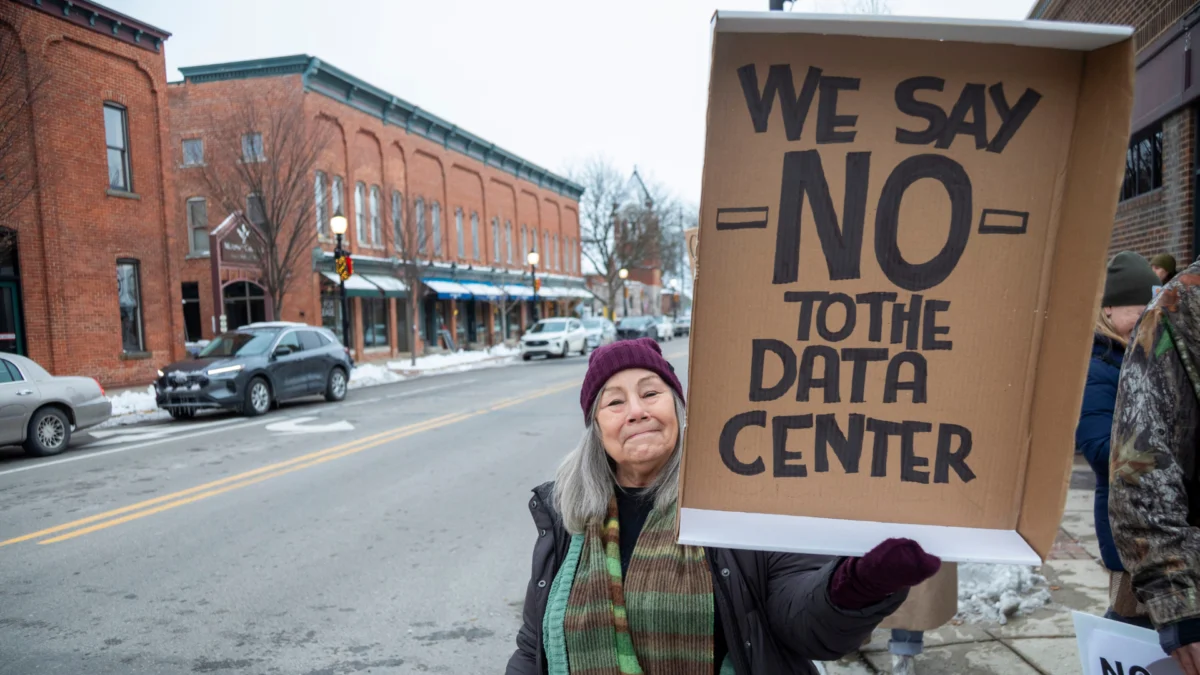
The digital revolution, fueled by the relentless pursuit of Artificial Intelligence, has hit a physical wall. While "hyperscalers"—the massive tech conglomerates driving the global AI race—are pouring unprecedented capital into digital infrastructure, a growing wave of local opposition is threatening to derail the momentum. According to a September 21 report from Bloomberg, citing data from the research group Data Center Watch, projects valued at $68 billion were either blocked or significantly delayed between April and June of this year alone.
This figure underscores a deepening divide between the soaring ambitions of Big Tech and the pragmatic, often protective, interests of local communities. As the demand for computing power reaches an all-time high, the geography of the internet is becoming a new battleground for zoning laws, environmental advocacy, and grid stability.
The Main Facts: A $68 Billion Friction Point
The data provided by Data Center Watch paints a stark picture of the current state of infrastructure development in the United States. Between April and June 2026, $68 billion worth of data center capacity faced severe headwinds. This is not merely a collection of minor zoning disputes; it represents a systemic bottleneck in the industry’s ability to scale.
The primary drivers of these delays are rooted in the massive resource footprint of modern data centers. These facilities are no longer the quiet, unassuming warehouses of the early internet era. Today’s AI-focused data centers are sprawling complexes that demand immense quantities of electricity and water for cooling, often taxing local power grids and municipal water supplies to their breaking points. Consequently, communities are increasingly turning to proactive, rather than reactive, measures. Instead of waiting for a permit application to be filed, neighborhoods are organizing to implement moratoriums on future construction, effectively freezing potential developments before they can even reach the drawing board.
Chronology: The Escalation of Resistance
The tension between tech developers and local municipalities has been brewing for years, but the timeline of 2026 marks a significant inflection point in the severity of the pushback.
- 2023–2024: The AI Gold Rush. Following the mainstream breakout of Generative AI, companies like Microsoft, Google, Amazon, and Meta began a historic spending spree. Hyperscalers collectively committed over $1 trillion to AI infrastructure during this period. The focus was on speed and scale, with land acquisition moving at an unprecedented pace.
- Early 2025: The First Cracks. As construction began on a new wave of massive "gigawatt-scale" campuses, early warning signs emerged. Reports of brownouts in areas near high-density data center hubs began to circulate. Environmental groups started filing lawsuits citing concerns over water consumption in drought-prone regions.
- Q1 2026: Legislative Momentum. State legislatures across the country began to take note. By the spring of 2026, 30 state houses had introduced or passed legislation aimed at restricting where data centers could be located and imposing strict caps on resource consumption.
- April–June 2026: The "Great Stalling." The Data Center Watch report captures this pivotal three-month window. As local opposition movements matured, they moved from protesting individual sites to advocating for sweeping moratoriums. The $68 billion figure represents the culmination of this organized local pushback.
- September 2026: The New Reality. The publication of the Bloomberg report has forced a national conversation. Industry analysts are now forced to re-evaluate the risk profiles of data center investments, as "NIMBY" (Not In My Backyard) sentiment evolves into a sophisticated regulatory hurdle.
Supporting Data: A Clash of Trillions
To understand why these delays are so disruptive, one must look at the staggering scale of capital investment. Hyperscalers have spent upwards of $1 trillion on data infrastructure since 2023. This capital is not just for software; it is for concrete, steel, fiber optics, and massive cooling towers.
Furthermore, the industry is not slowing down. In 2026 alone, an additional $745 billion in Capital Expenditure (Capex) is expected to be poured into the sector. This creates a paradox: the industry is flush with cash and desperate to expand, yet it is increasingly unable to find a place to put that capital to work.
The Data Center Watch report highlights that the 30 states with new restrictive regulations are not merely rural outposts. They include major technology corridors that were previously considered "safe" for development. When developers face a 30-state legislative map that is increasingly hostile to high-load infrastructure, the cost of project development rises exponentially due to legal fees, redesigns, and the opportunity cost of stalled projects.
Official Responses: Developers vs. Residents
The response from the tech industry has been a mix of lobbying, promises of sustainability, and attempts to negotiate. Large tech firms argue that data centers are the backbone of the modern economy. They point to the tax revenue these facilities bring, the jobs created during construction, and the essential nature of cloud computing for government services, healthcare, and global communication.
"We are building the infrastructure of the future," a spokesperson for a major hyperscaler noted in a recent industry forum. "Without these facilities, the promise of AI—from medical breakthroughs to climate modeling—remains out of reach."
Conversely, local officials and grassroots organizers argue that the "future" cannot come at the cost of the present. In many municipalities, the residents are the ones who bear the immediate burden of noise pollution, traffic congestion during the construction phase, and, most importantly, the risk of higher utility bills as data centers compete with households for power.
"We aren’t against technology," said one local advocate in a heavily contested district. "We are against industrialization without community consent. When a data center consumes as much electricity as a small city, you cannot expect the local population to simply absorb the impact without a seat at the table."
Implications: What This Means for the Future of AI
The implications of this $68 billion logjam are profound and multifaceted.
1. The Decentralization of Infrastructure
As tier-one markets (like Northern Virginia or Silicon Valley) become saturated and heavily regulated, developers are likely to push into more remote, less-regulated regions. However, this creates a new set of challenges regarding power transmission. Building data centers far from the power source requires expensive and time-consuming investments in electrical grids, potentially adding years to project timelines.
2. Rising Costs and Market Consolidation
The increasing difficulty of securing permits acts as a barrier to entry. Only the largest, most well-capitalized tech companies will be able to afford the long, complex legal battles required to bring a data center online. This could lead to further market consolidation, where smaller firms or independent data center providers are squeezed out by the massive, multi-billion-dollar war chests of the hyperscalers.
3. Energy Innovation as a Prerequisite
The tension has forced tech companies to become energy innovators. We are seeing a surge in corporate investment in small modular reactors (SMRs), advanced geothermal energy, and on-site battery storage. The goal is to make data centers "grid-neutral" or even "grid-positive," thereby neutralizing the primary complaint of local communities. If a data center can provide its own power without straining the local grid, the opposition may diminish.
4. A Shift in Regulatory Philosophy
The fact that 30 state legislatures have intervened indicates that the "wild west" era of data center construction is over. Future development will likely require a "social license to operate." Companies will need to move away from top-down land acquisition and toward transparent, community-integrated planning. This will inevitably slow down the speed of deployment, which may in turn dictate the pace of AI advancement.
Conclusion: Bridging the Gap
The $68 billion in stalled projects is a symptom of a maturing industry. The rapid, unchecked growth that characterized the early years of the AI boom is colliding with the hard realities of resource scarcity and community agency.
For the tech giants, the path forward is clear but difficult: they must move beyond seeing local communities as obstacles to be bypassed and begin treating them as partners. This involves investing in local grid upgrades, being transparent about environmental impacts, and ensuring that the benefits of the digital economy are felt by those living in the shadow of these massive server farms.
As we look toward the remainder of 2026 and into 2027, the success of the AI revolution will not be measured solely by the trillions of dollars invested or the sophistication of the neural networks developed. It will be measured by the ability of the industry to find a sustainable, harmonious way to exist within the physical constraints of our world. The "Great Stalling" is not just a regulatory headache—it is a necessary recalibration of the relationship between the virtual world and the physical one.


 Lina Hope
 Reynand Wu