Nana
Nana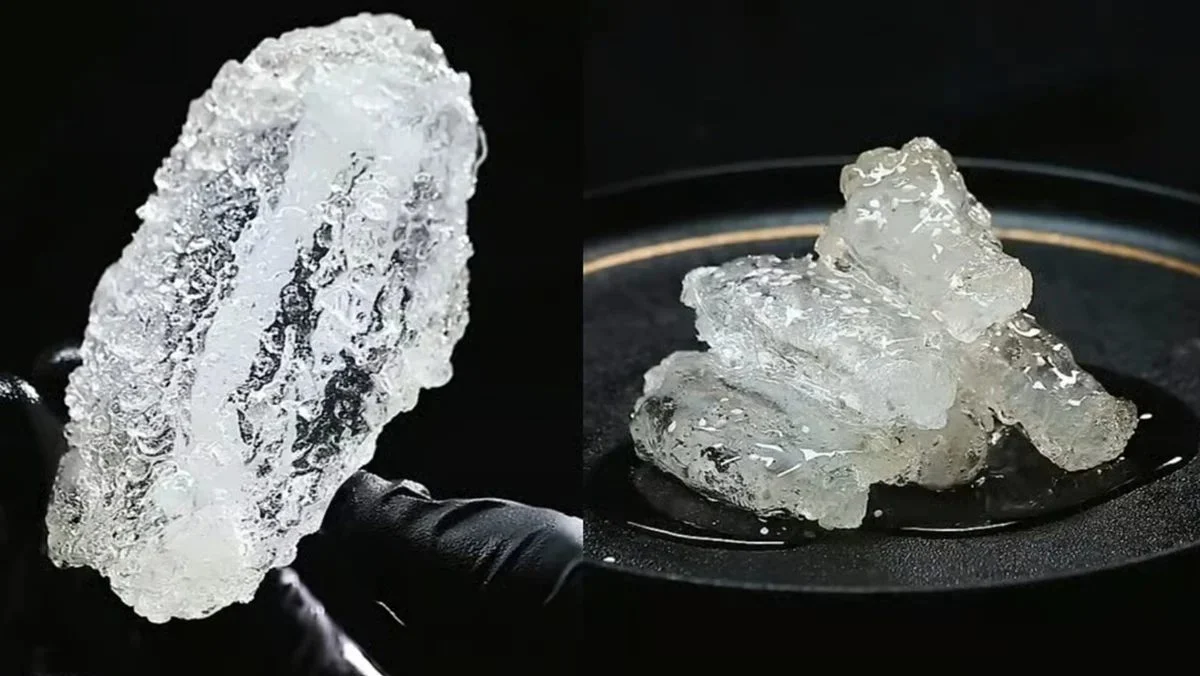
In the ever-evolving landscape of modern gastronomy, the boundaries between science, art, and sustenance are becoming increasingly porous. While the culinary world has long flirted with molecular gastronomy—the application of scientific principles to food preparation—a recent trend has emerged that challenges the very nature of what we consider "dinner."
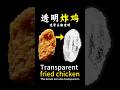
Enter Cai Nan, an unorthodox food creator and YouTuber whose recent project has captured the internet’s imagination: the creation of a fully edible, completely transparent chicken wing. This experiment, which blends advanced engineering with traditional cooking, forces us to question our sensory expectations. If a meal looks like a glass sculpture but tastes like poultry, has the essence of the food been preserved, or has it been fundamentally altered?
The Core Concept: Deconstructing the Chicken Wing
The premise of Nan’s project—titled with refreshing candor, "I want to make the fried chicken transparent, but the result is strange"—begins with a simple, albeit bizarre, provocation: Why is there so little "see-through" food?
While ice is technically edible and transparent, it is a poor substitute for a hearty meal. Nan’s goal was to recreate the structural integrity and textural complexity of a chicken wing while stripping away the opacity of the protein and the bone. Contrary to what some might hope, these wings are not harvested from a transparent species of poultry. Instead, they are the result of a rigorous, multi-stage manufacturing process that mirrors the workflows found in industrial food labs rather than traditional kitchens.
The project is not merely a novelty; it is a masterclass in material science. By utilizing bone marrow, collagen, and specialized cold-setting gels, Nan reconstructed the skeletal structure of the wing. The "meat," meanwhile, was achieved through a sophisticated extraction process that removed liquid from organic material, which was subsequently transformed into a moldable gel using advanced gelling agents. The final product, which appears more like a translucent crystal from a science fiction epic than a backyard barbecue staple, is entirely edible, marking a bizarre frontier in the future of food design.
A Chronology of the Transparent Revolution
To understand how a creator moves from a standard kitchen setup to producing transparent poultry, one must look at the timeline of Nan’s recent experiments.
The Early Experiments (Pre-2024)
Cai Nan first garnered attention in the niche circles of "experimental cooking" by attempting to distill the essence of familiar dishes into their most basic molecular components. His channel, which emphasizes the trial-and-error nature of scientific cooking, began with smaller-scale efforts—recreating textures of fruits and vegetables in translucent forms.

The Transparent Burger Breakthrough
A few months prior to the viral chicken wing video, Nan released his documentation of a "Transparent Burger." This was the trial run that proved his methodology for creating muscle-fiber-like structures from liquids. By using agar-agar, gelatin, and various stabilizers, he was able to create a "patty" that held its shape under heat while allowing light to pass through it. The burger proved that the process was scalable, leading directly to the more complex geometry of the chicken wing.
The Chicken Wing Viral Explosion
The chicken wing video, released in the summer of 2026, represents the pinnacle of this project thus far. The process was broken down into three distinct phases:
- Skeletal Reconstruction: Using marrow and collagen, Nan cast the "bones" in specialized molds to ensure the structural silhouette of the wing was maintained.
- The Meat Matrix: Through a vacuum-extraction process, Nan removed the moisture from chicken muscle fibers, then reconstituted them into a clear, gelatinous matrix that mimicked the mouthfeel of poultry.
- The Crispy Paradox: The most difficult stage involved creating a skin that could withstand high-heat frying without losing its transparency—a feat that required precise control over moisture content and oil temperature.
The Science: Molecular Gastronomy Meets Engineering
The methodology behind the transparent chicken wing relies heavily on the principles of hydrocolloids and thermal processing. In traditional cooking, opacity is caused by the scattering of light by protein structures, fats, and water content. To achieve transparency, Nan had to manage the refractive index of his ingredients.
The Role of Bone Marrow and Collagen
The skeletal component is perhaps the most impressive. By blending bone marrow with high-grade collagen, Nan created a "bioplastic" that could be cast into bone-shaped molds. Once set, these bones provide the necessary scaffolding for the wings. When cooked, they do not melt into a puddle; they retain their integrity, mimicking the experience of eating around a bone.
Managing Protein Denaturation
In standard frying, proteins denature and turn opaque. Nan’s process involves pre-treating the "meat" with enzymes that allow it to remain clear even when subjected to heat. This involves a technique often used in high-end molecular gastronomy labs to clarify consommés, but applied here to a solid-state protein structure. The result is a translucent gel that retains the chemical markers of chicken, tricking the palate even if the eyes are confused.
Industry Implications and Official Responses
While the scientific community has not issued formal peer-reviewed papers on the "transparent chicken wing," the project has sparked significant discussion among food technologists and chefs.
The Chef’s Perspective
Professional chefs have long used transparency as a tool for surprise. Dishes like clear tomato soup or translucent ravioli have appeared in Michelin-starred restaurants for years. However, the attempt to make a recognizable, fried, "comfort food" item transparent is viewed as a bridge between traditional culinary arts and synthetic food design. Critics argue that the texture, while technically similar to chicken, may lack the "grain" that defines the consumption experience.
Implications for Synthetic Biology
From a broader perspective, Nan’s work touches on the future of lab-grown meat. As the industry moves toward 3D-printed proteins and cell-cultured products, the ability to control the physical properties of food—including color, opacity, and texture—will become paramount. While transparent chicken is unlikely to hit grocery store shelves, the techniques used to stabilize these gels are highly relevant to the mass production of synthetic proteins.
The Future of the Transparent Dinner Party
We have long been promised a future of technological marvels: flying cars, colonies on Mars, and instantaneous travel. Yet, the reality of our technological progress has often manifested in more mundane—or in this case, more bizarre—ways.
Cai Nan’s work invites us to consider a future where the aesthetic of our food is entirely decoupled from its biological origin. If we can eat a transparent chicken wing, we can theoretically eat any dish in any color or transparency level. This opens the door to sensory-defying dining experiences, where the brain is forced to process the visual input of a "glass" object alongside the savory, salty, and crispy reality of a chicken wing.
Is This the Future?
While it is easy to dismiss these experiments as "internet clickbait," there is a genuine philosophical question buried in the transparent skin: Does food need to look like its origin to be satisfying? Or have we reached a point where the performance of cooking—the ability to manipulate the physical state of matter—is as important as the nutrition itself?
For now, Nan’s followers can look forward to a world where their dinner parties might feature entirely see-through courses. It is a world that is visually surreal, slightly unsettling, and undeniably a triumph of human curiosity. As we continue to push the boundaries of what is possible in the kitchen, we may find that the most exciting meals of the future are the ones we can see right through.
Conclusion
Cai Nan’s transparent chicken wings are more than just a viral moment; they are a signifier of the creative potential of the modern age. By blending the artistry of the kitchen with the rigor of the laboratory, Nan has turned a simple meal into a conceptual art piece. Whether or not this catches on as a mainstream culinary trend, the experiment serves as a reminder that the future is not just something we wait for—it is something we cook, mold, and occasionally, make transparent.
In a world where we are increasingly disconnected from the origins of our food, perhaps there is a strange, ironic wisdom in making our meals so transparent that they leave nothing to the imagination. We may not have our flying cars yet, but we certainly have a chicken wing that looks like a crystal from the Fortress of Solitude. And in today’s world, that might just be enough.

 Siti Muinah
 Azzam Bilal Chamdy