Evan Lee Salim
Baldur’s Gate 3 is, by any metric, a monumental achievement in the CRPG genre. With a scope that demands well over 100 hours for a single completionist run, Larian Studios has crafted a world so dense with reactivity and systemic depth that players are still uncovering hidden mechanics, niche interactions, and developer easter eggs years after its initial launch. Whether you are a veteran of the Forgotten Realms or a newcomer to the D&D 5th Edition ruleset, the game’s "hidden" layers offer endless reasons to return to Faerûn.
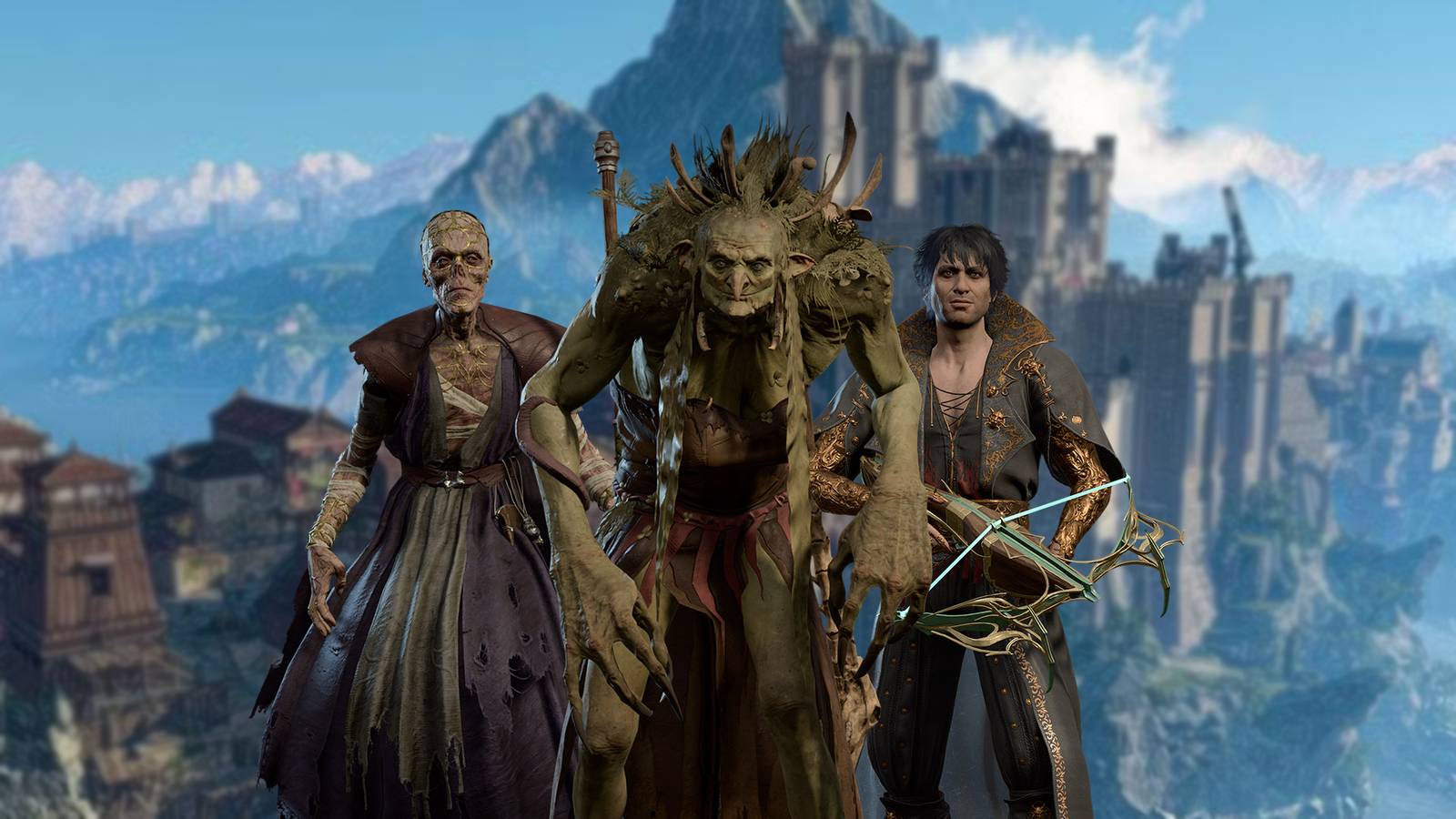
From physics-defying item interactions to obscure narrative triggers that completely alter your endgame experience, here are ten of the most fascinating, bizarre, and game-changing secrets hidden within the depths of Baldur’s Gate 3.

1. The Persistence of the Necromancy of Thay
Found deep within the Blighted Village’s cellar during Act 1, the Necromancy of Thay is more than just a piece of dark literature; it is a prime example of the game’s obsession with player intent. Most players know they need the Dark Amethyst to unlock it, but the book’s responses to "incorrect" interactions are where the true charm lies.

If you attempt to destroy the book using conventional means, you’ll find it surprisingly resilient. It requires radiant damage to even scratch the surface, and doing so summons a swarm of shadow enemies to punish your desecration. Perhaps most interestingly, if you attempt to circumvent the quest by using the Knock spell, the game treats this as an affront, spawning a hostile shadow rather than yielding its secrets. Furthermore, should you grow tired of carrying the heavy tome and attempt to hurl it into a chasm, the game’s physics engine—or perhaps the book’s own dark sentience—will simply cause it to reappear in your inventory. It demands to be read, not discarded.

2. Gontr Mael: The Multishot Guiding Bolt Glitch
Legendary items in Baldur’s Gate 3 are often game-breakers, but Gontr Mael, obtained by defeating the Steel Watcher Titan in the endgame, sits in a league of its own. Its unique ability, "Promised Victory," allows the wielder to apply Guiding Bolt to any target struck by an arrow.

While this is formidable on its own, savvy players have discovered a synergy that turns this into a tactical nuke. By using "Multishot" arrows—which split upon impact—the Guiding Bolt effect is applied to every enemy caught in the spread. This grants you and your party advantage on attacks against multiple targets simultaneously, effectively turning your ranged character into a high-utility support machine. It is a perfect example of how the game’s itemization rewards those who experiment with spell-arrow combinations.

3. A Nod to Divinity: Secret Portraits
Larian Studios has never been shy about referencing their past work. Inside the Arcane Tower in the Underdark, eagle-eyed players can find subtle tributes to Divinity: Original Sin 2. Depending on your edition of the game, you may find a portrait of Marcus Miles or Sebille—protagonists from the Divinity series—hanging above the beds on the tower’s upper floor. It is a fleeting, atmospheric touch that rewards players for exploring every corner of the environment, reinforcing the studio’s legacy as masters of the isometric RPG.

4. The "Dominate" Glitch: Recruiting the Unrecruitable
One of the most complex mechanical exploits in the game involves the use of Polymorph and Dominate Beast. By polymorphing an enemy into a sheep and then casting Dominate Beast on that sheep, players can effectively "convert" an enemy into a temporary party member.

The magic happens when you return to camp. If you dismiss the companion controlling the sheep and ask them to rejoin, the sheep will revert to its original form—but it will remain under your control as a companion. This allows players to recruit NPCs who were never intended to join the party, opening up hilarious and game-breaking possibilities for combat encounters. It serves as a reminder that the game’s spell interactions are often more flexible than the developers intended, leading to emergent gameplay that defines the Baldur’s Gate experience.

5. The "Murder Hobo" Epilogue: Withers’ Intervention
The game’s epilogue is often a time for reflection, but for those players who decide to go on a final rampage, the game has a surprising fail-safe. If you decide to turn on your companions during the final moments of your journey, the mysterious Withers will intervene.

Rather than allowing you to continue your path of destruction, Withers opens a portal and forcibly ejects you from the timeline. This cutscene is a rare, meta-narrative moment that suggests Withers—a being of immense, god-like power—has been watching over your journey the entire time, ready to pull the plug if your morality crosses a certain threshold. It is the ultimate "game over" screen, delivered with the dry, detached humor only Withers can provide.

6. The Putrid Bog Well: A Lesson in Greed
In the swamp surrounding Auntie Ethel’s house, you will encounter a well. Drinking from it once grants you a helpful +10 temporary hit points, which can be the difference between life and death in early-game encounters. However, the game punishes those who go back for seconds. If you return to the well and drink again, you are afflicted with a "sickened" condition, granting you vulnerability to all damage. It is a subtle piece of environmental storytelling that mocks the player’s tendency to hoard buffs without considering the source.

7. The Double-Buff Hag Exploit
Speaking of Auntie Ethel, most players assume they must choose between her hair (a permanent stat buff) or killing her for loot. A complex workaround exists: by using a Scroll of Arcane Lock on the door to her lair while she is distracted, you can prevent her from fleeing. By keeping her health low and using non-lethal attacks to knock her out, you can loot her body, take a long rest, and return to find her respawned and ready to offer you the stat-boosting hair. This sequence-breaking maneuver is a testament to the game’s commitment to allowing players to "outsmart" even the most powerful hags.

8. The Mobile Guardian of Faith
The Guardian of Faith spell is a staple for clerics, but its immobility is its greatest weakness. However, by utilizing Minthara’s "Soul Branding" ability—which adds movement speed—players can grant the Guardian of Faith the ability to traverse the battlefield. Add a Haste spell into the mix, and your stationary turret becomes a mobile, fire-dealing juggernaut. It transforms a mid-tier defensive spell into one of the most efficient area-denial tools in the game.

9. The Sleeping Guard’s Panic
In Wyrm’s Rock Fortress, there is a seemingly inconsequential interaction with a sleeping Dwarf guard. If you pickpocket her key, unlock the prison, and then wake her up, she enters a unique state of panic. She realizes the key is missing, assumes the prison is compromised, and then has a mini-existential crisis when she realizes she is the guard on duty who is responsible for the breach. This level of reactivity to player choice—even in minor, non-combat scenarios—is exactly why the game continues to feel "alive" hundreds of hours in.

10. The Poisonous Corpse of Ellswort
Perhaps the most "overpowered" discovery in Act 3 is the corpse of an NPC named Ellswort. Found in the Baldur’s Gate cemetery, this body emits a constant poison cloud. If a player reaches level 10 as a Monk and gains "Purity of Body" (making them immune to poison), they can carry the body in their inventory and manually trigger the poison cloud at will. Because the action of looting the body does not consume an action point, this allows for a "poison aura" build that can melt enemies without ever having to swing a weapon. It is a prime example of the game’s systemic depth allowing for bizarre, unintended character builds.

Chronology of Discovery
Since the release of Baldur’s Gate 3 on August 3, 2023, the community has acted as an informal research department. In the months following launch, players shared clips of these interactions on platforms like Reddit and Discord. Larian Studios, in turn, has consistently patched the game while leaving many of these "exploits" intact, acknowledging that the player’s creativity is a core pillar of the Baldur’s Gate experience.

Implications and Legacy
The existence of these secrets has significant implications for game design. Baldur’s Gate 3 proves that players crave a world that reacts to their unique logic. While traditional AAA titles often rely on "invisible walls" to keep players on a set path, Larian opted to let the player break the game, provided they had the ingenuity to do so. This philosophy has set a new gold standard for the RPG genre, suggesting that the future of the medium lies in systems-heavy, player-driven narratives where "secrets" are not just hidden items, but hidden possibilities.

As we look toward future updates and potential expansions, the mystery of what remains unfound in the depths of Faerûn continues to drive the player base forward. In the world of Larian Studios, the most important rule is the one you find a way to break.


 Asro
Asro
 Muslim