

For decades, Mujirushi Ryouhin—universally recognized by its minimalist moniker, MUJI—has served as the gold standard for understated, functional household goods. From modular shelving to ergonomic stationery, the brand is synonymous with the philosophy of "no-brand quality." However, in recent years, a quiet revolution has been taking place within their aisles. Beyond the organizers and cotton apparel, MUJI has cultivated a robust food department that rivals specialty grocers. From authentic spice-forward instant curries to artisanal freeze-dried soups, their culinary offerings have become a cult obsession.
The latest addition to this pantry-friendly lineup is the "Made-in-Italy" risotto series. Promising the sophistication of a Milanese trattoria with the convenience of a modern pantry staple, these kits have recently hit Japanese shelves. We sat down with the product to analyze whether this high-quality promise holds up under scrutiny.
Main Facts: The "Made-in-Italy" Concept
The premise behind MUJI’s new risotto series is simple yet ambitious: to bridge the gap between "instant" convenience and "gourmet" texture. Unlike many dehydrated meals that rely on precooked, mushy grains, the MUJI series utilizes authentic, uncooked Italian rice.
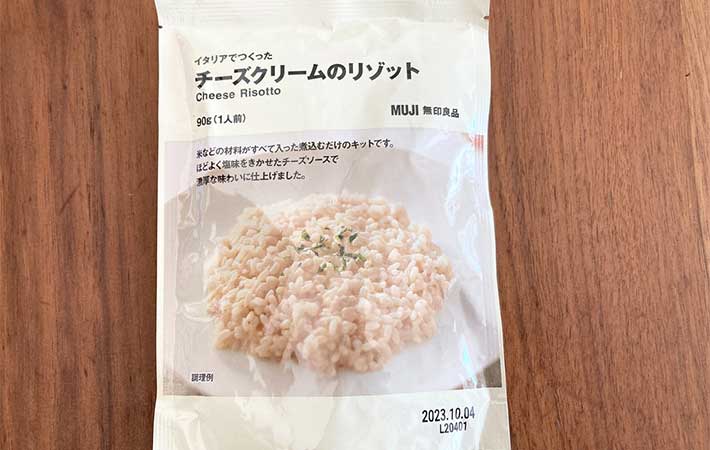
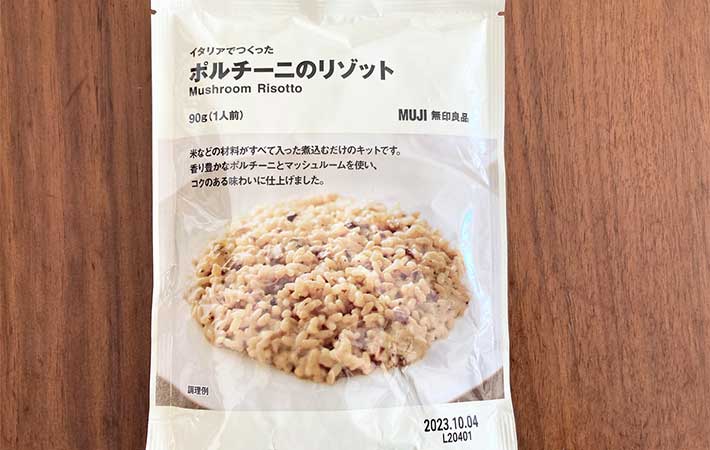
Currently, the lineup features two primary flavors: Cheese Cream and Porcini. Priced at an accessible 290 yen (including tax) per package, the product is positioned as a budget-friendly gourmet experience. Each packet is designed to be a "one-pot" solution, requiring only the addition of water and a bit of patience at the stovetop. By sourcing authentic Italian grains and pairing them with high-quality seasoning bases, MUJI aims to target the busy urban professional who desires a restaurant-quality meal without the time commitment of a multi-step recipe.
Chronology: From Package to Plate
To understand the efficacy of the MUJI risotto, one must look at the preparation process. The experience is designed to be tactile, sensory, and ultimately rewarding.
Phase 1: Unboxing and Preparation
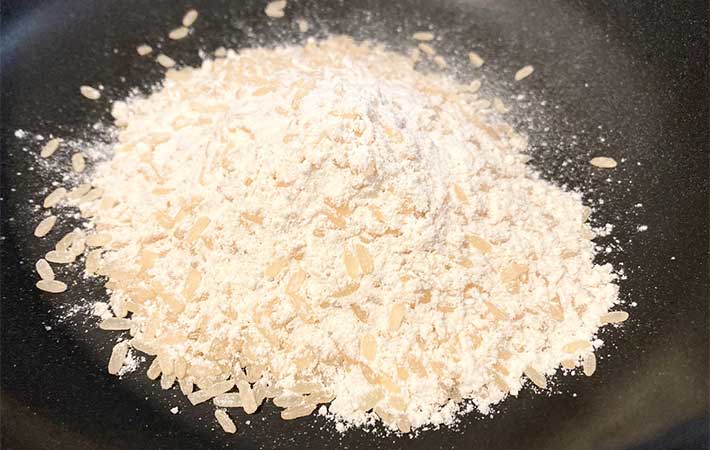
Upon opening the package, the immediate impression is one of authenticity. Unlike standard "just-add-water" meals that feature dehydrated, indistinguishable powders, the MUJI kit contains distinct, uncooked Italian rice grains. This is a critical detail; the choice to use raw rice necessitates a longer cooking time but guarantees the firm al dente texture required for an authentic risotto.
Phase 2: The Simmering Process
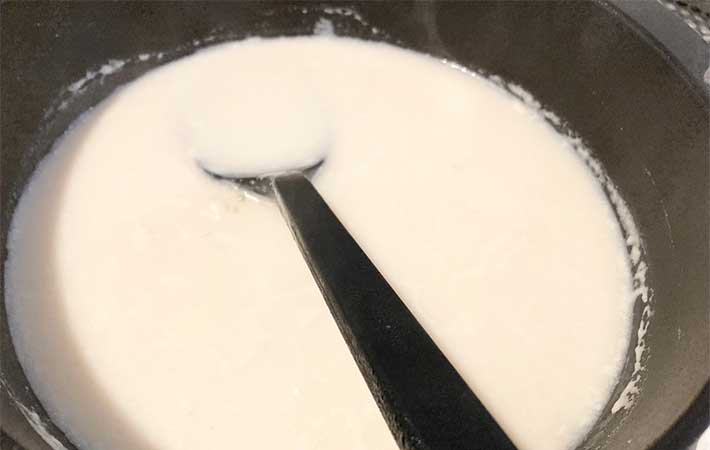
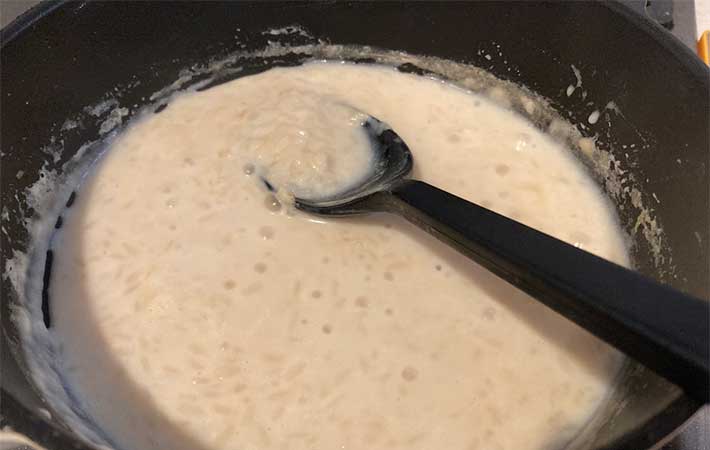
The preparation requires a small pot and the recommended amount of water. Once the contents are emptied into the pot, the mixture is brought to a high heat. As the liquid reaches a boil, the transformation begins. The instructions are precise: reduce the heat to medium and stir frequently. This step is vital. As the rice absorbs the liquid, it releases its starch, creating the signature creamy emulsion that defines a good risotto. The process takes approximately 30 minutes—a significant investment compared to a microwave meal, but one that allows the home cook to observe the evolution of the dish.
Phase 3: Finishing Touches
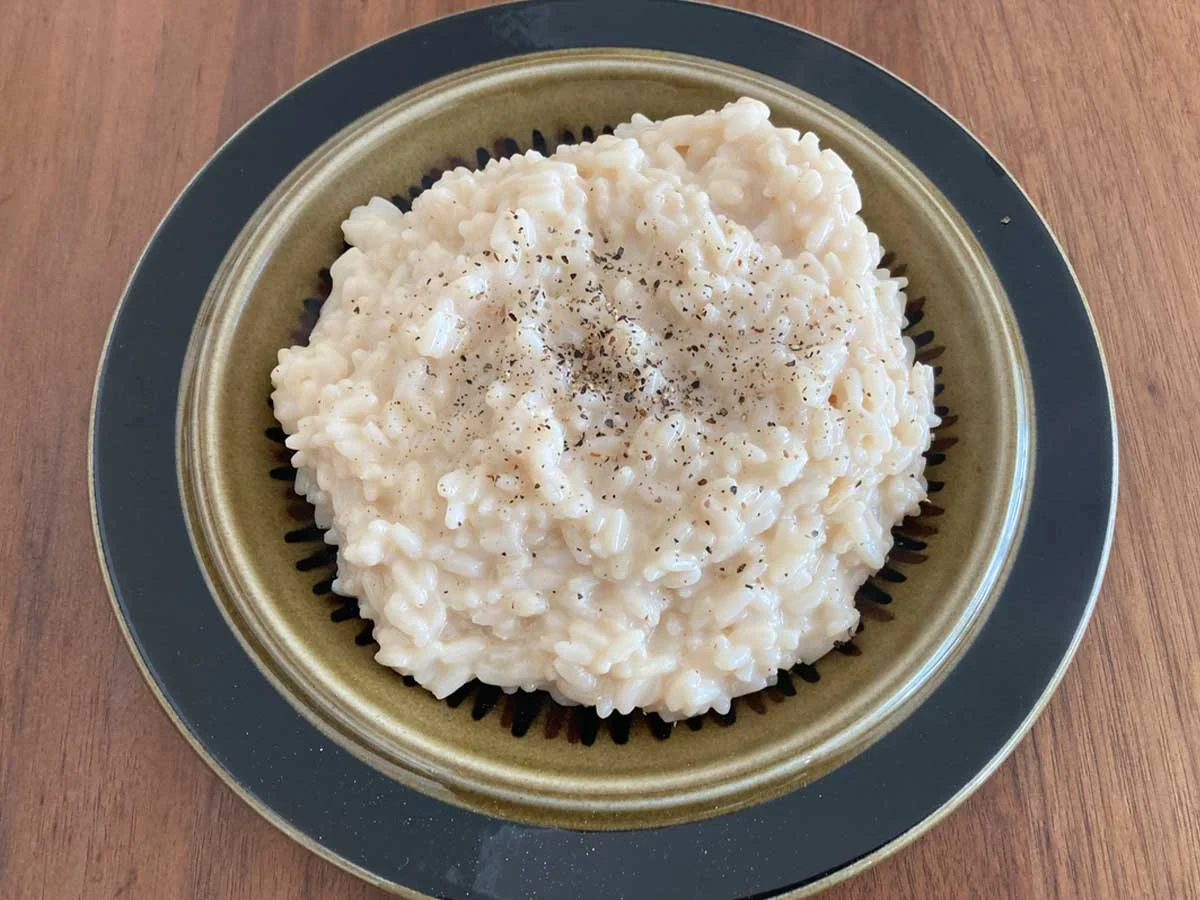
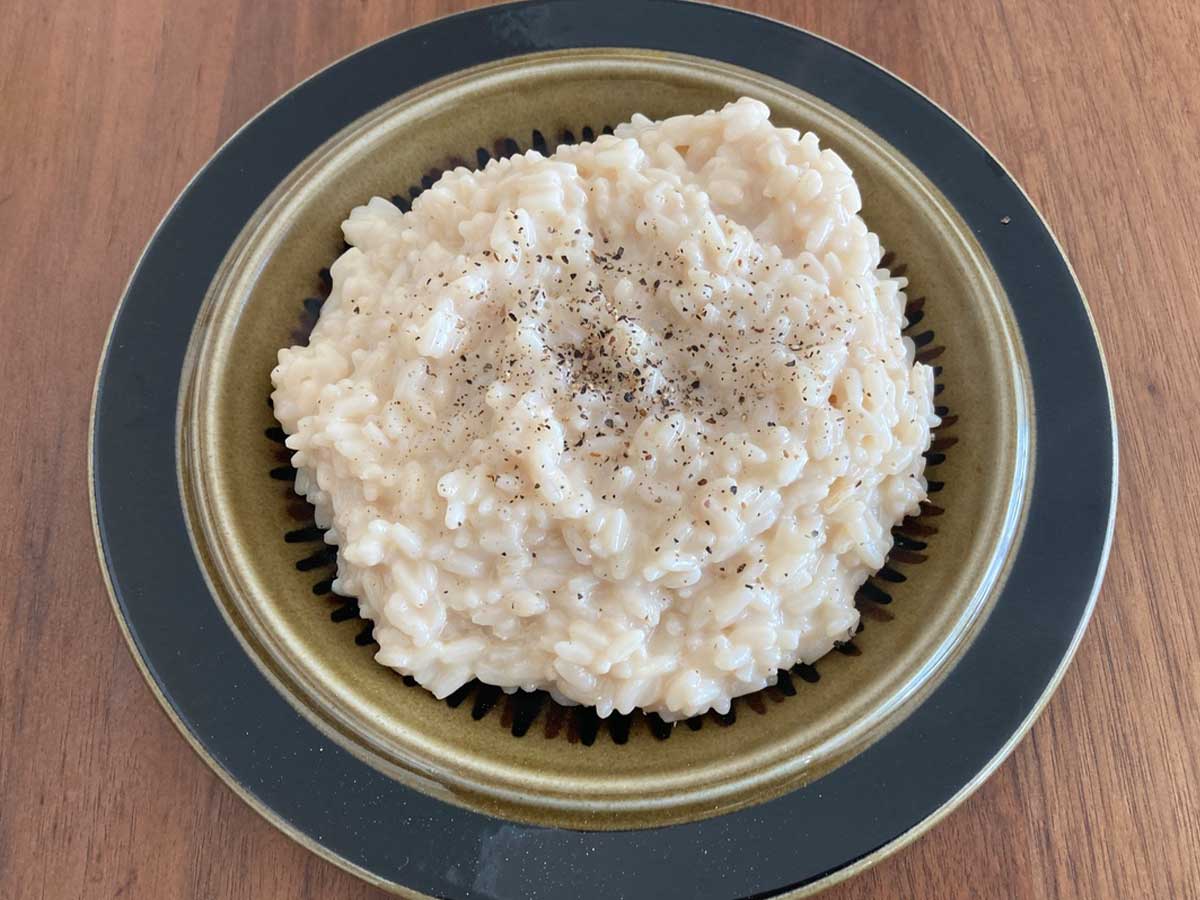
The aesthetic outcome is genuinely impressive. Once the liquid has evaporated to the desired consistency, the risotto presents as a cohesive, velvety dish. For our taste test, we added a light dusting of cracked black pepper. The visual appeal was sufficient to justify a proper plating, moving the dish from "convenience food" to "home-cooked meal."
Supporting Data: The Taste Profile
The true test of any food product is the palate, and the MUJI risotto series offers two distinct profiles that serve different culinary cravings.
The Cheese Cream Experience
The Cheese Cream variation is an exercise in indulgence. The flavor profile is bold, leaning into the saltiness and depth of a traditional Italian cheese blend. It is not a subtle dish; it is designed for those who enjoy the comfort of a rich, dairy-heavy meal. We found that the addition of fresh black pepper acted as a necessary counterpoint, cutting through the creaminess and elevating the cheese notes to a more complex level.
The Porcini Experience
In contrast, the Porcini risotto is a study in earthiness. While the flavor is more subdued than the Cheese Cream, it possesses a sophisticated depth of mushroom umami that feels remarkably fresh. It is the perfect choice for those who prefer a savory, aromatic meal that doesn’t feel heavy. The texture of the rehydrated mushrooms provided a much-needed structural contrast to the creamy rice.
Official Responses and Consumer Sentiment
While MUJI has not released a formal "mission statement" regarding this specific product line, the strategy is consistent with their broader "MUJI Food" initiatives. In past investor briefings, parent company Ryohin Keikaku Co., Ltd. has emphasized the importance of their food division in driving foot traffic to their physical locations.
The market response has been overwhelmingly positive. On Japanese social media platforms and food blogs, the consensus centers on the "value-to-effort" ratio. Consumers frequently cite the 290-yen price point as the most surprising factor. In an era of rising food costs, providing an authentic Italian dining experience at home for under 300 yen is a significant competitive advantage. The recurring critique, however, is the 30-minute cooking time. For the average Japanese salaryman or student, 30 minutes of standing over a stove is a luxury, yet the high quality of the final result seems to outweigh this inconvenience for most.
Implications for the Convenience Food Industry
The success of MUJI’s "Made-in-Italy" risotto signals a shift in consumer expectations. The "instant food" market is no longer satisfied with low-quality, high-sodium fillers. Instead, there is a growing appetite for "kit-based" meals that require minimal culinary skill but provide a sense of agency to the cook.
The "Slow-Convenience" Trend
This product represents a trend we might call "slow-convenience." It is not instant, but it is foolproof. By providing the raw, high-quality ingredients and the necessary flavoring base, MUJI is enabling consumers to participate in the cooking process. This builds a psychological bridge between the consumer and the meal; because they have stirred the pot for 30 minutes, they feel a greater sense of satisfaction than if they had simply hit the "start" button on a microwave.
The Future of Retail Private Labels
Retailers like MUJI, IKEA, and Trader Joe’s have proven that private-label food can be a brand identity, not just a commodity. By leaning into the "authentic" and "imported" narrative—even if it is just the sourcing of the rice—MUJI is building a level of brand loyalty that transcends their home goods department. If they continue to iterate on this "Made-in-Italy" series, they could effectively disrupt the traditional dried-pasta and sauce market.
Conclusion: A Must-Try for the Modern Pantry
The MUJI "Made-in-Italy" risotto is a triumph of design and culinary planning. It does not try to be the fastest meal on the shelf; it tries to be the best. For those who can afford the 30 minutes of preparation, the reward is a restaurant-quality bowl of risotto that punches well above its 290-yen weight class.
Whether you choose the rich, comforting Cheese Cream or the earthy, sophisticated Porcini, you are getting a product that respects the Italian tradition of cooking while embracing the Japanese ethos of efficiency and quality. As we look to the future of the modern kitchen, it is clear that MUJI’s foray into global cuisine is far more than a passing fad—it is a new standard for how we define "convenient" food.
If you find yourself near a MUJI store, these packets are an essential addition to your pantry. Just be sure to have some extra black pepper on hand, and perhaps a glass of wine to pair with the experience. After all, if you’re going to eat like you’re in Italy, you might as well do it right.












No comments yet. Be the first to join the conversation!