

[Editor’s note: The following article contains spoilers for "Supergirl."]
For over a decade, the term "cinematic universe" has acted as both the north star and the primary anchor for modern Hollywood blockbusters. Whether under the banner of the Marvel Cinematic Universe (MCU) or the evolving DC landscape, the prevailing philosophy has been one of exponential scale: more heroes, more villains, more timelines, and, inevitably, more apocalypses.
However, as the audience’s appetite for "event" cinema begins to show signs of fatigue, Craig Gillespie’s Supergirl arrives not as a franchise-spanning event, but as a quiet, defiant whisper in a room full of shouting. By focusing on the intimate, often painful journey of Kara Zor-El, the film challenges the very foundation of what we expect from a superhero movie, suggesting that the most powerful stakes are often the ones that fit within the human heart—not the ones that threaten to tear apart the fabric of reality.
The Tyranny of the "Universal" Threat
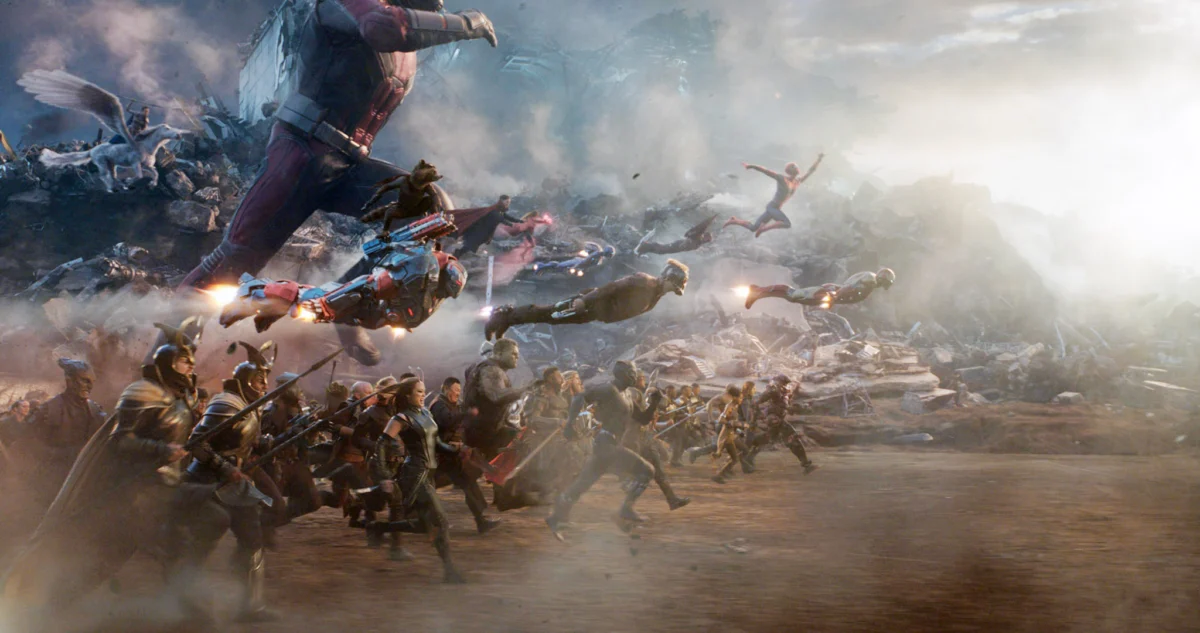
The exhaustion surrounding superhero cinema is a tangible phenomenon. When every film in a connected series culminates in the potential eradication of the entire universe—a feat achieved with a snap of fingers or a cosmic portal—the audience loses the ability to care. If the universe is destroyed, the story ends; therefore, we know the universe will be saved. The binary outcome removes the tension, leaving behind a hollow spectacle.

This "end-of-everything" fatigue has plagued the MCU most notably, where even grounded, character-driven television series are eventually pulled into a gravitational field of high-stakes cosmic conflict. When a story that should be a personal exploration of identity or trauma is forced to shoulder the weight of an entire galaxy, it loses its specificity. It ceases to be about a character and becomes a plot device for the next expansion.
We look back at 2018’s Avengers: Infinity War as a high-water mark for this model. It was a massive, exhausting, and undeniably ambitious undertaking. When our own David Ehrlich documented his 31-hour marathon of the entire MCU at the time, it felt like a cultural milestone. It was a testament to the sheer scale of the machine. Yet, even that massive undertaking was, in retrospect, a double-edged sword. It set a bar for "stakes" that has become impossible to maintain, leading to a decade of diminishing returns where the "Multiverse" is used as a narrative crutch to raise the volume, rather than deepen the drama.
Chronology of a Genre at a Crossroads
The evolution of the superhero genre can be mapped through its relationship with stakes:
- The Origins (2008–2012): Films like Iron Man focused on individual growth, industrial consequences, and the creation of a hero. Stakes were personal and localized.
- The Peak Expansion (2013–2019): The "Infinity Saga" era, defined by The Avengers and Avengers: Endgame, shifted the focus to universal extinction, establishing the "event film" as the dominant box office force.
- The Saturation Point (2020–2025): A period defined by the introduction of the Multiverse and a lack of character focus. The audience began to signal a desire for smaller, more contained narratives.
- The Correction (2026–Present): With the release of Supergirl, there is a budding movement toward "contained" superhero stories—films that prioritize character arc over franchise continuity.
The Case for the "Small-Scale" Hero
Supergirl, directed by Craig Gillespie and based on the acclaimed Supergirl: Woman of Tomorrow by Tom King and Bilquis Evely, is a masterclass in downsizing. The film moves away from the global—or cosmic—threats that define the Superman archetype and instead follows Kara Zor-El (played with grit and charisma by Milly Alcock) on a journey that is, at its core, a Western-inspired character study.

The film does not ignore the "big" themes—it touches upon the horrors of sex trafficking, the realities of genocidal violence, and the burden of being a survivor. However, it treats these not as reasons to assemble an army, but as personal catalysts for Kara’s moral development. As Gillespie noted in recent interviews, he was not beholden to the tone or the expectations of the broader Superman mythos. He was given the creative freedom to treat Kara as an individual, not just a supporting player in a wider game.
Critics who have labeled the film "formulaic" or "boring" often miss the point. As gaming auteur Hideo Kojima has eloquently argued, "formula" is not a dirty word; it is the structure upon which artistic expression is built. Supergirl uses the framework of a hero’s journey to explore the nuances of a woman who has lost everything and is still learning how to exist in a world that she does not quite fit into.
Official Perspectives and Critical Discourse
The critical appraisal of Supergirl has been polarized, reflecting a divide in the audience. There are those who feel that the lack of a "world-ending" threat makes the movie feel small, while others argue that the film’s "B" rating from reviewers is actually a badge of honor in a genre that has become averse to taking risks.
Warner Bros. and DC Studios have faced intense pressure to ensure their new slate of films resonates with a post-superhero-fatigue audience. The internal debate, according to industry reports, remains focused on whether to lean into "event" tentpoles or to nurture these smaller, director-driven visions. If the studio takes the "wrong" lesson from the opening weekend performance of Supergirl—concluding that audiences simply don’t want "small" stories—they risk alienating the very demographic that is most likely to save the genre: those who are tired of the same old, high-stakes, CGI-heavy noise.

Implications for the Future of the Box Office
The superhero genre is not dying, but it is undoubtedly in a state of flux. Marvel has multiple Avengers films in the pipeline, and we can safely assume they will again focus on the "fate of the entire universe." However, the financial and cultural dominance of that model is no longer a given.
The success or failure of Supergirl serves as a litmus test for the industry. If audiences continue to demand "more" in terms of scale, the genre will likely continue to bloat until it collapses under its own weight. If, however, there is an appetite for the personal, the compact, and the character-driven, we may see a renaissance of the "standalone" superhero film.
When you have a character as complex and compelling as Kara Zor-El, you don’t need to threaten the universe to make her struggles matter. You only need to make us care about her. By choosing to stay small, Supergirl has actually managed to reach a higher bar than many of its predecessors. It is a film that acknowledges the inherent absurdity of the superhero genre and chooses to find humanity within it rather than spectacle.
As we look toward the future of the DC universe, the message is clear: the era of the endless, ever-expanding, universe-threatening climax is hitting its expiration date. It is time for the pictures to get smaller. It is time for the heroes to return to the earth, to face personal demons, and to remind us that the most important thing to save isn’t the universe—it’s the individual.

Supergirl is currently in theaters everywhere.










