

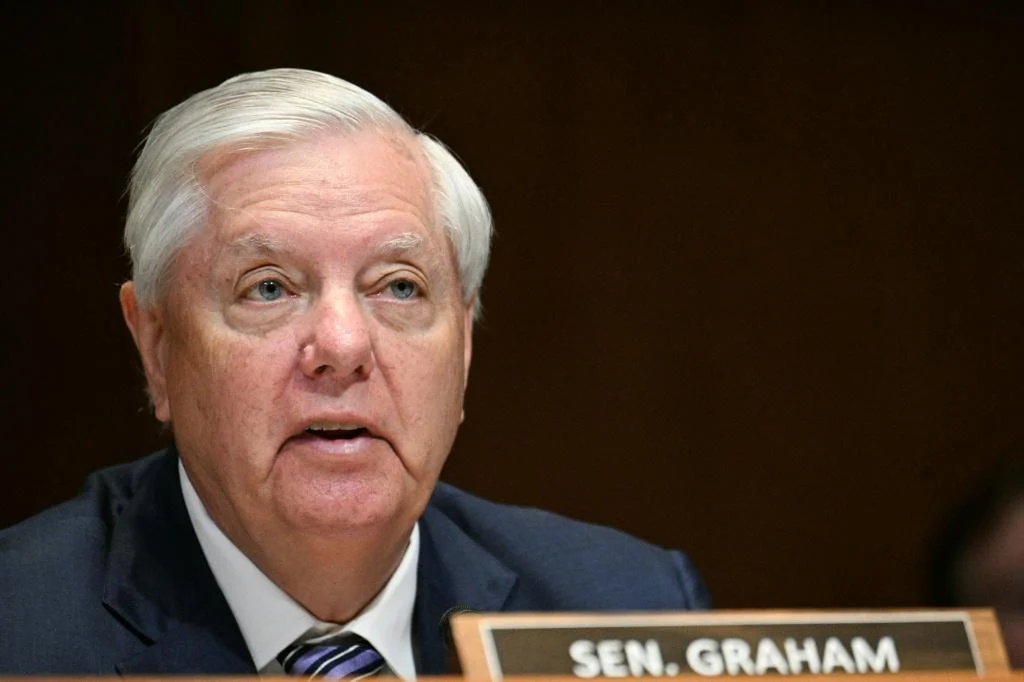
WASHINGTON D.C. — The corridors of the United States Capitol fell silent on Sunday as news rippled through the halls of power that Senator Lindsey O. Graham, the influential South Carolina Republican and a towering figure in American foreign policy, had passed away. He was 71.
His office confirmed in a brief, solemn statement posted to his official X (formerly Twitter) account that the Senator died on the evening of Saturday, July 11, following a "brief and sudden illness." The announcement prompted an immediate outpouring of grief from across the ideological spectrum, marking the end of a legislative career that spanned over three decades and bridged the eras of Cold War interventionism and the modern populist movement.
A Career Defined by Global Engagement
Lindsey Graham was a rare breed of politician in the 21st century: a committed hawk whose legislative footprint was primarily etched in the sphere of international relations. A former military lawyer who retired with the rank of Colonel in the U.S. Air Force Reserve, Graham viewed the world through the lens of national security and moral obligation.
His career began in the House of Representatives in 1994, where he emerged as a firebrand during the impeachment proceedings of President Bill Clinton. He transitioned to the Senate in 2002, succeeding the legendary Strom Thurmond. Over the next twenty-two years, Graham became the quintessential “interventionist,” advocating for a robust American presence abroad. Whether it was supporting the post-9/11 military actions in Iraq and Afghanistan or, more recently, championing the Ukrainian cause against Russian aggression, Graham remained a steadfast—and often controversial—voice for American hegemony.
Chronology: From the Air Force to the Senate Floor
- 1955: Born in Central, South Carolina.
- 1982–1989: Served on active duty in the U.S. Air Force as a Judge Advocate.
- 1994: Elected to the U.S. House of Representatives for South Carolina’s 3rd district.
- 2002: Elected to the United States Senate; votes in favor of the Iraq War.
- 2015: Launches a brief, unsuccessful bid for the Republican presidential nomination.
- 2016: Emerges as a fierce critic of Donald Trump, labeling him a "race-baiting, xenophobic, religious bigot."
- 2017–2021: Executes a dramatic political pivot, becoming one of Donald Trump’s most reliable allies in the Senate.
- 2021: Declares "count me out, enough is enough" following the January 6 Capitol insurrection, though later votes against conviction during the second impeachment trial.
- 2024–2026: Serves as a pivotal voice in the Senate, continuing to push for military aid to Kyiv and aggressive posturing toward Iran.
- July 11, 2026: Passes away at age 71.
The Complex Alliance: Graham and Trump
Perhaps no aspect of Graham’s career was as scrutinized as his evolving relationship with Donald Trump. In the 2016 Republican primary, Graham was a vitriolic opponent of the former reality television star, famously warning the party that nominating Trump would be a catastrophe.
However, following Trump’s 2016 victory, the two forged an unlikely and profound alliance. Graham became a fixture at the White House, frequently playing golf with the President and providing him with counsel on judicial appointments and foreign policy. This partnership survived the turmoil of the January 6th insurrection—a moment where Graham publicly broke with the former President—only for the two to reconcile in the years that followed.
On Sunday, Donald Trump issued a heartfelt tribute via his Truth Social platform: "Senator Lindsey Graham, one of the greatest people and Senators I have ever known, is dead! He was always working, and was a true American Patriot. Lindsey will be greatly missed!!!"
A Stalwart of the Transatlantic and Middle Eastern Alliances
While domestic politics provided the stage for his battles, foreign policy was Graham’s theater. He was an unwavering architect of the U.S.-Israel partnership. Israeli leadership, mourning his loss, reflected on his role as a bridge between the two nations.
"Lindsey understood that the security of Israel and America are inseparable," Prime Minister Benjamin Netanyahu said in a statement. "He devoted his life to defending America, strengthening our alliance, and standing up for the free world."
President Isaac Herzog echoed these sentiments, noting that the news left him "shocked and heartbroken." For decades, Graham had been a frequent visitor to the Middle East, pushing for a hawkish stance against the Iranian regime, which he often described as the "greatest exporter of terror in the world."
His final legislative mission, however, was in Eastern Europe. Only this past Friday, Graham met with President Volodymyr Zelenskyy in Kyiv—his 10th visit to the war-torn nation. During that trip, he continued his push for stricter economic sanctions on Russia and its global allies, demonstrating his commitment to the doctrine of "peace through strength" until his very last days.
Legislative Impact and Political Footprint
As Chairman of the Senate Budget Committee, Graham wielded significant influence over the federal purse strings. His tenure was marked by a relentless focus on defense spending. He argued consistently that the U.S. military budget was not merely a cost, but an investment in global stability.
South Carolina Governor Henry McMaster, reflecting on his long-time colleague, remarked that the Senator was "irreplaceable."
"The fiercest of fighters for South Carolina and America — and a loyal and steadfast friend," McMaster wrote on X.
His legislative record, however, was not without its detractors. His frequent calls for military intervention often put him at odds with the rising isolationist wing of his own party. Yet, Graham possessed a rare ability to navigate these ideological shifts, maintaining his seat through multiple re-elections in 2008, 2014, and 2020 by balancing his hawkish national security stances with localized service to his South Carolina constituents.
Implications of a Vacancy
The death of Senator Graham leaves a significant void in the upper chamber. As a senior member of both the Judiciary and Budget committees, his absence will be felt immediately in upcoming appropriations debates and judicial confirmation hearings.
Under South Carolina law, the Governor is tasked with appointing a successor to fill the remainder of the unexpired term until a special election can be held. This process is expected to set off a high-stakes political scramble within the Palmetto State, as Republicans look to maintain a seat that has been a cornerstone of their influence in the South.
Beyond the procedural implications, the loss of Graham signals the end of a specific archetype in American politics: the Cold War-era internationalist who viewed the United States as the indispensable nation. As the global security landscape grows increasingly volatile—with conflicts persisting in Europe and tensions simmering in the Middle East—the Senate loses a member who possessed both the institutional memory and the personal relationships to influence the course of global events.
Closing Reflections
In his final years, Graham often spoke of the need for "moral clarity" in a world that he felt was increasingly losing its way. Whether one agreed with his interventionist policies or his complex political alliances, his dedication to his vision of American greatness was undeniable.
As Washington prepares for a period of mourning, the legacy of Lindsey Graham remains a testament to the influence one individual can hold over the trajectory of a superpower. He was a man who lived at the intersection of history, diplomacy, and partisan warfare—a figure whose presence was as constant as the debates he so often ignited.
The flags at the U.S. Capitol were ordered to fly at half-staff as tributes continued to arrive from world leaders, military commanders, and political rivals alike. For a man who spent his life in the center of the arena, the silence that followed his passing served as the ultimate acknowledgment of his stature. As his family observes this period of privacy, the nation reflects on a life that, for better or worse, helped shape the modern world.











