Muslim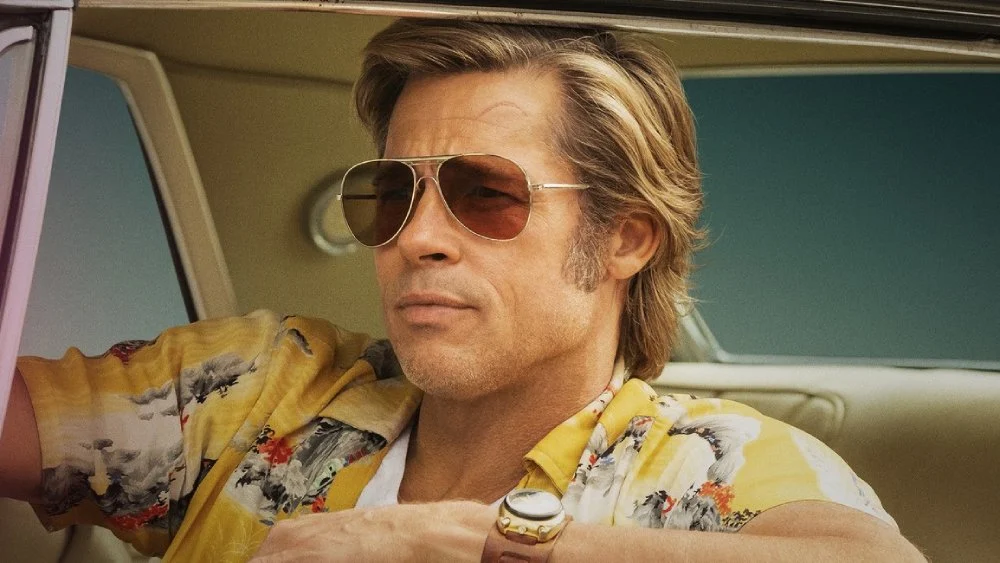
The cinematic universe of Quentin Tarantino is expanding in a way few fans expected, yet many have craved since the closing credits rolled on his 2019 masterpiece, Once Upon a Time in Hollywood. As the cultural landscape of 1977 begins to take shape through the lens of one of cinema’s most meticulous auteurs, the focus has shifted from the fading embers of the 1960s to the gritty, transitional era of late-seventies Tinseltown.
Quentin Tarantino is officially returning to the world of Clifford Booth, the enigmatic, stoic stuntman who captured the hearts of audiences worldwide. This time, the journey is bifurcated: a major motion picture sequel titled The Further Mis-Adventures of Cliff Booth and an accompanying novel, The Adventures of Cliff Booth, set to hit bookshelves shortly after the film’s theatrical premiere.
Main Facts: A Dual-Media Expansion
The project represents a rare collaborative effort for the famously protective filmmaker. While Tarantino has penned the screenplay for the sequel, he has handed the director’s chair to none other than David Fincher. The film, produced by Netflix with a staggering $200 million budget, will see Brad Pitt reprise his Academy Award-winning role.
The narrative leap is significant. While the original film was anchored in the golden, sun-drenched haze of 1969—a year defined by the Manson family murders and the twilight of the studio system—the new installments jump forward eight years to 1977.
The novel, published by HarperCollins, is slated for a December 8 release. This arrival is strategically timed to sandwich the film’s rollout: The Further Mis-Adventures of Cliff Booth will land in IMAX theaters on November 25, followed by a wide-release streaming debut on Netflix on December 23. It is a calculated, high-profile rollout that underscores the massive commercial expectations for what is essentially a spin-off of one of the most successful original films of the last decade.
Chronology: From 1969 to 1977
To understand the significance of this expansion, one must look at the trajectory of the characters. In Once Upon a Time in Hollywood, Cliff Booth and Rick Dalton (Leonardo DiCaprio) were relics of a bygone era, struggling to navigate a changing industry. Booth, the war hero-turned-stuntman, served as the steady, lethal anchor to Dalton’s volatile, insecure actor.
By 1977, the landscape of Los Angeles had shifted dramatically. The "Swinging Sixties" were long dead, replaced by the cynicism of the post-Watergate, post-Vietnam era. The novel’s logline provides a tantalizing glimpse into this evolution, describing a Cliff Booth who is still "keeping on" despite the world moving past him. He remains a man of many masks—stuntman, bartender, cinema projectionist—and, perhaps most intriguingly, a man who still performs "clandestine services" for his circle of friends.
The chronology of the release is equally deliberate:
- November 25: The Further Mis-Adventures of Cliff Booth premieres in IMAX.
- December 8: HarperCollins publishes The Adventures of Cliff Booth.
- December 23: The film arrives on Netflix.
This timeline allows the audience to experience the visual spectacle of Fincher’s direction before diving into the literary depth of Tarantino’s prose, a method that mirrors the release strategy of the original film’s novelization in 2021.
Supporting Data: The Commercial Weight of Hollywood
The financial stakes of this venture cannot be overstated. Once Upon a Time in Hollywood was a juggernaut, grossing over $400 million globally against a production budget of $90 million. It was a rare feat for an original property in an era dominated by intellectual property franchises.
The shift to Netflix for the sequel, backed by a $200 million production budget, highlights the streaming giant’s aggressive pursuit of prestige, auteur-driven content. While the original film enjoyed a traditional theatrical window under Sony, this sequel’s dual-theatrical-and-streaming model reflects the modern industry’s pivot toward hybrid distribution.
The critical success of the first film—which garnered 10 Academy Award nominations and two wins—has set an incredibly high bar. Critics will be watching closely to see if the transition from Tarantino’s directorial style to Fincher’s clinical, precise aesthetic maintains the "Tarantino-esque" grit that defined Cliff Booth’s character.
Official Responses and the "Retirement" Clause
The most pressing question surrounding this project has been: Why isn’t Quentin Tarantino directing? The answer lies in the filmmaker’s long-standing, public commitment to retiring after his tenth feature film.
Having directed nine films—including classics like Pulp Fiction, Reservoir Dogs, and Inglourious Basterds—Tarantino has been vocal about his desire to go out on his own terms. He has expressed deep reservations about his final film being a sequel, as he believes such a move would compromise the integrity of his self-imposed "ten-movie rule."
In an interview on the The Church of Tarantino podcast, the filmmaker provided clarity on his decision to step back from the director’s chair:
"I love this script, but I’m still walking down the same ground I’ve already walked. It just kind of unenthused me. This last movie, I’ve got to not know what I’m doing again. I’ve got to be in uncharted territory."
Tarantino’s desire for "uncharted territory" suggests that while he is happy to expand the world of Cliff Booth, he is unwilling to spend his final directorial effort revisiting past creative successes. By handing the reins to David Fincher, Tarantino ensures the story is told by a master of the craft while he keeps his eyes fixed on an entirely new horizon for his final, as-yet-unnamed tenth project.
Implications: The Legacy of the Auteur
The decision to release a novel alongside a film is not merely a marketing gimmick; it is an extension of Tarantino’s evolution as a writer. Following the success of his Once Upon a Time in Hollywood novelization—which expanded on the inner lives of Dalton and Booth in ways the film could only hint at—Tarantino seems to have found a new medium to explore his characters.
The implications for the industry are profound. If the Cliff Booth project proves that a spin-off can be as critically and commercially viable as the original, it may signal a new trend in "Prestige Franchising." In this model, high-end auteurs create expansive, multi-format narratives that allow for deeper character exploration in print while utilizing the cinematic scale of streaming services for visual storytelling.
Furthermore, the collaboration between Tarantino and Fincher represents a "dream team" scenario that the industry has rarely seen. The combination of Tarantino’s kinetic, dialogue-heavy writing and Fincher’s meticulous, atmospheric direction promises to create a 1977 Los Angeles that feels lived-in, dangerous, and profoundly authentic.
For the audience, this is a rare chance to see a beloved character evolve in real-time across different formats. Whether Cliff Booth is a hero, a villain, or something in between, his return is a testament to the enduring power of characters who are allowed to age, change, and exist in the shadow of their own history.
As the release dates approach, the industry is left to wonder: Is this the end of the Hollywood era, or is it merely the beginning of a new way to tell stories in an era where the boundary between the novel and the film is increasingly blurred? For now, the answer lies with a stuntman, his secret services, and the dark, neon-lit streets of 1977 Los Angeles.

 Pevita Pearce
 Layla Zulfa