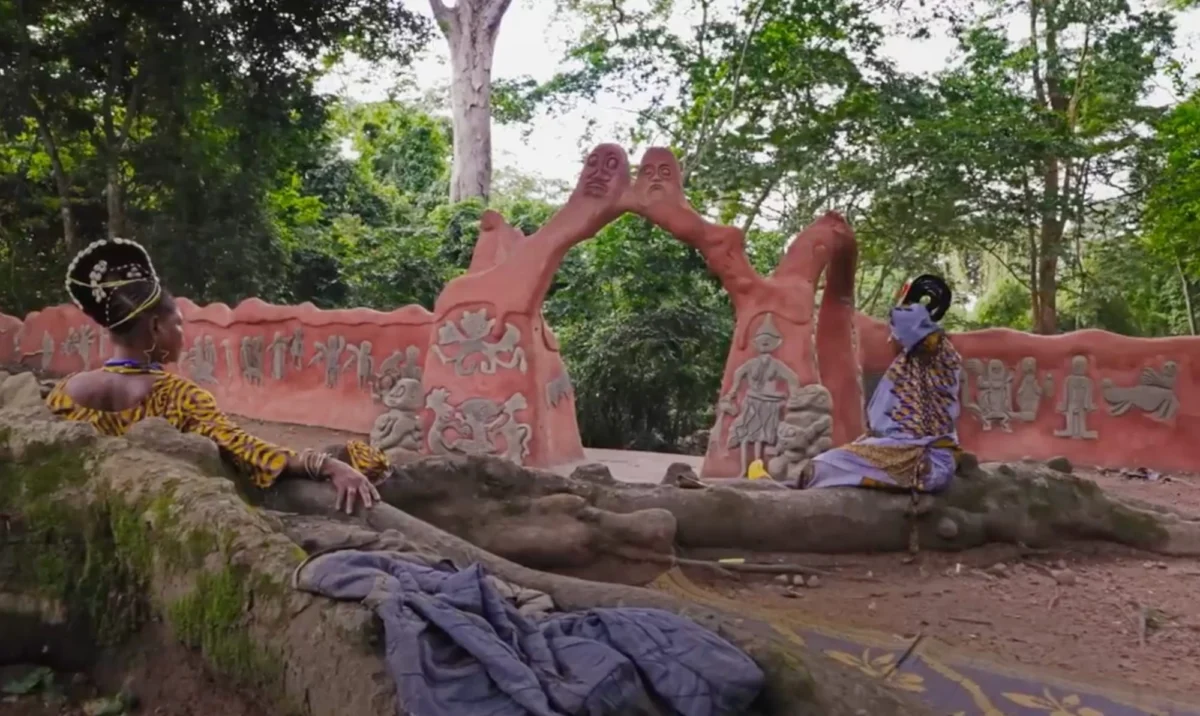
Deep within the lush, verdant forests of southwestern Nigeria lies a sanctuary that transcends the boundaries of traditional landscape and architecture. The Osun-Osogbo Sacred Grove, a 190-acre UNESCO World Heritage site, is more than a mere geographical landmark; it is a profound testament to the enduring relationship between the Yorùbá people and the divine. For over six centuries, this dense forest—carved by the winding path of the Osun River—has served as the spiritual heart of the region, dedicated to the goddess of rivers and fertility, Ọṣun.
Today, this site stands as a living museum, where ancient tradition meets mid-20th-century artistic innovation, ensuring that the pact between the hunter, the community, and the deity remains unbroken.
The Genesis of a Sacred Pact: Historical Foundations
The history of the Osun-Osogbo Sacred Grove is rooted in the narrative of a wandering hunter who, over 600 years ago, sought refuge for his drought-stricken community. As local lore recounts, the hunter discovered a lush, fertile grove fed by a rushing river. Recognizing the area as the domain of Ọṣun, the goddess of the waters, the settlers entered into a spiritual contract: in exchange for the deity’s protection, prosperity, and fertility, the people promised to offer perpetual celebration and stewardship.
This foundational myth is not merely a piece of folklore; it is the socio-religious cornerstone that has preserved the forest from the encroachment of urbanization and agricultural expansion. Unlike many other sacred sites in West Africa that were lost to the pressures of modernization, the Osun-Osogbo Grove was maintained as a protected space where the spirits of the Yorùbá pantheon were believed to dwell.
Chronology of Transformation: From Ancient Shrine to Modern Art Movement
The trajectory of the grove is defined by its ability to adapt while remaining tethered to its ancient roots.
- Pre-1950s: The grove served primarily as a forest shrine, known only to local devotees and the priesthood of Ọṣun. It was a place of deep silence, restricted access, and annual ritual offerings.
- 1950s–1960s: A pivotal shift occurred when the New Sacred Art Movement was established. Spearheaded by Austrian-Nigerian artist Susanne Wenger, along with local visionaries like Kasali Akangbe Ogun and Chief Adebisi Akanji, the movement sought to revitalize the grove. They began constructing monumental sculptures, shrines, and gateways that visualized the complex Yorùbá cosmology.
- 2005: Recognizing its cultural and architectural significance, UNESCO officially designated the Osun-Osogbo Sacred Grove as a World Heritage site, citing it as the largest remaining example of the once-widespread sacred groves of Yorùbá culture.
- Present Day: The grove continues to be a site of ongoing creative labor. It serves as a living laboratory where master artists, including the descendants of the original movement, work to repair, maintain, and expand the sacred art environment.
The New Sacred Art Movement: A Fusion of Faith and Form
The mid-20th-century revival of the grove is the primary subject of a new documentary series produced by The Metropolitan Museum of Art (The Met) in collaboration with the World Monuments Fund. Directed by filmmaker Sosena Solomon, the project captures the tactile, labor-intensive process of maintaining a spiritual sanctuary.
The "New Sacred Art" was not a replacement of traditional religion but a material manifestation of it. Artists like Kasali Akangbe Ogun transformed mud, clay, and wood into towering, totemic figures. These sculptures do not merely represent the deities; they act as conduits for them. By creating a physical, visual language within the forest, the artists ensured that the sacredness of the space was accessible to all, not just the initiated.

The documentary highlights the continuity of this work. Today, the same methods employed in the 1960s are being passed down to a new generation of artists. This intergenerational transfer of knowledge is critical to the site’s survival. It is not just about preserving old sculptures; it is about keeping the act of creation alive.
Supporting Data: Why the Grove Matters
The importance of the Osun-Osogbo Grove can be measured through both cultural and ecological lenses:
- Biodiversity: As one of the few remaining primary forests in the region, the grove acts as a vital carbon sink and a repository for indigenous plant species, many of which have medicinal properties used by local herbalists.
- Cultural Continuity: The annual Osun-Osogbo Festival, which attracts thousands of pilgrims and tourists from across the globe, serves as a major economic and cultural engine for the city of Osogbo. It bridges the gap between the diaspora and the ancestral homeland.
- Architectural Uniqueness: The sculptures within the grove represent a distinct artistic style—a hybrid of modernist sculpture and traditional Yorùbá wood carving. This style has influenced contemporary African art for decades, proving that traditional religious spaces can foster innovation rather than hinder it.
Perspectives from the Custodians
The preservation of the grove is a collaborative effort between the local community, the government of Nigeria, and international heritage organizations. Chief Nike Davies-Okundaye, a renowned artist and advocate for the grove, aptly summarizes the site’s significance: "What makes Ọṣun-Osogbo such a special place is: this is a living story."
This sentiment is echoed by the caretakers and artists featured in The Met’s series. For them, the grove is not a museum piece that must be kept behind glass; it is a space that breathes. Repairing a crumbling mud sculpture is considered a religious act, a way of sustaining the community’s covenant with the deity.
When asked about the future of the grove, local leaders emphasize the importance of "community ownership." While international funding from organizations like the World Monuments Fund provides the resources for structural conservation, the spiritual maintenance remains in the hands of the local priesthood and the artists who feel a personal, familial obligation to the site.
Implications for Global Heritage
The Osun-Osogbo Sacred Grove serves as a blueprint for how indigenous spiritual sites can survive in the 21st century. Its model suggests three core lessons for the global heritage community:
1. Active Stewardship over Passive Preservation
Many heritage sites are "preserved" by being cordoned off, which often leads to them becoming stagnant. In Osogbo, the site is "alive" because it is still used for its original purpose. By allowing ritual and artistic creation to continue, the site remains relevant to the people who live around it.

2. The Role of Artists as Custodians
The New Sacred Art Movement demonstrated that artists are often the best guardians of heritage. By embedding their work into the physical structure of the sanctuary, they made the landscape indispensable.
3. Sustainability through Storytelling
The grove is a narrative. Every totem, every pathway, and every shrine tells a story of the Yorùbá people. By documenting these stories—as The Met has done in their 13-part series on African landmarks—the global community can appreciate the universal value of these local sites.
A Call to Engagement
The Osun-Osogbo Sacred Grove stands as a vibrant, defiant answer to the forces of cultural erasure. As travelers, scholars, and observers, the challenge lies in engaging with such spaces respectfully—not as mere consumers of "exotic" culture, but as witnesses to an ongoing, vital history.
For those wishing to explore further, The Met’s full series on YouTube offers a deep dive into 13 distinct African cultural landmarks, each revealing a unique facet of the continent’s history. Furthermore, for those interested in the broader context of how humanity has built, shaped, and revered spiritual environments, resources such as The Library of Esoterica provide a fascinating survey of the over 400 such environments currently documented across the globe.
In the end, the grove remains what it was six centuries ago: a forest of secrets, a home for the gods, and a testament to the fact that when a community commits to protecting its sacred spaces, those spaces, in turn, sustain the community. As long as the river flows and the artists carve, the story of Ọṣun will continue to be told.