Evan Lee Salim
The global anime industry is currently navigating a period of unprecedented scrutiny regarding how Japanese content is adapted for Western audiences. While the rise of artificial intelligence has reportedly pressured subtitling teams to adhere more closely to original scripts to prove their value, the world of English language dubbing remains a primary battleground for "localization" versus "translation." The latest flashpoint in this ongoing cultural and industry debate is the third season of Reborn as a Vending Machine, I Now Wander the Dungeon.
Recent findings have highlighted significant discrepancies between the original Japanese intent (reflected in the English subtitles) and the English dub script produced by Crunchyroll’s in-house team. Critics argue that these changes represent a return to a "1990s-style" of localization—an era defined by heavy-handed rewrites and the insertion of regional slang—rather than the faithful adaptations modern audiences increasingly demand.

Main Facts: The Vending Machine Controversy
Reborn as a Vending Machine, I Now Wander the Dungeon, adapted from the light novel series by Hirukuma and produced by Studio Gokumi, is a unique entry in the "isekai" (reincarnation) genre. It follows a vending machine enthusiast who, after a fatal accident involving his favorite machine, is reincarnated as a sentient vending machine named Boxxo (voiced by Jun Fukuyama in Japanese and Garrett Storms in English) in a fantasy dungeon.
Because Boxxo’s physical presence is limited and his verbal communication is restricted to pre-recorded vending machine phrases, his internal monologue serves as the narrative’s emotional and logical backbone. Consequently, any alteration to this monologue significantly shifts the character’s personality and the tone of the story.

The controversy centers on Season 3, Episode 3, titled "A Stay in Enemy Territory." Analysis conducted by Bounding into Comics and verified by viewers reveals that the English dub script deviates sharply from the literal translation. The dub introduces modern internet slang, wrestling terminology, and Western legal concepts into a high-fantasy setting where such terms are anachronistic and tonally dissonant.
Chronology of Localization Friction
The friction surrounding Crunchyroll’s dubbing choices does not exist in a vacuum. It is the latest in a series of incidents that have polarized the anime community:

- The AI Shift (2023–2024): As AI translation tools became more sophisticated, streaming platforms faced pressure to justify the cost of human translators. This led to a notable "tightening" of subtitle accuracy in some departments to differentiate human work from machine-generated literalism.
- The Slang Infiltration (Late 2024): Earlier in the season, Crunchyroll faced criticism for inserting "Gen Alpha" slang and internet memes into the English dub of Dead Account, a move many fans felt dated the material and insulted the original script’s gravitas.
- The "Feminist" vs. "Feminine" Rewrite: Netflix’s localization of Blue Box became a talking point when a character described as "feminine" in Japanese was rebranded as "feminist" in the English script—a change seen by many as an ideological insertion rather than a linguistic necessity.
- The Vending Machine Escalation (2026): With the release of Season 3 of Reborn as a Vending Machine, the dubbing team appears to have leaned further into "creative localization," utilizing Boxxo’s internal thoughts to insert Western cultural references that do not exist in the source material.
Supporting Data: A Comparative Analysis of Episode 3
The most egregious examples of script alteration in Reborn as a Vending Machine Season 3 occur when Boxxo realizes that the "curse" placed on Ash (the son of Captain Kerioyl) by the Snow Spirit Sulream is a fraudulent performance designed to manipulate the Captain.
Example 1: The Revelation of the Farce
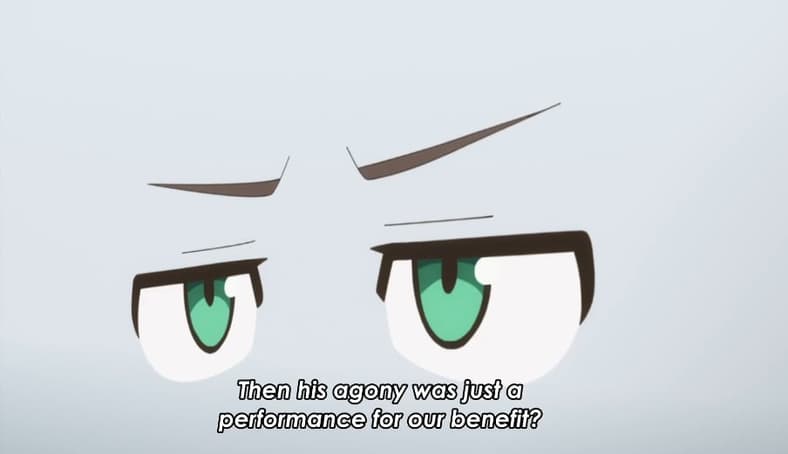
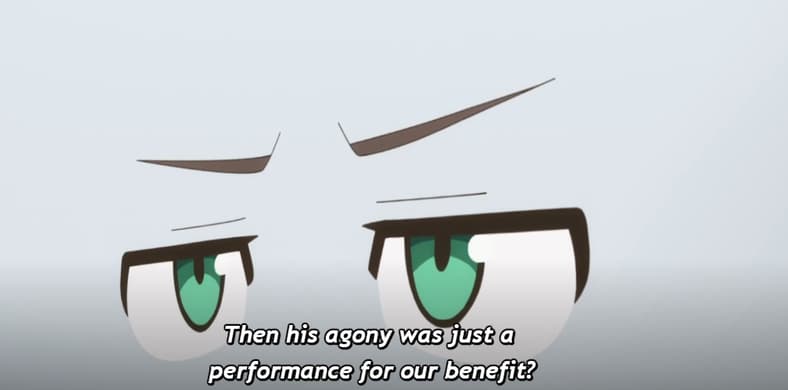
In the original Japanese script and the English subtitles, Boxxo reacts with logical surprise to the deception:

- Subtitles: "Then his agony was just a performance for our benefit?"
- English Dub: "Meaning the munchkin went method and totally had us marking out."
The dub replaces a clear, narrative-focused observation with "marking out"—a term specific to professional wrestling fandom—and uses the derogatory "munchkin" to refer to a child, a term that carries specific Western cinematic baggage (specifically The Wizard of Oz).
Example 2: The Predatory Motive
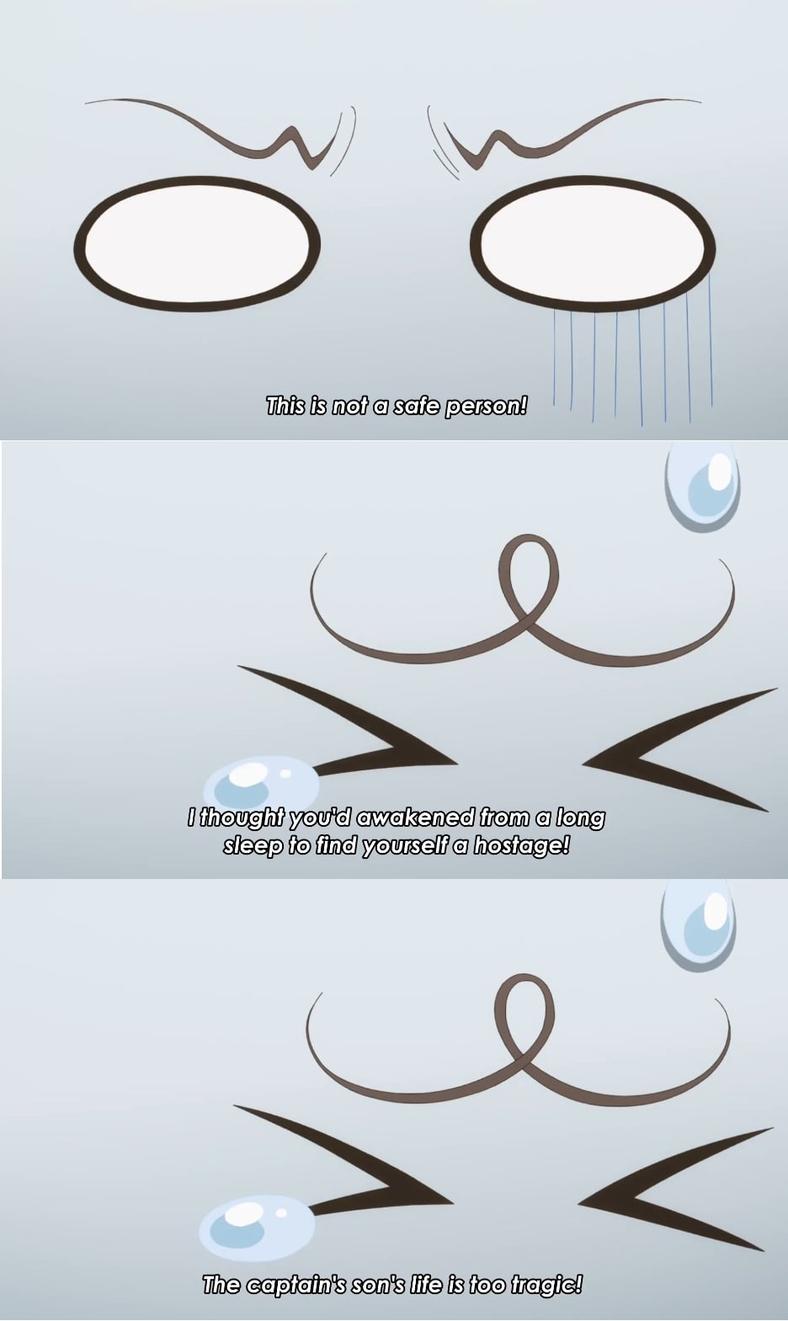
When Boxxo realizes Sulream’s obsession with the young boy, the subtitles reflect a sense of genuine alarm and moral concern:
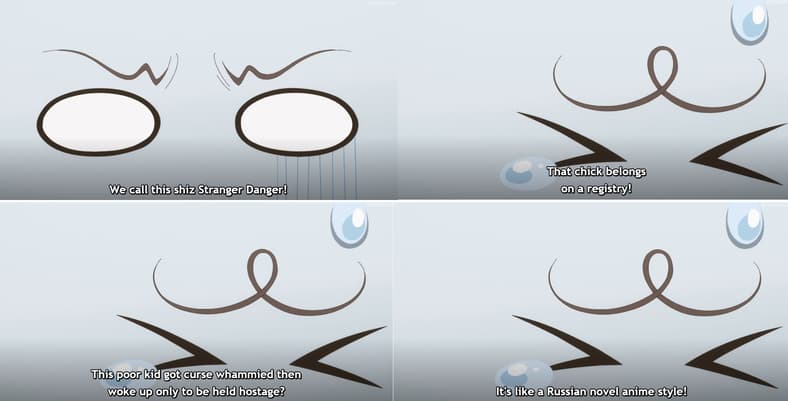
- Subtitles: "This is not a safe person! I thought you’d awakened from a long sleep to find yourself a hostage! The captain’s son’s life is too tragic!"
- English Dub: "That chick belongs on a registry! This poor kid got curse whammied then woke up only to be held hostage! It’s like a Russian novel, anime style!"
Here, the localizers insert a reference to a "registry" (a modern Western legal concept regarding sex offenders) and a "Russian novel" (a cultural shorthand for tragedy). These references break the "fourth wall" of the fantasy setting, reminding the viewer of the translator’s presence rather than immersing them in Boxxo’s world.
Example 3: Rationalizing the "Ick Factor"
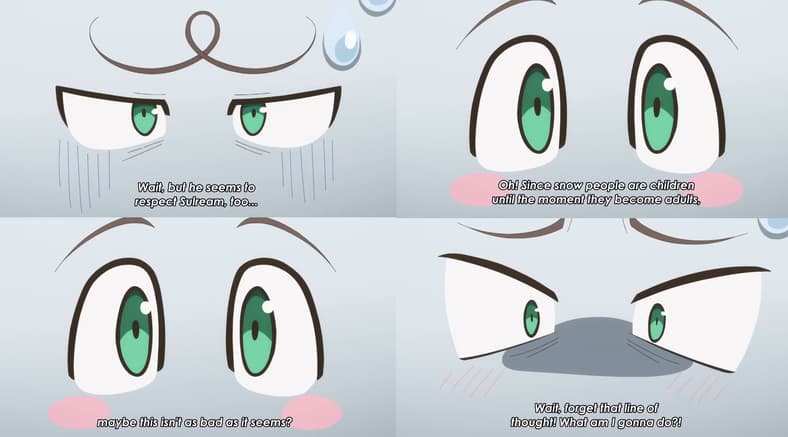
As Boxxo tries to process the bizarre social dynamics of "Snow People," the script takes another turn toward modern internet vernacular:
- Subtitles: "Wait he seems to respect Sulream, too… Oh! Since snow people are children until they become adults, maybe this isn’t as bad as it seems? Wait forget that line of thought! What am I gonna do?!"
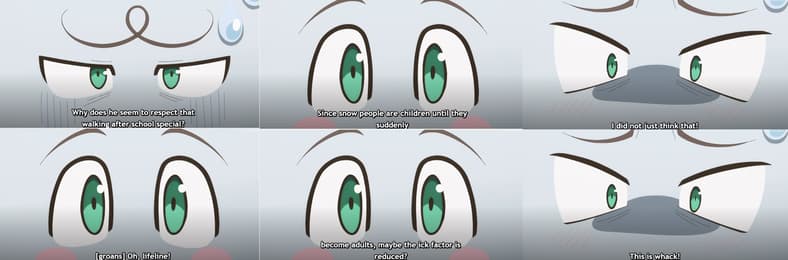
- English Dub: "Why does he seem to respect that walking after-school special? Oh, lifeline! Since snow people [are children] until they suddenly become adults, maybe the ick factor is reduced? I did not just think that! This is whack!"
The use of "after-school special," "ick factor," and "whack" represents a trifecta of slang that many fans argue belongs in a 1990s sitcom rather than a 2026 anime adaptation.
Official Responses and Industry Context
Crunchyroll has historically remained quiet regarding specific script criticisms, often deferring to the "creative freedom" of their ADR (Automated Dialogue Replacement) directors and scriptwriters. However, the industry context is shifting.
In the late 1990s and early 2000s, companies like 4Kids Entertainment and DiC were famous for "Americanizing" anime—changing rice balls to jelly donuts and rewriting entire plotlines to suit Western sensibilities. While this was once seen as a necessity for television broadcast, the modern era of "simulcasting" has created a more sophisticated fan base that often cross-references dubs with subtitles and the original Japanese audio.
Industry insiders suggest that the persistence of these "activist" or "creative" rewrites in dubbing stems from a disconnect between the subtitling departments (which prioritize speed and accuracy) and the dubbing departments (which often prioritize "natural-sounding" English dialogue and localized humor). The result is a growing rift: subtitled versions are becoming more faithful, while dubbed versions are increasingly viewed as "fanfiction" by the core community.
Implications for the Future of Anime Distribution
The controversy surrounding Reborn as a Vending Machine highlights a broader challenge for the anime industry: the "Localization vs. Translation" war.
1. Tonal Dissonance and Immersion
When a fantasy series set in a magical dungeon uses terms like "marking out" or "on a registry," it creates tonal dissonance. For many viewers, this breaks the "suspension of disbelief." If the goal of a dub is to make the story accessible, critics argue that using hyper-specific, dated slang achieves the opposite by making the dialogue feel "cringe-worthy" or out of place.
2. The Rise of "Accuracy-First" Fans
Modern anime fans are more connected to Japanese culture than previous generations. They are often aware of the original Japanese honorifics, social structures, and linguistic nuances. When localizers ignore these in favor of Western slang, they risk alienating their most loyal customers.
3. The Threat to Artistic Integrity
There is an ongoing debate regarding whether localizers have the moral right to alter the "voice" of a Japanese creator. By turning Boxxo’s internal thoughts into a vehicle for Western memes, the localization team is arguably overwriting Hirukuma’s original characterization.
4. The Economic Factor
As streaming platforms compete for a global audience, the quality of the "local product" is a key differentiator. If Crunchyroll’s dubs continue to be perceived as unreliable or unfaithful, fans may migrate toward platforms that prioritize accuracy or return to "fansubs"—unauthorized translations created by fans that often pride themselves on literal fidelity.
In conclusion, the case of Reborn as a Vending Machine Season 3 serves as a warning for the industry. While the intent may be to make the dialogue "snappy" or "relatable," the execution has sparked a backlash that underscores a simple truth: in the modern age of global media, authenticity is often more valuable than "localization." As the 2026 season continues, all eyes will be on whether Crunchyroll heeds these criticisms or continues to "mark out" for its own creative liberties.

 Laily UPN
 Lina Hope