Suro Senen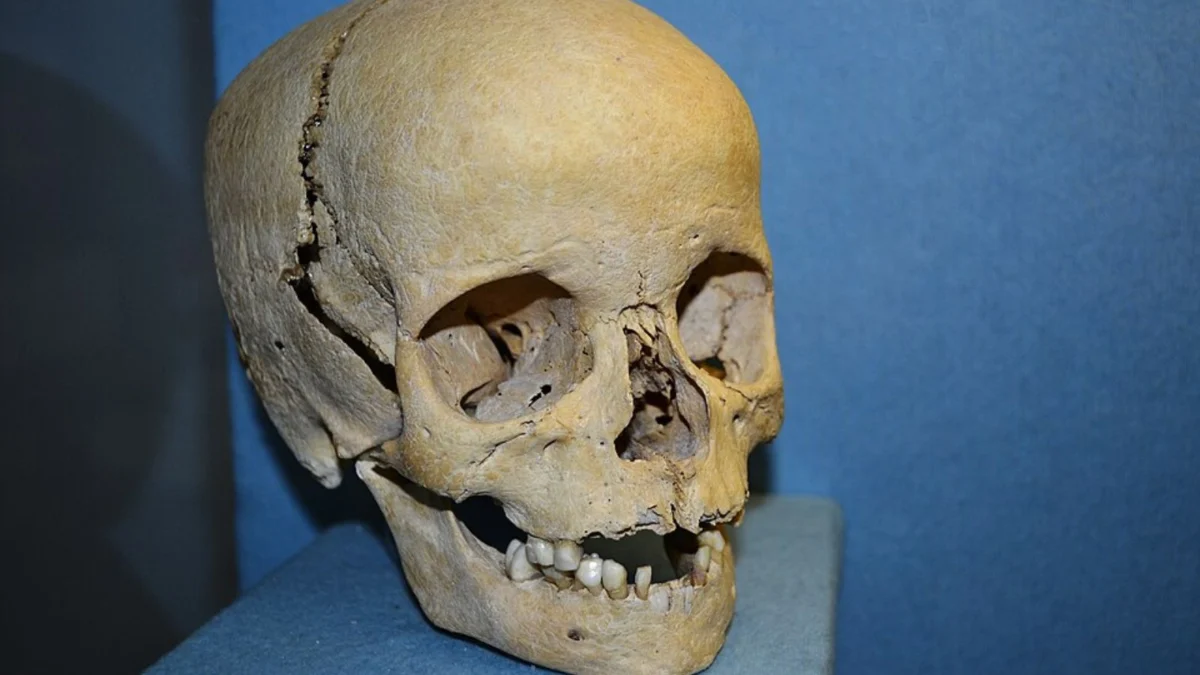
In the rapidly evolving world of influencer marketing, the standard playbook for monetizing a digital audience usually involves a predictable array of products: branded hoodies, minimalist t-shirts, ceramic mugs, and the occasional phone case. However, the creator known as “Horses” has shattered this conventional mold by introducing a product that has left the online community both baffled and deeply uncomfortable: an “ethically sourced” real human skull.
Listed on his official storefront for $3,000, the item sits incongruously alongside typical lifestyle merchandise. While the listing claims the remains were obtained through ethical channels, the complete absence of documentation, provenance, or verification methods has ignited a firestorm of ethical questions, legal concerns, and broader debates about the commodification of the deceased in the age of the internet.
The Anatomy of an Unusual Listing
The product page for the human skull is stark in its simplicity. It offers little context beyond a price tag and a set of logistical disclaimers. Potential buyers are warned that each specimen is unique, meaning the skull they receive may vary significantly in coloration, texture, and structural integrity compared to the studio-quality photograph provided.
The shipping timeline is estimated at three weeks, a stark contrast to the instant gratification typically associated with digital storefronts. Furthermore, the listing is currently marked as “out of stock,” suggesting that even at a premium price point, there exists a niche, albeit controversial, market for such items.
The logistical limitations of the sale further underscore the legal precariousness of the endeavor. The store notes that the skull cannot be shipped outside of the United States, nor can it be delivered to Tennessee, Georgia, Louisiana, Minnesota, or Florida—states that maintain stringent regulations or outright prohibitions regarding the trade of human remains.
A Chronology of the Controversy
The discovery of the listing began with eagle-eyed fans who, while browsing the creator’s site for conventional apparel, stumbled upon the biological item. The revelation quickly migrated to social media platforms, most notably the subreddit r/youtubedrama, where the discourse shifted from mere curiosity to intense scrutiny.
The timeline of this incident reflects a recurring theme in modern creator culture: the blurring of lines between content, business, and provocation. While the influencer has yet to issue a formal statement regarding the specific origin of the skull, the silence has only served to amplify the concerns of his audience.
This incident follows a particularly tumultuous week for the creator economy. Earlier, content creator “Mighty Mike Plays” faced severe public backlash after attempting to monetize a $118,000 accidental advertising spend by selling low-effort, AI-generated merchandise. These two events, while distinct, highlight a growing trend where creators are testing the boundaries of what their audiences will accept as “merch,” often disregarding the ethical implications in pursuit of novelty or shock value.
The Murky Ethics of the Bone Trade
The trade of human remains in the United States exists in a complex legal grey area. While federal law generally does not prohibit the private sale of human bones—provided they were not obtained through grave robbing or illegal acts—the market is governed by a patchwork of state-level regulations.
Investigations by organizations such as Reuters have previously shed light on the “body broker” industry, a multi-million dollar sector that often exploits loopholes in the systems meant to manage anatomical donations. These investigations revealed that bodies donated for scientific or educational purposes are frequently sold and resold through private networks, often without the knowledge or consent of the deceased’s next of kin.
When a creator claims a skull is “ethically sourced,” the term is functionally meaningless without a verifiable paper trail. As critics on Reddit pointed out, the historical medical supply chain is rife with instances of remains being sourced from marginalized communities, prisoners, or those in poverty, often during periods where informed consent was non-existent.

“You basically never know now where these bones are coming from,” one commenter noted, articulating the central anxiety of the situation. The lack of transparency from the seller leaves the buyer in a position where they must rely entirely on the creator’s word—a precarious foundation for a transaction involving human remains.
Implications for the Creator Economy
The inclusion of human remains in a merchandise catalog raises significant questions about the responsibility of creators toward their audiences. As influencers transition from entertainers to business moguls, the standards of conduct, sourcing, and ethical oversight are being forced to evolve.
1. The Erosion of Brand Safety
For brands looking to partner with creators, the “Horses” incident serves as a cautionary tale regarding brand safety. When a creator’s storefront includes items that push the boundaries of social taboos, it creates an environment that is unpredictable and potentially damaging to associated sponsors. The normalization of selling human remains could lead to a decline in professional partnerships, as companies seek to avoid the controversy inherent in such unconventional business practices.
2. The Normalization of the Macabre
The commodification of the human body for entertainment or personal profit risks trivializing the sanctity of the deceased. When human remains are presented as a consumer product, the distinction between a historical artifact and a novelty item vanishes. This, in turn, influences the perception of the audience, potentially desensitizing a generation of viewers to the ethical weight of human remains.
3. Legal and Regulatory Pressure
The current state of the trade—where it is legal in most of the US—may be unsustainable if more influencers begin to engage in this market. The scrutiny garnered by this listing could trigger legislative bodies to revisit state laws, potentially leading to a more unified, restrictive framework that bans the private sale of human remains across the country. Such a move would not only affect creators but would also impact the legitimate scientific and educational sectors that rely on anatomical specimens.
Official Responses and Public Sentiment
To date, Horses has remained largely silent on the specific sourcing of the skulls. This lack of communication has been interpreted by many as an admission that the “ethical” label is a marketing tactic rather than a verified claim.
The public reaction, while predominantly characterized by bafflement, has also seen a significant undercurrent of moral objection. While some fans view the act as a form of “dark humor” or a unique aesthetic choice, others have expressed deep concern regarding the dignity of the individuals whose remains are being traded. The discussion has also highlighted the demographic disparity in how remains are sourced, with critics pointing out that the commodification of human bones almost always falls hardest on the historically disenfranchised.
Moving Forward: The Need for Transparency
The situation surrounding Horses and his merchandise store acts as a microcosm of the challenges facing the digital economy. As creators wield increasing influence over consumer habits, the need for transparency in their business practices becomes paramount.
If the creator economy is to mature into a sustainable industry, it must move beyond the "anything goes" approach to merchandising. Whether it is AI-generated art or biological remains, consumers are becoming increasingly aware of the provenance of the goods they purchase. For creators like Horses, the path forward likely involves either providing the necessary documentation to prove the ethical nature of their products or acknowledging that certain items are simply not appropriate for a commercial storefront.
Ultimately, the incident serves as a stark reminder that the digital world, for all its virtual innovations, still operates within the physical and ethical constraints of the real world. As the boundaries continue to be tested, the audience remains the final arbiter—and in this case, the response has been a clear signal that there are some lines that, even in the pursuit of viral fame, should not be crossed.
The “Horses” controversy will likely be studied as a case study in how social media fame can distort traditional moral boundaries. Whether it leads to a change in the creator’s business model or a wider shift in platform policies remains to be seen. For now, the skull remains a silent, if unsettling, monument to the strange intersection of influence and the afterlife.

 Nila Kartika Wati
 Nana Muazin