

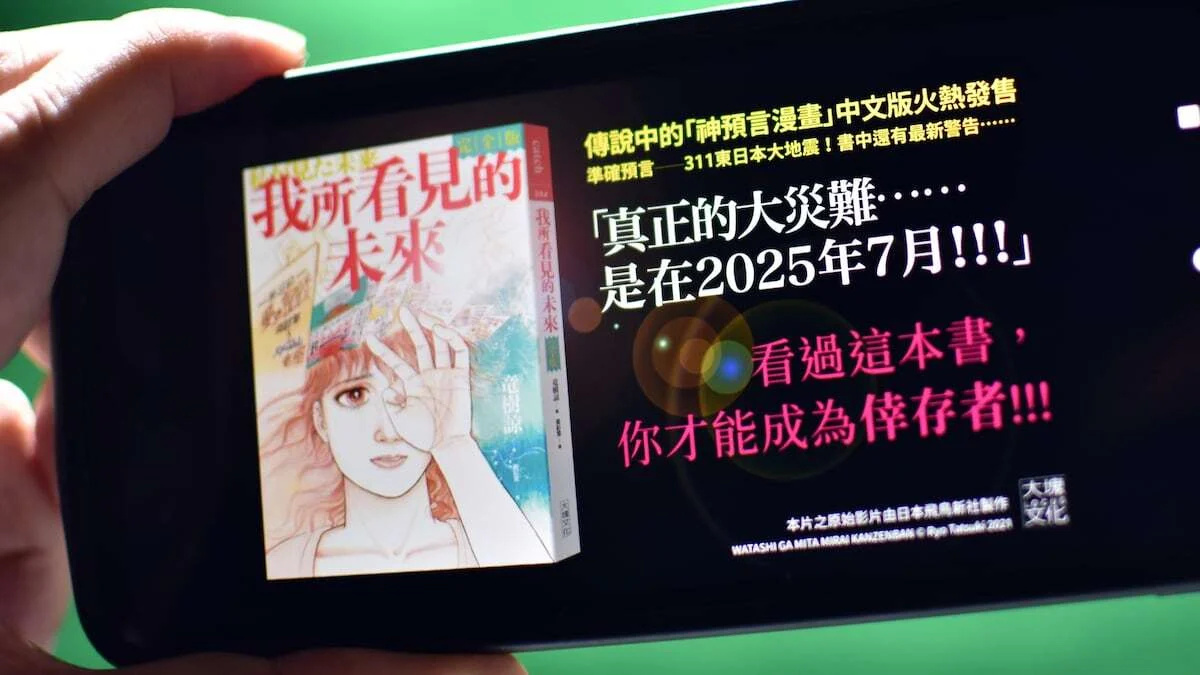
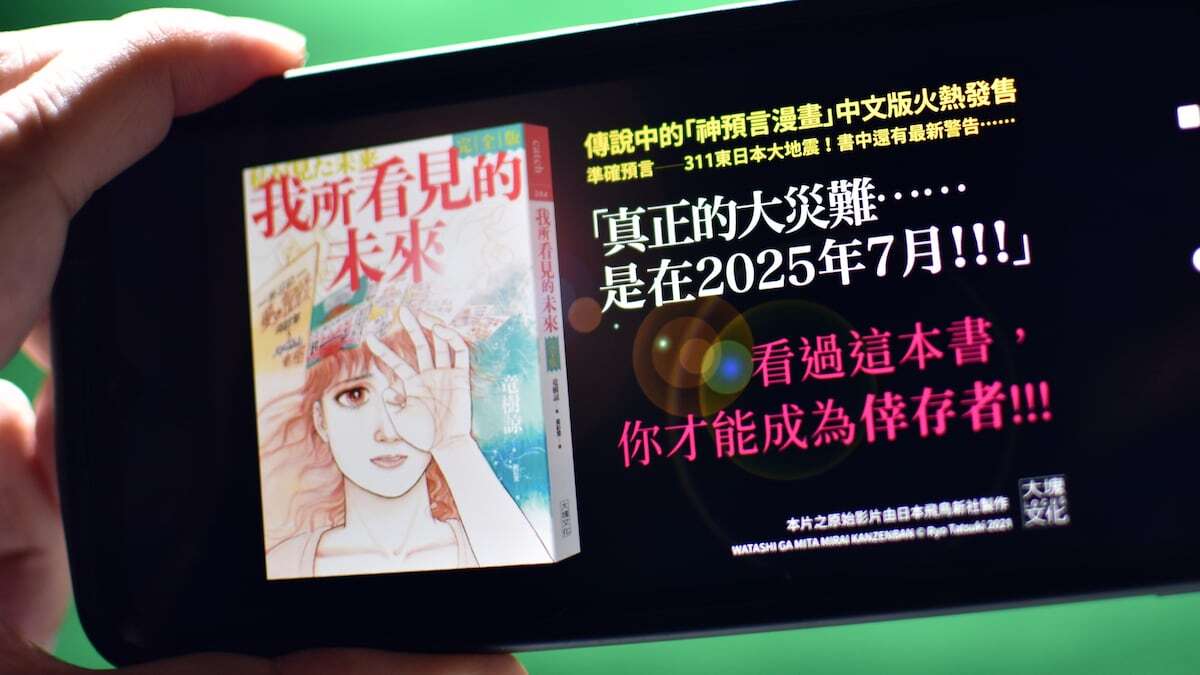
In the intersection of pop culture, superstition, and international economics, an unlikely catalyst has emerged to disrupt Japan’s post-pandemic tourism recovery. For nearly two years, a decades-old manga titled The Future as I See It (Watashi no Mite Kita Mirai) by Ryo Tatsuki has been at the center of a geopolitical and socio-economic storm. Despite the passing of its most dire "prediction" date—July 5, 2025—the ripple effects of the prophecy continue to manifest in measurable declines in tourist arrivals, particularly from Hong Kong, leaving regional Japanese airports and local governments scrambling for a solution.
Main Facts: The Intersection of Fiction and Financial Reality
The phenomenon began with the re-emergence of a 1999 manga volume. Ryo Tatsuki, a retired manga creator, gained legendary status in the early 2010s when internet sleuths noticed that her book’s cover accurately predicted the date of the Great East Japan Earthquake (March 11, 2011). Following a re-release of the book in 2021, Tatsuki shared a new, more terrifying vision: a massive earthquake and subsequent tsunami originating in the Pacific Ocean, scheduled to strike on the morning of July 5, 2025.
While the Japanese scientific community and the Japan Meteorological Agency dismissed these claims as baseless, the prediction took firm root in the digital consciousness of East Asia. The impact was most pronounced in Hong Kong, where travel agencies and airline carriers reported a significant downturn in bookings for the summer of 2025.
Even now, with the predicted date in the "rearview mirror" and no such disaster having occurred on Japanese soil, the tourism sector remains under pressure. The persistence of the narrative, fueled by social media rationalizations and subsequent seismic events in neighboring regions, suggests that the "Tatsuki Effect" is more than a temporary panic; it is a case study in how unverified digital information can destabilize a multi-billion-dollar industry.
Chronology: From 1999 to the Present
The timeline of this bizarre economic disruption spans over a quarter of a century:
- 1999: Ryo Tatsuki publishes The Future as I See It. The manga is a collection of the author’s dreams, which she claimed were prophetic. The book initially sees modest sales and fades into obscurity.
- March 2011: Following the devastating 9.0 magnitude earthquake and tsunami in Tohoku, the manga gains "cult" status online after readers notice a note on the 1999 cover that mentions a "Great Disaster in March 2011."
- 2021: A "Complete Edition" of the manga is published by Asahi Shimbun Publications. In this edition, Tatsuki details a new dream involving a "Great Disaster" occurring on July 5, 2025, at 4:18 AM. She describes a massive wave, much larger than the 2011 tsunami, hitting the Pacific coast of Japan.
- Early 2024 – Mid-2025: The prediction goes viral on platforms like TikTok, Weibo, and YouTube. Travel forums in Hong Kong and Taiwan begin seeing "cancellation threads" where travelers express fear of visiting Japan during the "danger window."
- July 5, 2025: The date passes without incident in Japan. There is no earthquake, no tsunami, and no national emergency.
- Late July 2025: An 8.8 magnitude earthquake occurs in a remote region of Russia on July 30. Despite the distance and the three-week discrepancy, internet theorists begin claiming this "validated" Tatsuki’s July prediction, keeping the fear alive in digital circles.
- August 2025: Regional Japanese airports, specifically Takamatsu Airport, report that tourism numbers from Hong Kong have failed to rebound to pre-prediction levels, prompting official concern from local governments.
Supporting Data: The "Hong Kong Gap" and Regional Disparity
While major hubs like Tokyo’s Narita and Osaka’s Kansai International Airport have seen a general surge in global tourism due to the weak yen, regional gateways have not been so fortunate. Data from Takamatsu Airport in Kagawa Prefecture highlights a worrying trend.
Historically, Hong Kong has been a vital source of tourism for the Shikoku region. Before the prediction gained traction, Hong Kong tourists accounted for a significant percentage of international arrivals at Takamatsu. However, city council meetings held in late August 2025 revealed that flight occupancy from Hong Kong remains stagnated.
The "Hong Kong Gap" is attributed to several factors:
- Cultural Susceptibility: Market analysts suggest that travelers from Hong Kong and parts of mainland China are more statistically likely to adjust travel plans based on "feng shui," fortune-telling, or prophetic warnings compared to Western tourists.
- The Russia Earthquake Anomaly: The July 30 earthquake in Russia served as a "confirmation bias" tool. According to social media sentiment analysis, roughly 35% of discussed content regarding the "Tatsuki Prophecy" shifted from "it didn’t happen" to "it happened nearby/late," sustaining a climate of caution.
- Economic Context: While the manga is a primary driver, the decline is also compounded by the broader economic cooling in the Chinese real estate market, which has reduced the disposable income of some frequent travelers.
Official Responses: Airports and Local Governments
The Japanese government and regional business leaders have moved from amusement to active damage control.
At a recent city council meeting, representatives from Takamatsu Airport expressed frustration over the lingering impact of the manga. "We are seeing a disconnect between the reality of Japan’s safety and the perception held by a specific segment of our international market," an airport spokesperson noted. To combat this, the airport has announced a series of new initiatives, including:
- Targeted Promotions: High-budget marketing campaigns in Hong Kong featuring influencers and travel vloggers to showcase the safety and stability of the region.
- Safety Transparency: Collaborative efforts with seismic experts to provide real-time, science-based safety data to prospective travelers.
- Diversification: An attempt to pivot marketing efforts toward Southeast Asian markets (like Singapore and Thailand) to reduce dependency on the Hong Kong demographic.
Public sentiment within Japan remains divided. In online forums such as SoraNews24, Japanese citizens have expressed everything from sympathy for the businesses to anger at the mangaka. One commenter noted, "Someone made a profit by predicting a disaster without any basis. The affected businesses have a right to seek compensation." Others, however, viewed the decline as a potential relief from "over-tourism," suggesting that a "calm down" period might benefit local infrastructure.
Implications: The Power of "Narrative Contagion"
The Ryo Tatsuki incident reveals several deep-seated implications for the future of international tourism and disaster management.
1. The Vulnerability of Regional Economies
The fact that a single comic book could impact the flight schedules of a regional airport underscores the fragility of tourism-dependent economies. Unlike Tokyo, which has a diverse "brand" that can withstand localized rumors, regional Japan relies on specific "safe" and "serene" imagery. When that imagery is replaced by visions of apocalyptic waves, the economic fallout is immediate.
2. The Persistence of "Alternative Facts"
The July 30 Russian earthquake serves as a textbook example of how conspiracy theories and prophecies evolve to survive debunking. In the digital age, a failed prophecy is rarely admitted as a failure; instead, the parameters are shifted. For the tourism industry, this means that "disproving" a rumor is no longer enough to win back consumer confidence.
3. The Need for "Psychological Crisis Management"
Traditionally, disaster management in Japan focuses on physical infrastructure—seawalls, early warning systems, and earthquake-resistant buildings. However, this incident suggests a need for "psychological infrastructure." Governments may need to develop strategies to counter "narrative contagion" or viral misinformation that can cause economic damage even in the absence of a physical event.
4. Ethical Responsibility of Creators
The debate over Ryo Tatsuki’s responsibility highlights a growing concern regarding the real-world impact of "occult" or "prophetic" media. While freedom of expression is paramount, the commercialization of disaster predictions—especially those that name specific dates—raises ethical questions when those predictions lead to measurable financial loss for third parties.
Conclusion: Navigating a Post-Prophecy Landscape
As Japan moves further into the latter half of 2025, the shadow of The Future as I See It is expected to lengthen before it finally fades. The "Tatsuki Effect" serves as a stark reminder that in a hyper-connected world, the lines between fiction and reality are increasingly blurred. For the tourism officials at Takamatsu Airport and beyond, the challenge is no longer just maintaining runways and terminals, but managing the invisible currents of internet-driven fear.
Japan remains one of the world’s safest and most prepared nations regarding seismic activity. However, as the 2025 prophecy saga demonstrates, sometimes the most difficult "disasters" to manage are not the ones that happen under the earth, but the ones that take root in the human imagination. Success in the coming years will depend on Japan’s ability to replace the "manga narrative" with a renewed story of resilience, hospitality, and undeniable reality.











No comments yet. Be the first to join the conversation!