Evan Lee Salim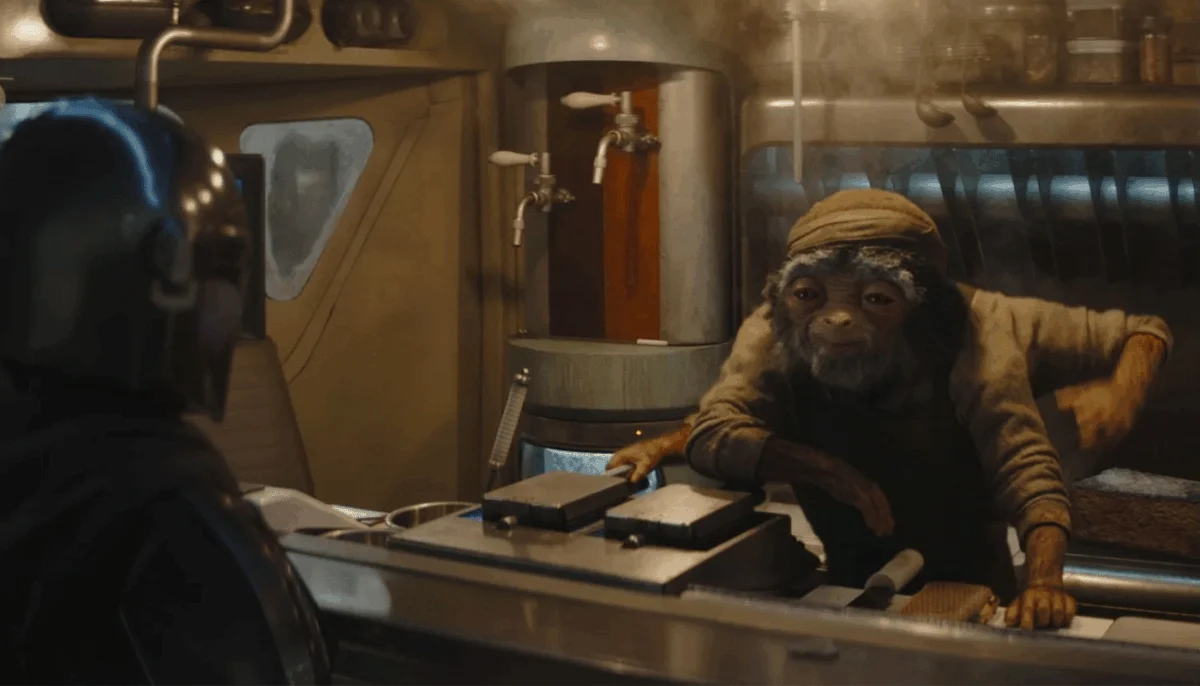
When the first trailer for The Mandalorian and Grogu dropped, sending ripples of disbelief through the Star Wars fandom, the collective internet reaction wasn’t focused on the titular bounty hunter or his Force-sensitive ward. It was a singular, stunned question: “Was that Martin Scorsese?”
The answer, as it turned out, was an emphatic yes. The legendary director, a man whose name is synonymous with the cinematic language of the American mob and the internal strife of the Catholic soul, had stepped into the galaxy far, far away. This appearance wasn’t just a fun cameo; it was a reminder that for all his mastery behind the camera, Scorsese has spent decades quietly building a parallel career as a character actor. While the world celebrates his contributions to the history of film, his own work in front of the lens—ranging from blink-and-you-miss-it appearances to substantive, scene-stealing performances—offers a fascinating, if under-discussed, look at the man himself.

In this retrospective, we examine the evolution of Scorsese the performer, steering clear of his self-referential cameos in his own masterworks—though the meta-commentary he provided in Killers of the Flower Moon and the raw, kinetic energy of his Taxi Driver appearance remain benchmarks of his range. Instead, we are looking at the times Scorsese took on a persona, playing a "real" character, and how he consistently navigated the tension between truth, lies, and the crushing weight of public performance.
The Chronology of a Character Actor
Scorsese’s acting filmography is not a resume of a man seeking the limelight; rather, it is the work of a director who knows exactly how to inhabit a space. His career as a performer is marked by a recurring thematic preoccupation: the "talker." Across almost all his roles, his characters exist in a state of moral compromise. They are men who must choose between spilling secrets that could save their own skins or maintaining a facade of integrity.

The Accountant: Search and Destroy (1995)
In the pantheon of 90s independent cinema, Search and Destroy occupies a strange, forgotten corner. Yet, it serves as an early example of Scorsese’s ability to inject life into a singular, fleeting scene. Playing an exhausted, beleaguered IRS agent, Scorsese leans into the "everyman" frustration that would eventually define his more comedic, self-deprecating roles. It is a minor performance, but one that highlights his inherent understanding of cinematic pacing—he knows exactly how long a scene needs to breathe before the punchline lands.
Goodley: ‘Round Midnight (1986)
Bernard Tavernier’s jazz masterpiece, ‘Round Midnight, offered Scorsese a chance to stretch his legs as a club owner and booker. Here, the moral ambiguity of his work begins to sharpen. His character, Goodley, is a man who monetizes genius, balancing his appreciation for Dexter Gordon’s Dale Turner with the cold, hard requirements of the nightlife industry. His motor-mouthed monologue about the superiority of New York over Paris remains one of the most electric, albeit brief, displays of his natural, rapid-fire cadence.

Martin Scorsese: The Studio (2025)
In the Apple TV series The Studio, Scorsese plays a heightened version of himself, navigating the absurdity of modern studio politics. The performance is a masterclass in controlled hysteria. Whether he is breathlessly pitching a bizarre Jim Jones cult film or spiraling into a performative breakdown upon hearing his project has been shelved, he displays a willingness to be the butt of the joke that is both refreshing and deeply self-aware.
Sykes: Shark Tale (2004)
Perhaps the most jarring entry in his filmography, Shark Tale sees Scorsese providing the voice for a puffer fish in a mob-run underwater society. While the film itself is a strange, genre-defying anomaly in children’s media, Scorsese’s performance as a spineless, panic-stricken manager is undeniably entertaining. His ability to channel his classic "wise-guy" persona into a creature-feature context is a testament to the versatility of his vocal delivery.

Hugo Durant: The Mandalorian and Grogu (2026)
Returning to the Star Wars universe, Scorsese’s portrayal of Hugo Durant, an Ardennian food truck owner, is a subtle nod to his own history. Like many of his characters, Durant is a small-time operator caught in the gears of organized crime. He attempts to play it cool, but the classic Scorsese stammer—the verbal dance of a man who knows he is saying too much while trying to say nothing—is on full display. It is a vibrant, textured performance that elevates the world-building of the Star Wars universe.
The Masterpiece: Akira Kurosawa’s Dreams (1990)
If there is one role that justifies the existence of a "Scorsese Acting Retrospective," it is his portrayal of Vincent Van Gogh in Akira Kurosawa’s Dreams. The casting of an American auteur as a Dutch post-impressionist in a Japanese film directed by a giant of world cinema is the kind of artistic collision that shouldn’t work, yet it is profoundly, almost hauntingly, perfect.

Scorsese captures the frenetic, desperate energy of a man who sees the world with such clarity that it becomes a burden. In the vignette "Crows," his Van Gogh is not a caricature of the "mad artist," but a focused, driven professional. He barks at the visitor, "Why aren’t you painting?" with a sense of urgency that transcends language. It is a moment of pure, distilled artistic philosophy. Behind-the-scenes footage reveals that Scorsese was juggling the post-production of Goodfellas while memorizing his lines for this role—an irony that seems to have only added to the frantic, visionary intensity he brought to the screen.
Supporting Data: The Anatomy of a Performance
When analyzing Scorsese’s acting, critics often point to his "naturalism." Unlike actors who rely on physical transformation, Scorsese relies on his own internal tempo. Data from his appearances suggests a clear correlation between his best-received performances and his ability to subvert his own "New York tough" image.

| Film/Show | Role | Year | Genre |
|---|---|---|---|
| ‘Round Midnight | Goodley | 1986 | Drama |
| Dreams | Van Gogh | 1990 | Fantasy |
| Guilty by Suspicion | Joe Lesser | 1991 | Historical Drama |
| Quiz Show | Martin Rittenhome | 1994 | Drama |
| Shark Tale | Sykes | 2004 | Animation |
| The Mandalorian | Hugo Durant | 2026 | Sci-Fi |
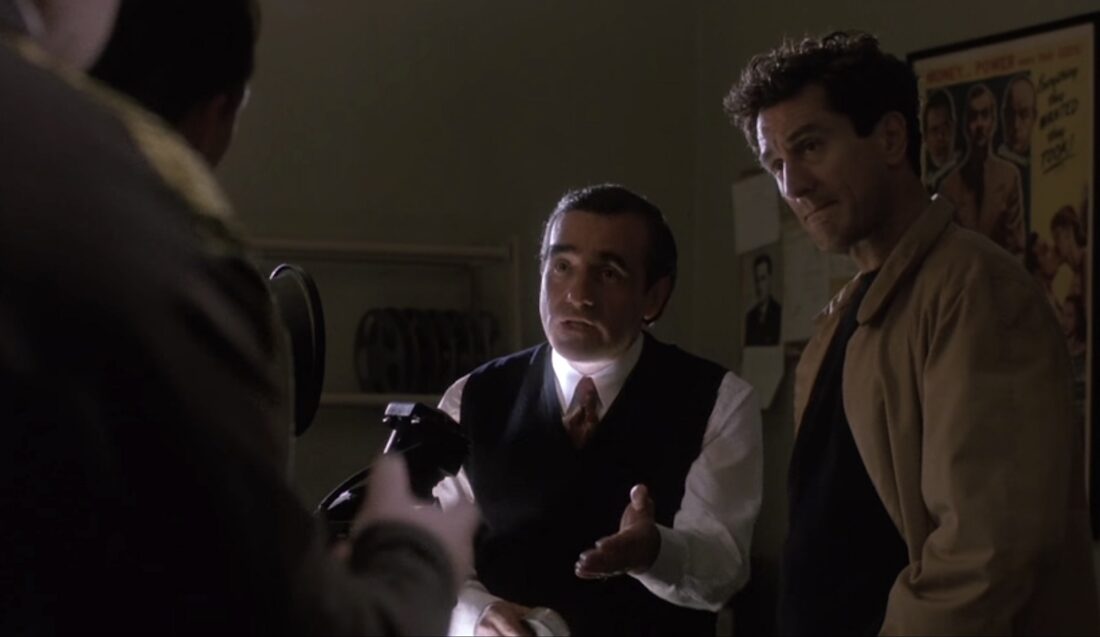
His performance as Joe Lesser in Guilty by Suspicion remains a critical standout. Tasked with portraying a director fleeing the House Un-American Activities Committee (HUAC), Scorsese delivers a performance stripped of all affectation. It is a sobering, ebullient, and ultimately tragic turn that forces the audience to confront the reality of the blacklisting era.
Official Responses and Industry Reception
The industry has generally treated Scorsese’s acting endeavors with a mix of surprise and admiration. While he has never sought accolades for his screen work, his peers have frequently noted his ability to provide exactly what a scene requires without the "ego" often associated with big-name directors-turned-actors.

In a 1994 interview regarding Quiz Show, Robert Redford famously remarked that Scorsese’s presence in the film was the "anchor" the scenes needed. "He doesn’t act," Redford noted. "He just exists in the space you give him, and he fills it completely."
Implications for the Future
What does this long, eclectic career in front of the camera tell us about Martin Scorsese? It confirms what his films have always hinted at: he is a man deeply fascinated by the performance of life. Whether it is a mob boss, a tortured artist, or a space-faring food truck operator, Scorsese is interested in how people present themselves to the world when the walls are closing in.
As he continues to take on roles, we are witnessing the evolution of an artist who refuses to be static. His acting career is not a hobby; it is an extension of his directorial vision. It is a laboratory where he tests the limits of the persona, the truth of the word, and the power of the frame.
Whether we see him next in a blockbuster or an obscure indie, one thing is certain: when Martin Scorsese steps into the light of the camera, he brings with him a lifetime of observing the human condition. And for that, we are all the better—and perhaps a little more intrigued—for the show.


 Raul Delapena Setiawan
 Nila Kartika Wati