

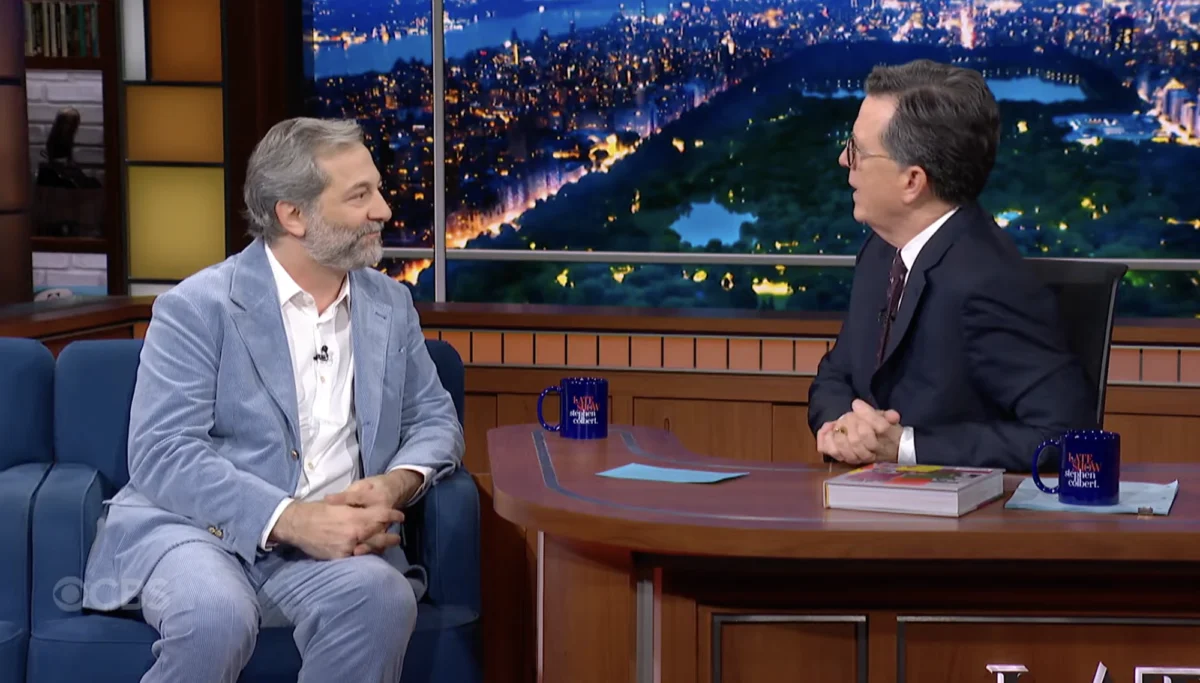
As the digital age continues to reshape the landscape of American media, the traditional late-night talk show—a fixture of the cultural zeitgeist for over half a century—finds itself at a crossroads. The recent, abrupt shuttering of CBS’s The Late Show with Stephen Colbert has sent shockwaves through the industry, prompting a poignant, high-profile defense from one of Hollywood’s most influential voices: Judd Apatow.
In a recent, earnest essay published in Rolling Stone, the Freaks and Geeks creator and renowned filmmaker articulated a fervent argument for the preservation of the late-night institution. Apatow’s tribute arrives at a moment of profound transition, serving as both a eulogy for the legacy of the franchise—which traces its roots back to David Letterman—and a clarion call for the survival of a format he views as essential to the American consciousness.
The Cultural Significance of the "Desk and the Band"
For Apatow, late-night television is more than just a delivery system for celebrity interviews and light comedy; it is a vital public square. Growing up, the ritual of tuning in to various hosts served as a formative education in world events, political discourse, and emotional processing.
"We watched Letterman talk about 9/11. We went through political events through the eyes of these people," Apatow wrote. He emphasized the "Herculean" task faced by hosts like Stephen Colbert, Jimmy Kimmel, Jimmy Fallon, and Seth Meyers. According to Apatow, the ability to synthesize the day’s most harrowing news into an eleven-minute monologue that finds a way to make the audience laugh is a form of public service. It is a balancing act of dark subject matter and necessary catharsis that has, for generations, provided a sense of stability in a chaotic world.
Apatow’s appreciation for the genre is deeply rooted in his own professional history. His tenure working on The Larry Sanders Show—Garry Shandling’s masterful satire of the industry—gave him a unique vantage point on the "backstage machinations" of the late-night machine. "Garry had observed all of the backstage machinations of that workplace, and he thought it was the perfect metaphor for life," Apatow noted. "The curtain and what’s behind the curtain… It was a way to talk about human frailty in a hilarious manner."
Chronology of an Institutional Exit
The cancellation of The Late Show represents the end of an era that began when David Letterman moved his operations to CBS in 1993. Over the decades, the slot became synonymous with the network’s brand, surviving industry shifts, ownership changes, and the rise of streaming.
However, the final chapter for Stephen Colbert’s iteration of the franchise moved with startling speed. The final episode aired on May 21, drawing a staggering 6.74 million live-plus-same-day viewers, according to Nielsen preliminary data. This record-breaking audience provided a bittersweet punctuation mark to the show’s history, highlighting that even in its final moments, the program maintained a massive, dedicated following.
The day after the finale, in a move that underscored his passion for the medium, Colbert made a surprise appearance on the local public access program Only in Monroe. Joking about his abrupt transition, Colbert quipped: "It’s been an excruciating 23 hours without being on TV, so I’m grateful to be here on Monroe Community Media, before they also get acquired by Paramount."
The closure arrived just three weeks before David Ellison was set to officially assume control of Paramount. While the timing has led to widespread public speculation, the network has maintained a firm stance regarding the rationale behind the decision.
The Financial vs. Editorial Debate
The narrative surrounding the show’s end is polarized between corporate fiscal responsibility and the tension between talent and ownership. CBS representatives have characterized the shuttering as "purely a financial decision against a challenging backdrop in late night," explicitly denying that the move had any connection to the show’s ratings, content, or the internal politics of Paramount Global.
Critics and observers, however, have found it difficult to divorce the decision from the climate of the industry. The cancellation occurred just days after Colbert publicly referred to Paramount Global’s $16 million settlement regarding a lawsuit involving Donald Trump as a "big fat bribe."
This public critique added a layer of complexity to the narrative, as the audience—and, by extension, figures like Apatow—began to question whether the "challenging backdrop" cited by the network was truly the sole motivator. In his essay, Apatow referenced the broader pressures faced by hosts, pointing to Jimmy Kimmel’s past suspensions and the resulting public outcry as evidence of the ongoing struggle for creative autonomy. "They are going to fight until their last breath to be allowed to express themselves," Apatow asserted.
The Future of the Monologue in a Surveillance State
Apatow’s essay is not merely a look backward; it is a desperate appeal for the future of democratic expression. He acknowledges the common critique that late-night is a dying medium, but he rejects the idea that its utility has diminished.
"I hope one day our country is stable enough that some of the monologues don’t have to be about all the horrifying things that happened that day," he wrote. "But when almost everything that happens is horrifying, you really do need to gather and talk about it."
Apatow’s vision for the future is darkly humorous yet deeply cynical. He expresses a hope that in a future dominated by massive corporate entities—led by what he describes as a "bizarro creature who’s half man, half robot"—those in power will retain a fondness for the late-night format.
"I pray that when all of the entertainment industry is owned by one man in the future… that he likes talk shows," Apatow concluded. "And even if it doesn’t make economic sense, I hope he lets at least one stay on the air."
Implications for the Industry
The departure of The Late Show from the CBS schedule leaves a massive void in the late-night landscape. The implications are three-fold:
- Economic Viability: The network’s insistence that this was a "financial decision" signals a shift in how legacy media views traditional talk formats. As ad revenue moves toward algorithmic digital content, the high overhead of a nightly broadcast with a full band and writing staff is being scrutinized with unprecedented intensity.
- Creative Suppression: The timing of the cancellation in relation to Colbert’s political commentary has reignited a debate regarding the role of late-night hosts as political commentators. If networks become increasingly risk-averse regarding their talent’s political speech, the biting, satirical nature of late-night may be permanently neutered.
- Audience Fragmentation: With 6.74 million people tuning in for the finale, it is clear the audience for these shows has not vanished; rather, the business model that sustains them is fracturing. The challenge for future entertainment executives will be determining whether these programs can exist in a "leaner" format without losing the cultural resonance that Apatow so fiercely defends.
As the industry pivots toward the era of David Ellison’s Paramount, the fate of the late-night monologue remains a bellwether for the health of American cultural discourse. Whether the "desk and the band" can survive the transition into a post-broadcast world remains to be seen, but as Judd Apatow suggests, the need for a communal space to process the absurdities of daily life has never been greater. The curtain may have fallen on The Late Show, but the debate over what that exit signifies for the future of free speech and entertainment is only just beginning.









No comments yet. Be the first to join the conversation!