
 Neng Nana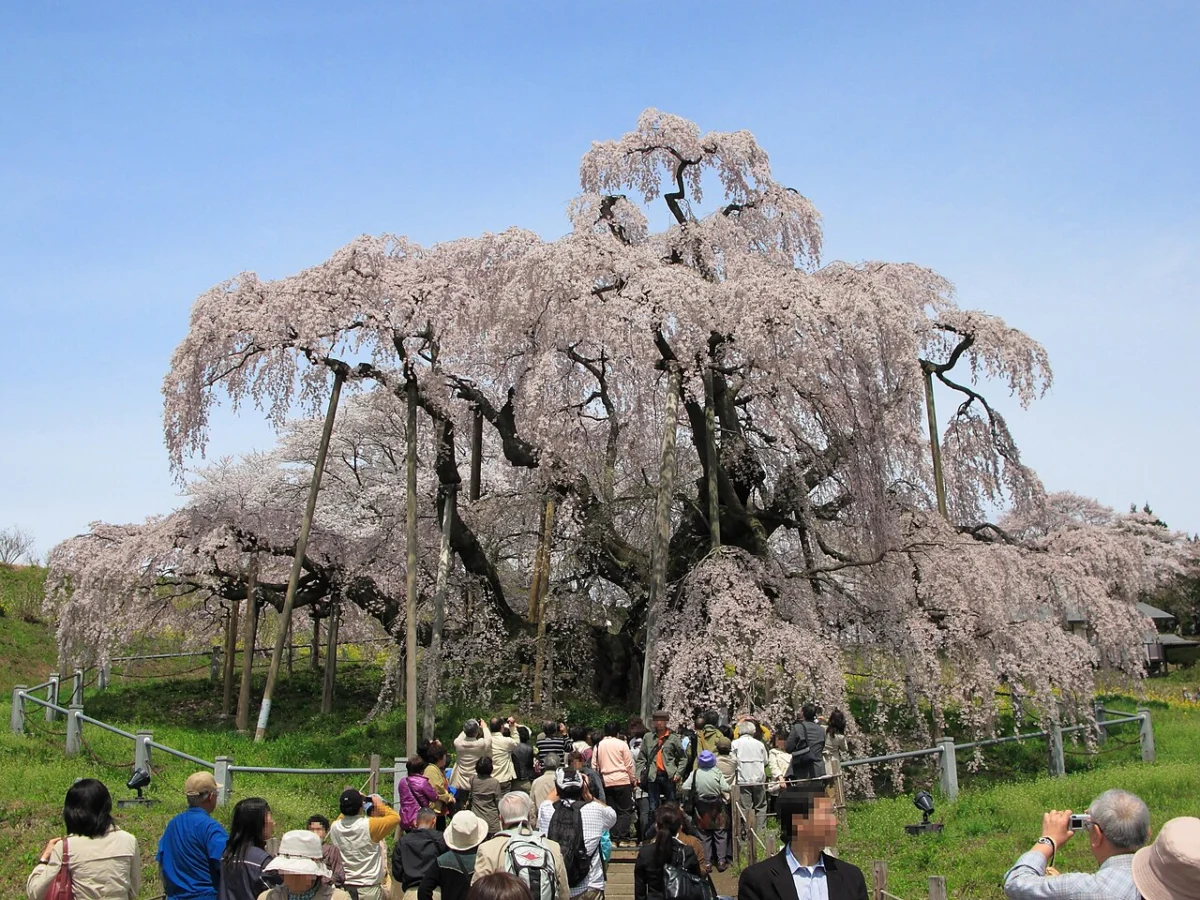
In the heart of Fukushima Prefecture, where the rolling hills of the Abukuma highlands meet the rural tranquility of Tohoku, stands a living monument that has witnessed forty generations of Japanese history. The Miharu Takizakura—literally the "Miharu Waterfall Cherry Tree"—is not merely a botanical specimen. It is a cultural monolith, a centerpiece of the Japanese spring, and one of the "Three Great Cherry Trees of Japan."
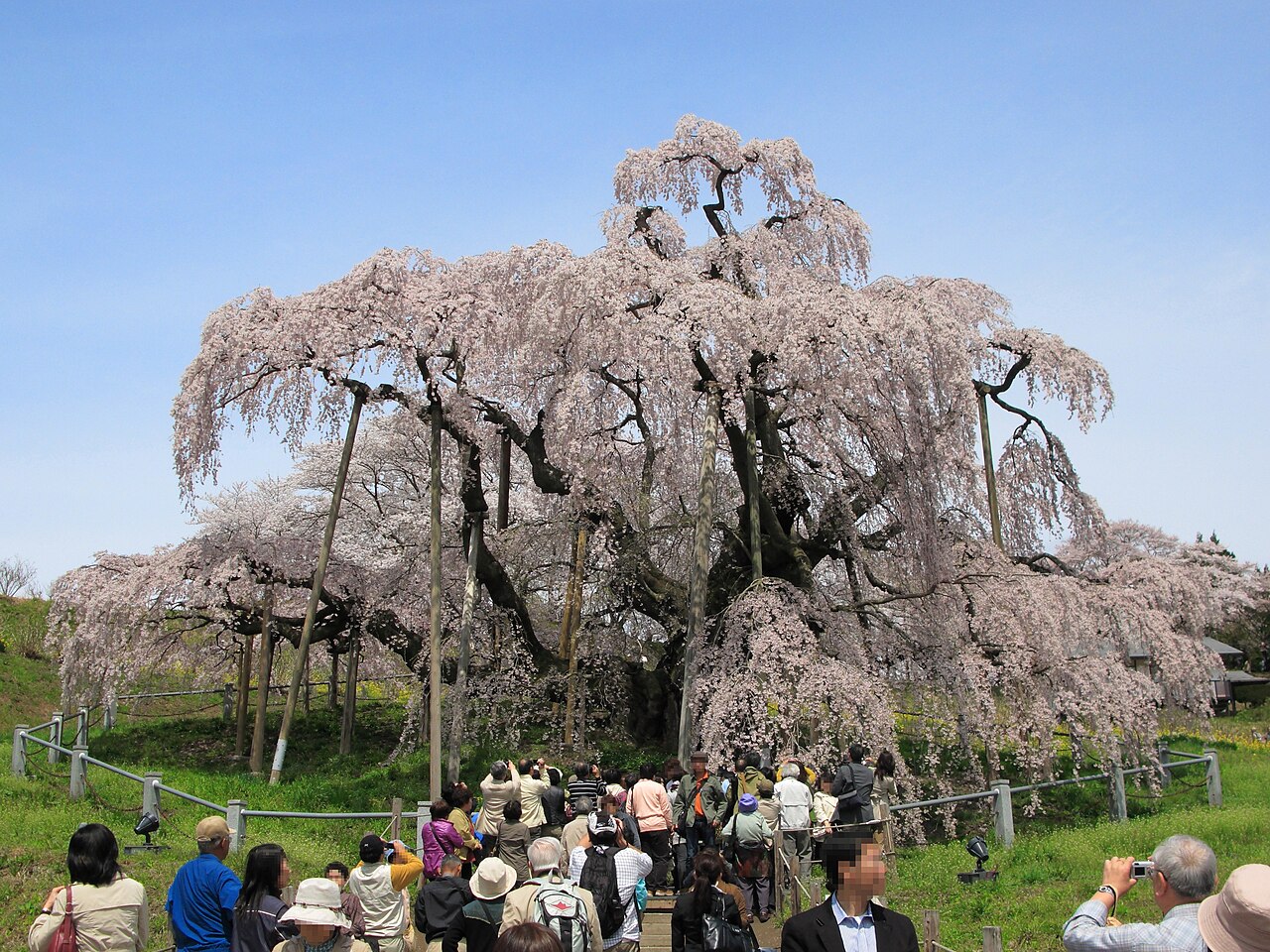
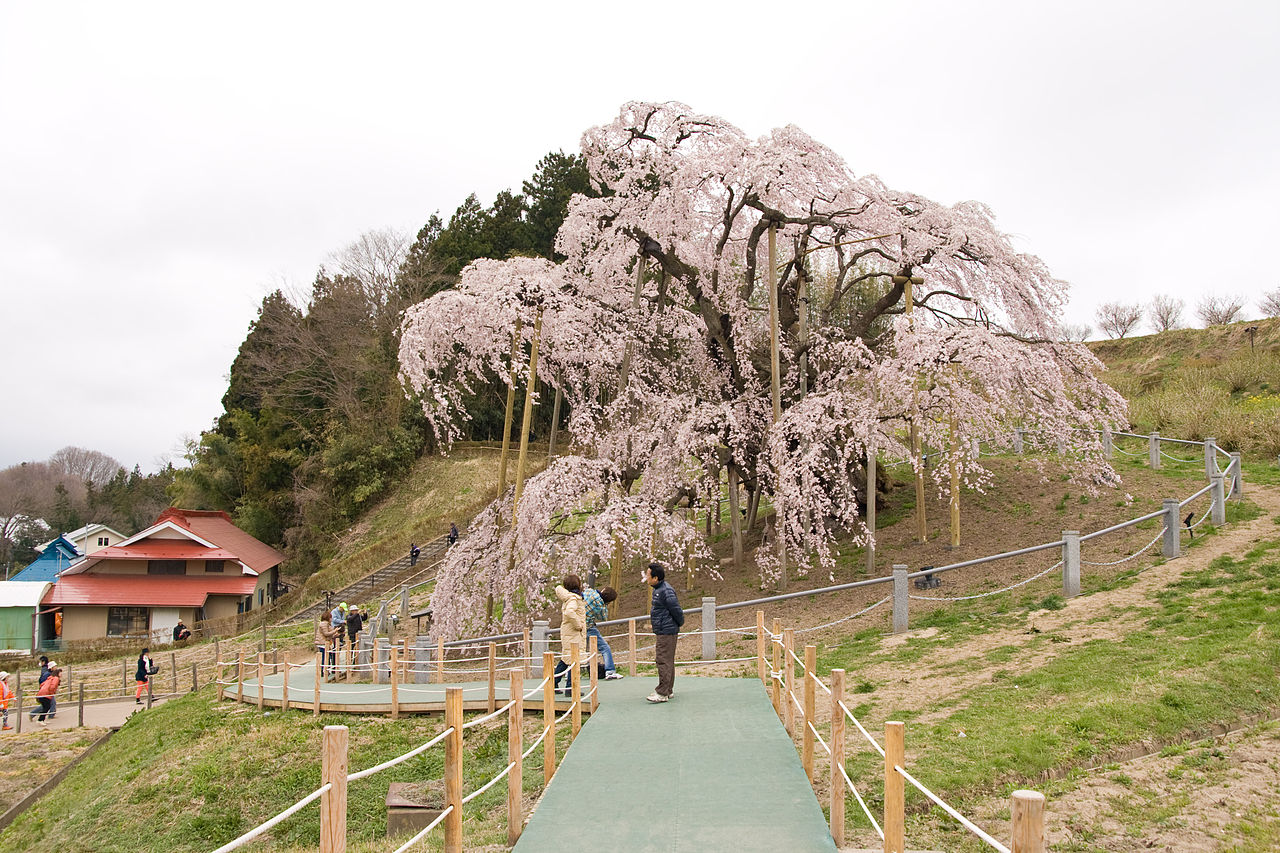
When the blossoms reach their peak in mid-April, the tree transforms into a cascading curtain of soft, vibrant pink, standing over 13 meters tall with a branch spread that eclipses a tennis court. For those who make the journey, the sight is less of a sightseeing stop and more of a pilgrimage.
Main Facts: The Anatomy of a Legend
The Miharu Takizakura is a venerable beni-shidare (red weeping cherry) of the Prunus pendula species. Unlike the Somei-yoshino—the iconic, pale-pink, short-lived cherry trees that populate Tokyo’s parks—the Takizakura is a survivor. While the Somei-yoshino typically lives for approximately 80 years, the beni-shidare is a long-lived cultivar that, when left to its own devices, can endure for over a millennium.
Key Specifications:
- Estimated Age: Over 1,000 years.
- Height: 13.5 meters.
- Trunk Circumference: 8.1 meters (at chest height).
- Branch Spread: 14.5 meters (south), 14.0 meters (west), 11.0 meters (east), 5.5 meters (north).
- Status: Designated a National Natural Monument of Japan on October 12, 1922.
The tree’s striking asymmetry is the hallmark of its history. It has spent ten centuries leaning into the sunlight and shielding itself against the prevailing winds, a physical map of a millennium of weather patterns etched into its very silhouette.
Chronology: A Thousand Years of Resilience
The Takizakura’s history is inextricably linked to the feudal identity of the Miharu-han. During the late Edo period, it was protected as an oya-boku or "official tree," signifying its importance to the local domain.
- 1830s: The poet Kamo no Suetaka immortalized the tree in verse, describing blossoms "reaching to every corner of Oshu." This act of literary canonization solidified the tree’s status in the Japanese cultural imagination.
- 1922: The Japanese government formally recognized the tree’s scientific and cultural significance, granting it the first National Natural Monument designation ever awarded to a cherry tree.
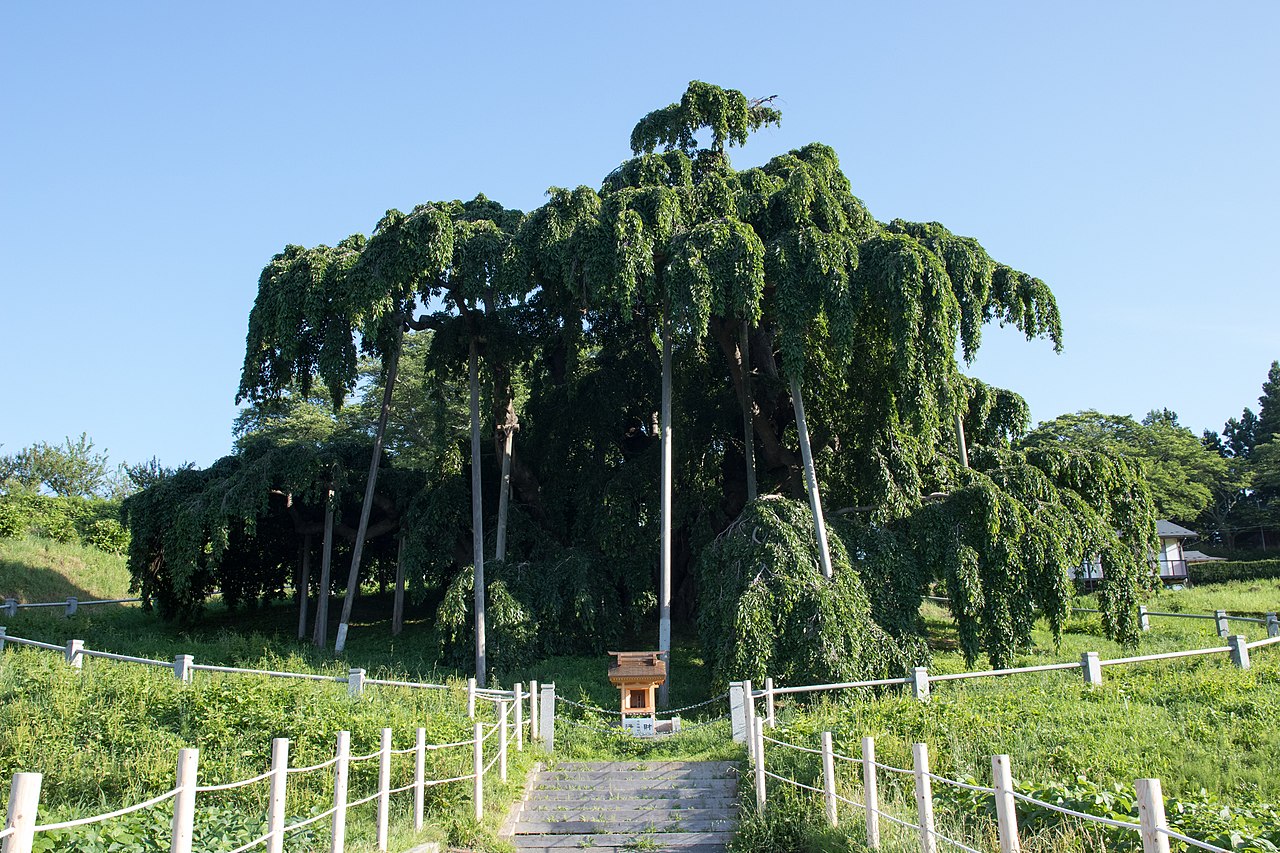
- 1970s: Due to the extreme age and weight of its massive, sprawling branches, the town began installing permanent supporting poles—a necessary intervention to ensure the tree’s continued survival under the strain of its own longevity.
- 2011 to Present: Following the Tohoku earthquake and the Fukushima Daiichi accident, the tree became a symbol of regional endurance. Despite being located in an area that faced significant public concern, the tree remained safe and open to the public, continuing its annual cycle of renewal.
Supporting Data: Understanding the Bloom Window
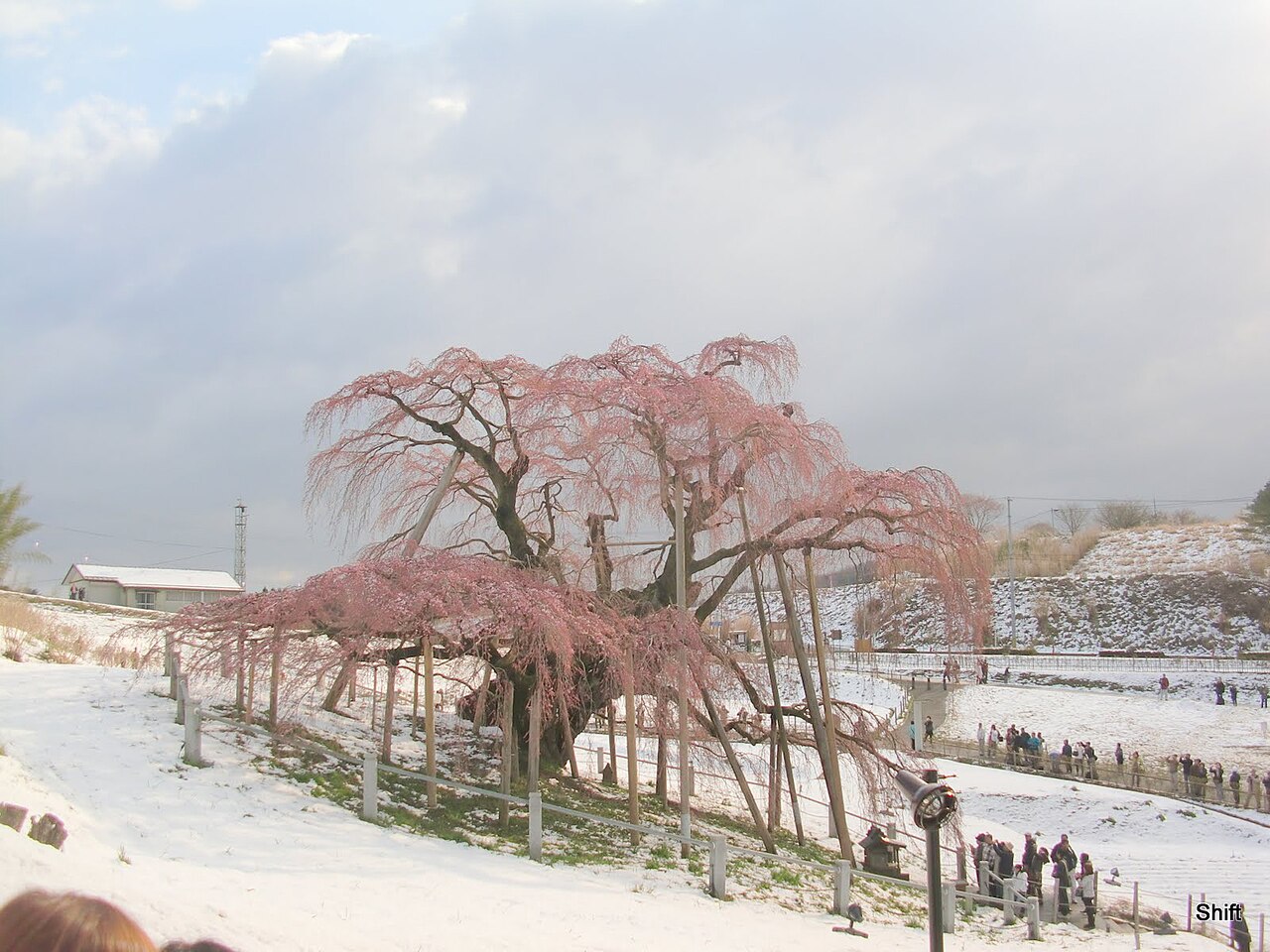
The bloom of the Miharu Takizakura is a volatile event, heavily dependent on the climate of the preceding winter and early spring. The "peak" period typically lasts only ten days.
The Stages of Bloom
- Tsubomi: The bud stage, signaling the approach of spring.
- Saki-hajime: The beginning of the bloom.
- Mankai: Peak bloom (the optimal window).
- Chiri-hajime: The beginning of the blossom fall.
In a standard year, mankai arrives in the third week of April. However, climate variability is a significant factor. In warmer years, it can occur as early as April 10th; in colder years, such as the snowy spring of 2010, the peak can be pushed past April 25th. Visitors are advised to monitor the Miharu Tourism Association’s daily bloom updates, as the timing of this event is as unpredictable as nature itself.
Official Responses and Conservation Efforts
The management of the Miharu Takizakura is a delicate balance between public access and preservation. Because the tree draws between 150,000 and 200,000 visitors during its short bloom window, the local government has implemented strict management protocols.
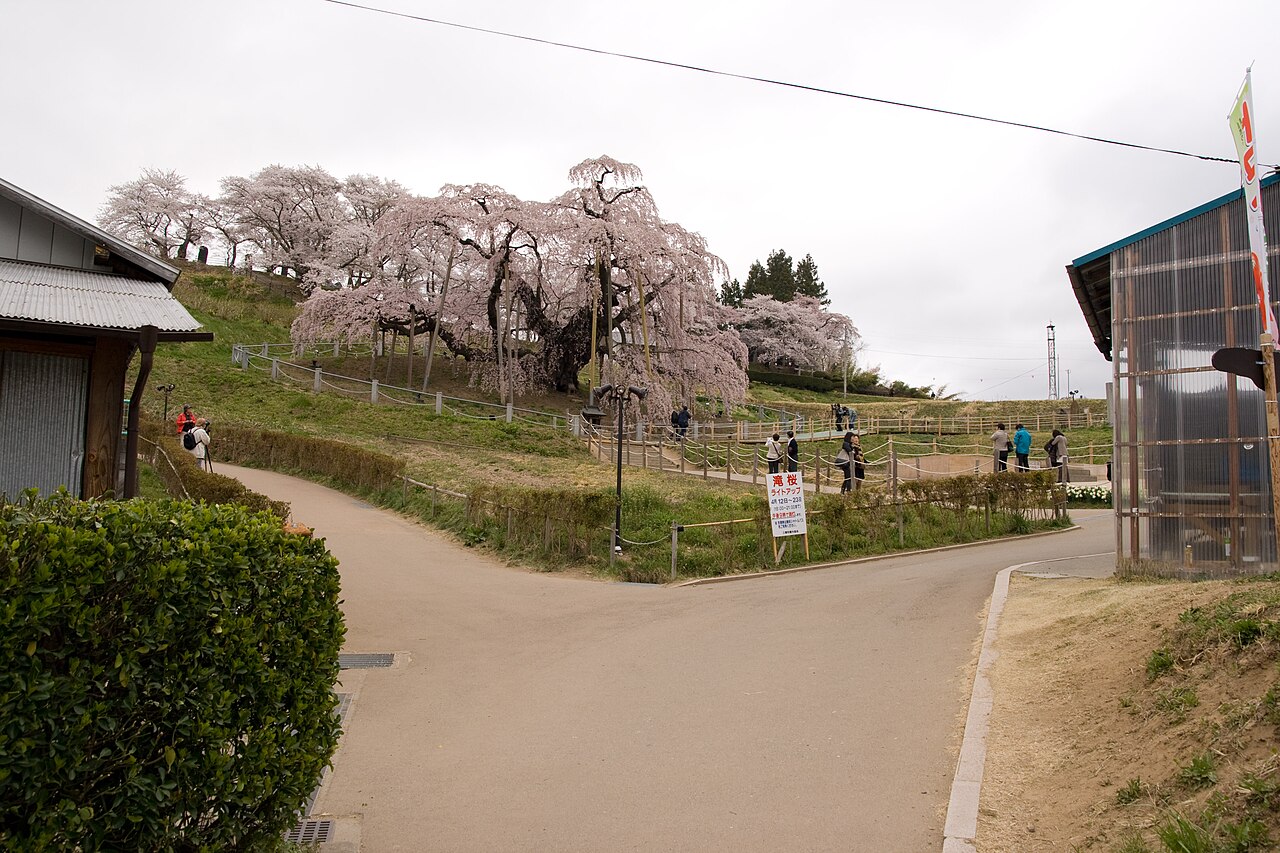
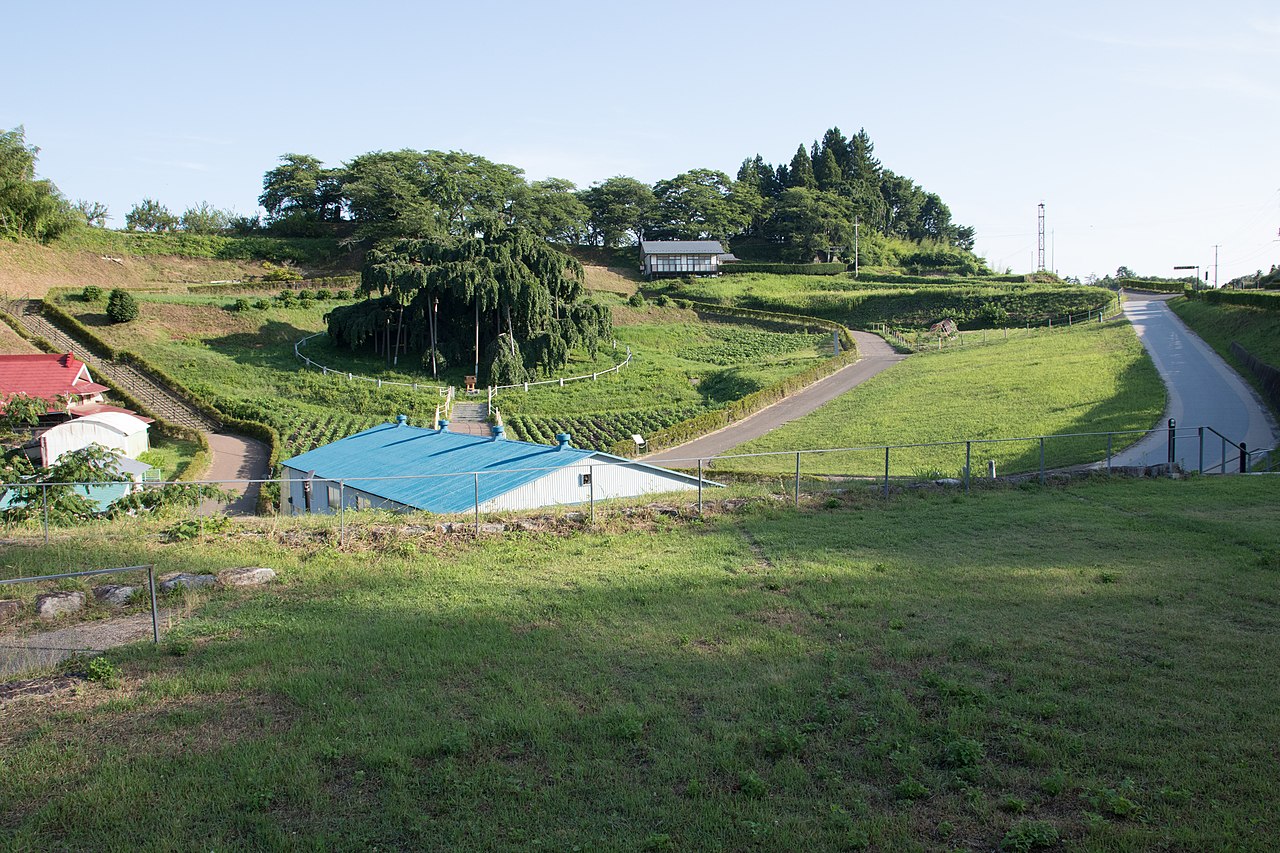
The viewing area is carefully structured to prevent soil compaction near the root zone, which covers an area 11.3 meters in diameter. A one-way walking path ensures that the thousands of daily visitors can circulate without causing bottlenecks or damaging the fragile environment. Furthermore, the tree is under constant monitoring by arborists who manage the supporting structures, ensuring that the heavy branches—some reaching 14.5 meters from the trunk—are adequately braced against the weight of the blossoms and potential late-season snow.
Implications: The Cultural and Economic Impact
A Catalyst for Regional Tourism
Miharu, a town of only 17,000 people, relies on the Takizakura as a primary driver of its spring economy. The event is so significant that it has spawned an entire "Sakura-meguri" (cherry-tour) map, featuring roughly forty other notable cherry trees across the town. This decentralized tourism strategy encourages visitors to look beyond the "headline" tree, distributing the economic benefit across the region and alleviating the extreme pressure on the main site.
The Night Illumination Experience
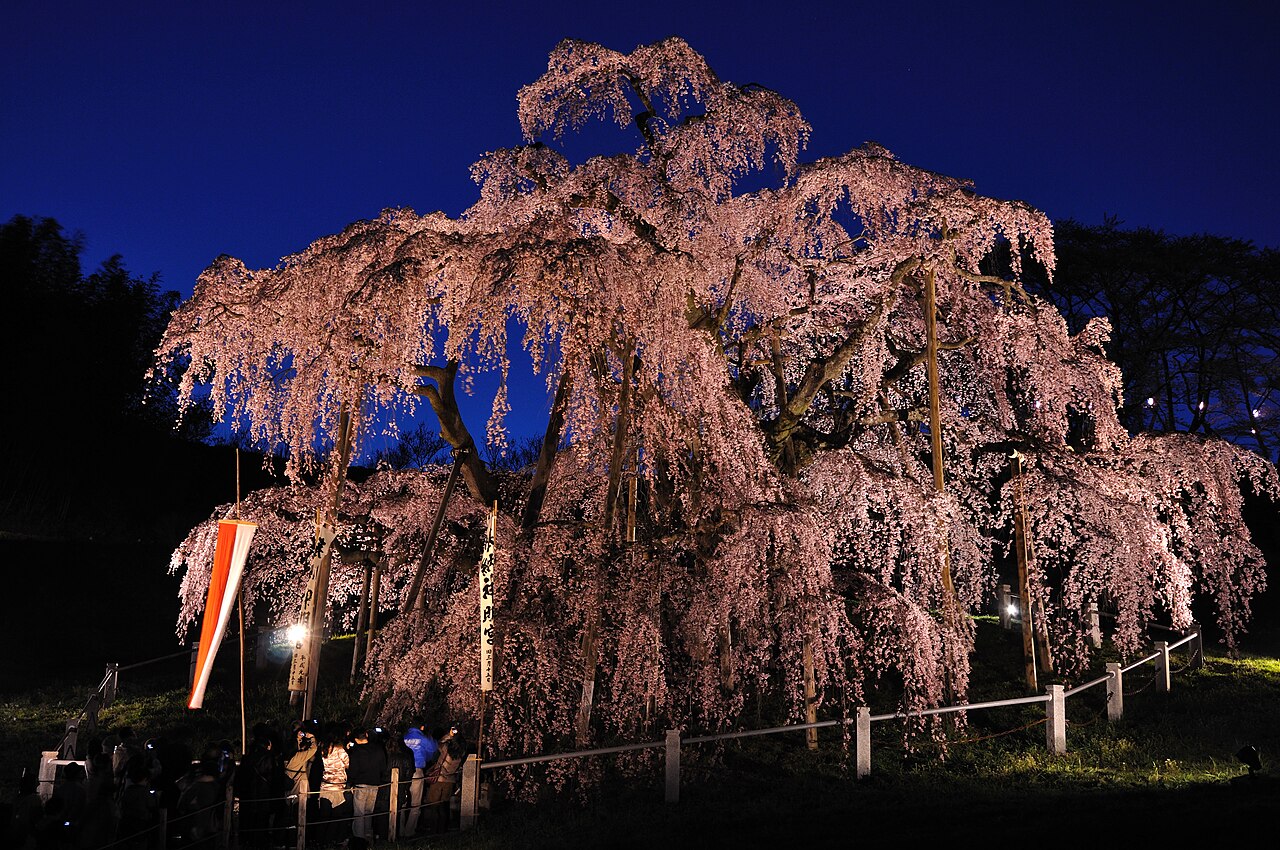
Perhaps the most profound implication of the site’s management is the "light-up" event. By installing low-level, warm-toned lighting behind the tree, officials have created an experience that is fundamentally different from the daytime visit. The illumination shifts the blossoms from their natural soft pink to a dramatic, golden-hued spectacle against the night sky. This allows the tourism association to extend the visitor experience into the evening, effectively doubling the capacity of the site while providing a more intimate atmosphere for photographers and nature enthusiasts.
Contextualizing the Recovery
For visitors, the Miharu Takizakura is also an entry point into understanding modern Fukushima. Nearby facilities like Commutan Fukushima provide a somber, necessary counterpoint to the beauty of the blossoms. By learning about the 2011 earthquake and the subsequent decontamination efforts, visitors gain a more holistic view of the region—one that acknowledges the trauma of the past while celebrating the enduring, natural resilience of the land.
Strategic Advice for the Modern Traveler
If you are planning to witness the Takizakura, strategy is paramount.
- Timing is Everything: Do not plan your trip months in advance without flexibility. If you cannot hit the peak bloom, the tree is simply a large, bare silhouette. Book flexible accommodation in nearby Koriyama (a 12-minute train ride away) and monitor the bloom forecast closely.
- The "Early Bird" Protocol: To avoid the crush of tour buses, aim to be at the site by 7:00 AM. Alternatively, visit during the night illumination (18:00–21:00), when the crowds thin significantly.
- Respect the Scale: Photographs often flatten the tree’s appearance. To truly appreciate its magnitude, you must walk the entire perimeter. The tree changes shape every ten steps. A second lap of the viewing path is almost always more rewarding than the first.
- Beyond the Tree: Do not ignore the Miharu-goma workshops at the Takashiba Dekoyashiki craft village or the quiet beauty of the Miharu Dam and Lake Sakura. The area is rich with Edo-period history that persists long after the last petal has fallen.
Final Assessment
Is the Miharu Takizakura worth the effort? If you are a devotee of natural history, photography, or Japanese culture, the answer is an unequivocal yes. It is not just a tree; it is a millennium of survival, a masterpiece of natural engineering, and a testament to the enduring spirit of the Tohoku region. When you stand beneath that curtain of pink, you aren’t just looking at a plant; you are standing in the presence of history.



 Asro
Asro





