

In Peter Farrelly’s 2018 film Green Book, the narrative arc relied heavily on a tired, antiquated trope: the white protagonist who, through a series of culinary and social "lessons," teaches his Black associate how to navigate the complexities of his own identity. It was a film that felt culturally deaf upon release, a relic of a bygone era of "racial healing" cinema that sought to soothe American anxieties by reducing systemic racism to a series of interpersonal misunderstandings.
Eight years later, director Elegance Bratton’s sophomore feature, By Any Means, attempts to tread similar ground, yet it manages to feel even more regressive. While Green Book used fried chicken as a vehicle for cultural "bona fides," By Any Means opts for something far more sinister: the glorification of ruthless, extrajudicial violence. The film presents a binary where the white man is not just an ally, but a necessary tutor in the art of brutality, suggesting that for a Black man to succeed in the fight against white supremacy, he must shed his "starchier" sensibilities and embrace the cudgel.
A Chronicle of Historical Erasure
The film is set against the backdrop of 1960s Mississippi, a period defined by the visceral terror of the Jim Crow era. It opens with an archival montage of the disappearance of three civil rights workers—two Jewish men and one Black man—who were targeted during the "Freedom Summer" initiative to register Black voters. These images of a nation in search of its lost souls carry weight, grounding the viewer in the stark, unforgiving reality of the era.
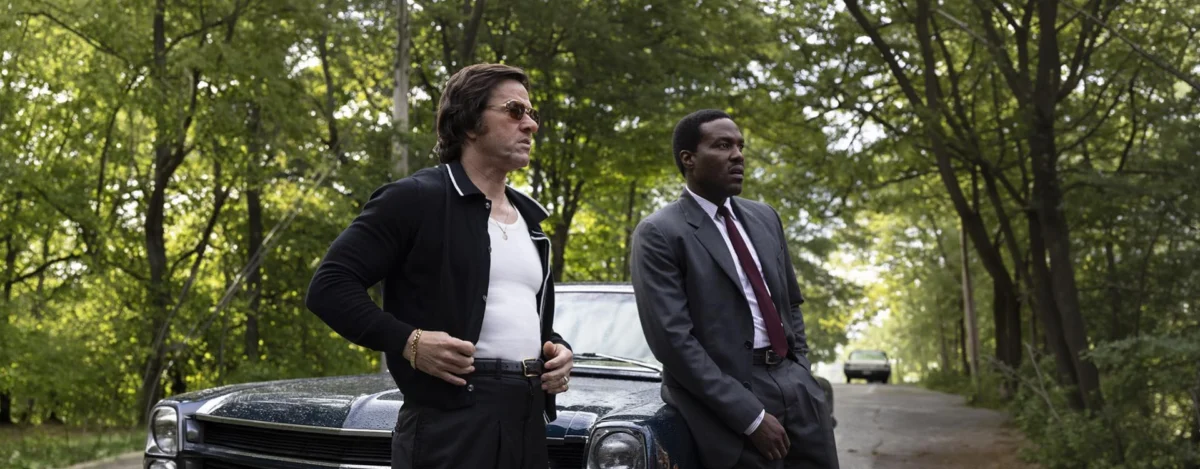
However, the film abruptly pivots from this somber historical context to the grimy, hyper-stylized basement of mob enforcer Greg Scarpa (Mark Wahlberg). With his hair absurdly parted and muscles straining, Scarpa is introduced not as a complex historical figure, but as an action-movie archetype, interrogating a victim by shattering his knees with a baseball bat.
The narrative proceeds as follows:
- The Catalyst: Following the murder of NAACP leader Vernon Dahmer (Giancarlo Esposito) by the Ku Klux Klan, the federal government enters a state of panic.
- The Partnership: FBI Agent Wayne Strider (Yahya Abdul-Mateen II) is paired with the notorious mobster Greg Scarpa.
- The Conflict: The film pits Strider’s commitment to institutional law and order against Scarpa’s "anything goes" methodology.
- The Resolution: Through a series of violent escalations, the film attempts to argue that Scarpa’s brand of lawlessness is the only language the KKK understands, ultimately pressuring Strider to abandon his ethical framework in favor of raw aggression.
The Distortion of "By Any Means Necessary"
The title of the film is a deliberate, and arguably offensive, appropriation of a phrase popularized by Malcolm X. In the historical record, "by any means necessary" was a rallying cry for Black liberation and self-defense against state-sanctioned violence. By transferring this slogan to Greg Scarpa—a white mobster who operates for personal gain and nihilistic thrills—the film performs a crude rewriting of history.
This is exacerbated by the film’s shaky relationship with the truth. While the real Greg Scarpa was a known mob informant for the FBI, the character of Wayne Strider is entirely fictional. There is no historical evidence to suggest such a partnership existed, nor that a Black federal agent of the time would have been mentored by a mob hitman. By manufacturing this connection, the film creates a "White Savior" narrative in reverse: it presents a Black man who can only achieve his goals by adopting the violent, sociopathic tendencies of his white counterpart.
Character Dynamics and the "Buddy Cop" Trap
At its core, By Any Means is a standard-issue mismatched buddy thriller that happens to be set during one of the most violent periods in American history. Strider, a man who has experienced the daily grind of white supremacy, is characterized as a "buttoned-up" federal agent. He is a man of the law, a husband who finds solace in the quiet support of his wife (played by Nicole Beharie, who offers a nuanced performance despite the limited scope of her character).
In stark contrast, Scarpa is portrayed as a caricature of Brooklyn-accented machismo. He is the "id" to Strider’s "superego." The dialogue frequently falls into cringeworthy territory, with Scarpa delivering lines such as, "You’ve got your gun, you’ve got your badge, now you need to grow some balls." It is a script that desperately wants the audience to cheer for its protagonist’s descent into immorality, framing his "temerity" as a necessary evolution rather than a moral failure.
Visual Splendor Amidst Narrative Decay
If there is a redeeming quality to By Any Means, it lies in the cinematography. Elegance Bratton, working with cinematographer Ante Cheng, displays a remarkable eye for beauty that is frequently at odds with the ugliness of the script. The film is undeniably gorgeous; the way sunlight reflects off wet pavement at dawn or how horizontal shutter shadows cast a sinister, noir-like quality over the film’s villains suggests a director of high caliber.
Bratton’s debut, The Inspection, was a lyrical, deeply moving exploration of identity and resilience. It is disheartening to see his aesthetic sensibilities applied to a screenplay that feels like a "Black List" reject from twenty years ago. The script, penned by Sascha Penn, seems to misunderstand the very conflict it seeks to dramatize. It attempts to stage a debate between non-violent resistance and retaliatory violence, but it does so with such a heavy thumb on the scale that any nuance is lost by the first act.
Implications for Historical Cinema
The implications of By Any Means are clear: Hollywood continues to struggle with the depiction of the civil rights movement, often preferring the safety of "buddy movie" tropes over the uncomfortable truths of historical struggle. By centering a white mobster as the moral compass for a Black federal agent, the film effectively strips the Black experience of its agency. It suggests that the systemic failures of the 1960s weren’t solved by political organizing or the bravery of figures like Vernon Dahmer, but by the "cracking of heads" by a white thug.
Furthermore, the film’s reliance on "official" records—or rather, the lack thereof—highlights a disturbing trend in historical dramas. When filmmakers opt to invent fictional handlers or redefine loaded political slogans to fit a genre-thriller mold, they dilute the gravity of the actual events they claim to honor.
Final Verdict
By Any Means is a film that wants to have it both ways: it wants the prestige of a civil rights drama and the visceral, mindless entertainment of a 1980s action flick. It fails on both counts. The performances, particularly by Abdul-Mateen II and Beharie, are valiant efforts to bring depth to a script that lacks it, but they cannot overcome the structural rot of the narrative.
For viewers seeking a thoughtful examination of the 1960s or a nuanced take on the intersection of race and law enforcement, By Any Means will undoubtedly leave a bitter taste. It is a visually arresting film that is, unfortunately, hollow at its center. In its attempt to argue that the ends justify the means, the film forgets that the "means" include the erasure of history, the mockery of struggle, and the reinforcement of the very stereotypes it supposedly aims to subvert.
Ultimately, By Any Means serves as a cautionary tale: not every story is improved by the addition of a baseball bat, and not every conflict can—or should—be solved by a "buddy" partnership that ignores the reality of the systemic oppression it purports to examine.










