

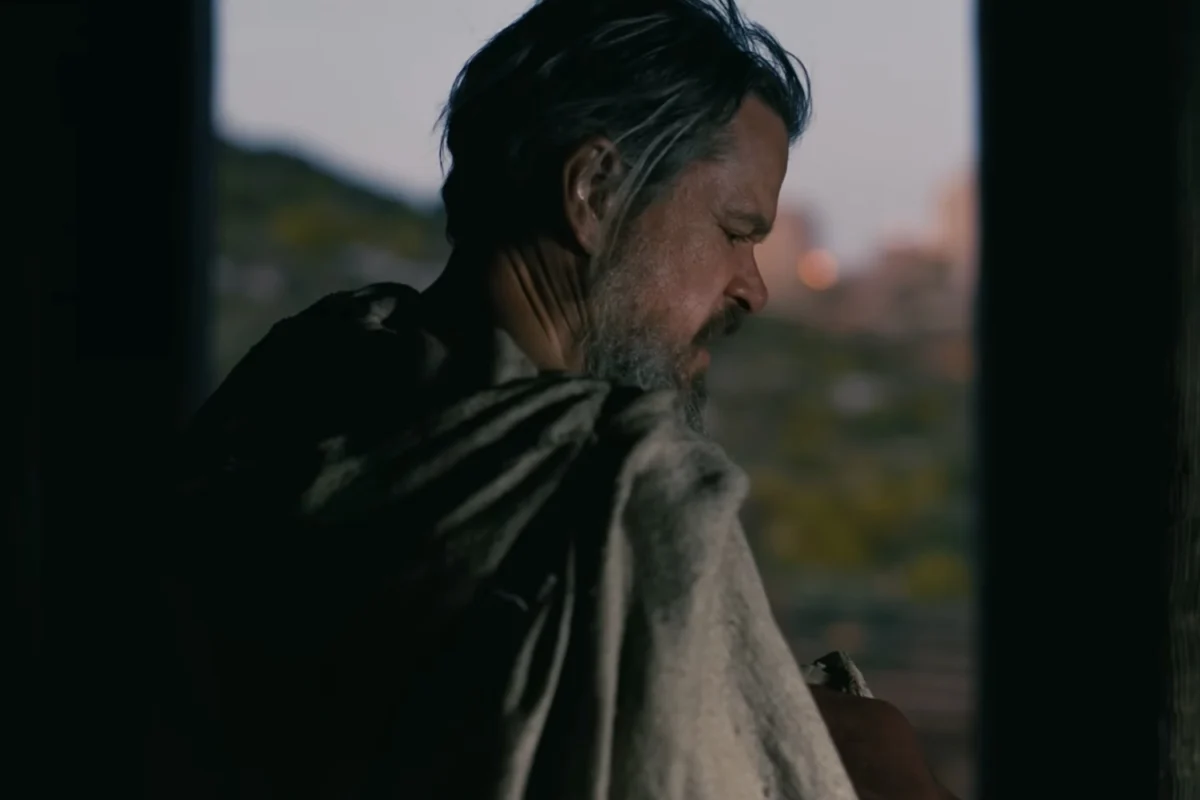
In a sprawling, introspective conversation with Vulture, acclaimed filmmaker Christopher Nolan has peeled back the curtain on his latest cinematic endeavor: an ambitious adaptation of Homer’s The Odyssey. Known for his meticulous approach to genre—from the psychological noir of Memento to the hard science-fiction of Interstellar—Nolan is now turning his gaze toward the foundations of Western storytelling. His thesis is as bold as it is simple: despite the cultural ubiquity of Greek mythology, the genre itself remains a largely untapped reservoir in contemporary cinema.
"The genre of Greek mythology doesn’t really exist in movies," Nolan remarked during the interview. "What I saw with The Odyssey is a gap that hadn’t been filled." For a director who has consistently sought to redefine the boundaries of blockbusters, this statement serves as both a mission statement and a provocation.
Main Facts: A New Look at the Ur-Text
The core of Nolan’s argument lies in his identification of what he calls the "Ur-text" problem. He posits that foundational stories like The Odyssey have become so ingrained in the cultural lexicon that they are often perceived as stale, over-familiar, or relegated to the realm of educational curriculum.
While Nolan is quick to clarify that he is not dismissing the history of mythology on film—he explicitly cites Ray Harryhausen’s stop-motion marvels like Jason and the Argonauts (1963) and the Clash of the Titans (1981) as formative influences—he argues that these works were limited by the technological and stylistic constraints of their eras. For Nolan, the challenge is not just to retell a classic tale, but to strip away the "museum piece" quality that often clings to ancient myths and replace it with the visceral, immediate reality of a lived-in world.
Chronology: The Evolution of Mythic Cinema
To understand why Nolan believes the genre is effectively "empty," one must look at the history of how Hollywood has handled antiquity.
The Era of Spectacle (1950s–1980s)
Historically, films set in the classical period were often treated as "sword-and-sandal" epics. These films focused primarily on historical spectacle, with mythological elements being shoehorned in as distinct, often jarring, fantastical set pieces. As Nolan notes, the "mythical aspects" were largely delegated to the ingenuity of special effects pioneers like Harryhausen. While these films were beloved, they often failed to integrate the divine and the supernatural into the fabric of the narrative, treating the gods and monsters as attractions rather than integral parts of the characters’ reality.
The Technical Threshold (1990s–2010s)
The release of Peter Jackson’s The Lord of the Rings trilogy marked a definitive pivot point in cinematic history. According to Nolan, these films proved that high-fantasy narratives could be treated with the same narrative weight, emotional gravitas, and technical sophistication as grounded, non-fantastical dramas. This shift provided the "technical viability" required to elevate mythology beyond the B-movie status it had occupied for decades.
The Present: The Nolan Interpretation
With the upcoming July 17 release of The Odyssey, Nolan is attempting to synthesize these lessons. By leveraging modern visual effects not as a "spectacle for spectacle’s sake," but as a tool to render the impossible as mundane, he aims to bridge the gap between ancient legend and contemporary audience expectations.
Supporting Data: Technology and Vision
Nolan’s critique is twofold: it concerns both the technological capabilities of the industry and the creative vision of the filmmakers. He argues that for a long time, the medium lacked the ability to provide "weight and validity" to a fantastical story.
The Problem of "Alienation"
A primary concern for Nolan is the depiction of the Olympian gods. In previous iterations of Greek myth on screen, the gods are often portrayed as detached, omnipotent figures, observing humanity from afar like chess players. Nolan views this as inherently "alienating" for the audience.
In his version of The Odyssey, he has made a conscious choice to minimize the presence of the divine. He has revealed that only one deity, Athena, will make a significant on-screen appearance. This is a deliberate narrative device. "It’s not so much about trying to be realistic," Nolan explains, "it’s just trying to see the gods the way these characters would have seen them." By limiting the gods, he forces the audience to experience the world through the eyes of the mortals, where the supernatural is an internal, psychological, or environmental pressure rather than a literal figure standing on a cloud.
Official Responses and Creative Philosophy
The industry reception to Nolan’s project has been one of high anticipation, largely because he is applying a "grounded" aesthetic to a story that is inherently magical. While many modern blockbusters have moved toward high-concept, high-CGI-density spectacles (often seen in superhero films), Nolan is moving in the opposite direction.
His approach is deeply rooted in the concept of "intimacy." He wants the audience to feel the grit, the salt, and the despair of Odysseus’s journey. By stripping away the distance created by heavy-handed divine intervention, he hopes to refocus the narrative on the human condition. The gods, in this framework, represent forces of nature, fate, and internal conflict—abstract concepts that are felt by the characters rather than seen by the viewer.
Implications: The Future of Mythic Storytelling
The implications of Nolan’s project are profound for the future of the blockbuster landscape. If The Odyssey succeeds, it could set a new template for how studios approach public domain material and classical literature.
1. The Death of the "Stale" Adaptation
By treating the "Ur-text" not as a burden but as a foundation for a new, grounded genre, Nolan is challenging other directors to find the "gap" in well-trodden stories. If he can make an audience believe in the reality of a cyclops or a siren through the lens of a psychological drama, it opens the door for a wave of "prestige" myth-making.
2. The Shift in VFX Usage
Nolan’s career is defined by his preference for practical effects. His insistence on using modern technology to ground the fantastical—rather than to create glossy, digital dreamscapes—could force a shift in how major studios allocate their massive budgets. The success of this film could dictate whether audiences prefer "mythic realism" over the current trend of "maximalist fantasy."
3. The Re-evaluation of the "Genre"
If, as Nolan suggests, the genre of Greek mythology currently "doesn’t exist," his film essentially creates a new category. This would be a significant development in film theory and industry classification, moving "myth" away from the "fantasy" aisle and into the "drama" or "epic" categories, where characters are judged by their choices and growth rather than their ability to defeat CGI monsters.
Conclusion
Christopher Nolan has never been one to shy away from the Herculean task of reshaping how audiences view cinema. With The Odyssey, he is attempting to solve a problem that has persisted since the dawn of the medium: how to make the ancient feel new, the impossible feel real, and the divine feel human.
Whether he succeeds in filling this "gap" remains to be seen. As the July 17 release date approaches, the film stands as a testament to the idea that even the oldest stories possess untapped potential, provided they are approached with the right vision. If Nolan’s past work is any indication, he is not just interested in telling a story—he is interested in creating an experience that will redefine our relationship with the myths that shaped civilization.
For now, the audience is left with the director’s promise: a film that treats the fantastical as a part of the world the characters live in, grounded in the sweat, blood, and longing of a man trying to find his way home. It is a bold, ambitious, and deeply human vision for a genre that has, for too long, been lost at sea.










