

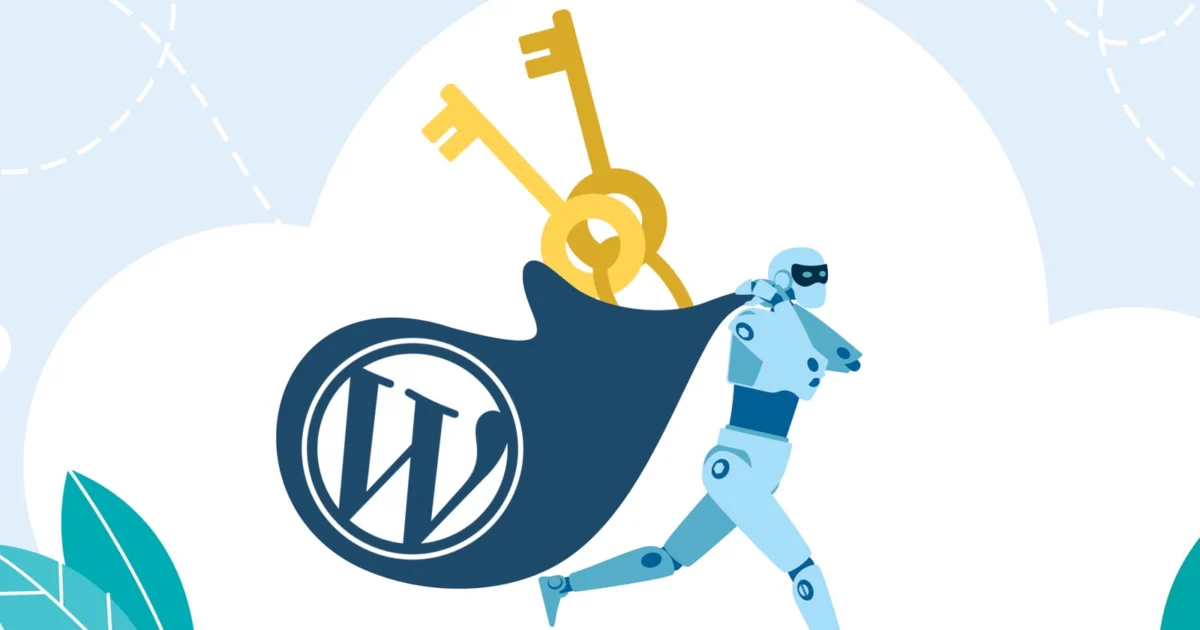
The digital landscape is undergoing a seismic shift as Artificial Intelligence integration becomes the new standard for web development. However, this transition has introduced a lucrative new incentive for cybercriminals: AI API keys. As WordPress 7.0 rolls out with deeper AI integrations, security researchers are raising the alarm. Oliver Sild, founder of the WordPress security firm Patchstack, has issued a stark warning: the convergence of WordPress plugin vulnerabilities and high-value AI credentials has created a "gold rush" for hackers.
This article examines the growing threat to the WordPress ecosystem, the technical vulnerabilities currently being identified, and the broader debate regarding the platform’s architectural readiness for the AI era.
The Economics of AI API Theft
To understand why hackers are shifting their focus toward WordPress sites, one must first understand the financial value of an AI API key. These keys act as secure, unique passwords that allow plugins and themes to interface with powerful Large Language Models (LLMs) such as OpenAI’s GPT-4, Anthropic’s Claude, or Google’s Gemini.
Unlike monthly subscription models that offer "all-you-can-eat" access, API usage is typically metered. Every query—every summary, every generated meta description, and every automated chat interaction—incurs a cost. When an attacker gains control of a valid API key, they are not merely stealing data; they are stealing a line of credit.
The Value Chain for Cybercriminals
Stolen API keys are worth tens of thousands of dollars on the dark web. For a hacker, these keys are the fuel for sophisticated, high-volume operations:
- AI Botnets: Attackers use stolen keys to power massive networks of bots that engage in realistic, long-form social engineering campaigns on dating apps and social media platforms.
- Scaled Phishing: LLMs allow attackers to generate hyper-personalized, context-aware phishing emails that are nearly indistinguishable from legitimate communication, increasing the success rate of credential harvesting.
- Automated Malware Generation: Malicious actors utilize the stolen computing power to write and obfuscate malware code, bypassing traditional signature-based detection systems.
- Data Exfiltration: Beyond the keys themselves, an AI integration often provides a "bridge" to sensitive databases. If a site is compromised, the AI tools can be used to parse, summarize, and export private user information stored within the WordPress database.
Chronology of the WordPress 7.0 Security Concern
The debate surrounding WordPress security reached a fever pitch following the release of WordPress 7.0. The following timeline outlines the progression from general warnings to the discovery of specific, actionable vulnerabilities.
The Warning
Shortly after the launch of 7.0, Oliver Sild took to social media to warn that the combination of standard plugin vulnerabilities and AI integration was a "perfect storm." Sild’s prediction was blunt: "WordPress 7.0 combined with plugin vulnerabilities equals free AI tokens. There will be an absolute rush by hackers to steal API keys."
The Discovery
Sild’s warnings were quickly validated by a concrete security bug reported via the official WordPress GitHub repository (Ticket #65303). The vulnerability involves the integration setup form for AI providers, specifically Anthropic.
The security flaw is an "autofill exposure" issue. When a user enters their API key into the configuration form, the browser’s autocomplete feature suggests and displays the key in plain text within the field. Because the form does not treat the field as a "secure password" input, the API key remains visible to anyone with access to the browser session, a shared computer, or a screen-share session.
The Response
The WordPress community and core contributors acknowledged the ticket, confirming that the lack of password-masking on API input fields represents a genuine security risk. While the bug may seem minor in isolation, in the context of Sild’s warnings, it serves as a microcosm of how easily sensitive credentials can be exposed due to poor UX/UI security implementation.
The "Security Culture" Debate: Official Responses
The discourse surrounding these vulnerabilities has triggered a wider debate about the inherent security of the WordPress ecosystem.
The "Secure by Default" Argument
WordPress co-founder Matt Mullenweg has historically pushed back against the narrative that WordPress is an inherently insecure platform. Mullenweg has frequently cited his own experience managing sites for over two decades without a single breach. His stance is that the "vast majority" of WordPress installations are secure, provided that site owners follow best practices, such as keeping plugins updated and using strong, unique passwords.
The Skeptic’s Perspective
Critics, including security researchers at Patchstack, argue that "best practices" are an insufficient defense against the new breed of automated attacks. They point to the reality of the "Time-to-Exploit" gap. Modern hackers utilize automated scanners to detect vulnerabilities the moment they are disclosed. If a site owner is even 24 hours behind on their updates, they are already at high risk.
Furthermore, historical incidents—such as the 2011 security breach at WordPress.com—serve as reminders that even the most robust platforms are not immune to architectural flaws that expose sensitive information.
Architectural Implications: The "Root Cause" Challenge
The discussion has evolved beyond simple API bugs to a fundamental critique of WordPress architecture. In the Dynamic WordPress Facebook group and other developer forums, experts have begun to question whether the current plugin-trust model is suitable for an AI-connected future.
The Problem of Database Access
Andrei Lupu, a prominent developer in the space, noted the grim reality of WordPress security: "The reality is that once they [hackers] have access to the database, you are doomed. We need to work on best practices to prevent that."
In a traditional WordPress environment, the database stores everything—including configuration settings and API keys. If a vulnerability allows an attacker to execute PHP code or access the database, the keys are effectively exposed. There is currently no robust, native "Secret Management" system in WordPress that isolates these credentials from the broader site environment.
The Search for Granular Permissions
Steve Jones of Equalize Digital has suggested that the platform may require a transition to a more granular permissions model. Currently, if a plugin is installed and active, it often has broad, blanket access to the site’s environment. Jones advocates for a system where plugins must request specific, limited permissions to access sensitive services, preventing a minor plugin vulnerability from cascading into a full-site compromise.
The "Arbitrary Execution" Barrier
Brian Coords, a developer advocate at WooCommerce, highlighted the difficulty of fixing this without a total rebuild. "Even if you could theoretically hide the keys and connections themselves outside the environment," Coords explained, "the ability to add PHP to a site means you could still include malicious code to make the calls from the site itself."
This creates a paradox: as long as WordPress allows for the execution of arbitrary PHP code (which is the backbone of its plugin ecosystem), a compromised site will always be able to "act" as the site owner.
Implications for the Future of WordPress
The rise of AI API keys has turned every WordPress site, regardless of its size or purpose, into a potential financial target.
- The End of "Low-Value" Targets: Previously, a small, static business site was rarely targeted by sophisticated hackers. Today, if that site uses an AI plugin to generate content, it holds an API key with a monetary value, making it a viable target for botnets.
- Increased Responsibility for Plugin Developers: Developers are now tasked with more than just functionality; they are now the custodians of their users’ financial security. Integrating secure password-masking and utilizing environment variables for API keys are no longer optional—they are critical requirements.
- The Shift Toward Managed Security: As the threat landscape matures, it is likely that site owners will migrate away from "do-it-yourself" security toward managed WordPress hosting services that provide proactive, AI-driven threat monitoring and hardened API credential storage.
Conclusion
The introduction of AI into the WordPress ecosystem is a transformative step that brings immense power to site owners. However, as Oliver Sild and other security professionals have underscored, this power comes with significant risk. The "rush to steal keys" is not a temporary trend but a permanent shift in the economics of cybercrime.
While the core team works to patch specific bugs like the one found in the Anthropic integration, the broader industry must grapple with the fundamental question: Is the current WordPress architecture capable of protecting the high-value assets of the future? For now, the burden of security rests on the vigilance of the user. Site owners must treat their AI API keys with the same level of protection as their bank account passwords, as, in the modern digital economy, they are effectively one and the same.











No comments yet. Be the first to join the conversation!