Basiran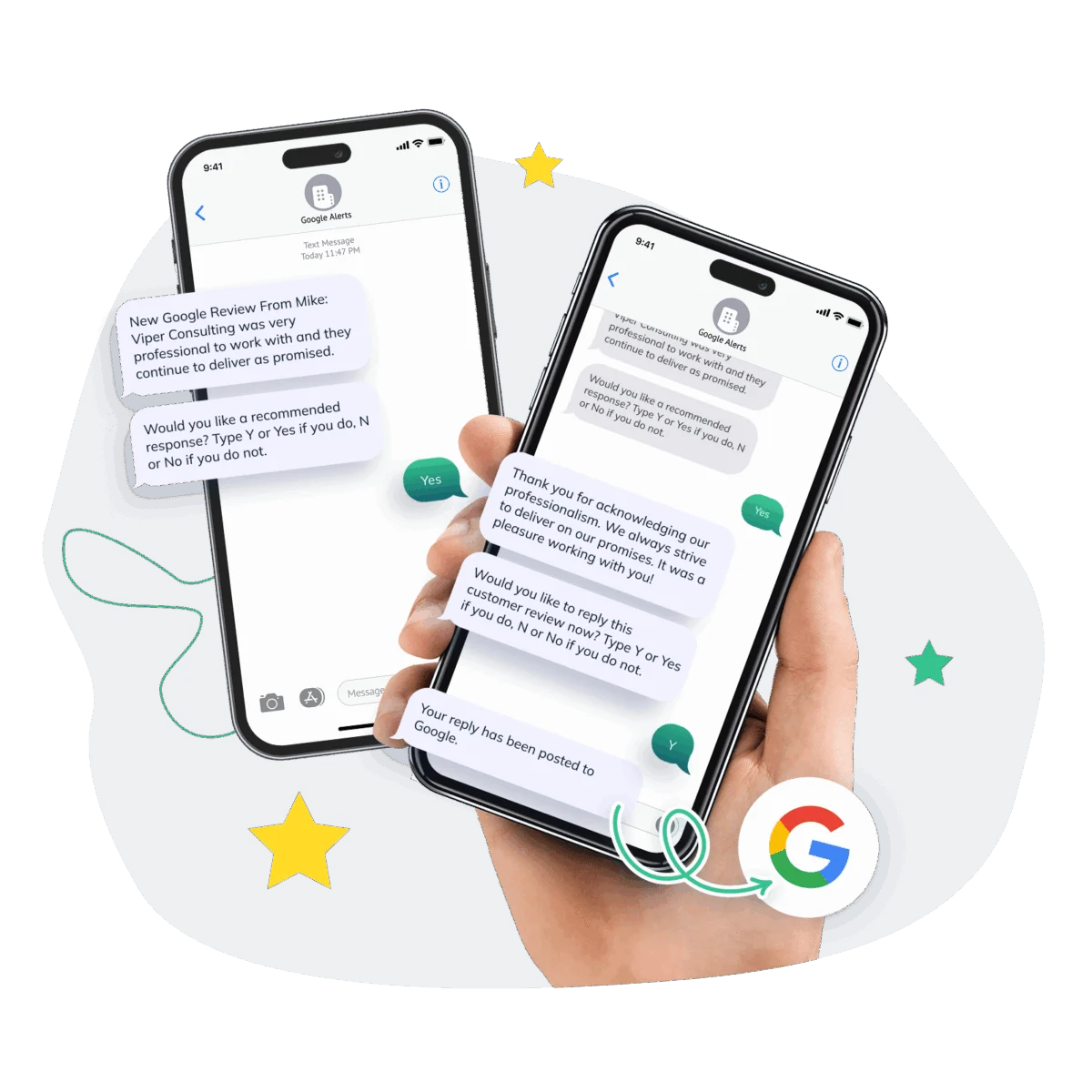
This post was sponsored by Reviewly.ai. The opinions expressed in this article are the sponsor’s own.
In the rapidly evolving digital landscape of 2026, the traditional “ten blue links” model of search engine optimization is no longer the sole gatekeeper of online traffic. With the ubiquity of Google AI Overviews, ChatGPT, and Perplexity, the way consumers discover local businesses has fundamentally shifted. When a user asks an AI, “Who is the best landscaper in my city?” they aren’t scrolling through a list of websites; they are receiving a curated recommendation generated by an LLM (Large Language Model).
For business owners and digital marketers, this shift raises a critical question: How do you become the recommendation of choice for an AI? The answer lies in a single, high-stakes metric that has become the primary trust signal for modern algorithms: Customer Reviews.
Main Facts: The AI-Driven Reputation Shift
In the past, SEO was largely about keywords, meta-tags, and backlink authority. Today, those factors remain important, but they have been eclipsed by the "AI Trust Signal." AI platforms do not have the luxury of human experience; they rely on proxy data to determine legitimacy, quality, and relevance.
The most weighted proxy? Fresh, consistent, and authentic customer reviews.
If your business lacks a steady stream of recent reviews, you are effectively invisible to the AI models that now facilitate the majority of local commerce discovery. A review generation strategy is no longer a “reputation play”—it is a technical necessity for visibility. If the AI cannot verify your reputation through recent, positive feedback, it will simply move on to a competitor that has established that trust.

Chronology: The Evolution of Search Discovery
To understand where we are in 2026, we must look at how search has evolved:
- Pre-2023: The "Blue Link" era. Business discovery was based on keyword density and domain authority.
- 2024-2025: The "Hybrid" era. Search engines began integrating snippets and AI-generated summaries, forcing businesses to scramble for featured positions.
- 2026 and Beyond: The "AI Recommendation" era. The focus has shifted from optimizing for search to optimizing for trust. Because AI models prioritize safety and user satisfaction, they look for "social proof" as a validation of a business’s real-world reliability.
Supporting Data: Why Freshness Trumps Volume
Many businesses fall into the trap of “review stagnation.” They hit a milestone—say, 200 reviews—and assume their work is done. Data from 2026 suggests this is a fatal error.
AI platforms treat review data similarly to human psychology. If you were searching for a restaurant, would you trust a review from 2022? Likely not. Google’s algorithms and LLMs share this preference for recency. A business with a steady trickle of 5 to 10 new reviews per month significantly outperforms a competitor with 500 reviews that have sat untouched for two years.
The KPI for 2026 is Review Velocity. Consistent, ongoing activity demonstrates to the AI that your business is currently active, providing high-quality service, and maintaining its standards.
Official Strategies: How to Build Your Review Engine
Moving from a passive review strategy to an active, automated system is the defining challenge for modern marketers.
Step 1: Map Your Review Touchpoints
Don’t ask for reviews at random. Identify the "moments of peak satisfaction" in your customer journey.

- Service-based businesses: Ask immediately after the completion of a successful job (e.g., after the final inspection of a home repair).
- Product-based businesses: Ask once the user has had enough time to experience the product, usually 3–5 days post-delivery.
- In-person retail: Utilize "tap-to-review" NFC technology or QR codes at the point of sale. Capturing a review while the customer is still on-site eliminates friction and ensures the experience is top-of-mind.
Step 2: Leverage the Power of SMS
Email has become a graveyard for review requests. With open rates plummeting, businesses must pivot to SMS. A text message sent 1–2 hours after a service or purchase reaches the customer when the experience is still vivid. Because SMS is personal and immediate, the response rates are exponentially higher than email, allowing you to maintain that all-important "review velocity."
Step 3: Prioritize Google Business Profile
While industry-specific directories have their place, Google Reviews are the bedrock of AI trust. AI Overviews and major LLMs reference Google Business Profile data more than any other source. Consolidating your efforts here creates a stronger, more concentrated signal than spreading your efforts thin across multiple, lower-impact platforms.
Step 4: The "Rich Content" Advantage
AI doesn’t just count stars; it parses text. A review that says "Great service" is helpful, but a review that says, "They fixed my HVAC unit in under four hours and left my basement cleaner than they found it" is a goldmine. This language is packed with long-tail keywords and contextual detail that the AI associates with your business.
Encourage customers to be descriptive by changing your prompt. Instead of asking, “Can you leave a review?”, try asking, “Would you mind sharing what your experience was like working with us?” This simple pivot encourages richer feedback that acts as high-quality training data for the AI.
Step 5: Master the Art of the Response
Responding to reviews is not just about customer service—it’s about SEO.
- Negative Reviews: Handle them with transparency and professional accountability. This signals to the AI that your business is responsive and reliable.
- Positive Reviews: Avoid generic "thanks" messages. Use your response to naturally incorporate keywords, service locations, and details about the work performed. When the AI reads your response alongside the original review, it creates a robust, keyword-optimized narrative about your brand.
Implications: The Widening Gap
The gap between businesses that embrace AI-ready reputation management and those that don’t is widening. As AI platforms become the primary interface for the internet, the "unoptimized" business will find itself pushed to the second or third page of search results—or, more likely, omitted from the AI’s summary altogether.

Automating these processes—such as using tools like Reviewly.ai—is no longer a luxury; it is the infrastructure of modern business. By automating the request, monitoring the sentiment, and generating keyword-rich responses, you turn your reputation into an "always-on" engine that feeds the algorithms.
Wrapping Up
In 2026, your review strategy is the most critical component of your digital presence. It is the bridge between your real-world performance and your AI-generated visibility. By auditing your current review velocity, automating your touchpoints, and ensuring every interaction is used to build context, you aren’t just managing your reputation—you are securing your place in the future of search.
The businesses that treat reviews as a living, breathing component of their operational infrastructure are the ones that will thrive in the era of AI. Those that ignore this will find themselves fighting for a visibility that is rapidly disappearing from the traditional web.
For more information on how to automate your review generation and stay ahead in the AI era, visit Reviewly.ai.


 Nana
Nana
 Jia Lissa