

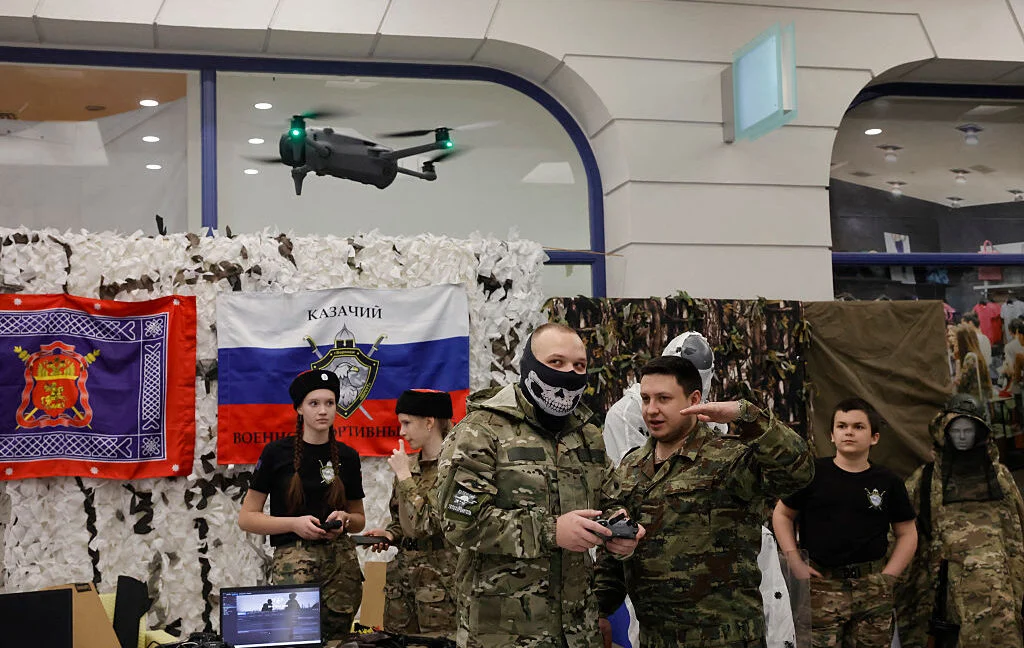
As the war in Ukraine enters a grueling fifth year, the Russian military is shifting its recruitment strategy, pivoting away from traditional infantry mobilization toward a more specialized, high-tech, and potentially hazardous path for the country’s youth. Russian universities, once bastions of academic pursuit, are now serving as primary nodes for the state’s ambitious military expansion. With promises of financial windfalls and exemption from "frontline duty," the Kremlin is aggressively courting students to fill the ranks of its drone operator units—a push that experts warn is both a tactical necessity for the Russian military and a profound threat to the nation’s future intellectual capital.
The Financial Lure: Scholarships, Land, and the Promise of Safety
The recruitment drives are as multifaceted as they are lucrative. At institutions like the Bauman Moscow State Technical University—a prestigious institution known for its engineering prowess—pamphlets are being distributed that offer students a combination of free tuition and signing bonuses reaching up to $70,000. These financial incentives are designed to bypass the hesitation of a generation largely disinterested in the state’s "Special Military Operation."
Beyond immediate cash, universities are dangling long-term life-altering benefits. Packages marketed to prospective recruits include tax holidays, the total forgiveness of student loans, and in some cases, promises of free land. According to reporting by the independent magazine Groza, at least 270 academic institutions across the Russian Federation are now actively promoting these military contracts. The scale of the effort is massive, targeting a pool of roughly two million male students. The military’s search for specific skill sets—expertise in electronics, radio engineering, model aircraft, and, most crucially, proficiency in gaming and computer systems—suggests a pivot toward a more digitized, remote-controlled theater of war.
Chronology of a Recruitment Shift
To understand the current urgency, one must look at the timeline of the Russian military’s technological evolution during the conflict.
- February 2022: The full-scale invasion of Ukraine begins, relying on conventional armored and infantry superiority.
- 2023: Russia realizes the devastating impact of Ukrainian drone warfare and begins internalizing the need for an asymmetric response. The space corporation Roscosmos begins recruiting its own employees into specialized militias.
- June 2024: Ukraine establishes the Unmanned Systems Force, the world’s first independent military branch dedicated entirely to drone technology, forcing Russia to accelerate its own recruitment to remain competitive.
- September 2024: The dangers of utilizing specialized personnel in general infantry roles are highlighted when a Russian drone unit is disbanded by command, leading to the avoidable deaths of its operators in a frontal assault.
- Early 2026: Russia organizes "motorized rifle regiments" using personnel pulled from the Navy and Aerospace Forces, signaling a desperate infantry manpower shortage.
- May 2026: The current push reaches a fever pitch, with universities becoming the primary battleground for recruitment, even as battlefield assessments show the Russian spring-summer offensive stalling against Ukraine’s "Fortress Belt."
Supporting Data: The Cost of the "Kill Zone"
The Russian government’s primary selling point—that drone operators are removed from the carnage of the trenches—is being met with skepticism by analysts and, increasingly, by the reality of the front. Commanders in the Ukrainian Unmanned Systems Force have noted that the "kill zone" now extends up to 25 kilometers on either side of the front lines. In this environment, constant surveillance, artillery fire, and counter-drone strikes render no position truly "safe."
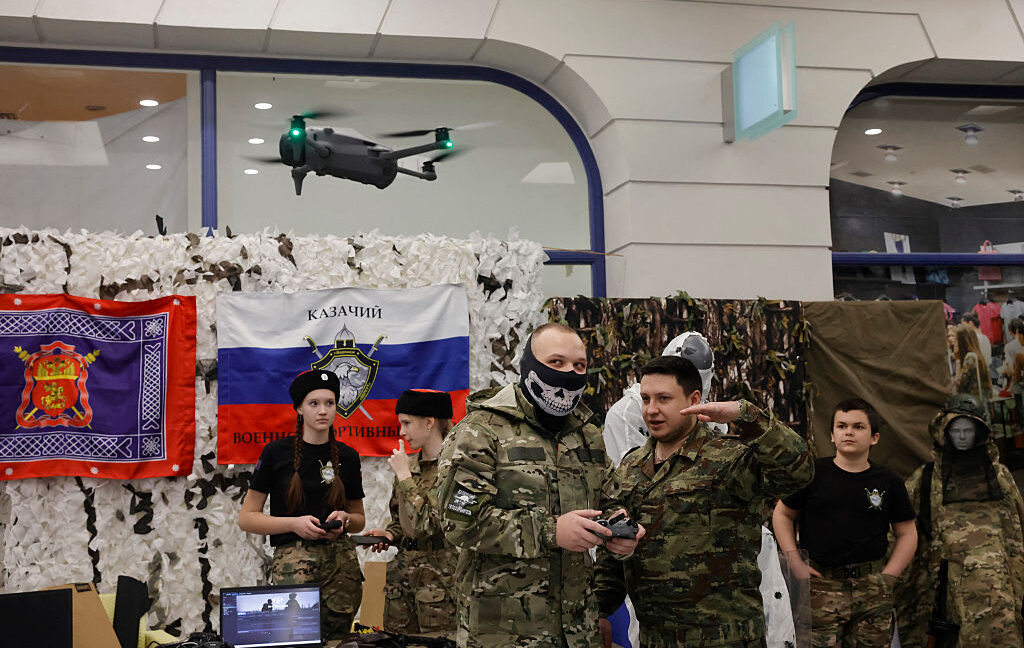
The human cost of this gamble is already becoming apparent. BBC News recently identified 23-year-old Valery Averin as the first confirmed death among the student-recruited drone operators. Averin, who had undergone three months of intensive training, was killed in a mortar attack near the occupied city of Luhansk. His adoptive mother, Oksana Afanasyeva, echoed the growing public sentiment that these recruits are being sacrificed as mere fodder. "The child had been training on a drone for three months, and now we’re throwing him into the meat grinder," she stated, highlighting the disconnect between the government’s promises and the reality of the front.
Furthermore, the scale of the war’s attrition is staggering. NATO officials reported in February 2026 that Russia has suffered approximately 1.3 million total battlefield casualties since the start of the war. While Russia has attempted to mitigate this by recruiting students, the depletion of its educated workforce remains a silent crisis. A study published in EPJ Data Science found that 24 percent of Russia’s top software developers on GitHub had left the country within the first year of the war—a trend of "brain drain" that is now being exacerbated by the state’s drive to press remaining talent into military service.
Official Responses and Tactical Reality
The Russian Ministry of Defense has been clear about its objectives: they aim to field 168,000 drone operators by the end of 2026. This is a direct response to the success of Ukrainian drone units, which have effectively disrupted Russian logistics by targeting ammunition depots and fuel convoys deep behind enemy lines.
However, the efficacy of this recruitment is hampered by a fundamental mismatch in morale. Students like "Andrey," interviewed by NBC News, reflect a pervasive apathy toward the conflict. "No one wants to join," he said. "No one is interested." This lack of enthusiasm is not just a social issue; it is a tactical one. When a military force relies on coerced or financially incentivized students who are not ideologically committed to the mission, the discipline and effectiveness of those units often suffer.
Moreover, the Russian military’s persistent reliance on "human wave" tactics, even as it tries to modernize its drone capabilities, creates a dangerous environment for its specialized personnel. The Institute for the Study of War has documented instances where commanders, facing infantry shortages, have stripped drone operators of their equipment and forced them into infantry assaults. This misuse of specialized, expensive-to-train personnel reflects a systemic desperation that threatens to undermine the very technological edge the Kremlin is trying to build.

Implications: A Future Devastated
The implications of this policy extend far beyond the battlefield. By siphoning off the brightest young minds—those with the technical aptitude for engineering and programming—the Russian state is effectively mortgaging its economic and technological future. The "brain drain" that began in 2022 is no longer just a passive departure of professionals; it is a state-sponsored cannibalization of the next generation of innovators.
Furthermore, the reliance on drone warfare as a "safe" alternative for students is a cruel irony. As Ukraine shifts toward the use of ground-based robots to minimize human exposure to the frontlines, Russia continues to struggle with maintaining an infantry force, often resulting in the deaths of those who were promised a desk-based, remote-control war.
As the offensive against the "Fortress Belt" stalls and recruitment rates drop below replacement levels, the Kremlin faces a choice: continue to drain the academic pipeline to sustain a war of attrition, or face the reality that no amount of financial incentive can replace the lives and the future potential being lost in the conflict. For the students of Moscow, St. Petersburg, and beyond, the choice is no longer between an education and a career, but between the promise of a life in the classroom and the grim, unpredictable reality of the front.
Ultimately, the drive to recruit students into drone units serves as a mirror of the war itself: a high-stakes, technologically focused effort that is nonetheless tethered to the brutal, grinding attrition of the past. Whether Russia can reach its goal of 168,000 operators remains to be seen, but the cost of that ambition is already being paid in the classrooms of its universities and the trenches of eastern Ukraine.











No comments yet. Be the first to join the conversation!