

The landscape of professional sports is undergoing a seismic shift. For decades, the broadcast model was simple: the league provided the game, the networks provided the distribution, and the fans provided the loyalty. Today, however, that paradigm is being dismantled by a generation of viewers who prioritize snackable, creator-led narratives over three-hour linear broadcasts.
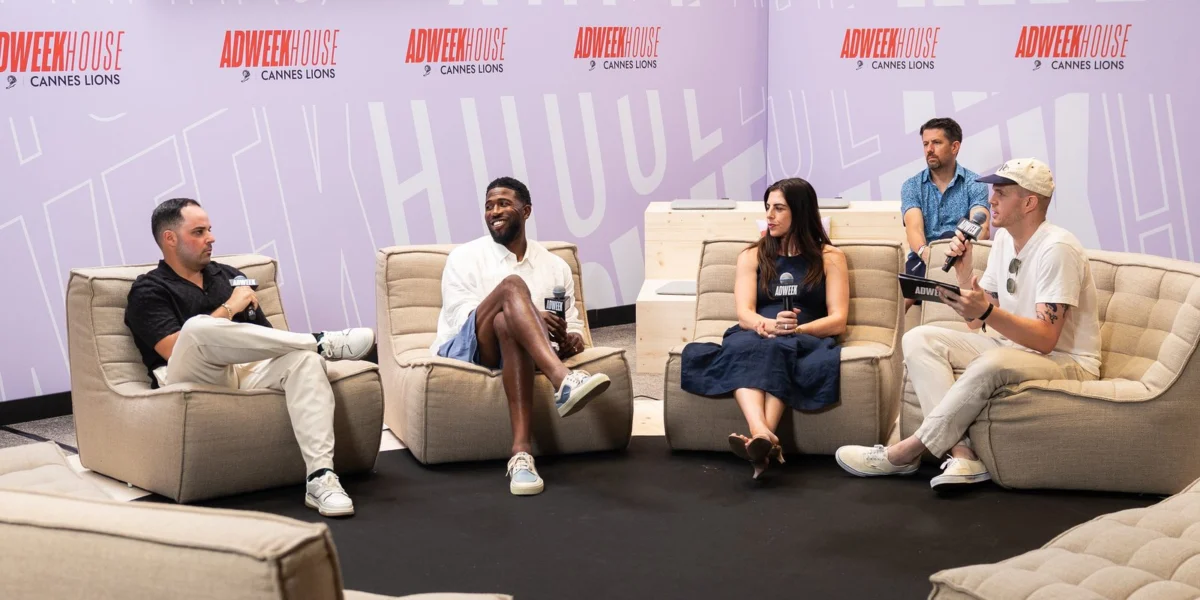
At the recent Cannes Lions festival, held at the prestigious ADWEEK House, industry leaders gathered to dissect this transformation. The panel, featuring Courtney Hirsch, CEO of Jomboy Media; Dexter Fowler, former MLB All-Star and co-founder of 400 Ventures; and EJ Aguado, VP of player engagement and celebrity relations at Major League Baseball, provided a masterclass in how leagues are evolving from gatekeepers to content collaborators.
The Paradigm Shift: From Linear Broadcasting to Digital Storytelling
For the better part of the 20th century, the "entry point" to baseball was static. You sat in front of a television, watched nine innings, and consumed the product as the league packaged it. Today, the entry point has migrated to the palm of the hand.
Courtney Hirsch of Jomboy Media—a company that has become the gold standard for modern sports commentary—notes that the modern fan rarely begins their journey with a full-game broadcast. "Fans’ entry points to a sport are no longer watching full games on TV," Hirsch explained. "Instead, their introduction to the sport and the league is often through creator-driven content on social media."
This shift has forced a reckoning within the executive offices of Major League Baseball. EJ Aguado, speaking on behalf of the league, candidly admitted that MLB’s partnership with entities like Jomboy is a strategic necessity. "We recognized that there are audiences who will not sit through an entire game but are content to consume engaging clips across various social media channels," Aguado stated. By meeting fans where they live—on TikTok, Instagram, and YouTube—the league is effectively lowering the barrier to entry, transforming passive observers into active digital participants.
Chronology of a Digital Revolution: The "Jomboy" Effect
To understand how we arrived at this moment, one must trace the rise of Jomboy Media and its integration into the professional sports ecosystem.
The Emergence of the Lip-Reader
The "Jomboy phenomenon" began as an organic, fan-led endeavor. By focusing on the minutiae of the game—specifically, the high-stakes, unscripted moments like managers arguing with umpires—Jomboy Media turned the human element of baseball into viral entertainment.
This led to a cultural shift within the dugouts themselves. Players and managers became acutely aware that their private conversations were being scrutinized. This created a paradoxical situation: players began covering their mouths to avoid being featured in viral lip-reading videos, yet they simultaneously recognized the power of that engagement. Hirsch noted that while teams were initially wary, the industry has come to respect the accuracy and passion behind the coverage. It wasn’t just "content"; it was a digital extension of the stadium experience.
The Institutional Pivot
Recognizing this influence, MLB stopped fighting the disruption and started funding it. In recent years, the league has pivoted toward an "omnichannel" approach. Rather than issuing cease-and-desist orders, the league began providing credentials and access to digital-first creators. This transition was not merely about publicity; it was about leveraging the credibility of creators to reach demographics that traditional sports news had failed to capture for years.
Supporting Data: The Power of Authenticity
The efficacy of this new model is supported by hard data. When MLB collaborated with superstar Francisco Lindor for the series Café con Lindor, the results were a proof-of-concept for the entire industry.
The social series, which saw Lindor host guests from the worlds of fashion, music, and pop culture, generated approximately 35 million social media views. This figure is staggering when compared to traditional ad-buy metrics. It demonstrated that when an athlete is allowed to showcase their "authentic self"—rather than performing as a scripted corporate spokesperson—the fan connection deepens significantly.
For Dexter Fowler, the transition is personal. Reflecting on his career as an All-Star, Fowler noted that the media landscape was far more restrictive during his playing days. "If Jomboy Media had existed during my playing days, I would have used the platform to have more control over my messaging," Fowler explained. The ability to bypass traditional beat reporters and speak directly to a niche, engaged audience via a platform that understands the "language" of the game is a massive advantage for player branding.
Official Perspectives: The Synergy of League and Creator
The partnership between a massive institution like MLB and a nimble, creator-led organization like Jomboy Media is built on a shared mission. Hirsch, who oversees a company that has grown to include 60 employees and 14 creators, emphasized that scaling the business has not diluted its core value proposition: keeping the fan first.
"We are just people having fun with sports," Hirsch remarked at Cannes. This sentiment is the secret sauce. While traditional broadcast networks are often tied to rigid sponsorship obligations and time-constrained slots, Jomboy Media is tied to the culture of the game.
EJ Aguado underscored this by framing the partnership as a "bridge." The league, he noted, has realized that it cannot be all things to all people. By empowering creators, MLB is delegating the "vibe" of the sport to those who speak the language of the internet fluently. The league focuses on the high-production spectacle of the game, while creators focus on the high-engagement narrative of the culture.
Strategic Implications: The Future of Sports Fandom
What does this mean for the future of the multi-billion dollar sports industry? Several key implications have emerged from the dialogue at Cannes:
1. The Death of the Gatekeeper
The era of the "official" sports broadcaster being the sole source of truth is over. Teams and leagues that attempt to control every frame of footage will find themselves irrelevant to Gen Z and Alpha audiences. The new gold standard is "curated openness," where leagues provide the raw materials and creators provide the context.
2. Athlete as Media House
We are moving toward a future where every high-profile athlete functions as a media brand. Café con Lindor is likely the first of many such projects. Athletes are realizing that their own social channels are more valuable than a spot on a local news broadcast. This shift will fundamentally change how agents, PR firms, and leagues interact with players.
3. Community Over Consumption
The goal is no longer just "viewership"—a metric that is increasingly difficult to track in a fragmented digital landscape. The goal is "community." When a fan watches a Jomboy breakdown, they aren’t just consuming a clip; they are participating in a conversation. They comment, they share, and they debate. This engagement cycle is what keeps the sport alive in the cultural zeitgeist between games.
4. Authenticity as Currency
In an age of AI-generated content and hyper-produced commercials, raw, unfiltered, and "human" content has become the most valuable commodity. Hirsch’s insistence on staying true to the mission—keeping the fan first—is a reminder that no amount of fancy editing can replace genuine enthusiasm.
Conclusion: A New Era of Engagement
As the industry moves toward 2026, the blueprint established by the MLB-Jomboy collaboration is set to become the standard. The future of sports is not found in the television box; it is found in the social feed, the fan-led commentary, and the authentic storytelling that turns a casual viewer into a lifelong devotee.
The takeaway for marketers and stakeholders is clear: stop trying to force the audience to come to you. Instead, dismantle the walls of the stadium, hand the microphone to the creators who truly understand the pulse of the game, and prepare for a future where the definition of a "sports community" is as fluid, fast-paced, and authentic as the creators who define it.
The game isn’t changing; the way we talk about it is—and for the fans, that’s the best news of all.










