Sagoh
Sagoh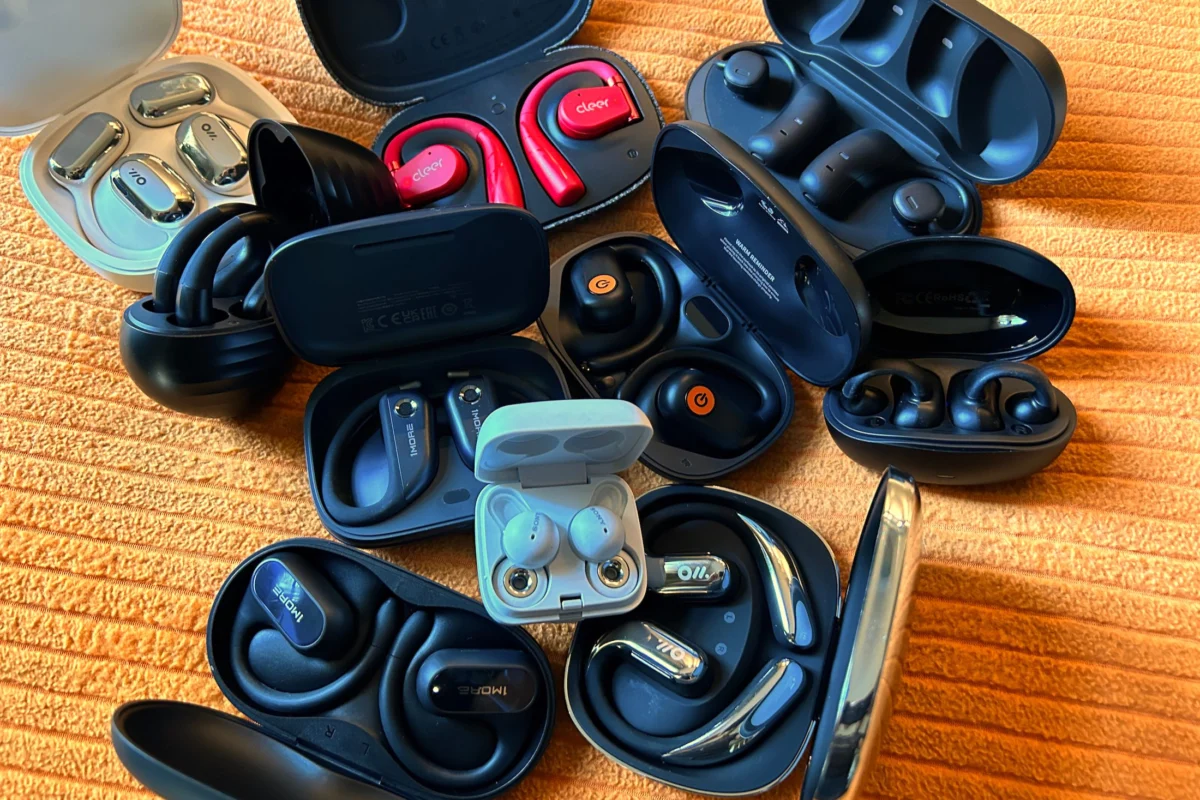
The modern urban landscape is an assault on the senses. For the average commuter, noise-canceling earbuds have long served as the ultimate digital barricade—a way to carve out a private oasis of sound amidst the cacophony of sirens, construction drills, and the relentless hum of public transit. However, as the technology that isolates us reaches a zenith, a counter-movement is taking hold. Enter the "open-ear" revolution: a wave of audio devices designed not to block the world, but to invite it in.
While the convenience of these devices is undeniable, their rise signals a profound shift in how we interact with our environment, our colleagues, and our own attention spans. We are moving toward a future where we are never truly "unplugged," only partially present.
The Evolution of Audio: From Isolation to Integration
The transition from noise-cancellation to open-ear design didn’t happen overnight. It is the result of a decade of hardware refinement. Brands like Shokz pioneered the bone-conduction market, proving that high-fidelity audio could be delivered without physically obstructing the ear canal. Simultaneously, industry giants like Bose and Sony pivoted toward "transparency modes" and external-ear designs that bridge the gap between immersive audio and ambient awareness.
A Chronology of the Audio Shift
- 2010–2015: The era of total isolation. Noise-canceling headphones (ANC) become the standard for frequent travelers and office workers.
- 2016–2020: The miniaturization phase. True wireless earbuds (TWS) dominate, making "plugging in" a constant, low-friction habit.
- 2021–2023: The "Awareness" pivot. Manufacturers begin prioritizing ambient sound passthrough and bone-conduction technology to address safety concerns for athletes.
- 2024–Present: The "Always-On" era. Audio glasses, AI-integrated wearables, and open-ear buds normalize the concept of layering digital content over physical reality.
The Functional Appeal: Why We’re Making the Switch
The primary motivation for the shift to open-ear devices is practical. Anyone who has juggled groceries while fumbling to remove a pair of noise-canceling earbuds to speak to a cashier understands the friction of the "sealed-off" lifestyle. Dropping an expensive, slippery earbud on hot asphalt is a rite of passage for the modern commuter.
Beyond the physical convenience, there is the issue of situational awareness. For runners and cyclists, the decision to use ANC technology is often a trade-off between immersion and safety. Open-ear designs solve this by allowing the sounds of traffic—a screeching tire or a cyclist’s bell—to reach the wearer. It is, by all accounts, a more responsible way to consume audio while moving through the world.
The Office Paradox: A New Social Contract
If the benefits of open-ear tech are clear in the streets, the implications in the office are significantly more complex. In the traditional workplace, large, over-ear headphones served as a universal "do not disturb" sign. They were a clear, visual boundary.

Open-ear models, however, blur these lines. Because the wearer can theoretically hear their environment, the expectation of accessibility increases. If you can hear a coworker say your name, the social obligation to respond becomes mandatory. This creates a psychological "loophole": you are technically reachable, yet your mental energy remains tethered to a podcast, a playlist, or an AI-driven personal assistant.
This creates a peculiar, semi-detached social existence. We are physically present, yet cognitively elsewhere. The technology enables a form of "polite multitasking" where we maintain the appearance of being engaged members of a team, while our attention is perpetually partitioned.
Implications of Constant Stimulation
The rise of these devices is not merely about audio hardware; it is about the normalization of constant, low-level stimulation. Whether it is an AI voice whispering notifications into your ear or a curated soundtrack accompanying your morning coffee, the "open-ear" philosophy ensures that silence is increasingly treated as a void to be filled.
Data and Behavioral Observations
Recent market research indicates that users of open-ear wearables tend to keep their devices on for 30% longer per day than users of traditional closed-back earbuds. This suggests that the barrier to entry—and the barrier to removal—is significantly lower. When a device doesn’t "seal" the ear, the brain is less likely to register it as a foreign object, leading to a phenomenon known as "passive wearing."
Industry analysts point out that this trend is the hardware precursor to a more invasive AI future. As companies like Meta, Apple, and various hardware startups integrate generative AI into wearables, the "open-ear" design becomes the essential interface. These devices are intended to function as an invisible layer over reality, providing real-time data, navigation, or conversational support without requiring the user to look at a screen.
The Professional and Ethical Landscape
How do employers react to a workforce that is perpetually listening to something else? Thus far, the response has been muted, largely because the technology is so discreet. Unlike the bulky headphones of the past, open-ear buds are often near-invisible.

However, the ethical implications of this "always-on" behavior are surfacing in academic circles. Researchers in neuro-ergonomics have begun studying the impact of "continuous partial attention." While the wearer feels more efficient, the quality of their social interactions may be suffering. If a conversation is constantly competing with a background podcast or AI alert, the depth of human connection is inevitably diluted.
The Future of "Renegotiating" Reality
The hardware itself is not the villain. For the athlete, the traveler, and the worker with a commute, these devices represent a genuine improvement in quality of life. The ability to safely navigate a city while enjoying high-quality audio is a triumph of modern engineering.
However, we must consider the habit we are fostering. By choosing to layer our digital lives over our physical ones, we are fundamentally changing our relationship with the present moment. We are renegotiating the terms of our engagement with the world. We are saying that we want to be here, but only on our own terms—with a buffer, a soundtrack, or a digital assistant to keep us company.
As we move forward, the "open-ear" label might prove to be a misnomer. These devices aren’t just leaving our ears open; they are keeping our minds preoccupied. The question for the next generation of consumers is not whether the technology works, but whether we still know how to exist in a world that is completely, and blissfully, silent.
The next time you see someone wearing a pair of open-ear buds, look closely. They are likely listening to you, but they are almost certainly listening to something else as well. We are all learning to be in two places at once, and for better or worse, the silence of the city is the first thing we’ve decided to sacrifice.


 Asro
Asro
 Suro Senen