

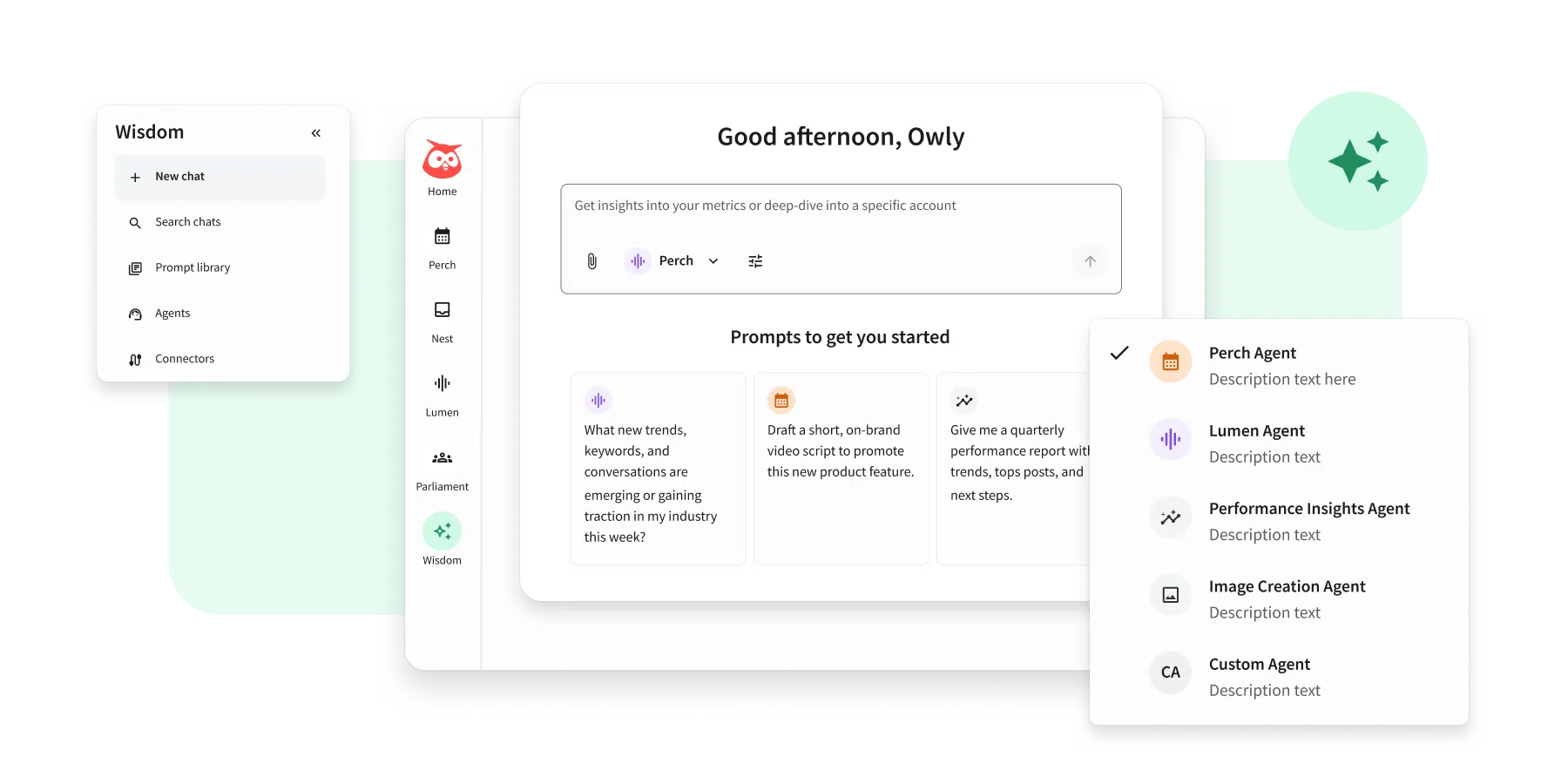
Eighteen years after pioneering the social media management space, Hootsuite has made a radical decision: it is tearing down the very products that cemented its industry dominance. In a major strategic pivot announced this week, the company is shifting from a tool-based model to a unified "Social OS," powered by a new, real-time AI architecture.
This isn’t merely a feature update. Under the leadership of returning CEO and co-founder Ryan Holmes, Hootsuite is betting that the future of social media marketing lies not in historical data analysis, but in the ability to capture, understand, and act upon the "live signal" of global conversation.
Main Facts: The Shift to Social OS
The core of Hootsuite’s new announcement is the launch of Hootsuite Social OS, a centralized platform that integrates four previously siloed functions—publishing, customer care, advocacy, and intelligence—into one connected, AI-driven environment.
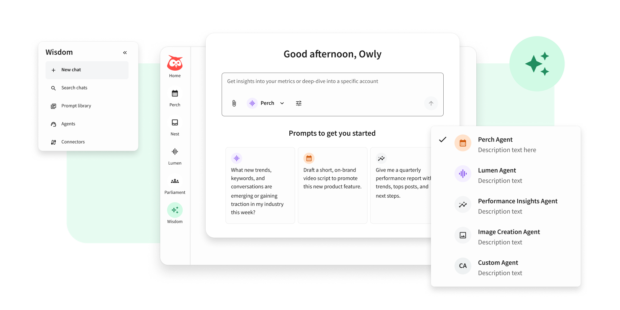
Central to this transformation is Wisdom, Hootsuite’s new, proprietary social-first AI agent. Unlike generic language models that rely on static, historical datasets, Wisdom is built on a "live signal layer." It processes massive, real-time streams of social data across 187 languages and 150 million sources. By grounding its responses in the immediate, ongoing pulse of the market, Wisdom aims to provide brands with actionable intelligence about their reputation and consumer sentiment as it happens, rather than weeks after the fact.
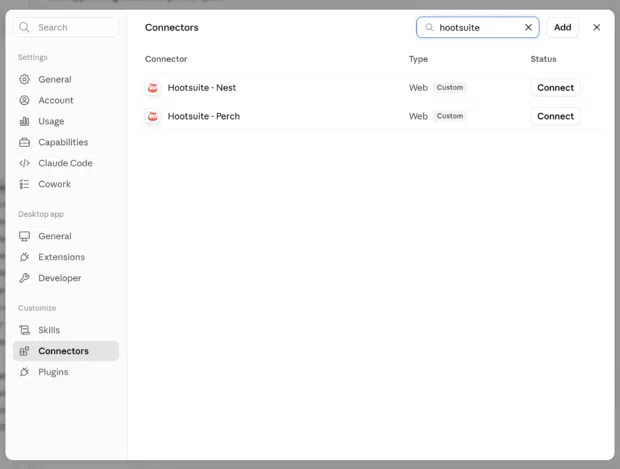
Perhaps most disruptively, Hootsuite is embracing an "open" strategy through Model Context Protocol (MCP) connectors. By adopting this open standard, Hootsuite is effectively moving "headless," allowing its data and capabilities to be triggered directly from within third-party AI assistants like Claude, ChatGPT, and Gemini. This marks a departure from the traditional SaaS model of forcing users to log into a single, closed dashboard.
A Chronology of Change
The roots of this overhaul trace back to the rapidly changing landscape of artificial intelligence in early 2026.
- 2008–2025: Hootsuite established itself as the leading platform for social scheduling and basic listening, helping brands manage the complexity of fragmented social channels.
- Early 2026: Ryan Holmes returned to the role of CEO, bringing a mandate to modernize the company’s technological infrastructure.
- Mid-2026: Internal audits revealed that while legacy features were functional, they were increasingly disconnected from the speed of modern AI-driven market cycles.
- Present Day: The company has officially retired its previous AI offerings, such as OwlyGPT and Yeti, consolidating their capabilities into the unified Wisdom agent and launching the Social OS platform.
Supporting Data: Why "Last Quarter’s Data" Is No Longer Enough
The fundamental tension identified by Hootsuite’s leadership is the "blind spot" inherent in current enterprise AI. Most commercial AI tools are trained on large, static datasets. While these models excel at summarization and drafting, they are largely incapable of identifying trends that "land and leave" within a single day.
Hootsuite’s competitive advantage lies in its eighteen-year-old repository of social data, which the company claims acts as a real-time barometer for global sentiment. By moving away from general-purpose LLMs toward a "Social-First" architecture, Hootsuite is attempting to solve the problem of latency. In a market where a brand crisis or a viral trend can escalate in minutes, a delay in data processing represents a significant competitive risk.
The decision to go "headless" via MCP is supported by a shift in user behavior. As professionals spend less time navigating complex interfaces and more time interacting with AI copilots, platforms that require manual navigation risk becoming obsolete. By making its data accessible to external agents, Hootsuite is positioning itself as the "intelligence layer" for social media, regardless of where the user is actually working.
Official Response: From the Desk of the CEO
In his official announcement, Ryan Holmes struck a tone of both transparency and urgency. "We took apart products that worked," he wrote. "Not because they were broken. Because ‘working’ wasn’t going to be enough for what’s coming, and I’d rather risk confusion now than wake up irrelevant later."
Holmes acknowledged that this transition would be challenging for long-time users. By admitting that the transition might have some initial friction, he invited the community into a dialogue. "We rebuilt to move faster toward what’s next," he stated, encouraging users to provide feedback directly via professional networking platforms. "If you use Hootsuite, what’s the one thing we can’t afford to lose in this? Tell me what we’d miss."
Strategic Implications for the Marketing Industry
The implications of this move are twofold: for the user, and for the broader SaaS ecosystem.

For Marketing Teams:
The integration of social intelligence with operational tasks means that the traditional boundaries between a social media manager, a customer service agent, and an analyst are blurring. Under the Social OS model, a piece of customer feedback captured in the "Nest" module can automatically trigger a change in content strategy via the "Perch" module, all mediated by the Wisdom agent. This creates a feedback loop where insights drive actions in real-time, reducing the "handoff" time that typically plagues enterprise marketing teams.
For the SaaS Industry:
Hootsuite’s embrace of the Model Context Protocol (MCP) signals a potential shift in the "walled garden" approach typical of software companies. If successful, this could set a new industry standard. The trend suggests that "platform stickiness" will no longer be measured by how many hours a user spends inside a specific app, but by how effectively the platform provides value to the user’s broader AI-driven workflow.
The Risk of Complexity:
Despite the clear vision, the transition poses significant risks. Simplifying legacy systems is notoriously difficult. If the new Social OS feels too abstract or if the transition period disrupts critical daily workflows, the company risks alienating its core user base. Furthermore, the success of the Wisdom agent depends entirely on the accuracy and latency of the real-time signal, which is significantly harder to maintain than training on static datasets.
Looking Ahead
The launch of Hootsuite Social OS represents a pivotal moment for the company and the industry. By moving away from the "dashboard-first" era and into an "intelligence-first" model, Hootsuite is attempting to future-proof itself against the rapid encroachment of general-purpose AI.
As the company rolls out this new architecture, the focus will inevitably shift to user adoption and the tangible results provided by the Wisdom agent. Whether or not this "Social OS" becomes the standard for the next decade of digital marketing remains to be seen, but one thing is certain: the era of social media management as a static, scheduled task is coming to a close. In its place, we are entering the age of the "live signal"—where the brands that win will be those that can see, understand, and respond to the world before it moves on.











