

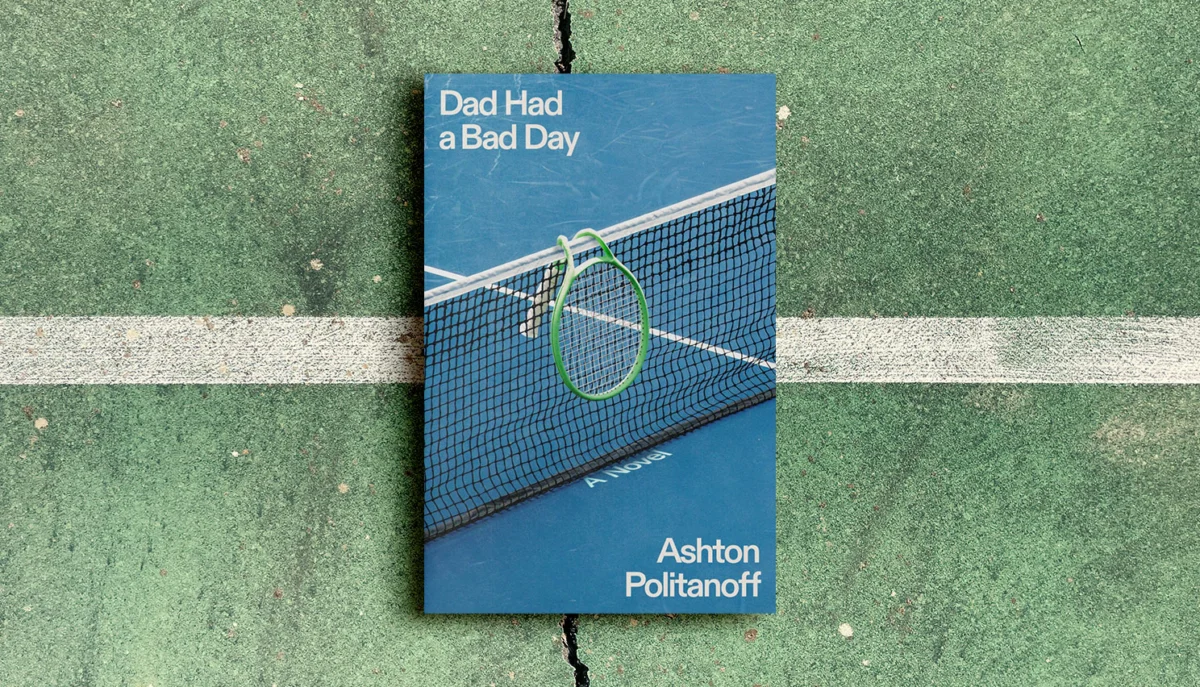
In the landscape of contemporary American literature, few authors manage to capture the claustrophobic intersection of mundane suburban life and psychological unraveling as precisely as Ashton Politanoff. His second novel, Dad Had a Bad Day, is a sharp, atmospheric descent into the mind of a man whose quest for purpose manifests as an all-consuming, potentially destructive obsession with tennis.
The novel, which has garnered critical acclaim for its propulsive narrative and darkly comedic undertones, serves as a masterclass in genre-bending. It utilizes the structural aesthetics of noir to examine the fragile architecture of modern masculinity. To better understand the mechanics behind this "triumph" of a book—as described by Pulitzer Prize finalist Rita Bullwinkel—we turn to an exclusive conversation between the author and Barnes & Noble bookseller Apoorva Kotaru.
The Narrative Core: A Descent into the Deuce
At the center of Dad Had a Bad Day is Ned, a protagonist defined by his recent displacement from the workforce. Stripped of his professional identity and thrust into the role of primary caregiver for his young son, Ned finds himself untethered in the quiet, sunny sprawl of Los Angeles. His life takes a sharp, jagged turn when he rediscovers an old tennis racket in his garage.
The sound of a ball hitting a string, a trigger that evokes latent memories of his own youth, acts as the catalyst for his transformation. Driven by a secret credit card and a desperate need to reclaim a sense of self, Ned joins a local tennis club, eventually captaining a men’s recreational league. What begins as a benign hobby quickly metastasizes into an obsession. As the novel progresses, the reader is taken on a "wild ride" that balances a sunny, L.A.-noir atmosphere with the mounting tension of a man losing his grip on his domestic reality.
A Chronology of Obsession: From Personal Seeds to Literary Fruit
The genesis of Dad Had a Bad Day is rooted in Politanoff’s own history with the sport. Having played competitively in college and participated in semi-professional events, Politanoff experienced a long, 14-year hiatus from the court. The return to the game, prompted by the sights and sounds of a tournament at a local club, mirrored the initial stages of his protagonist’s journey.
- The Catalyst: While sitting in a jacuzzi at a local club, Politanoff observed an 18-year-old player of high caliber. The visceral memory of the game—the sound of the ball, the tension of the court—ignited a desire to return to the sport.
- The Inception of Conflict: Politanoff began playing in local leagues. A single, early-season loss triggered an outsized emotional reaction—sleeplessness and internal distress—that forced the author to interrogate his own "complicated relationship with tennis."
- The Writing Process: The book was not an immediate success in its drafting phase. It took three distinct attempts to find the correct voice. Once Politanoff established an outline and embraced the "noir" genre as a structural framework, the narrative momentum accelerated.
- The Fever Dream: The final stages of the writing process were characterized by a "fever dream" intensity, with Politanoff writing daily for several months to capture the propulsive, haunting rhythm that defines the final product.
Structural Influences and Literary DNA
Politanoff’s work is characterized by a high degree of formal experimentation. He rejects the traditional long-winded chapters in favor of "bursts"—a technique he attributes to the influence of Michael Ondaatje’s Coming Through Slaughter.
"Textually and formally, something interesting needs to be happening for me as a writer," Politanoff explains. The interjection of letters and the deliberate use of off-balance structural choices serve to keep both the reader and the writer engaged. Beyond formal structure, the novel draws on a rich tapestry of literary and cinematic influences:
- Iris Murdoch: During the writing of Dad Had a Bad Day, Politanoff was deeply immersed in The Sea, The Sea, which informed his approach to the psychological depth of his characters.
- John Cheever: Cheever’s stories provided a blueprint for exploring masculinity. Politanoff notes a shared appreciation for the "whimsical quality" found within the weightier themes of Cheever’s work.
- Martin Scorsese: While the novel is a dark comedy, its tonal shift—a distinct pivot in the middle of the narrative—is a nod to the structural pacing found in many of Scorsese’s iconic films.
The "Noir" of the South Bay
The setting of Dad Had a Bad Day is not merely a backdrop; it is a character in its own right. Politanoff deliberately cultivates a "sunny L.A. vibe" to contrast with the dark, detective-like internal narrative of Ned. By using the shadow of a palm tree or the specific atmosphere of public courts, the author builds a world that feels both grounded and surreal.

Ned’s journey includes a subplot involving the search for a missing childhood friend—a classic trope of the noir genre—which Politanoff uses to heighten the stakes of the novel without ever needing to rely on a literal, hard-boiled detective character. This "casually haunting" tone allows the reader to experience the story as a literary mystery, where the "crimes" are more internal than external.
Official Commentary: Authorial Intent and Reception
When asked about the differences between Dad Had a Bad Day and his previous work, You’ll Like it Here, Politanoff highlights the transition from an archival-heavy, collage-based narrative to a more traditional, yet still experimental, novelistic structure.
"I really needed to find that tone and a rhythm that felt propulsive," says Politanoff. The result is a book that has been lauded for its "swift, addictive, and life-giving" quality. Critics have noted that Politanoff’s writing about tennis possesses a "totally filthy" and visceral energy, comparing his obsession with the sport to Barry Hannah’s legendary depictions of alcohol.
Implications: The Future of the Suburban Gothic
The implications of Politanoff’s success with this novel extend to his future projects. Currently, the author is in the research phase for his next work, which will explore the world of surfboard shapers in the South Bay. This shift from tennis to surfing underscores Politanoff’s interest in the intersection of craftsmanship, hobbyism, and the obsessive nature of the human spirit.
As he continues to read and draw inspiration from works like Tana French’s The Searcher—which he admires for its pacing and literary mystery elements—it is clear that Politanoff is cementing his place as a chronicler of the modern, often-troubled American experience.
For readers who have yet to dive into Dad Had a Bad Day, the experience promises to be one of profound discomfort and genuine delight. It is a book that captures the precise moment when a hobby ceases to be a distraction and becomes an identity. As Apoorva Kotaru aptly noted during their conversation, the reading experience is a "fever dream," one that lingers long after the final point has been played.
Key Takeaways for the Reader
- Genre: A dark, literary comedy with strong noir influences.
- Themes: Mid-life displacement, the fragility of suburban masculinity, the psychology of obsession, and the search for purpose.
- Style: Propulsive, atmospheric, and formally experimental with a focus on rhythmic "bursts" of narrative.
- Availability: Dad Had a Bad Day is currently available in paperback via Barnes & Noble and other major retailers.
In the final assessment, Ashton Politanoff has delivered a novel that refuses to be ignored. By turning the tennis court into a crucible for the human soul, he has elevated a story of a "bad day" into a profound reflection on the lives we lead when we think no one is watching.










No comments yet. Be the first to join the conversation!