The landscape of modern cinema is currently defined by a singular, titanic project: Christopher Nolan’s The Odyssey. With its sweeping vistas, visceral practical effects, and a narrative scope that defies the standard constraints of modern blockbusters, the film has become a cultural phenomenon. Yet, as audiences pack theaters to witness this analog masterpiece, a secondary, highly controversial debate has emerged. Elon Musk, the CEO of Tesla and xAI, has declared his intention to challenge Nolan’s vision with an entirely different approach: a feature-length film generated by artificial intelligence. This clash—between the meticulous, human-centric craftsmanship of Nolan and the algorithmic ambitions of Silicon Valley—represents a pivotal moment in the history of storytelling.
The Analog Revolution: Why Nolan’s The Odyssey Captivated the World
Christopher Nolan has long been a champion of the "filmmaker’s craft," often shunning the digital sheen of modern CGI in favor of tangible reality. With The Odyssey, he has taken this philosophy to its logical extreme. By opting for traditional puppetry, complex animatronics, and massive physical sets to recreate the legendary beasts and giants of Homer’s epic, Nolan has provided audiences with a sensory experience that feels undeniably "real."
The film’s production has been marked by a dedication to detail that borders on the obsessive. Reports from the set highlight that the cyclops was a physical puppet operated by a team of puppeteers, and the Laestrygonians—the giants of the poem—were portrayed by performers in elaborate, high-fidelity suits rather than being rendered in post-production software. This commitment to practical effects has paid off, with the film currently holding a staggering 94% critic score on Rotten Tomatoes. In the UK, demand has reached such a fever pitch that some theaters are sold out through September, with reports even surfacing of fans attempting elaborate, "Trojan Horse"-style ruses to sneak into sold-out screenings.
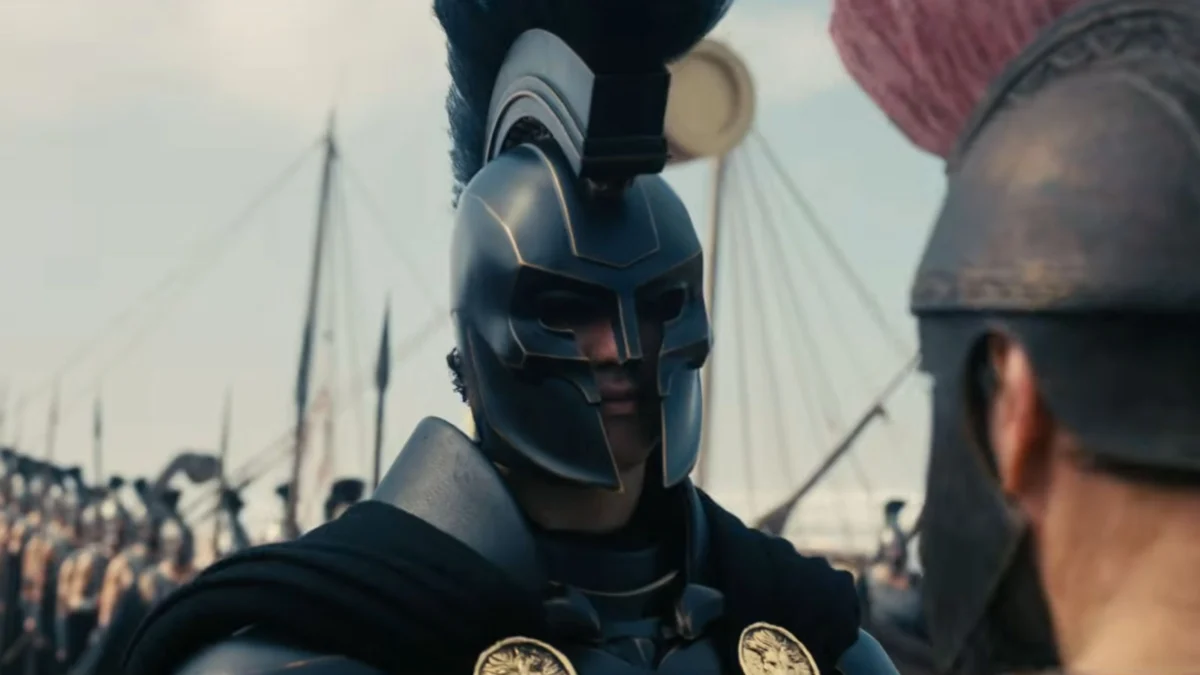
However, the film has not been without its detractors. As the release date approached, a vocal segment of the online community took aim at the film’s historical accuracy. Specifically, critics pointed to the costume design—notably the attire worn by Benny Safdie’s Agamemnon—and certain casting choices as departures from the traditional visual representation of Mycenaean Greece. These critiques, while common for high-profile period pieces, have provided the perfect opening for those looking to disrupt the traditional Hollywood model.
The Chronology of a Digital Duel
The tension between Nolan’s traditionalist approach and the encroaching world of generative AI has unfolded over several months:
- Early 2026: Anticipation builds for The Odyssey as reports emerge regarding Nolan’s strict "no CGI" mandate.
- Summer 2026: The film premieres to widespread critical acclaim, cementing its status as a commercial and cultural juggernaut.
- July 2026: Elon Musk, having previously expressed skepticism toward Nolan’s adaptation, shares a three-minute AI-generated clip of The Odyssey created using his company’s "Grok Imagine" tool.
- Late July 2026: Musk issues a public challenge, declaring that he intends to release a full-length, AI-generated version of the epic by the end of the year, promising it will be "historically accurate and true to the art of Homer."
This timeline highlights a growing rift in the entertainment industry: the divide between those who believe in the sanctity of human artistic labor and those who view art as a data set to be optimized, refined, and generated at scale.
Supporting Data: The Power of the Myth
The enduring popularity of The Odyssey is not merely a product of the current film’s success, but a testament to the power of the source material. Homer’s narrative remains one of the most resilient stories in human history.
Current market data regarding the film’s performance provides a fascinating insight into audience preferences:
- Critical Reception: A 94% approval rating on Rotten Tomatoes indicates that the audience is craving high-concept, "event" cinema that avoids the visual fatigue of standard green-screen blockbusters.
- Box Office Demand: With sold-out runs extending months into the future, the film is proving that audiences are willing to invest in stories that are told with a clear, uncompromising vision.
- The AI Variable: While there is no current metric for the commercial viability of an AI-generated feature, the engagement numbers on Musk’s social media posts regarding his AI project suggest a massive, albeit polarized, interest in the technology’s capability to handle complex narrative structures.
Official Responses and Public Discourse
The response to Musk’s announcement has been swift and deeply divided. Within the Hollywood creative community, the reaction has ranged from dismissive to alarmed. Many industry veterans argue that the "art of Homer" is not merely about historical accuracy—a term that is notoriously slippery when applied to mythological texts—but about the human perspective, the subtext of the prose, and the emotional resonance that only human performers can provide.
Musk’s supporters, meanwhile, argue that the technology is an equalizer. By removing the barriers of massive production budgets, equipment, and traditional studios, AI could allow for a "truer" adaptation that focuses on textual fidelity rather than the stylistic whims of a director. Musk’s insistence that his version will be "true to the art of Homer" serves as a direct jab at Nolan, implying that the director’s stylistic flourishes are distractions from the source material’s core identity.
Implications for the Future of Cinema
The implications of this collision are profound. If Musk manages to release a feature-length, AI-generated film by the end of the year, it will set a significant precedent.
The Death of the "Blockbuster" Budget?
If high-quality, long-form narratives can be generated via AI, the traditional $200 million-plus production budget for major epics may become obsolete. This could lead to a democratization of filmmaking, where individuals with vision but no capital can produce work that competes with the world’s top directors.
The Value of Human Labor
Conversely, this shift threatens the livelihoods of thousands of people in the film industry—from the animatronics experts and puppeteers who built the creatures for Nolan’s film, to the lighting technicians, set designers, and actors. If the market favors the convenience and speed of AI, the human element of filmmaking may transition from a standard expectation to a luxury good.
Defining "Historical Accuracy"
Perhaps the most ironic aspect of this debate is the focus on "historical accuracy." The Odyssey is a poem, a work of fiction rooted in oral tradition. To seek "accuracy" in a story featuring sirens, gods, and man-eating cyclopes is a modern fixation. Whether an AI can capture the soul of a story—as opposed to merely the visual approximation of it—remains the ultimate question.
Conclusion: A Tale of Two Odysseys
As we move toward the end of 2026, the contrast between the two versions of The Odyssey could not be starker. Christopher Nolan has invited us to step into a world that is tangible, tactile, and born of thousands of hours of human collaboration. Elon Musk is offering a mirror held up to the data, a promise of a frictionless, instantaneous retelling of an ancient story.
The audience will be the ultimate arbiter. Does the magic of cinema lie in the perfection of the image, or in the struggle and craft required to create it? As we await the results of this digital experiment, one thing is certain: the debate over the future of film has only just begun, and it is a saga as complex and enduring as the one Homer first recited thousands of years ago.