

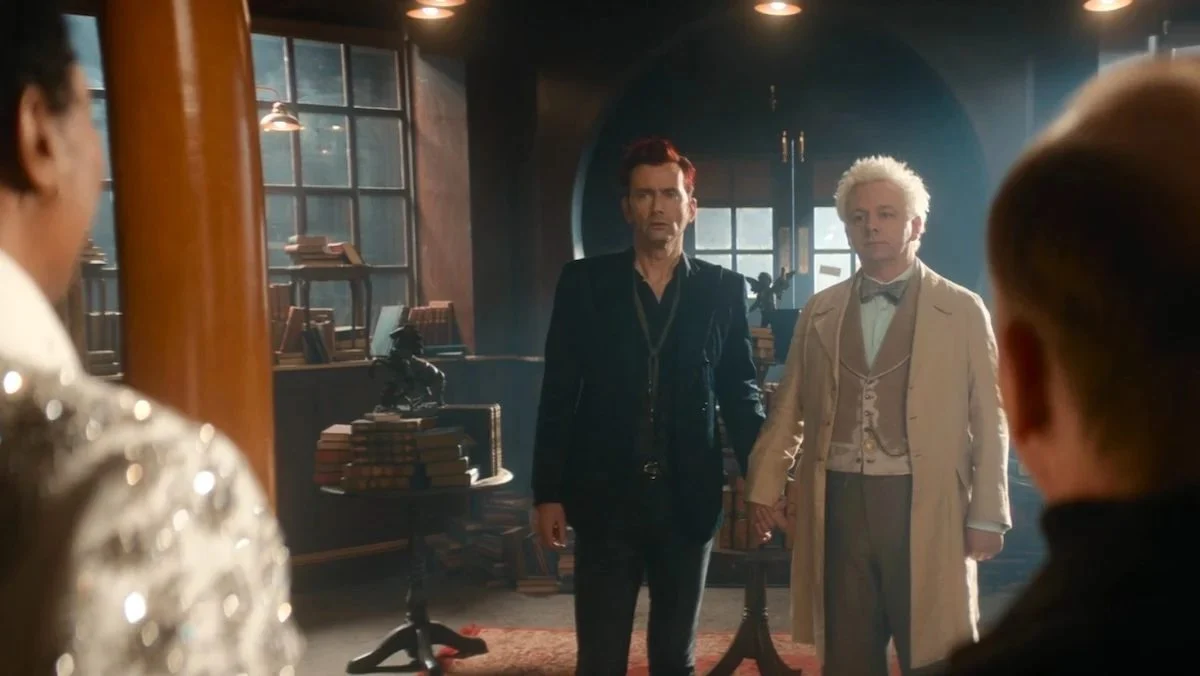
The final chapter of Amazon Prime Video’s Good Omens has arrived, serving as a poignant, albeit divisive, farewell to one of the most beloved fantasy series of the streaming era. For three seasons, the show navigated the celestial politics of Heaven and Hell through the eyes of Aziraphale, the fastidious angel, and Crowley, the roguish demon. While the third season ultimately delivered a conclusion that was intellectually stimulating and emotionally resonant, it left many fans—and critics alike—grappling with a profound existential sting.
The Narrative Arc: A Compressed Farewell
The production of Good Omens 3 was, by many accounts, a race against time. The season felt undeniably condensed, with a narrative velocity that occasionally sacrificed the slow-burn character development that defined the show’s earlier installments. Plots were accelerated, and secondary characters—who had previously been given the room to breathe and evolve—felt somewhat shortchanged by the truncated runtime.
However, despite these structural frustrations, the core DNA of the series remained intact. The finale delivered the trademark blend of wit, intelligence, and heartfelt sincerity that has become the show’s hallmark. It was a conclusion that felt "earned," even if the path taken to reach those final moments left a lingering sense of coldness. The series, which began as a whimsical exploration of the apocalypse, bowed out by asking the most difficult question of all: What happens to our memories when reality itself is erased?
Chronology of a Celestial Crisis
To understand the emotional fallout of the finale, one must look at the trajectory of the third season. The story begins with the familiar tension between Aziraphale’s desire for order and Crowley’s cynical pursuit of autonomy. As the season progresses, the stakes shift from the prevention of a literal Armageddon to a metaphysical struggle for the nature of reality.
The Archangel Michael, acting as a catalyst for the series’ ultimate disruption, orchestrates a series of events that forces the audience to confront a godless universe. In the final act, the "Great Plan"—the grand, unknowable design of the Supreme Being—is dismantled. By the time the screen fades to black, the cosmic hierarchy of Heaven and Hell has been effectively nullified, leaving humanity to navigate its own destiny, free from the machinations of divine or infernal intervention.

The Human Essence of a Supernatural Tale
Despite its supernatural framing, Good Omens has always been a deeply human story. It has never been about the glory of Heaven or the fire of Hell; it has been about the fragile, precious nature of being alive. The series operates on the premise that life is inherently difficult, often unfair, and ultimately finite.
In this, the show functions as a unique meditation on faith. Even in a universe where a supreme deity is known to exist, the characters—and by extension, the audience—are forced to reckon with the fact that this deity is largely indifferent. The show posits that while we may never have proof of a divine purpose, the existence of love, friendship, and empathy serves as a testament to the value of life.
The "Pro-Faith" Argument
Paradoxically, Good Omens has often been labeled one of the most pro-faith shows on television. It suggests that even in a universe that doesn’t make sense, the act of existing is a miracle in itself. By introducing characters like Aziraphale and Crowley—two entities who, despite their origins, became the most "human" characters in the story—the series highlights that goodness is a choice, not a mandate. They watch over humanity not because they are ordered to, but because they have come to cherish the messy, unpredictable nature of mortal life.
Supporting Data: The Impact of Erasure
The primary point of contention in the finale is the metaphysical "reset" that occurs. To reach a universe where humanity is truly free from the influence of God and the warring factions of the afterlife, the series essentially deletes the timeline in which certain characters existed.
This creates a philosophical friction. For example, the character of Mrs. Sandwich, who undergoes a poignant arc of reconciliation with her sister, is rendered a casualty of this cosmic reboot. The audience is left to wonder: If a character’s struggle, growth, and eventual joy are wiped from existence, did they ever really matter?

This highlights a key tension in the series’ philosophy:
- The Comfort of Continuity: We find solace in the belief that those we love, and the impact they have on us, persist through time.
- The Fear of Non-Existence: The show forces us to confront the possibility that all our struggles, triumphs, and heartbreaks might be erased, leaving no trace that we were ever here.
Official Responses and Creative Direction
The production team behind Good Omens 3 has remained relatively quiet regarding the specific backlash to the finale’s "erasure" plot point, maintaining that the creative intent was to emphasize the finality of free will. In various interviews, showrunners have suggested that the goal was to strip away the "crutch" of divine oversight. By removing the supernatural safety net, they intended to elevate human agency to its absolute pinnacle.
Critics have noted that this approach aligns with the source material’s cynical-yet-hopeful tone, but the execution remains a subject of intense debate among the fandom. Some see the ending as a beautiful, clean slate for humanity; others see it as a nihilistic undoing of everything the audience had grown to love over three seasons.
Implications: A Legacy of "What If"
The implications of Good Omens 3 extend beyond the screen. The show leaves its audience with a challenging thought: Does the meaning of our lives depend on our endurance, or does it exist in the moment of our experience?
The finale argues that the universe is essentially cold and, eventually, doomed to fade. However, it also suggests that because we existed—because we felt, cared, and loved—that existence carries an intrinsic, indelible value. The tragedy of the finale is that it forces this realization upon us by threatening to take that existence away.

The Final Verdict
Good Omens 3 is a polarizing masterpiece. It succeeds in its mission to bring the series to a logical, if heart-wrenching, conclusion. It respects the audience’s intelligence, refusing to offer easy answers or a sanitized happy ending. While the erasure of certain narrative threads remains a point of frustration, the core message—that your life matters, that you are the architect of your own joy, and that the universe is better for having held you—remains as powerful as ever.
In the end, Good Omens reminds us that we are all we have. It is a show that has always understood that while we may be small in the face of an infinite, unknowable universe, the connections we forge in the dark are what truly constitute the "good omens" of our existence. Whether or not one accepts the narrative cost of the finale, the emotional impact is undeniable: we were here, we loved, and that, in its own beautiful way, is enough.










No comments yet. Be the first to join the conversation!