Asep Darmawan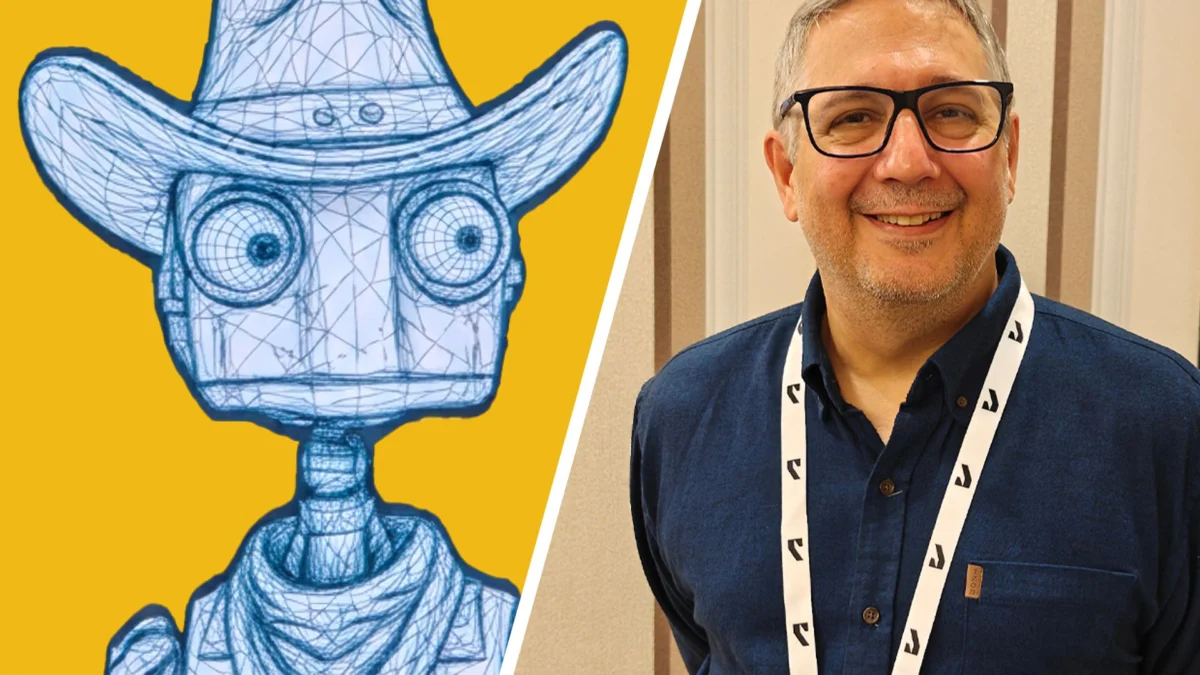
In the high-stakes world of digital production, perfection is usually the only acceptable currency. Yet, at Autodesk University 2026 (AU26) in Las Vegas, the company behind industry standards like Maya showcased a project that embraced a glaring, unavoidable failure. The demo film, Robots of the Wild West, features a simple sequence: a character sits down next to another at a table. A few frames later, the character has inexplicably teleported to the opposite corner of the table.
It is a classic continuity error—a cardinal sin in traditional filmmaking. However, for Maurice Patel, Autodesk’s VP of M&E Industry Strategy, this glitch is not a reason for embarrassment; it is a profound teaching moment. "My team tried to prompt the problem away and couldn’t," Patel admitted during a candid conversation in the post-keynote quiet of AU26. The choice was binary: restart the entire generative process at a cost exceeding the project’s value, or leave the "happy accident" in. They chose the latter, providing a perfect microcosm for the current state of artificial intelligence in professional creative workflows.
The Architecture of the News: AI at the Crossroads
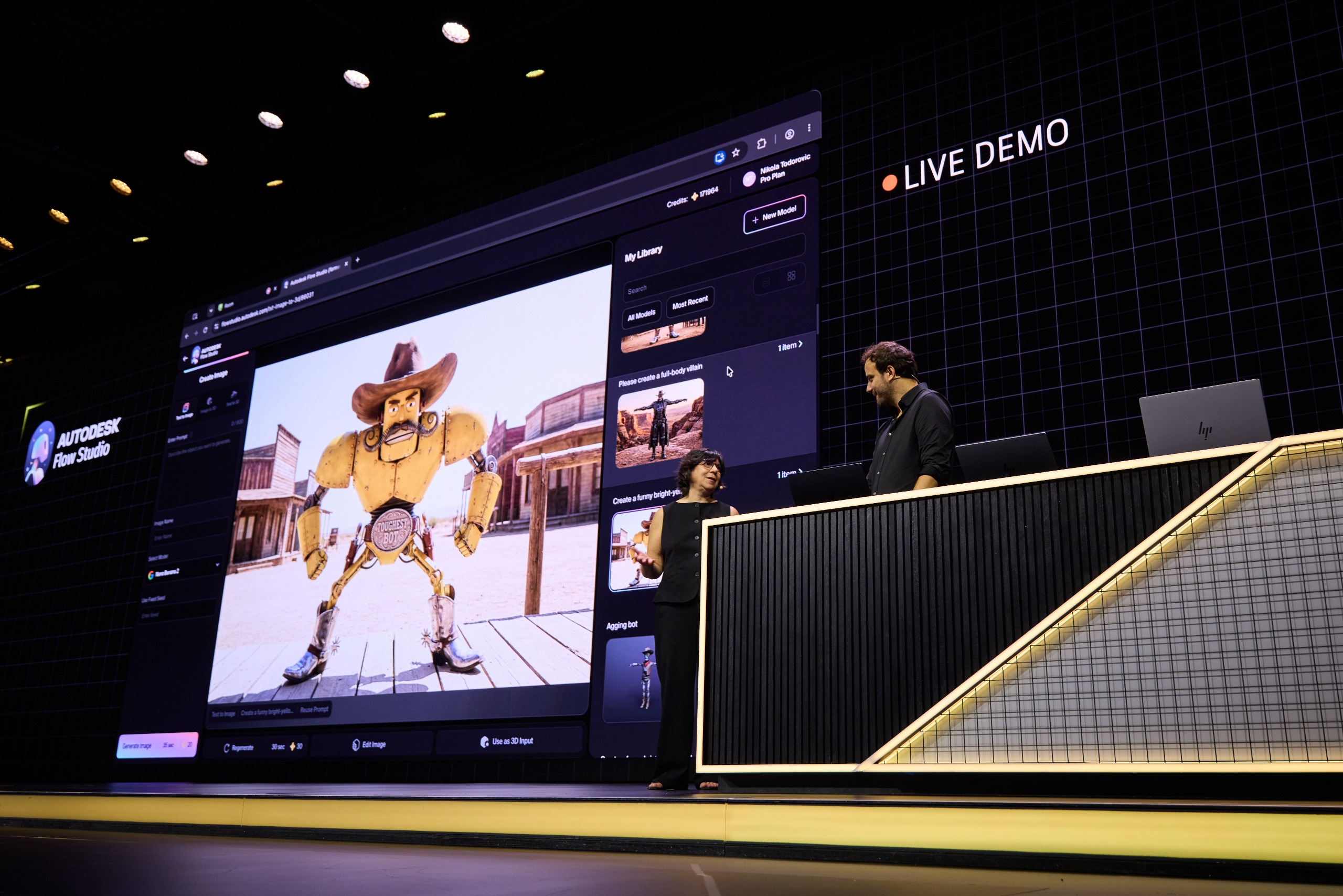
Autodesk’s message at AU26 has been consistent and deliberate: AI is not a replacement for the artist’s hand, but a new layer of orchestration in an increasingly complex pipeline. While the industry is flooded with hyperbolic claims of "text-to-movie" automation, Autodesk is positioning itself as the grounding force. Through tools like Flow Studio and the integration of MotionMaker into Maya, the company is attempting to bridge the gap between generative spontaneity and the rigid requirements of professional production.
Patel’s philosophy on AI is structured around a three-tier hierarchy: Tasks, Shots, and Worlds.
- Tasks: These are small-scale, specialized models trained to execute singular functions, such as MotionMaker, which handles locomotion for humans and animals.
- Shots: This is the domain of generative video—the current frontier where Autodesk is focusing its immediate development efforts.
- Worlds: These represent the "holy grail"—persistent, physics-aware environments that remain a distant reality.
"AI is great at serendipitous content and is terrible at directed content," Patel notes. This distinction is the bedrock of Autodesk’s strategy. By acknowledging that generative models are prone to hallucinations and continuity breaks, the company is pivoting toward a future where human artists act as "directors" of AI-driven systems, rather than laborers performing repetitive, manual tasks.

Chronology of the Shift: From Compositing to Generative AI
To understand the current anxiety surrounding AI, one must look back at the history of digital transformation. Patel’s career began during the industry’s transition to digital compositing via Avid, a period where "roto artists" and optical compositors faced the same existential questions now haunting the modern animator.
In the 1990s and early 2000s, the arrival of digital tools did not kill the film industry; it expanded it. It turned a niche, highly technical cottage industry into a massive global engine employing hundreds of thousands of people. Patel argues that AI is currently in its "newbie" phase, creating a sense of fear that mirrors the transition to digital suites thirty years ago.
"Everything I’ve experienced with AI, including doing the work for Robots of the Wild West, is that you still need artists who have a vision," Patel says. The process of steering a model—often referred to as "prompting"—is merely a new interface for the same creative intent. Just as the introduction of digital animation curves didn’t replace the need for an animator’s understanding of weight, timing, and emotion, AI will not replace the need for the human imagination to define what makes a performance "shine."
Supporting Data: The Reality of "AI Slop" vs. Creative Vision
While the hype cycle suggests that AI will lower the cost of production to near-zero, the reality is far more nuanced. Patel remains skeptical of claims that feature-length projects can be produced for minimal budgets without massive infrastructure support. He points to projects like Dreams of Violets, which allegedly cost only $2,000 to produce, as likely outliers where the "cost" was offset by the creator’s own technical labor and free compute power.
In reality, for a professional studio, the cost of "prompting" a high-quality, feature-length film can run into the hundreds of thousands of dollars in compute power alone. Patel warns against the rise of "AI slop"—cheap, mass-produced content that lacks creative direction or narrative cohesion.

"If you don’t care about the content, you can do something quickly and cheaply," he warns. The industry’s current crisis is not a lack of content, but a lack of sustainable production models. Games that once cost $15 million to $20 million to develop have ballooned to $200 million, forcing studios into a risk-averse loop of sequels, reboots, and remakes. Autodesk’s hope is that by reducing the technical overhead of VFX, AI might allow for the same kind of creative risk-taking seen in low-budget horror films like those from A24 or Blumhouse.
Official Responses: Orchestration Over "One Model to Rule Them All"
Autodesk’s stance is a direct pushback against the "black box" platforms that promise to do everything for everyone. "We fundamentally believe that the future of AI is orchestration," says Patel. He explicitly rejects the idea of a single, all-encompassing model, viewing such attempts as a misunderstanding of how professional studios actually function.
In the studio of the future, Patel envisions a hybrid workflow:
- 3D Control: Using Flow Studio’s 3D Editor + Canvas to block cameras and character positions before AI is ever touched.
- Generative Augmentation: Applying AI to fill in the gaps, generate textures, or animate secondary elements.
- Human Curation: Using traditional VFX techniques to polish, fix, and integrate these elements into a coherent whole.
This "orchestration" approach allows artists to return to any stage of the process. If a model generates a character that works in one shot but fails in the next, the artist can intervene at the 3D blocking stage rather than starting the entire generative process from scratch.
Implications: The Future of the Human Animator
What happens to the artist when the computer can generate a million rabbits? "You could train a model on a million rabbits," Patel muses, "and it would never produce Bugs Bunny." The reason is simple: AI understands patterns, but it does not understand the intent behind the performance. Bugs Bunny isn’t a rabbit; he is a specific accumulation of human imagination, timing, and characterization.
This reinforces the core takeaway from AU26: The tools are changing, but the job remains. Whether an animator is using a digital pencil, an animation curve, or a prompt, the fundamental requirement is the ability to make an audience feel something.
As for the "table problem" in Robots of the Wild West? It remains a testament to the fact that we are in the early, messy days of a new medium. "It’s a love-hate thing," Patel admits, reflecting on his own transition from a seasoned CG expert to a student of these new, chaotic tools. "It’s scary, but it’s also kind of fun."
For the creative industry, the implication is clear: The future belongs to those who view AI not as a magic wand that solves every problem, but as a complex, temperamental instrument that requires a master’s hand to play. The "happy accidents" of today are the growing pains of a new era of storytelling—one where the artist is more vital, and perhaps more challenged, than ever before.


 Suro Senen
 Siti Muinah