

By Financial News Desk
May 12, 2026
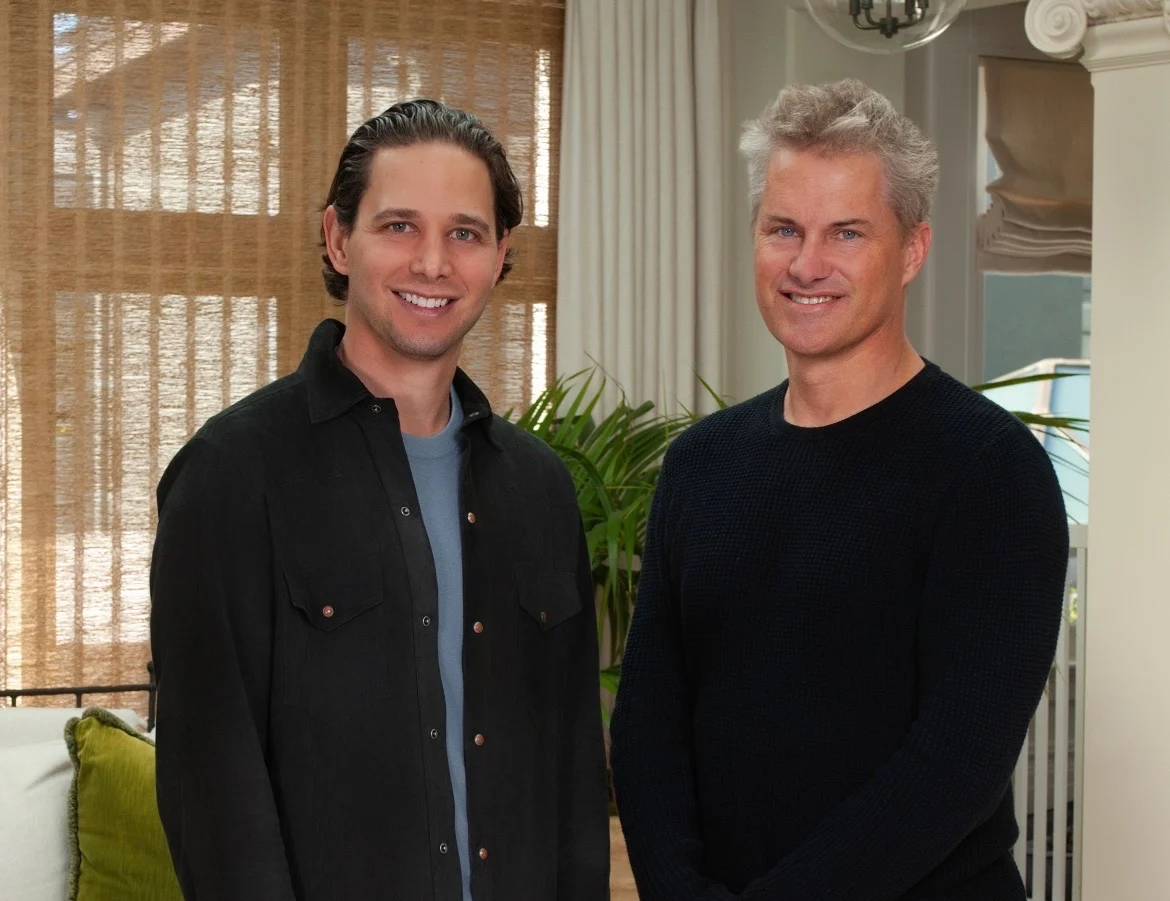
In a significant show of confidence in the early-stage venture ecosystem, A* Capital, the high-profile venture firm spearheaded by serial entrepreneur Kevin Hartz and partner Bennet Siegel, announced on Tuesday the close of its third flagship vehicle. The new $450 million Fund III marks a substantial step up from its predecessors, signaling the firm’s intent to deepen its footprint in an increasingly competitive landscape.
While many venture capital firms have pivoted toward specialized, thesis-driven models in response to market volatility, A* Capital continues to embrace a rigorous generalist approach. The firm confirmed it intends to deploy the new capital over the next 24 to 36 months, targeting at least 30 new startups with average check sizes ranging from $3 million to $5 million.
Main Facts: The Anatomy of Fund III
The $450 million raise represents a significant milestone for a firm that only emerged on the venture scene in 2020. Fund III is designed to provide "bridge-to-scale" support, focusing on companies that have moved past the initial ideation phase but require significant capital to achieve product-market fit and operational maturity.
The firm’s mandate remains broad. According to internal strategy briefings, A* Capital will continue to allocate capital across high-growth verticals, including:
- Artificial Intelligence: Applications focusing on enterprise efficiency and agentic workflows.
- Fintech: Infrastructure-level financial services and next-generation payment systems.
- Healthcare: Biotech and health-tech solutions that leverage data science to improve patient outcomes.
- Security: Cybersecurity software protecting critical digital infrastructure.
The capital base for Fund III is notably institutional. Limited Partners (LPs) in the fund include a diverse mix of foundations, non-profit organizations, and university endowments, with Carnegie Mellon University publicly identified as a key backer. This institutional backing provides a degree of stability that allows A* Capital to maintain its long-term investment horizon, independent of the short-term fluctuations of public market sentiment.
A Brief Chronology: Building the A* Brand
To understand the trajectory of A* Capital, one must look at the pedigree of its leadership. Kevin Hartz, a name synonymous with the mid-2000s Silicon Valley boom, built his reputation on the success of Xoom, the international money-transfer service that was eventually acquired by PayPal for $1.1 billion in 2015. His subsequent triumph, the event-ticketing giant Eventbrite, which went public in 2018, cemented his status as a founder-turned-investor who understands the "zero to one" journey.
- 2020: A* Capital is founded by Hartz and Siegel with the goal of institutionalizing "founder-friendly" venture capital.
- 2021: The firm launches its inaugural Fund I, raising $300 million. The fund quickly gained traction by backing high-growth winners early in their lifecycle.
- 2024: A* Capital closes its second fund, an oversubscribed $315 million vehicle. This period marked a shift in the firm’s public persona, as it began to gain notoriety for its willingness to bet on unconventional talent.
- 2026 (May): The firm announces its $450 million Fund III, expanding its dry powder and confirming its position as a Tier-1 early-stage firm.
Supporting Data: The "Teenage" Alpha
Perhaps the most distinctive aspect of A* Capital’s strategy—and one that has sparked significant debate in venture circles—is its propensity for backing exceptionally young founders. In an industry that often prizes gray hair and decades of corporate experience, Hartz has taken a contrarian path.
In an interview with TechCrunch in the fall of 2025, Hartz revealed that nearly 20% of the firm’s portfolio was comprised of startups founded by teenagers. This is not merely a philanthropic gesture; the firm views this as an arbitrage opportunity. By identifying "digital native" founders who have grown up with the tools they are now building upon, A* Capital believes it can capture value that traditional firms might overlook due to bias.
Portfolio highlights that validate this thesis include:

- Ramp: A dominant force in the fintech space, which has redefined corporate expense management.
- Mercor: An AI-driven recruitment and talent-matching platform that has become a staple for firms looking to optimize hiring workflows.
The firm’s performance data remains private, but the consistent oversubscription of their funds suggests that their LPs are satisfied with the risk-adjusted returns generated by these unconventional bets.
Official Responses and Strategic Outlook
"We are building for the long term," said a spokesperson for the firm during the announcement. "The current economic environment presents a unique opportunity to back founders who are building the bedrock of the next decade of technology. Whether it is an experienced entrepreneur building their third company or a young founder solving a problem for their generation, our focus remains on conviction, vision, and execution."
The firm’s approach to the current market is one of "disciplined aggression." By maintaining a check size between $3 million and $5 million, they are positioning themselves as a lead investor in Seed and Series A rounds, where they can exert influence on governance and strategic direction.
Implications for the Venture Ecosystem
The closing of A* Capital’s Fund III has several implications for the broader venture capital landscape:
1. The Survival of the Generalist
While many funds have been forced to become "vertical-specific" to compete, A* Capital’s success suggests that a strong brand and deep networks can still attract capital for a generalist strategy. By being "category agnostic," the firm remains flexible enough to pivot toward the next big trend—whether that be a resurgence in climate-tech or a new wave of robotics—without being tied to a rigid thesis.
2. Generational Shifts in Entrepreneurship
The firm’s heavy investment in teenage and collegiate founders is a bellwether for the industry. As the barrier to entry for building software (via LLMs, low-code tools, and cloud infrastructure) continues to collapse, the age of the "average" successful founder is likely to trend downward. A* Capital is effectively betting that raw intellect and speed will outperform institutional experience in the AI-driven economy.
3. Institutional Confidence
The participation of major endowments, such as Carnegie Mellon, signals a continued appetite for venture capital among institutional allocators, despite the exit-market stagnation that has plagued the industry over the past two years. These institutions are looking for firms that can provide access to "innovation alpha"—startups that have the potential to grow regardless of the macro-economic climate.
4. The "Founder-Investor" Model
Hartz’s background remains the firm’s greatest asset. In a market where founders are inundated with term sheets, the promise of "operational guidance from someone who has been in the trenches" is a significant competitive advantage. A* Capital is not just selling money; they are selling a playbook.
Conclusion
As A Capital moves into this next chapter, the pressure to deploy $450 million effectively will be high. However, the firm has established a clear pattern of success and a distinct identity that sets it apart from the sea of venture capital firms operating in the Valley. By bridging the gap between established institutional capital and the next generation of experimental, youthful innovation, A Capital has solidified its role as a key architect of the future tech landscape.
The industry will be watching closely to see if the firm’s "20% teenage" bet pays off in the long run, or if the increased fund size necessitates a pivot toward more mature, safer bets. For now, the sentiment remains clear: the market is ready for more, and A* Capital is ready to deliver.












No comments yet. Be the first to join the conversation!