
 Ammar Sabilarrohman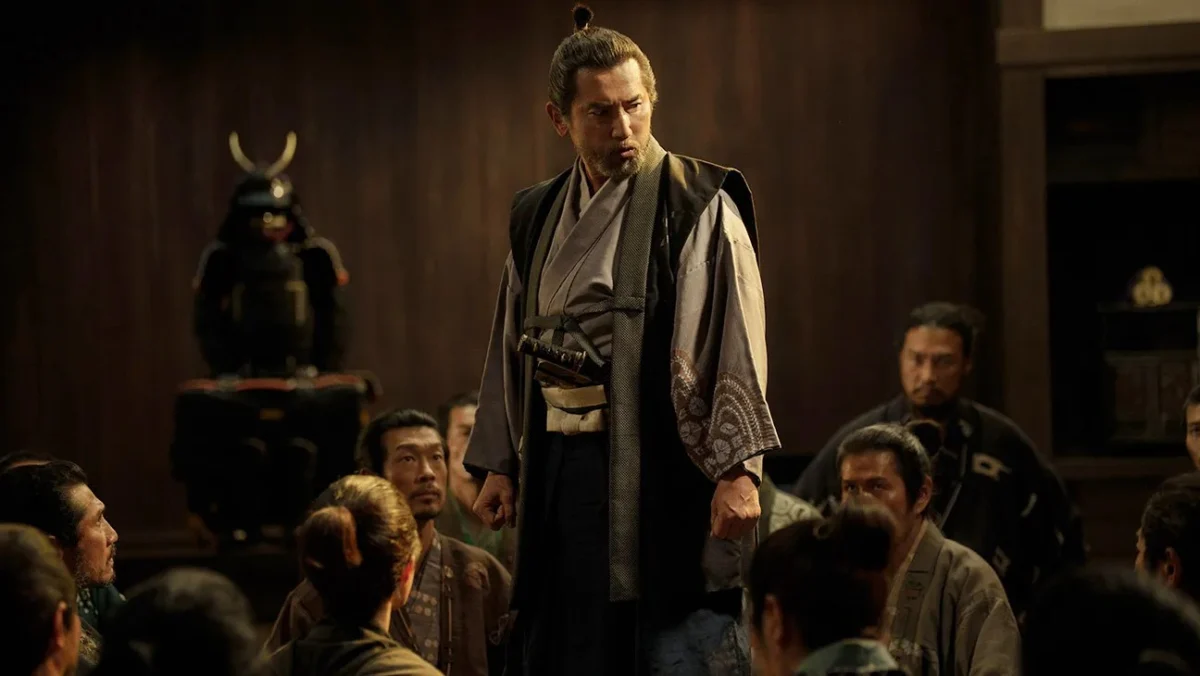
In the vast, haunting filmography of Kiyoshi Kurosawa, the Buddhist proverb “advance to paradise, retreat into hell” serves as a chilling compass. It is a philosophy of backwards logic, often adopted by the doomed protagonists who populate his modern-day nightmares, from the psychological decay of Cure to the domestic dread of Creepy. Kurosawa has long been the preeminent architect of modern accelerationism, observing how humanity’s impulse to push forward—faster, harder, and with less reflection—during a crisis often serves as the very engine of its own destruction.
With his latest feature, The Samurai and the Prisoner, Kurosawa pivots away from the neon-lit, existential anxiety of the contemporary urban landscape to the mud-caked, claustrophobic stone walls of a 16th-century Japanese castle. It is an anomalous entry in his career, a plodding but intellectually rich jidaigeki (period drama) that attempts to transplant his signature dread into the Sengoku era. While the film may struggle with the rigid constraints of its historical genre, it ultimately stands as a profound meditation on the futility of ambition and the courage required to simply stop.
The Siege of Arioka: A Historical Setup
The film is an adaptation of Honobu Yonezawa’s 2021 novel, set against the backdrop of the 1578 rebellion of Araki Murashige against the formidable warlord Nobunaga Oda. The historical stakes are established early: Murashige (played with stoic gravity by Masahiro Motoki) has barricaded himself and his loyalists within the walls of Arioka Castle as Oda’s forces prepare to annihilate them.
The narrative catalyst arrives not in the form of a siege engine, but as a strategic infiltration. Kuroda Kanbei (Masaki Suda), a brilliant tactician for the Oda clan, arrives at the castle to plead for a peaceful surrender, hoping to save his own family from the wrath of his commander. In a departure from the brutal norms of the era, Murashige refuses to execute the intruder, choosing instead to imprison him in the dark, dank bowels of the fortress. This decision transforms the film from a standard war epic into a series of locked-room mysteries, as the two men—captor and prisoner—are forced into a symbiotic, intellectual dance while the castle slowly crumbles around them.
A Chronology of Confinement
The structure of The Samurai and the Prisoner is episodic, spanning the shifting seasons of the siege. The narrative is divided into four distinct "whodunnits," each triggered by a mysterious death within the castle walls.

- The Initial Incarceration: The first act establishes the dynamic. Kanbei is shackled in the dungeon, a location Kurosawa renders in suffocating, monochromatic browns and deep, impenetrable shadows.
- The First Mystery: When a child of a rival samurai is found dead in the light of day, the established order of the castle is shattered. Murashige, a man who insists that “killing gains nothing,” is forced to seek the counsel of his prisoner.
- The Escalation: As the seasons change, the murders continue. Each case serves as a thematic mirror for the characters. One death forces a reevaluation of the value of material wealth, while another provides a rare, brutal glimpse of the violence occurring outside the castle.
- The Climax: The final mystery, occurring as autumn fades, introduces the specter of divine intervention. It is here that the film’s disparate narrative threads coalesce, leading to a conclusion that favors philosophical resignation over martial triumph.
Supporting Data and Production Context
The film, which premiered at the 2026 Cannes Film Festival, is a curious stylistic departure for Kurosawa. Known for his masterful use of empty space and unsettling movement in modern settings, his decision to embrace the "stodgy" tropes of traditional jidaigeki is both a bold experiment and a potential point of friction.
Critics have noted that the film’s visual palette—frequently muddy and low-contrast—acts as a thematic choice rather than a technical failing. By eschewing the clean, high-contrast aesthetic of classic black-and-white samurai films, Kurosawa forces the audience to dwell in the discomfort of the period. However, the pacing remains deliberately slow, with the 147-minute runtime occasionally testing the viewer’s patience. The film’s "wood-like" rigidity reflects the source material, suggesting that Kurosawa felt the weight of the novel’s structure more heavily than in his more loose, improvisational projects like Cloud.
Official Perspectives and Critical Reception
The film has been hailed as a "vintage Kurosawa" project, not because of its setting, but because of its thematic obsession with moral crossroads. The production team has emphasized that the goal was to remain ultra-faithful to Yonezawa’s novel, a challenge for a director whose career is defined by subversion.
Masaki Suda’s performance has been a focal point for critics. His "shiv-like" sharpness brings a necessary contemporary edge to the film, acting as a foil to the older, more weary Murashige. While some reviewers have found the episodic nature of the mysteries to be "mild" or predictable, the consensus is that the film gains significant emotional weight in its final hour. It is a work of "temporal friction," where the history of the samurai code clashes with the modern, fatalistic nihilism inherent in Kurosawa’s worldview.
The Implications of "The Samurai and the Prisoner"
What does it mean to "retreat into hell" in the 16th century? In The Samurai and the Prisoner, Kurosawa suggests that the traditional path of the samurai—valor, suicide, and the aggressive pursuit of honor—is the true path to hell.

The film’s most significant implication lies in the transformation of Murashige. By engaging with Kanbei, he begins to realize that loyalty is not merely a matter of victory or battlefield dominance. Instead, he discovers that true agency may reside in the act of opting out. The "surrender" that the Oda clan demands is reframed as a quiet act of rebellion against the cycle of violence.
Kurosawa, often viewed as a cynic regarding the future of society, offers a rare, if guarded, glimmer of hope here. He posits that if society is destined to "advance for the next 500 years without any sign of heaven to come," then the individual’s only salvation is to rethink their place within that advancement. The film serves as a reminder that when the world is burning, the most radical act is not to charge into the flames, but to change one’s trajectory entirely.
Conclusion: A Grade of C+
While The Samurai and the Prisoner may not reach the dizzying, terrifying heights of Kurosawa’s genre-defining work, it remains a fascinating study of a director grappling with the weight of tradition. The film is a slow burn—often tedious in its plotting and constrained by its genre’s own fossilized tropes—yet it is saved by a hauntingly beautiful, quiet conclusion.
For the dedicated Kurosawa enthusiast, this film is an essential piece of the puzzle, a meditation on how the past can be used to critique the present. For the casual viewer, it may feel like a long walk through a dark, dusty castle. Ultimately, the film succeeds in its goal: it asks us to stop running, to stop advancing toward our own destruction, and to consider what might happen if we simply chose a different path.
As the credits roll and we are left with the silence of the castle, one thing is clear: Kurosawa is not interested in the battles of history, but in the internal war that every person faces when they realize their time is running out. Whether or not that realization constitutes paradise remains, as always, entirely up to the viewer.


 Pevita Pearce
 Asep Darmawan




