

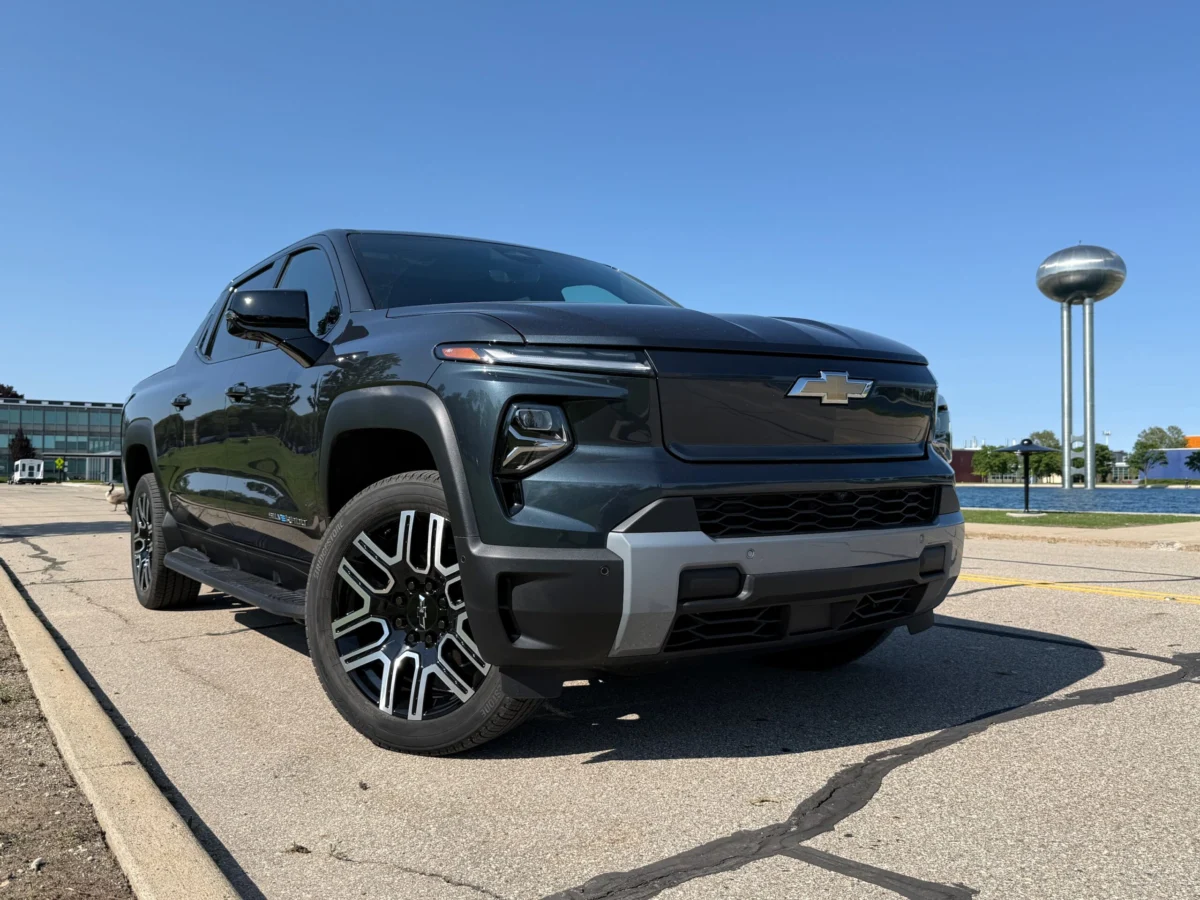
Although I grew up shifting my dad’s Chevrolet S-10 pickup truck from the passenger seat, I’ve never been a "truck guy." My automotive preferences have always leaned toward the agility of hatchbacks and the urban practicality of compact crossovers. Yet, after spending a full day navigating the bustling streets of Detroit in the new Chevrolet Silverado EV, I realized that General Motors might have finally engineered a vehicle capable of converting even the most staunch traditionalists.
The Silverado EV represents a radical departure from the internal combustion engine (ICE) heritage of its namesake. It drives with a level of refinement that feels more like a luxury sedan than a workhorse, yet it retains the raw utility of a full-size pickup. It boasts a cavernous "frunk," a bed that can be extended into the cabin for massive storage, and a whisper-quiet interior. It is capable of powering your entire home during a power outage and can navigate miles of freeway without the driver ever needing to touch the steering wheel. With an impressive range exceeding 400 miles on a single charge, it appears to be the ultimate realization of the American dream on wheels.
And yet, despite its engineering prowess, the truck isn’t flying off showroom floors. Last year, GM moved only about 14,000 units across the U.S. and Canada—a figure that pales in comparison to the quarterly sales of its gas-powered counterpart. This leaves us with a compelling mystery: If GM has truly built the "perfect" American EV, why is the market turning a blind eye?
A Chronology of the Electric Shift
The trajectory of the Silverado EV is part of a larger, more complex story regarding the electrification of the American automotive landscape. GM’s pivot toward an all-electric future was signaled years ago, culminating in the development of the Ultium platform—a modular battery architecture designed to underpin everything from entry-level commuter cars to the heavy-duty Silverado EV.

The vehicle was unveiled to massive fanfare, with promises that it would bridge the gap between legacy truck reliability and next-generation technology. However, the rollout has been measured. As early adopters took their first deliveries, the industry watched to see if the traditional truck buyer—a demographic famously resistant to change—would embrace the quiet, torque-heavy performance of an electric motor. The data suggests that while the product is technically superior, the cultural and logistical hurdles remain higher than anticipated.
The Engineering Behind the "Sail"
At a glance, the design of the Silverado EV is unmistakable, drawing inspiration from the cult-classic Chevy Avalanche. The "sail"—a stylistic panel connecting the cabin to the bed—is not merely an aesthetic nod to the past; it is a functional necessity designed to minimize aerodynamic drag, a crucial factor for maximizing electric range.
Getting into the cabin requires a significant step up, a reminder that you are entering a full-size vehicle. However, the experience inside is one of modern comfort. The dashboard is dominated by crisp, high-resolution screens that feel responsive and intuitive. Unlike many competitors that have moved every function to a touchscreen, Chevy has retained essential physical controls for volume and climate, a nod to usability that veteran truck owners will appreciate.
Perhaps the most surprising aspect of the drive is the handling. Measuring nearly 20 feet in length, the Silverado EV is objectively massive. Yet, thanks to advanced rear-wheel steering, the truck maneuvers through tight city parking lots with the agility of a much smaller vehicle—at least until you attempt to squeeze it into a standard-issue parking space.

Supporting Data: Efficiency and Tech
The technology suite is headlined by a Google-powered infotainment system that is remarkably snappy. More importantly, the integration of Google Maps goes beyond simple navigation. It provides intelligent routing that estimates not just the time of arrival, but how much of the trip can be completed using Super Cruise, GM’s hands-free driver-assistance system.
Super Cruise is, without hyperbole, a transformative experience. During a peak-hour slog through the Detroit metro area, the system handled the stress of stop-and-go traffic with ease. While it occasionally struggled with aggressive lane-cutters—a common limitation in current Level 2 systems—it performed reliably on long stretches of highway.
Underneath the cabin sits a massive 205 kilowatt-hour battery pack. This heavy, mid-mounted battery acts as a low-center-of-gravity ballast, significantly improving the truck’s ride quality. Even more impressive is the efficiency: I clocked approximately 2.1 miles per kilowatt-hour. While this is lower than a standard passenger EV, it is a testament to the engineering required to push such a massive, blunt-nosed object through the air at highway speeds.
The Sales Paradox: Price and Utility
Why are sales lagging? A common critique is the price point. However, looking at the market, the average transaction price for a full-size pickup in the U.S. is roughly $66,000. This is just $5,000 shy of the base Silverado EV LT Extended Range, which offers an impressive 410-mile range. The disparity isn’t as wide as many skeptics claim.

Similarly, the "towing range" argument—that EVs lose too much capacity when hauling heavy loads—is frequently cited as a dealbreaker. Yet, market research from Strategic Vision indicates that about 75% of full-size truck owners tow at most once per year. There should, theoretically, be a massive contingent of buyers ready to make the switch without sacrificing their daily driving needs.
The issue appears to be one of market inertia. The truck market is notoriously slow to adopt new paradigms, driven by concerns over public charging infrastructure and the "range anxiety" that has plagued the EV movement since its inception.
Implications for the Future
The current state of the Silverado EV is that of a "solid first draft." It proves that the technology is ready, even if the public sentiment is still catching up. GM seems to recognize that cost-reduction is the final piece of the puzzle. The company has hinted at a transition to lithium-manganese-rich (LMR) battery chemistry, which is expected to slash production costs by roughly $6,000 later this decade. If these savings are passed on to the consumer, the Silverado EV could reach price parity with fossil-fuel trucks, effectively removing the final barrier to mass adoption.
Furthermore, there is a clear opportunity for engineering refinement. By shedding weight—a challenge for all current-generation EVs—GM could improve payload capacities and further extend the range, potentially allowing for smaller, cheaper battery packs.

Conclusion: A Bigger House for a Bigger Future
As I finished my drive, I found myself genuinely impressed. The Silverado EV is not just a truck; it is a statement of what the future of American utility looks like. It is quiet, powerful, and remarkably sophisticated.
Would I buy one? I’d certainly consider it, if only for the sheer capability. Unfortunately, the realities of urban planning intervene; the Silverado EV is far too large for my 1950s-era two-car garage. To own this truck, I’d need a bigger house. And as I parked the massive machine, I couldn’t help but chuckle—what could be more quintessentially American than buying a vehicle that forces you to upgrade your lifestyle to match its scale?
GM has built the truck of the future. Now, they just need the future to arrive. Until then, the Silverado EV remains a misunderstood masterpiece, waiting for a market that is just beginning to realize that the era of the internal combustion engine is slowly, but surely, shifting gears.











