
 Rifan Muazin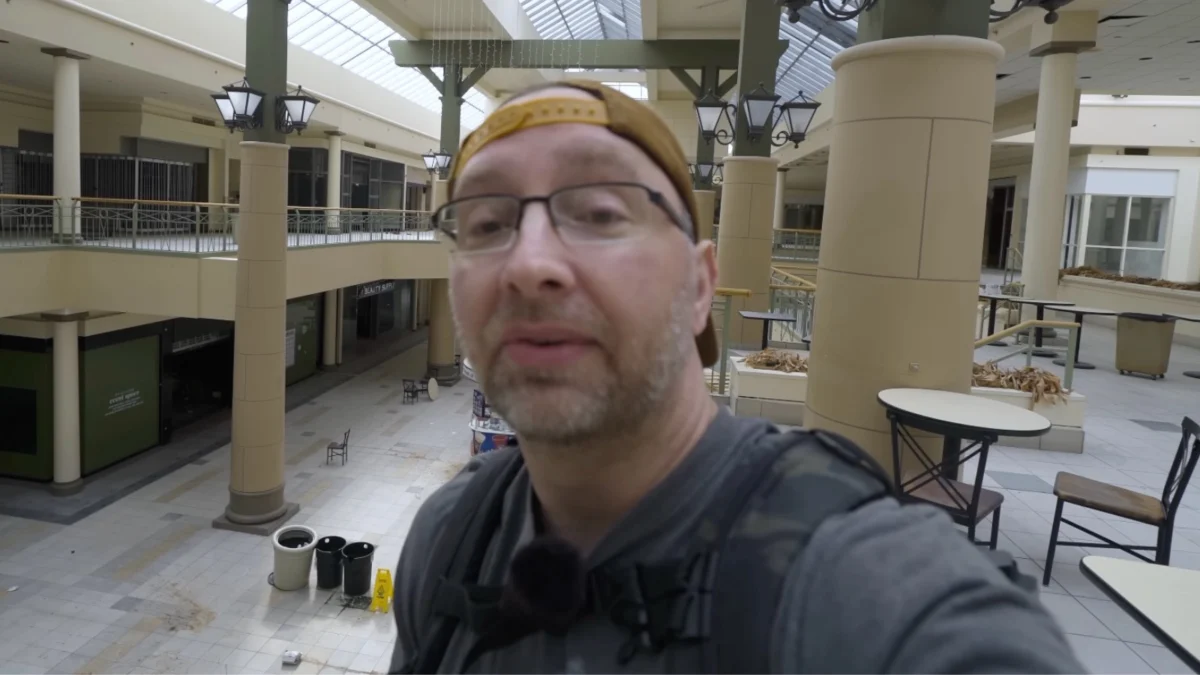
KENNER, La. — The allure of the abandoned, the decaying, and the forgotten has long fueled a thriving subculture known as “urban exploration,” or “urbex.” However, a growing trend of content creators livestreaming or documenting their trespassing into derelict properties has placed the practice under the harsh scrutiny of the law. This week, the Kenner Police Department confirmed the arrest of Richard Matranga, a 44-year-old YouTuber known to his followers as “RangerRickTV,” marking the second such arrest in a high-profile investigation into the unauthorized infiltration of the shuttered Esplanade Mall.
Matranga’s surrender to authorities on August 19 brings to the forefront a contentious legal battle between the freedom of digital documentation and the rigid statutes of private property rights and public safety. As authorities clamp down on what they characterize as dangerous criminal tourism, the case serves as a grim reminder of the physical risks inherent in exploring aging, structurally compromised buildings.
A Chronology of the Investigation
The legal proceedings against Matranga and his associate, Stephen Pamaran—widely known in the digital sphere as “Steve Ronin”—began with a digital footprint. In September 2025, the pair uploaded a video to their respective YouTube channels documenting a clandestine tour of the vacant Esplanade Mall in Kenner. The footage, which garnered thousands of views, depicted the two men navigating the darkened, hollowed-out corridors of a retail space that has stood as a monument to the shifting landscape of American commerce.
Following the circulation of the video, the Kenner Police Department launched an investigation, spurred by an anonymous tip. By mid-July 2026, investigators had secured warrants for both Matranga and Pamaran, alleging that their unauthorized presence inside the structure constituted a criminal act.
On August 19, 2026, nearly a year after the content was initially posted, Matranga turned himself in to local law enforcement. He was booked on a felony charge of unauthorized entry of a business, as well as a misdemeanor charge of unlawful posting of criminal activity for notoriety or publicity. He was subsequently released on August 20 after posting a $5,500 bond. The status of his co-defendant, Pamaran, remains a point of interest for the legal community as the investigation continues to unfold.
The Legal Landscape: Property Rights vs. Digital Content
The charges brought against Matranga are not merely based on simple trespassing. They reflect a strategic effort by Louisiana law enforcement to utilize specific legislative tools aimed at curbing the “clout-chasing” economy of social media.
The Legislative Shift
The charge of “unlawful posting of criminal activity for notoriety or publicity” is a relatively recent addition to the Louisiana legal code. It targets individuals who monetize or seek social media influence by documenting themselves committing crimes. Authorities argue that by filming their trespass, creators are not just documenting a location; they are creating a spectacle that encourages others to endanger themselves, all while profiting from the views generated by the transgression.
Kenner Police Deputy Chief Mark McCormick has been vocal about the department’s stance, noting that the Esplanade Mall is not a public park or a historical site open to the curiosity of the masses. It is private property, and its current state of abandonment makes it a liability for both the owners and the trespassers themselves. “Entering a closed mall without permission is not just a breach of civil order; it is a criminal act that poses significant safety risks,” McCormick stated.
The Physical Risks of “Urbex”
The romanticization of “urbex” in online communities often masks the grim reality of structural instability. Abandoned buildings like the Esplanade Mall or the infamous Plaza Tower in New Orleans are rarely maintained to current safety standards. Floors, staircases, and ceilings in these structures are subject to rot, water damage, and the slow creep of structural fatigue.
The dangers of these excursions were underscored in a tragic incident occurring just days before Matranga’s arrest. On August 15, 17-year-old Jacque St. Ann died after falling from an interior staircase that lacked railings inside the 45-story, long-vacant Plaza Tower in New Orleans. Police reports indicated that St. Ann and a group of teenagers had entered the building specifically to explore its upper floors.
The death of St. Ann has become a rallying point for those advocating for stricter enforcement against urban exploration. For local authorities, the distinction between a “photographer” and a “trespasser” is secondary to the immediate threat of death or serious injury. When YouTubers like Matranga and Pamaran broadcast their successful entries, officials argue that they are essentially providing a roadmap for thrill-seekers who may lack the experience or equipment to navigate such environments safely.
Implications for the Creator Economy
The arrest of Matranga and Pamaran highlights a growing tension within the “creator economy.” YouTubers who specialize in urbex content argue that they are providing a form of “digital preservation,” documenting the decline of American landmarks before they are demolished or renovated. They often maintain that their presence is non-destructive and that they “take nothing but photos and leave nothing but footprints.”
However, the legal system remains unmoved by these artistic justifications. In the eyes of the law, the intent—whether for artistic documentation or for YouTube monetization—does not override the right of the property owner to exclude the public.
The “Clout” Factor
Critics of the urbex community point to the “misdemeanor for notoriety” charge as a necessary deterrent. In an era where digital engagement is a currency, there is an inherent incentive to escalate the danger of one’s content. The more dangerous or inaccessible the location, the higher the likelihood of a viral video. This dynamic creates a perverse incentive structure where the risk of arrest or physical injury is viewed by some as an acceptable trade-off for channel growth and ad revenue.
A Future of Tighter Scrutiny
As the case against Matranga progresses, it is expected to set a precedent for how Louisiana authorities handle similar incidents in the future. The use of “notoriety” charges suggests that the state is prepared to pursue not only the act of trespassing but also the digital footprint left behind.
For property owners, the message is clear: security measures must be tightened, and those who attempt to breach these barriers will face legal consequences. For the urbex community, the landscape is becoming increasingly hostile. Creators are now forced to weigh the aesthetic value of an abandoned building against the very real possibility of a permanent criminal record and significant financial penalties.
The arrest of Matranga and the tragic death of Jacque St. Ann have prompted a broader conversation about the responsibility of platforms like YouTube. As of now, the content remains accessible, raising questions about whether the platform should take a more active role in moderating content that depicts illegal acts.
As the legal proceedings continue, the case of the Esplanade Mall will likely serve as a cautionary tale for those who seek to profit from the aesthetics of ruin. The allure of the abandoned remains, but for those who cross the line into the criminal, the cost of the next video may be far higher than they ever anticipated. The line between explorer and criminal is often drawn at the boundary of a “No Trespassing” sign, and for the authorities in Kenner, that line is absolute.
With court dates pending and the debate over digital ethics intensifying, the incident underscores a fundamental truth: no video, no matter how many views it garners, is worth the price of a life or the weight of a felony conviction. As the investigation into the Esplanade Mall continues, the eyes of the public—and the legal community—will be watching to see if this represents a turning point in the battle against digital-age trespassing.


 Suro Senen
 Pevita Pearce




