

By Investigative Desk
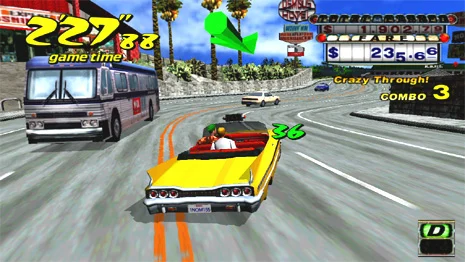
In a major strategic realignment, Sega has officially confirmed the termination of its ambitious "Super Game" initiative. Once touted as a cornerstone of the company’s long-term digital growth strategy, the project’s cancellation marks a significant departure from the publisher’s previous vision of creating a massive, interconnected ecosystem. However, far from signaling a retreat from development, Sega is doubling down on its most potent assets: its deep, storied library of intellectual property. As the gaming landscape shifts toward live-service fatigue, Sega’s renewed focus on revitalizing legendary franchises like Crazy Taxi, Jet Set Radio, and Golden Axe may prove to be the company’s most lucrative move yet.
Main Facts: The End of an Ambition
The "Super Game" project, first unveiled in 2021, was intended to be the crown jewel of Sega’s modern era. The initiative promised a revolutionary, large-scale, global title that would leverage cutting-edge technology to offer persistent online experiences. Central to this vision was a strategic alliance with Microsoft, which involved integrating Azure cloud computing services to facilitate the project’s massive scale.
In its recent earnings call, however, Sega executives confirmed that the project has been officially scrapped. The decision reflects a broader trend in the industry where large-scale, high-budget live-service experiments are increasingly being re-evaluated in favor of more focused, high-quality releases. While the "Super Game" will not see the light of day, the infrastructure and learnings gathered from the collaboration with Microsoft—particularly regarding cloud-based development—are expected to be redistributed across Sega’s other internal studios.
A Chronological Perspective: From Vision to Pivot
To understand the weight of this decision, one must look at the timeline of Sega’s recent corporate evolution:
- 2021: The Grand Announcement: Sega officially announces the "Super Game" initiative. The company positions this as a multi-year project designed to produce a "flagship" title that would stand alongside the biggest live-service games in the world.
- 2021-2022: Microsoft Partnership: Sega formalizes a "Strategic Alliance" with Microsoft. The partnership aims to build a next-generation development environment using Azure, fueling speculation that the "Super Game" would be an exclusive or a cloud-first title.
- 2023: The Shift Toward Revivals: Amidst shifting market conditions, Sega surprises the industry by announcing a wave of development projects focused on "classic IP." Titles like Jet Set Radio, Crazy Taxi, Streets of Rage, and Golden Axe are explicitly mentioned as being in various stages of production.
- 2024: Formal Cancellation: The "Super Game" is officially retired as a primary corporate goal. Sega shifts its messaging to focus on "Global IP Expansion" and "Remake/Remaster" strategies, signaling a definitive end to the previous project.
Supporting Data: Why the Pivot Makes Sense
The gaming industry is currently navigating a "correction" phase. According to market data from Newzoo and other industry analysts, player engagement with "infinite" live-service titles is plateauing. Players are increasingly gravitating toward "comfort gaming"—the revival of beloved franchises that offer nostalgia paired with modern quality-of-life improvements.
Sega’s decision to move away from the "Super Game" is backed by the overwhelming success of its recent Sonic the Hedgehog titles and the Yakuza/Like a Dragon series. Sonic Frontiers, for instance, shattered internal sales projections, proving that Sega’s core audience is eager for high-budget, single-player experiences rather than experimental, service-based platforms. Furthermore, the commercial and critical success of the Sonic films has created a "halo effect," revitalizing the brand and proving that Sega’s legacy characters have immense cross-generational appeal.
Official Responses and Internal Outlook
While Sega has not provided a single, specific reason for the cancellation of the "Super Game," company filings hint at a transition toward "profitability through efficiency."
"We are constantly reviewing our portfolio to ensure that our development resources are aligned with market demand," a spokesperson noted in the supplementary materials of the recent earnings report. "While the ‘Super Game’ project represented a bold vision for the future, we have determined that our current strategy of leveraging our rich library of existing franchises provides a more sustainable path to growth and audience engagement."
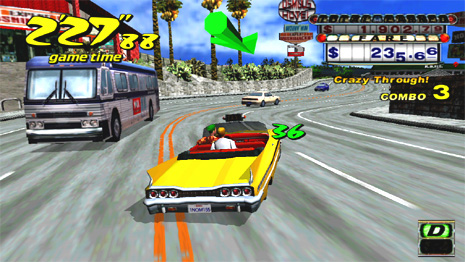
The sentiment within the development teams is reportedly one of relief. Developers who were previously tied to the opaque and daunting requirements of the "Super Game" are now being reallocated to projects that have clearer creative identities. The move toward Crazy Taxi and Jet Set Radio is viewed as a "back to basics" approach that allows creative teams to work with established design pillars while updating them for a modern engine and audience.
Implications for the Future of Sega
The cancellation of the "Super Game" is not a failure; it is a redirection. By shedding the weight of a singular, monolithic project, Sega has freed up significant financial and human capital to reinvigorate its back catalog.
1. The Power of Nostalgia-Driven Innovation
The modern gaming market has shown that franchises like Street Fighter, Resident Evil, and Final Fantasy thrive when they balance nostalgia with technical modernization. By bringing back Jet Set Radio and Crazy Taxi, Sega is targeting a demographic that grew up with the Dreamcast and the Saturn, while simultaneously appealing to a new generation of players who appreciate "stylized" and "arcade-like" experiences that have become rare in the era of gritty, realistic shooters.
2. Strategic Asset Management
Sega owns one of the most enviable lists of intellectual properties in the gaming industry. By focusing on Streets of Rage and Golden Axe, the company is essentially creating a "Sega Renaissance." This strategy minimizes the risk associated with developing a new IP from scratch while maximizing the potential for brand recognition.
3. The Microsoft Relationship
Despite the cancellation of the "Super Game," the relationship with Microsoft remains intact. Analysts suggest that the Azure cloud tools developed during the project will likely be utilized for other Sega titles, potentially enabling cross-platform play, advanced matchmaking, or cloud-streamed game demos. The pivot is therefore not an abandonment of technology, but a realignment of how that technology serves the consumer.
4. A New Golden Age?
Sega’s future now rests on its ability to execute these remakes and reboots with the same level of care that allowed the Sonic franchise to reclaim its status as a premier global brand. If the company can successfully translate the high-octane gameplay of Crazy Taxi for a modern console environment, it could set a new standard for how legacy publishers treat their back catalogs.
Conclusion: A Sharper Focus
The death of the "Super Game" marks the end of an era defined by grand, undefined corporate ambitions. In its place, a more pragmatic and exciting path has emerged. By doubling down on the franchises that defined the company’s golden years, Sega is betting that its history is its greatest asset. For gamers who have been clamoring for the return of Jet Set Radio or the high-speed thrill of Crazy Taxi, the company’s latest move is not a sign of weakness—it is a promise of a future that honors the past while embracing the potential of modern development.
Sega is no longer trying to build a single "Super Game" to rule them all. Instead, they are building a portfolio of games that celebrate what made them a household name in the first place. For the gaming community, that is an outcome worth celebrating.










No comments yet. Be the first to join the conversation!