

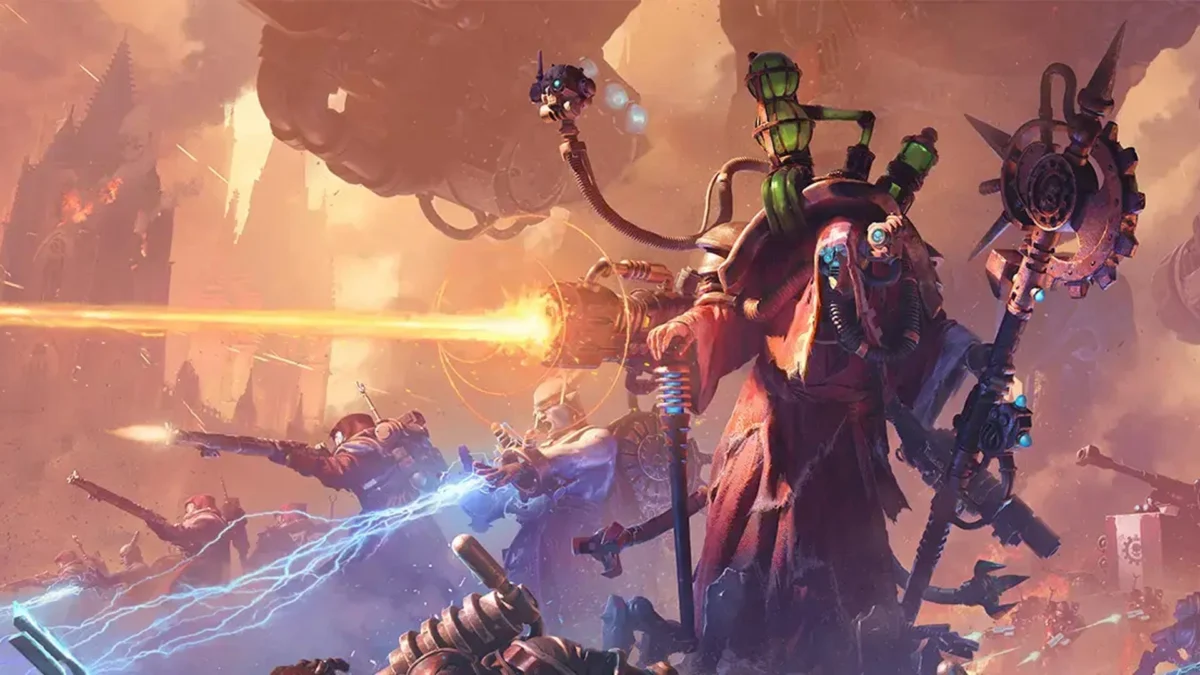
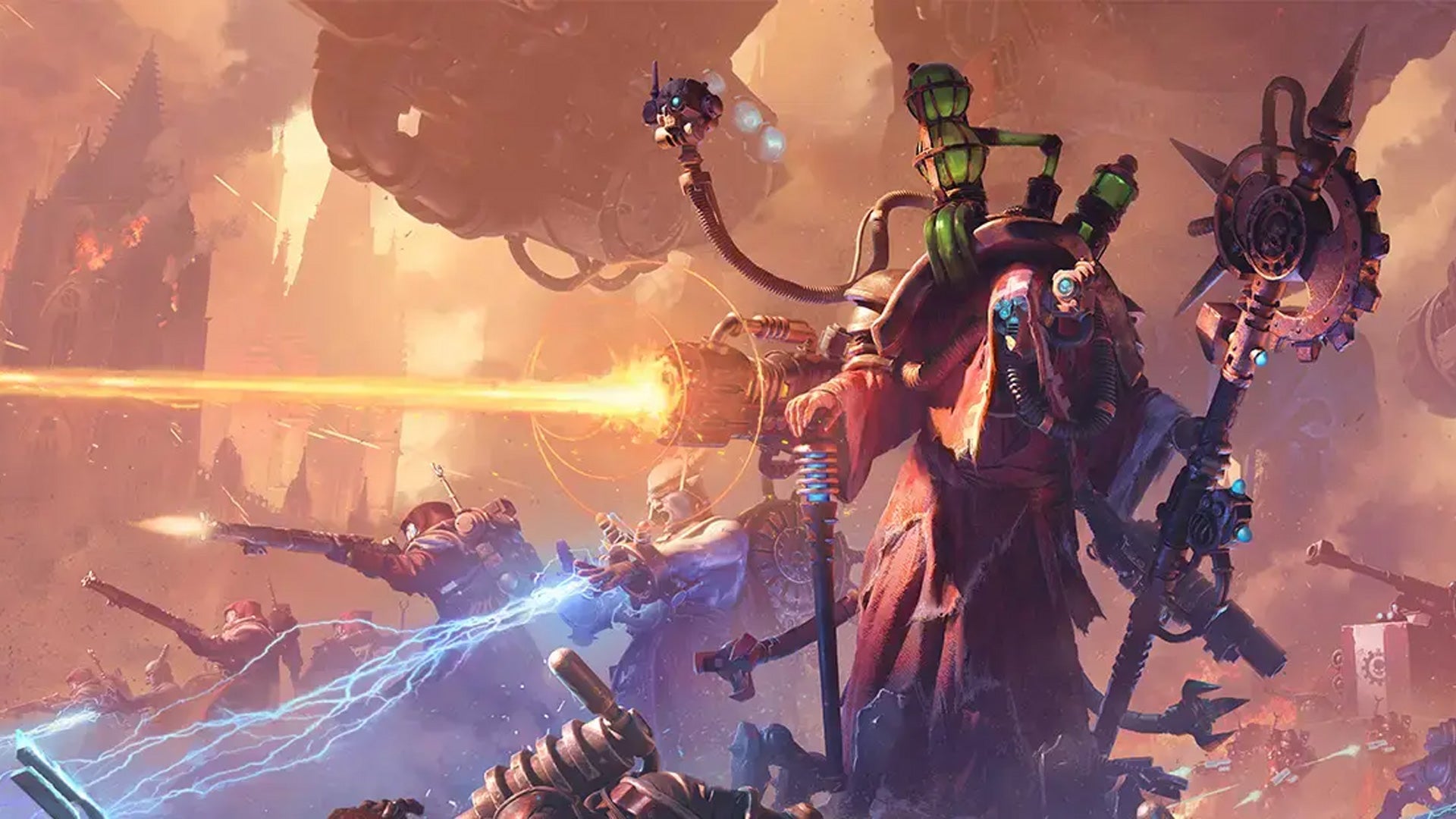
In the grim darkness of the far future, there is only war—and, apparently, a never-ending cycle of legacy software maintenance. As the development team at King Art Games prepares for the launch of Warhammer 40,000: Dawn of War IV, the spotlight has turned to the faction that effectively serves as the Imperium’s IT department: the Adeptus Mechanicus.
While players are accustomed to the explosive power of Space Marines or the sheer human resilience of the Astra Militarum, the Adeptus Mechanicus brings a unique flavor of existential dread to the battlefield. Recent reveals from the game’s development cycle have highlighted a charmingly neurotic detail about the faction’s units—specifically the Ironstrider Ballistarius—that perfectly encapsulates the faction’s desperate struggle to keep ancient, decaying technology functional in a galaxy that has forgotten how to innovate.
The Burden of Perpetual Motion: Understanding the Ironstrider
If you have analyzed the Dawn of War IV faction trailer, you may have noticed a spindly, bird-like mech performing an erratic, rhythmic dance on the spot. To the uninitiated, it might appear to be a glitch in the animation or perhaps a quirk of the machine spirit. In reality, it is a profound nod to one of the most tragic and fascinating pieces of Warhammer 40,000 lore.
"They can never stop," explains Jan Theysen, Creative Director at King Art Games. "They’re always moving and always walking because the Adeptus Mechanicus fear that if they turn them off, they might not be able to turn them on again. So they just keep them moving all the time."
This is not merely a tactical decision; it is a theological and technological mandate. The Ironstrider, a mechanical marvel featuring a high-caliber autocannon, is designed to be a perpetual motion machine. Once activated, the machine is intended to march until its internal mechanisms finally succumb to entropy.
A Chronology of Obsolescence
To understand why these units move in such a frantic, permanent state of animation, one must look back to the 33rd Millennium. The Ironstriders were the brainchild of Tech-priest Aldebrac Vingh. Vingh was a visionary who sought to create a weapon system capable of endless, autonomous support.
However, the culture of the Adeptus Mechanicus is one defined by the hoarding of knowledge and the stifling of original thought. Upon the creation of his masterpiece, Vingh’s peers were consumed by professional jealousy and suspicion. They conspired against him, effectively assassinating the only man who possessed the complete schematics and operational wisdom required to manufacture and maintain the Ironstriders.
When Vingh died, he took the "off" switch—or rather, the technical knowledge of how to perform a successful cold boot—to his grave. Consequently, every Ironstrider currently in service is a relic of a lost design philosophy. The machines are doomed to walk until their joints seize or their internal power cells finally fail, and their pilots are often forced to ride these metal beasts until they perish of old age, necessitating a grisly succession process where a new pilot must climb onto the moving machine to replace their predecessor.
Tactical Realities vs. Narrative Fidelity
The challenge for King Art Games was balancing this "perpetual motion" lore with the practical requirements of a real-time strategy (RTS) game. In a genre predicated on positioning, resource management, and unit control, having a combat unit that refuses to stand still presents a significant design hurdle.
"Of course, we couldn’t have a unit that moves all the time," Theysen admits. "In a strategy game, you can’t have units wandering off from their positions."
The solution was a masterful compromise: the Ironstrider "stamping" animation. By having the units march in place, King Art has preserved the lore-accurate anxiety of the Mechanicus while maintaining the functional integrity of the game’s combat mechanics. It serves as a "wink" to the hardcore community—an acknowledgement that the developers understand the deeper history of the faction, even when gameplay constraints force a slight departure from the source material.
The Titan Drop: Engineering a Grand Entrance
Perhaps no unit in the Adeptus Mechanicus arsenal commands as much awe as the Titan. These walking fortresses are the literal jewels in the crown of the Omnissiah’s army. However, bringing a unit of that magnitude to a digital battlefield raised a logistical question that even the developers initially struggled with: How does a Titan arrive at a combat zone without looking like a magical summoning?
The team consulted with Games Workshop to find a solution that felt authentic to the Warhammer aesthetic. The resulting implementation involves a massive, atmospheric-tearing drop pod—a "Knights drop pod"—that crashes into the terrain, deploying the Titan directly into the fray.
Crucially, the landing site does not vanish. It remains on the map, transforming into a permanent turret installation. "It feels very Warhammer," says Theysen. It reflects the Mechanicus’ tendency to turn every tactical engagement into an opportunity for permanent infrastructure development.

The Imperium’s IT Department: A New Perspective
For many players, the Adeptus Mechanicus has often felt like an impenetrable wall of red robes and binary cant. However, as the industry begins to lean into the more "human" side of the faction, they are becoming increasingly relatable.
Consider the plight of the modern IT worker:
- Legacy Systems: Much like the Tech-priests, many IT professionals spend their days managing systems built by people who left the company decades ago.
- The Fear of the Reboot: How many servers, mainframes, or clunky internal softwares are kept running solely because nobody is 100% sure they will boot back up if they are restarted?
- Documentation Debt: The Mechanicus’ reliance on rituals and "blessing" machines is a dark, hyperbolic reflection of the "don’t touch that, it works" school of system administration.
When one realizes that the Adeptus Mechanicus are not just cold, calculating cyborgs, but rather a stressed-out collective of sysadmins trying to keep the lights on in a galaxy that is actively trying to kill them, the faction becomes infinitely more interesting.
Implications for Dawn of War IV
The inclusion of these specific, lore-rich details suggests that Dawn of War IV is aiming for a level of narrative depth that respects the legacy of the tabletop game. By focusing on the "why" behind the faction’s behavior—rather than just their stats—King Art Games is fostering a deeper connection between the player and the units.
As we await further updates on the game’s release, the Adeptus Mechanicus stands out as a faction that rewards curiosity. Whether you are a fan of the Imperial Guard’s gritty realism or the Tau’s sleek, advanced aesthetics, the Tech-priests offer a unique narrative angle. They represent the endurance of human (and post-human) civilization through sheer, stubborn, and often misguided maintenance.
Ultimately, the Mechanicus serves as a reminder that in the 41st Millennium, the most dangerous weapon is not the Bolter or the Titan’s cannon—it is the desperate, terrified need to ensure that the machine keeps running for one more day, one more battle, and one more century. And if that means dancing on the spot to avoid a system crash, then so be it.











No comments yet. Be the first to join the conversation!