

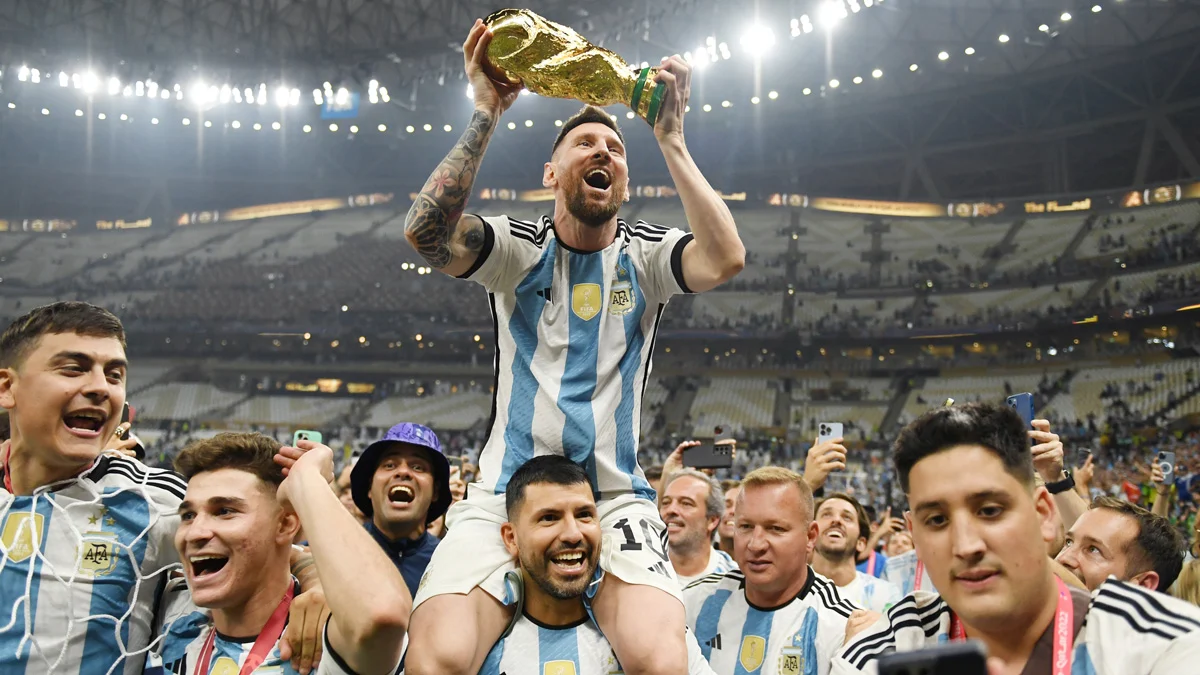
As the global sporting landscape prepares for a historic convergence of massive cultural events—most notably the 2026 FIFA World Cup—the traditional marketing funnel is being dismantled and replaced by something far more volatile and immediate. At the recent ADWEEK House: Sports Summit, held at the iconic Edge observation deck in Manhattan, industry titans gathered to confront a singular, pressing reality: the future of brand engagement no longer belongs to those who plan months in advance, but to those who can master the art of the “cultural moment.”
The Shift Toward Fluidity: Main Facts from the Summit
The central thesis emerging from the summit was clear: the rigidity of traditional media buying is becoming a liability. As consumer attention fragments across digital platforms, social media, and streaming, the ability to capitalize on live events as they unfold has become the gold standard for brand relevance.
“The future of marketing will belong to the brands able to respond to cultural moments as they happen,” stated the consensus of the day’s panels. This shift is driven by a fundamental change in how fans consume sports. It is no longer just about the broadcast; it is about the ancillary conversations, the memes, the betting integration, and the real-time social commentary that surround a match.
The event, which served as a precursor to broader discussions on the future of sports media, highlighted that brands failing to integrate into the "live moment" risk becoming invisible. Whether it is a viral goal in the World Cup or a high-stakes trade in the NBA, the window of relevance is now measured in seconds, not weeks.
Chronology: From Static Planning to Real-Time Execution
To understand the urgency expressed by the panelists, one must look at the evolution of the sports marketing timeline over the past decade.
1. The Pre-Streaming Era (Pre-2015)
Marketing plans were largely static. Advertisers committed to multi-month campaigns with fixed inventory. The "moment" was anticipated, and assets were created well in advance. Flexibility was virtually non-existent.
2. The Rise of Social Integration (2015–2020)
Brands began experimenting with "second-screen" experiences. Twitter (now X) and Instagram forced brands to acknowledge that audiences were watching the game while scrolling their phones. Marketing began to incorporate live social media responses, though these were often heavily scripted and vetted, leading to a "cringe-worthy" disconnect between brand voice and fan culture.
3. The Current Paradigm: The "Moment as the Media Plan" (2020–Present)
We have entered the era of hyper-connectivity. Data-driven decision-making, programmatic advertising, and real-time content production have allowed brands to pivot their creative messaging during a game. The panel, "When the Moment Becomes the Media Plan," underscored that the media plan is no longer a static document—it is a living, breathing strategy that changes based on game outcomes and audience sentiment.
Supporting Data and the Digital Ecosystem
The summit featured a powerhouse panel moderated by Adweek editor Bill Bradley, including:
- Tony Marlow, CMO at Genius Sports
- Michael Page, SVP of Digital Sales at Fox Television Stations
- Courtney Carter, CRO of Seattle Sounders FC and Seattle Reign FC
- Andrew Perlmutter, CEO of NBA Take-Two Media
- Regan Clark, VP of American Whiskey at Suntory Global Spirits
- Anthony Campanella, VP of Inventory Partnerships and Operations at MadHive
The data supporting their arguments points to a massive migration of capital. As audiences move away from traditional linear cable, the value of live sports remains the single most resilient asset in media. According to industry analysis, sports account for the vast majority of the top-rated programs on television, yet the way that inventory is sold is changing.
MadHive’s Anthony Campanella noted that programmatic TV is finally catching up to the speed of digital. With the integration of real-time inventory management, brands can now bid on ad slots during a live game based on the performance of a team or even a specific player’s momentum. This technological capability allows for a level of precision that was previously impossible.
Official Responses and Strategic Perspectives
The diversity of the panel provided a 360-degree view of how these changes are impacting different sectors of the sports industry.
The Rights Holder Perspective
Courtney Carter of the Seattle Sounders FC emphasized the human element. "It’s about authentic connection," she noted. For a club, the goal is to ensure that the brand’s presence in the stadium—and on digital platforms—feels like a natural extension of the fan experience rather than an interruption. The Sounders have been pioneers in digital engagement, recognizing that their fans are global, not just local.
The Betting and Data Perspective
Tony Marlow of Genius Sports highlighted that data is the lifeblood of the modern sports moment. As legalized betting continues to spread, the integration of real-time statistics into the broadcast experience has turned every play into a potential moment of engagement. "The data tells us what the fans are looking for, and that allows brands to be where the attention is," Marlow explained.
The Brand and Product Perspective
Regan Clark, representing Suntory Global Spirits, spoke to the difficulty of maintaining brand equity while moving at the speed of culture. For premium spirits, the challenge is maintaining a sophisticated voice while participating in the frenetic, often chaotic environment of live sports social media. The key, according to Clark, is "calculated agility"—having the framework to act fast without sacrificing the brand’s core identity.
The Broadcast and Distribution Perspective
Fox’s Michael Page discussed the transformation of local and national broadcasting. As streaming platforms (such as the shift toward digital-first coverage) continue to dominate, the barrier between the broadcaster and the advertiser has thinned. "We aren’t just selling 30-second spots anymore," Page noted. "We are selling moments of high-intent engagement."
Implications for the 2026 World Cup and Beyond
The discussions at the Edge served as a wake-up call for CMOs preparing for the 2026 World Cup. With the tournament hosted across North America, the scale of engagement will be unprecedented.
The Death of the "Big Reveal"
Traditionally, brands have relied on "Big Reveal" commercials—expensive, highly produced spots intended to air during halftime. The summit participants argued that while these still have value, they are no longer sufficient. The brands that win in 2026 will be those that have "dark posts" (unpublished ads) ready to go for every possible scenario: an upset victory, a star player’s injury, a historic goal, or even a weather delay.
The Rise of Programmatic Creativity
Implication number two is the necessity of "programmatic creativity." Brands need to build systems where creative assets are modular. If a team is down by two goals, the ad copy should reflect that tension. If a team is dominating, the messaging should lean into the celebration. This requires a level of collaboration between creative agencies and data scientists that most organizations have not yet achieved.
Cultural Literacy as a Competitive Advantage
Finally, the summit emphasized that technical proficiency is not enough. A brand can have the fastest programmatic response time, but if the content is culturally tone-deaf, the impact will be negative. The panelists argued that brands must invest in "cultural literacy"—teams whose sole job is to understand the nuances of fan communities, from the language of sub-Reddits to the aesthetics of TikTok trends.
Conclusion: Preparing for the New Normal
As the ADWEEK House: Sports Summit concluded, the takeaway was clear: the era of the passive observer is over. Sports marketing has moved from a spectator sport to a participant sport.
For brands looking to capture the attention of the modern fan, the roadmap for the next two years involves three pillars:
- Technological Integration: Leveraging real-time data and programmatic platforms to reach fans where they are, when they are there.
- Structural Agility: Flattening the approval process to allow for real-time decision-making during live events.
- Authentic Engagement: Moving beyond the "interruptive" ad model to become a genuine part of the sports narrative.
The 2026 World Cup will be the proving ground for these strategies. As the industry looks toward New York City and beyond, one thing is certain: the brands that win will be those that realize the media plan is no longer a document, but a conversation—and in sports, the conversation never stops.











