Ali Ikhwan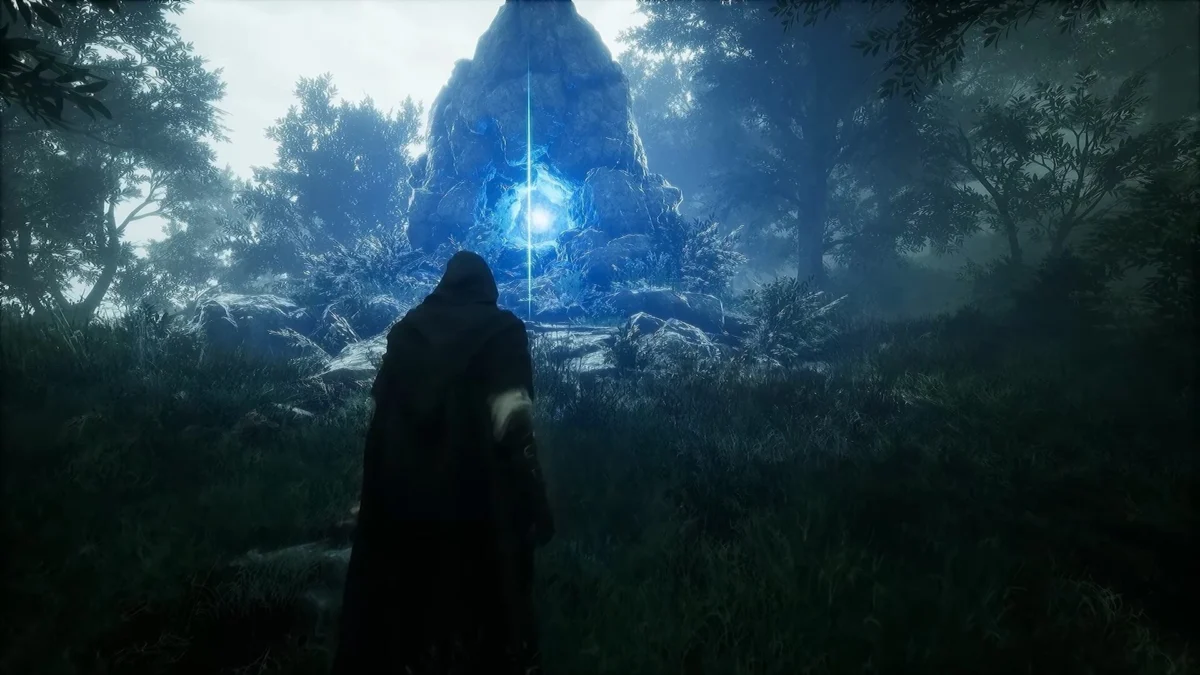
FOR IMMEDIATE RELEASE
LONDON, UK / SEOUL, SOUTH KOREA – [Current Date] – The highly anticipated dark fantasy Soulslike action RPG, The Relic: First Guardian, is poised to plunge players into a desolate yet captivating world, with its initial release slated for PlayStation 5 and PC via Steam on July 31st. This announcement, made by publisher Perp Games and developer Project Cloud Games, marks a significant moment for fans of challenging, lore-rich action RPGs. Following its debut, the title will extend its reach to Xbox Series consoles and Nintendo Switch later this summer, completing a multi-platform rollout designed to ensnare a broad audience of intrepid adventurers.
The Relic: First Guardian promises to deliver a quintessential Soulslike experience, challenging players with formidable foes, intricate world design, and a cryptic narrative. Set in the once-thriving land of Arsiltus, now ravaged by a cataclysmic event, players assume the mantle of the "First Guardian," tasked with a heroic quest to reassemble the shattered pieces of a great relic and seal the encroaching void that threatens to consume all remaining life. The game emphasizes deep character progression through a diverse skill system, demanding strategic combat, and the unraveling of ancient mysteries to restore prosperity to a dying world. With its impending launch, the gaming community eagerly awaits to see how Project Cloud Games will carve its niche within the beloved yet fiercely competitive Soulslike genre.
Main Facts: A New Challenger Enters the Fray
The core announcement revolves around the definitive release schedule for The Relic: First Guardian. Developer Project Cloud Games, in collaboration with publisher Perp Games, has confirmed that the dark fantasy action RPG will first become available to PlayStation 5 and PC players on July 31st. This simultaneous launch on two major platforms is a strategic move, allowing for a strong initial impact and catering to a significant portion of the gaming demographic known for embracing challenging titles.
Shortly thereafter, within the broader "summer" window, the game will extend its reach to Xbox Series X|S and Nintendo Switch. While a precise date for these latter platforms has yet to be finalized beyond "later this summer," the staggered release strategy is not uncommon in the industry, often allowing developers to optimize performance across different hardware and gather initial feedback from the first wave of players.
At its heart, The Relic: First Guardian is framed as a traditional Soulslike, promising the genre’s hallmarks: demanding combat, intricate level design, and a narrative shrouded in mystery. Players will step into a world, Arsiltus, that has been irrevocably altered by a cataclysm – the destruction of a powerful relic. This event has unleashed a destructive "void," transforming the once-vibrant land into a realm of death and despair. The player’s mission is clear: journey through this blighted landscape, recover the fragments of the broken relic, and ultimately confront and seal the void. The game’s premise positions the player as the "last hope" for Arsiltus, a common but effective trope that immediately imbues the quest with a sense of urgency and profound significance. Character growth through a diverse skill system and the solving of environmental and narrative riddles are highlighted as central pillars of the gameplay experience.
Chronology: From Concept to Console
The journey of bringing a game like The Relic: First Guardian to fruition is often a long and arduous one, particularly for independent studios venturing into complex genres. While Project Cloud Games’ specific history prior to this title is not widely publicized, their ambition to tackle the Soulslike genre suggests a dedicated team with a clear vision and a deep understanding of what makes these games resonate with players.
The Development Journey: Crafting a Desolate World
The creation of The Relic: First Guardian has undoubtedly been a multi-year endeavor. Developing a Soulslike requires meticulous attention to detail, from the precise timing of combat mechanics and enemy AI patterns to the intricate, interconnected design of the game world. Project Cloud Games, likely a relatively new studio, would have faced the inherent challenges of game development, including balancing creative ambition with technical constraints, iterative design processes, and extensive playtesting to fine-tune the difficulty curve that is so crucial to the genre’s appeal. The team would have poured countless hours into world-building, lore creation, and designing the unique aesthetic that defines its "dark fantasy" setting, ensuring Arsiltus feels both oppressive and intriguing. Their focus would have been on establishing a distinct identity for The Relic while honoring the foundational elements that fans expect from a Soulslike experience.
Marketing and Pre-Release Buzz: Building Anticipation
Perp Games, as the publisher, plays a critical role in bringing Project Cloud Games’ vision to a global audience. Their strategy would have involved a phased marketing approach, likely beginning with initial teasers or concept art, followed by more substantial gameplay reveals. The release date trailer, unveiled alongside the announcement, serves as a crucial piece of this puzzle. It provides a visual taste of the game’s atmosphere, combat, and some of the desolate environments players will traverse. For an indie Soulslike, building community engagement through early access opportunities, developer diaries, or presence at digital gaming showcases would have been vital in generating pre-release excitement and establishing a player base eager to dive into the challenges awaiting them. The timing of the announcement, a few months prior to the initial launch, allows for a concentrated period of hype generation.
The Staggered Release Strategy: A Calculated Rollout
The decision to launch The Relic: First Guardian first on PS5 and PC, followed by Xbox Series and Nintendo Switch later in the summer, is a calculated one. This staggered approach offers several advantages. For developers, it can allow for a more focused launch effort, concentrating resources on optimizing for specific platforms initially. Feedback from the PS5 and PC communities can also be invaluable for identifying and addressing any unforeseen issues, allowing for a more polished experience when the game arrives on Xbox and Switch. From a marketing perspective, it can sustain a longer news cycle, keeping the game relevant over several months rather than a single, concentrated launch window. For Perp Games, this strategy likely aims to maximize reach and ensure a robust technical foundation across all target platforms, acknowledging the varying hardware capabilities and player expectations of each console.
Supporting Data: Unpacking the World of Arsiltus and the Soulslike Ethos
To understand the full scope of The Relic: First Guardian, it’s essential to delve deeper into its announced features and extrapolate based on the genre it inhabits. The "dark fantasy Soulslike action RPG" label itself carries a significant weight of expectation and established conventions.
Deep Dive into the Soulslike Genre: Legacy and Innovation
The Soulslike genre, pioneered by FromSoftware with titles like Demon’s Souls, Dark Souls, Bloodborne, and more recently, Elden Ring, is defined by a set of core tenets. These include:
- Challenging, Deliberate Combat: Players must master dodge rolls, parries, blocks, and precise attack timings. Stamina management is crucial, and every encounter, even with seemingly minor enemies, can be lethal.
- Intricate, Interconnected Level Design: Worlds are often designed with shortcuts, hidden paths, and environmental storytelling that encourages exploration and rewards curiosity.
- Cryptic Lore and Environmental Storytelling: Narratives are rarely spoon-fed; instead, they are pieced together through item descriptions, environmental clues, and sparse NPC dialogues, fostering a sense of discovery and mystery.
- Punishing Death Mechanics: Dying often means losing progress or currency (like souls/runes), which can be recovered by returning to the point of death, adding a layer of risk-reward to every encounter.
- Formidable Boss Battles: Multi-phase boss encounters with unique attack patterns and weaknesses are a cornerstone, serving as significant skill checks and narrative milestones.
- Deep Character Progression: Players customize their builds through stat allocation, weapon choices, armor sets, and magical abilities, allowing for diverse playstyles.
The Relic: First Guardian aims to fit squarely within this framework. The mention of "grow your character with various skills" suggests a robust progression system, likely featuring branching skill trees or stat allocations that allow players to specialize in melee combat, ranged attacks, magic, or a hybrid approach. The promise to "solve the riddle of Arsiltus" directly points to the genre’s emphasis on emergent narrative discovery rather than explicit exposition. Project Cloud Games’ challenge will be to not only replicate these beloved elements but also to inject their own unique flavor, whether through distinct combat mechanics, an innovative lore system, or a particularly memorable world design, to stand out in a crowded field.
The World of Arsiltus: Lore Expansion and Environmental Decay
The premise of Arsiltus, a "once-prosperous" land now "swallowed up by the void created by the destruction of the great relic and transformed into a land of death," provides a fertile ground for rich dark fantasy lore.
- The Great Relic: What was this relic? Was it a source of immense power, a stabilizing force, or a key to cosmic balance? Its destruction implies a cataclysm of unimaginable scale, perhaps a magical explosion, a dimensional tear, or a divine judgment.
- The Void: This isn’t just a generic emptiness. In a Soulslike context, the void could manifest as a corrupting influence, twisting creatures into grotesque forms, decaying structures, and siphoning life force from the land itself. It might be a literal breach into another dimension or a metaphysical decay spreading across reality. The player’s mission to "close the void" suggests a grand, world-saving endeavor, requiring more than just brute force.
- The First Guardian: The player character’s title implies a chosen destiny or a lineage tied to the relic itself. They are not merely an adventurer but a figure of immense importance, possibly possessing unique abilities or an inherent resistance to the void’s corruption. This protagonist is the "last hope," a classic narrative device that immediately establishes high stakes.
Environmentally, Arsiltus is likely to feature diverse biomes, each touched by the void in unique ways. We can expect crumbling castles, forgotten cities swallowed by decay, eerie forests where twisted flora and fauna reside, and perhaps even remnants of the land’s former glory, offering glimpses into its lost prosperity. The visual aesthetic from the trailer confirms a grim, atmospheric world, ripe for exploration and danger.
Gameplay Mechanics: Inferred Features and Soulslike Staples
While the initial overview is concise, we can infer several key gameplay mechanics based on the Soulslike genre:
- Combat System: Expect a stamina-based combat system where careful resource management is paramount. Players will likely utilize a variety of melee weapons (swords, axes, spears), potentially bows or crossbows, and a magic system. Combat will demand precise dodging, parrying, and strategic use of consumables. Enemy attack patterns will be diverse and require learning.
- Exploration and Level Design: Levels are unlikely to be linear. Instead, players can anticipate intricate, sprawling maps with numerous secrets, shortcuts that loop back to earlier areas, and hidden pathways. This encourages meticulous exploration and rewards observant players.
- Character Progression: Beyond "various skills," a deep RPG system is expected. This includes:
- Stat Allocation: Players will likely invest points into attributes like strength, dexterity, vitality, endurance, and possibly intelligence or faith to tailor their build.
- Equipment: A wide array of weapons, armor, and accessories, each with unique stats, properties, and upgrade paths, will be available.
- Magic/Abilities: Spells, incantations, or unique "relic powers" could offer offensive, defensive, or utility options, adding another layer to combat strategy.
- Boss Encounters: True to the genre, The Relic: First Guardian will undoubtedly feature a roster of imposing bosses, each with unique mechanics, multi-phase battles, and distinct lore implications. Defeating them will likely grant rare resources or crucial plot progression.
- Resurrection and Checkpoints: A system akin to bonfires or Archstones will serve as save points, healing stations, and fast travel hubs, but dying will likely reset enemies and potentially incur a penalty, such as losing collected "void energy" or "relic fragments."
The trailer itself, while brief, hints at visceral combat, diverse enemy types ranging from corrupted humanoids to monstrous beasts, and environments that showcase both grand decay and subtle beauty, reinforcing these inferred mechanics.
Official Responses: Voices Behind the Vision
While specific direct quotes from Project Cloud Games and Perp Games were not extensively detailed in the initial announcement beyond the basic facts, we can envision the sentiments and strategic perspectives that would underpin such a release.
Developer’s Vision: Crafting a Challenge with Purpose
A hypothetical statement from a representative of Project Cloud Games, perhaps the Creative Director, would likely convey both excitement and a deep respect for the genre they are entering:
"Bringing ‘The Relic: First Guardian’ to life has been a labor of passion for our entire team. We’ve poured our hearts into crafting a world that feels both familiar to Soulslike enthusiasts and fresh in its own right. Our goal was to create a truly challenging experience, one that tests players’ resolve and skill, but also rewards their persistence with a deeply satisfying sense of accomplishment and a rich, evocative narrative. We wanted Arsiltus to feel like a character in itself, scarred and beautiful, full of secrets waiting to be uncovered. We believe players will find our combat system intuitive yet profound, and our world’s lore will keep them theorizing long after they’ve put down their controllers. We are incredibly excited for players to finally embark on this heroic journey as the First Guardian."
Such a statement would emphasize the studio’s commitment to the genre’s core tenets while hinting at their unique contributions to world-building and narrative. It would also acknowledge the inherent difficulty of the game, framing it as a rewarding challenge rather than a barrier.
Publisher’s Perspective: Strategic Support and Market Confidence
Perp Games, known for supporting independent developers and bringing niche titles to a broader audience, would likely express strong confidence in Project Cloud Games’ ability to deliver a compelling product. A statement from their Managing Director might sound like this:
"At Perp Games, we are always on the lookout for titles that push boundaries and offer unique experiences. ‘The Relic: First Guardian’ immediately captivated us with its dark fantasy aesthetic, its ambitious world-building, and Project Cloud Games’ clear dedication to the Soulslike genre. We firmly believe this game has the potential to resonate deeply with fans who crave a challenging yet immensely rewarding action RPG. Our role is to ensure that Project Cloud Games’ vision reaches as many players as possible across all platforms, and we are thrilled to be partnering with them on this journey. The staggered release strategy is designed to ensure a smooth and optimized launch experience for all players, and we are confident that ‘The Relic: First Guardian’ will be a standout title this summer."
This perspective highlights the publisher’s belief in the game’s quality and market potential, their strategic approach to its release, and their commitment to fostering new talent within the industry. It positions Perp Games not just as a distributor, but as a strategic partner invested in the game’s success.
Implications: Navigating the Future of Arsiltus
The launch of The Relic: First Guardian carries several significant implications, both for the game itself and for the broader gaming landscape.
Impact on the Soulslike Landscape: Carving a Niche
The Soulslike genre is more vibrant and crowded than ever before. From FromSoftware’s own masterpieces to highly regarded indie darlings and AAA attempts, players have a high bar for quality, polish, and innovation. For The Relic: First Guardian to succeed, it must not only meet the fundamental expectations of the genre but also offer something distinct. Its success could prove that there is still ample room for new IPs to thrive within this beloved framework, especially when they bring fresh lore, unique artistic direction, or innovative gameplay mechanics. A strong reception could position Project Cloud Games as a formidable new developer to watch, contributing to the diversity and evolution of the genre. Conversely, in such a competitive market, merely being "good" might not be enough; the game needs to be exceptional or offer a particularly compelling hook to capture widespread attention.
Economic and Market Considerations: A Summer Release Challenge
Releasing in the summer months can be a double-edged sword. While it avoids the highly congested holiday season, it can also fall into a period where players are less engaged or are focused on other activities. However, for a niche genre like Soulslike, a dedicated audience often seeks out new releases regardless of the season. The staggered release, while beneficial for optimization, also means maintaining marketing momentum over a longer period. The initial PS5 and PC launch will be critical for generating early sales, reviews, and community buzz that can then carry over to the Xbox and Switch releases. Digital distribution platforms like Steam are crucial for indie titles, offering broad reach and community features, while console presence ensures accessibility for a wider array of players. The game’s pricing, post-launch content plans (e.g., DLC, expansions), and ongoing community engagement will all play a role in its long-term viability and success.
Future Prospects for Project Cloud Games and Perp Games: Building a Legacy
A successful launch for The Relic: First Guardian would be transformative for Project Cloud Games. It would establish their reputation as a capable developer, potentially leading to increased funding, larger future projects, and the ability to expand their team. It could pave the way for sequels, spin-offs, or entirely new IPs that leverage the experience and lessons learned from this debut. For Perp Games, a hit indie title further solidifies their position as a valuable partner for smaller studios, enhancing their portfolio and credibility within the publishing sphere. It demonstrates their ability to identify promising projects and effectively bring them to market, strengthening their brand and attracting future development partners. The journey of the First Guardian begins on July 31st, and with it, the potential for a new dark fantasy epic to take root in the hearts of gamers worldwide.


 Lina Irawan
 Sagoh
Sagoh