Main Facts: The Evolution of the Digital Escape Room
In the rapidly expanding universe of Roblox, a platform now hosting over 66 million daily active users, the "Escape Room" genre has emerged as a cornerstone of cognitive entertainment. Among the most formidable entries in this category is Project Escape Room, a series developed to challenge the analytical prowess and spatial awareness of its players. Its latest iteration, the Prison map, has seen a surge in concurrent players, driven by its intricate level design and multi-layered puzzles.
Project Escape Room: Prison is not merely a game of "find the key." It represents a sophisticated blend of environmental storytelling and logical deduction. Players are thrust into a high-security correctional facility simulation where they must navigate through six distinct phases of incarceration and escape. The game’s popularity underscores a broader trend in the gaming industry: the transition from passive consumption to active, problem-solving-based engagement.
The Prison map specifically leverages the "locked-room mystery" trope, requiring players to interact with mundane objects—tally marks on walls, dumbbells in a gym, and shower patterns—to derive complex codes. As Roblox continues to evolve from a simple "block game" into a robust engine for professional-grade game design, Project Escape Room stands as a testament to the creative potential of user-generated content (UGC).
Chronology: A Step-by-Step Walkthrough of the Prison Breach
To understand the mechanical depth of Project Escape Room: Prison, one must analyze the chronological progression required to achieve "freedom." The following is a detailed breakdown of the escape methodology.
Step 1: The Initial Cell Breach
The experience begins in a standard-issue isolation cell. Unlike simpler games, the solution is not immediately visible. Players must conduct a thorough "grid search" of their environment. The primary objective here is to locate a concealed tool—typically a makeshift shiv or a hidden lever—located behind the sanitation fixtures or beneath the cot. This stage sets the tone for the game, teaching the player that every pixel in the environment may hold a functional purpose.
Step 2: The Tally Mark Cryptography
Once the cell door is bypassed, players encounter a common trope of prison lore: tally marks scratched into the walls. However, in Project Escape Room, these are not merely aesthetic. They represent a variable-based code. Players must count the groupings of marks across different walls, which often correspond to a four-digit keypad located near the block exit. This step introduces basic arithmetic as a barrier to progress, forcing players to synthesize visual data into numerical output.
Step 3: Electrical Grid Manipulation (Cutting the Wires)
The third phase shifts from observation to technical interaction. Upon reaching the maintenance corridor, players are faced with an exposed circuit board. This puzzle requires the player to find a pair of wire cutters (hidden in a nearby janitor’s closet) and identify the correct sequence of wires to snip. Cutting the wrong wire often triggers an alarm or resets the puzzle, introducing a "fail state" that heightens the tension. The logic here is usually color-coded, requiring the player to have observed colored hints in the previous hallway.
Step 4: The Shower Pattern Recognition
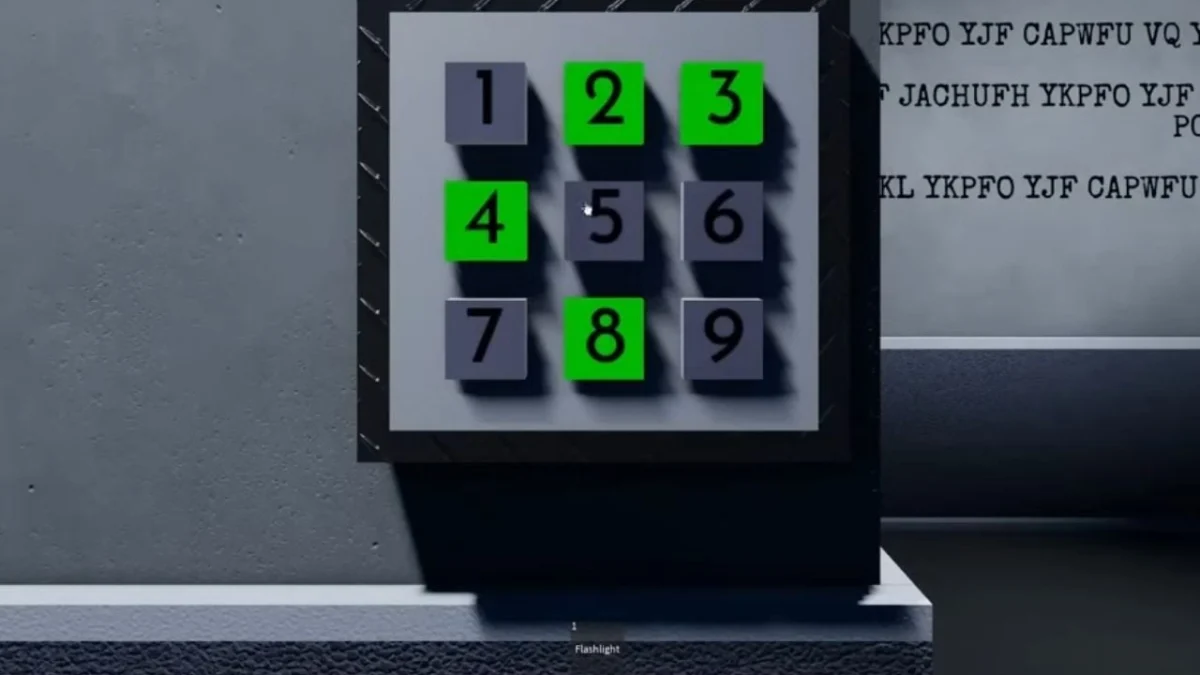
The prison’s communal shower area serves as the setting for the game’s most abstract puzzle. Players must observe the floor tiles or the sequence in which the showerheads drip. This is a classic pattern-recognition test. By replicating the sequence on a nearby wall panel, players unlock the ventilation shafts. This stage highlights the game’s use of environmental cues to guide the player without explicit instructions.
Step 5: The Weight Room Analysis (Dumbbells)
The gym area introduces a physics-based clue system. By examining the weights on the dumbbells scattered across the floor, players derive the next code. If three dumbbells are labeled 10lbs, 25lbs, and 5lbs, the code might be a sum or a sequence based on the rack’s organization. This requires the player to distinguish between "clutter" and "clues," a vital skill in high-level escape room design.
Step 6: The Gate Padlock and Final Extraction
The climax of the map involves the "Gate Padlock" key. This is rarely found in a static location; instead, it is often guarded by a final logic gate or hidden within a timed platforming sequence. Once the key is obtained, the player must navigate back through the security checkpoint to the main gate. The finality of the padlock click serves as the psychological reward for the preceding thirty to sixty minutes of cognitive labor.
Supporting Data: The Metrics of Engagement
The success of Project Escape Room: Prison can be quantified through both platform-specific metrics and broader industry trends.
- Platform Reach: Roblox reported a 20% year-over-year increase in hours engaged during its most recent fiscal quarter, with "Strategy" and "Puzzle" genres seeing the highest retention rates among users aged 13–17.
- Difficulty Scaling: Data from community forums suggests that only 35% of players complete the Prison map on their first attempt without external guides. This "difficulty curve" is intentional, as it encourages community collaboration and the sharing of walkthroughs.
- Monetization and UGC: The developers of Project Escape Room utilize a "freemium" model. While the base map is free, cosmetic items and "hint tokens" are available for Robux (the platform’s digital currency). This mirrors the "micro-transaction" economy that currently dominates the $200 billion global gaming market.
Official Responses and Expert Insights
Industry analysts and developers have noted the significance of these digital environments.
A spokesperson for Roblox Corporation recently stated in a developer blog: "Our goal is to provide the tools for creators to build experiences that challenge the mind. ‘Project Escape Room’ is a prime example of how our community uses Luau [Roblox’s coding language] to create complex logic systems that rival standalone indie titles."
Dr. Aris Vangelis, a digital psychologist specializing in gaming, explains the appeal: "Escape rooms, whether physical or digital, tap into the ‘Zeigarnik Effect’—the psychological phenomenon where people remember uncompleted tasks better than completed ones. The Prison map creates a series of ‘open loops’ in the player’s brain. The satisfaction of closing these loops by solving a puzzle provides a significant dopamine release, which is why players find these games so addictive."
Furthermore, the developers of Project Escape Room (independent creators within the Roblox ecosystem) have expressed that the Prison map was designed specifically to "punish" over-reliance on speed, instead rewarding those who take a methodical, journalistic approach to exploring the environment.
Implications: The Future of Interactive Logic
The proliferation of games like Project Escape Room: Prison has several long-term implications for the gaming industry and educational technology.
1. The Gamification of Education
As these puzzles become more complex, the line between "play" and "learning" blurs. The Prison map teaches deductive reasoning, basic mathematics, and pattern recognition. Educators are increasingly looking at Roblox-based environments as "sandbox" classrooms where students can develop critical thinking skills in a low-stakes environment.
2. The Professionalization of the Hobbyist
Project Escape Room is not the product of a multi-million dollar studio with hundreds of employees. It is the product of a small team of developers using democratized tools. This shift suggests a future where the next "blockbuster" game could come from anyone, anywhere, regardless of traditional industry gatekeepers.
3. The Shift Toward Digital Experiences
With the rising cost of physical escape rooms—which can range from $30 to $50 per person—digital alternatives on platforms like Roblox offer a cost-effective alternative. While they lack the tactile sensation of a real room, they offer "impossible" puzzles that physical rooms cannot replicate, such as shifting walls or gravity-based logic.
4. Community and Social Problem-Solving
Project Escape Room: Prison is often played in multiplayer mode. This necessitates communication and leadership. One player might count the tally marks while another monitors the guards or the timer. This social dimension builds "soft skills" that are increasingly valuable in the modern workforce, such as remote collaboration and collective troubleshooting.
Conclusion
Project Escape Room: Prison is more than a digital distraction; it is a complex, interactive puzzle that reflects the current state of digital entertainment. By blending high-stakes narrative with rigorous logical challenges, it has secured its place as a flagship experience on the Roblox platform. As the game continues to receive updates and new maps, it will undoubtedly serve as a blueprint for the future of the escape room genre, proving that the greatest prison to escape is often the limits of one’s own perception.