

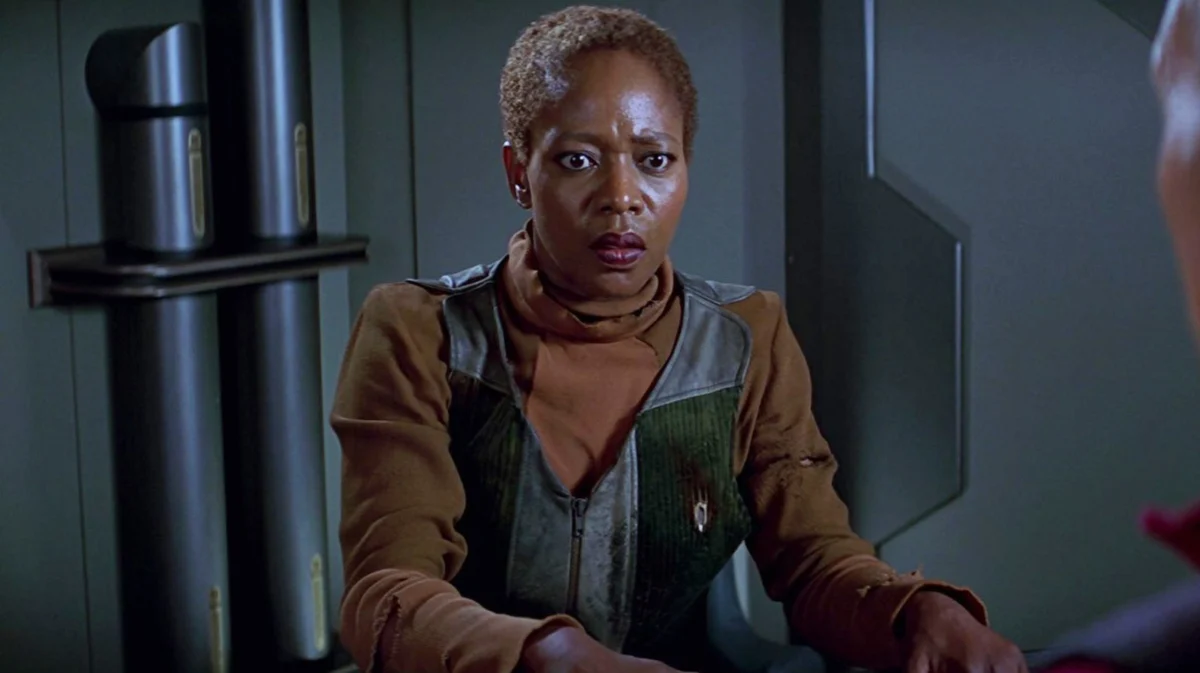
In the vast, expansive lore of the Star Trek franchise, few cinematic entries hold the same cultural weight as Jonathan Frakes’ 1996 masterpiece, Star Trek: First Contact. Beyond its success as a high-stakes action film involving the franchise’s most terrifying antagonists, the Borg, it served as a pivotal character study for Captain Jean-Luc Picard. Central to that emotional core was Lily Sloane, portrayed by the formidable Alfre Woodard.
While audiences remember Lily as the grounded, whip-smart assistant to Zefram Cochrane who serves as the moral mirror to Picard’s vengeance-fueled Ahab complex, historical production documents reveal that her role was originally conceived to be far more permanent. A deep dive into the archives of the production suggests that Alfre Woodard was nearly cast as a recurring fixture in the Star Trek: The Next Generation film cycle, a trajectory that was ultimately derailed by the creative realities of screenwriting.
The Context: A World on the Brink
To understand the significance of Lily Sloane’s potential trajectory, one must look at the setting of First Contact. The film transports the crew of the USS Enterprise-E back to the year 2063, a dark period in human history. Earth is reeling from the devastation of the Third World War, a nuclear conflict that nearly wiped out the human race. In this fractured reality, Zefram Cochrane (James Cromwell) is attempting to launch the Phoenix, the first human-built vessel capable of warp drive.
Lily Sloane is the woman tasked with keeping the cynical, alcoholic, and reluctant genius Cochrane on track. When the Borg invade the Enterprise, Lily is injured, rescued, and brought into the 24th-century reality of the ship. Her presence serves as a crucial catalyst for the film’s narrative: she is the "everywoman" who forces Captain Picard to confront his own internal darkness. By the time she famously compares him to Herman Melville’s Captain Ahab, she has become the narrative anchor for the audience.
Chronology of a Scrapped Romance
The evolution of the Lily Sloane character from a one-off guest star to a potential series regular followed a specific, albeit short-lived, creative path.
Early Development: The "First Contact" Treatment
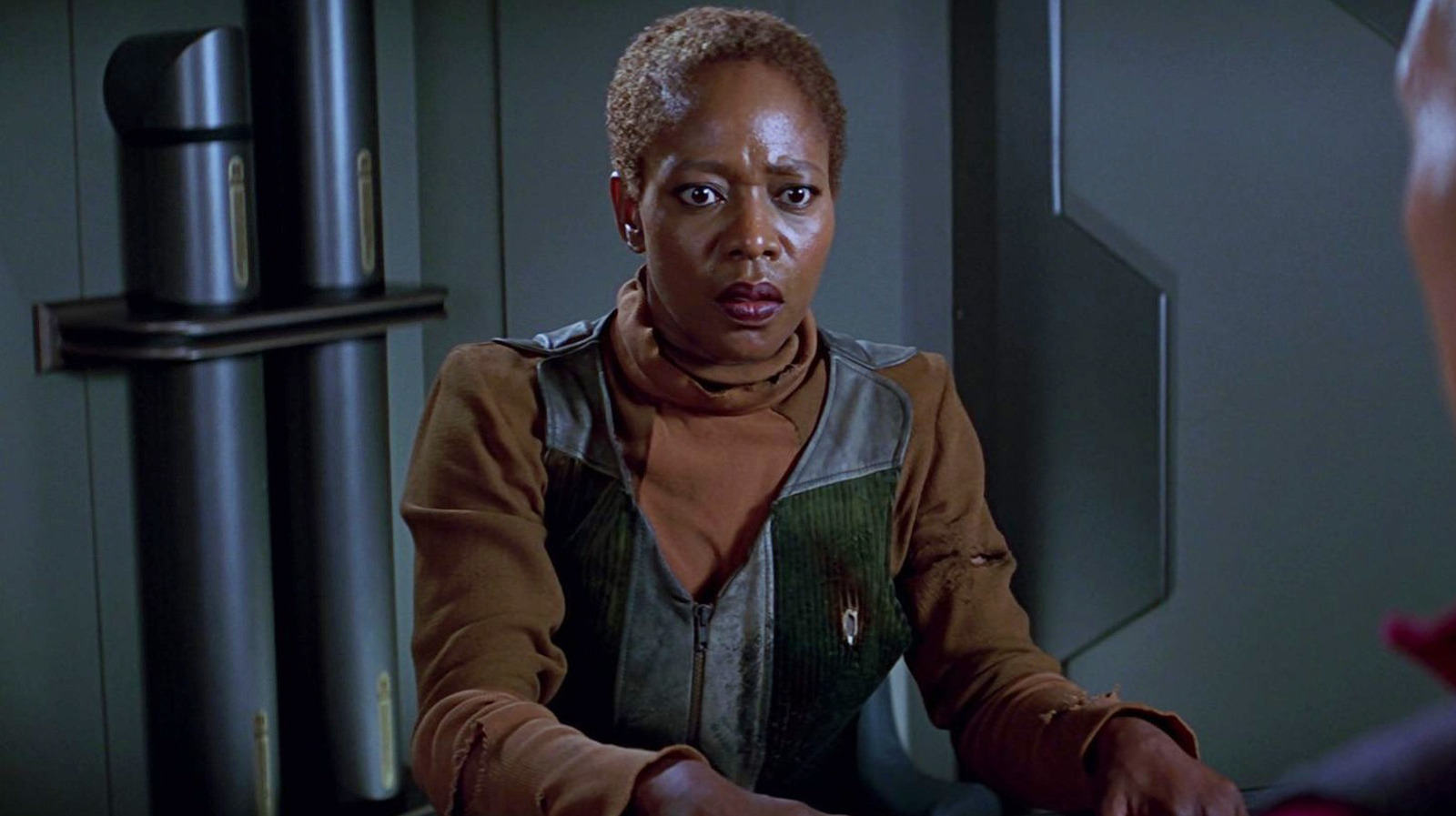
In the early drafts of the script, the dynamic between Picard and Lily was designed to be explicitly romantic. Writers Ronald D. Moore and Brannon Braga toyed with the idea of a "slow burn" relationship that would develop amidst the chaos of the Borg invasion. The chemistry between Patrick Stewart and Alfre Woodard was undeniable, and early drafts included scenes that leaned heavily into the romantic tension between the two, including a pivotal moment involving a kiss that was eventually excised from the final cut.
The Mid-Production Pivot
By the time principal photography commenced, the romantic subplots were being significantly curtailed. The production team recognized that the film’s tight timeframe—spanning less than 48 hours—made a deep, foundational romance feel forced. As the story shifted toward the high-octane battle for the ship, the focus on romance was sacrificed in favor of thematic exploration of Picard’s trauma.
The Post-Production Realization
Following the film’s release, it became clear that the character of Lily had left a lasting impression. However, the decision to leave her in the 21st century was finalized during the editing process. Had the writers chosen to have Picard take Lily back to the future, Woodard would have been contracted for subsequent films, effectively integrating her into the main cast for the duration of the Next Generation movie era.
Supporting Data: Why the Romance Was Abandoned
The decision to abandon the romance was not merely a matter of pacing; it was a philosophical choice made by the creative team. In an interview published in the December 1996 issue of Cinefantastique Magazine, writer Ronald D. Moore provided a candid look into the decision-making process.
"Picard represented this idealistic, great man of the future," Moore explained, "and her character was more in the here-and-now and really starting to lose hope and faith. In the conflict between the two, they found a certain romance."
However, the logic of the narrative eventually outweighed the desire for a subplot. Moore continued, "We’d even talked about bringing her back to the 24th century at the end of the picture, but ultimately we decided that, because the timespan of the movie took place over the course of two days at the most, it would be difficult to believe they would fall so deeply in love that he would bring her back to the future."
The logistical hurdles were twofold:
- Pacing Issues: Trying to establish a believable romance while the ship was being assimilated by cybernetic zombies would have diluted the tension of the film’s primary conflict.
- The "Seinfeld" Effect: The producers were keen on keeping Picard a "bachelor" figure. This allowed them the narrative freedom to introduce new romantic interests in subsequent films, much like the rotating cast of partners in long-running sitcoms. By keeping Picard single, the franchise avoided the complications of a long-distance relationship or a permanent partner who would have to be written around in future sequels.
Implications for the Franchise
The "What If" scenario of Alfre Woodard as a recurring Star Trek regular carries significant implications for how we view the Next Generation film era.
The Evolution of Picard’s Character
Had Lily joined the crew of the Enterprise-E, Picard’s character arc would have been fundamentally altered. Instead of the brooding, isolated commander seen in Star Trek: Insurrection or Star Trek: Nemesis, we might have seen a more vulnerable, domestically-inclined captain. Lily’s grounding influence would have likely served as a counterweight to the increasingly heavy-handed themes of later Trek movies.
The Waste of a High-Caliber Talent
Alfre Woodard is an Academy Award-nominated actress with an incredible range. Utilizing her only as a guest star—despite her immense contribution to First Contact—is often cited by fans as a missed opportunity for the franchise. If she had been brought back, it would have added a layer of prestige and continuity that the Next Generation films, at times, struggled to maintain.
Precedent for Future Love Interests
The decision to cut the romance with Lily paved the way for the introduction of Anij (Donna Murphy) in Star Trek: Insurrection. By establishing that Picard’s love life would be episodic rather than serial, the franchise effectively closed the door on any permanent romantic resolution for the Captain, a choice that remains debated by fans to this day.
Conclusion: A Legacy Defined by Absence
In retrospect, the absence of Lily Sloane from the wider Star Trek universe is a testament to the strength of her single appearance. By refusing to shoehorn a romance into a two-day timeline, the writers ensured that Lily remained a distinct, impactful character who stood on her own merits. She was not defined by her relationship to the Captain, but by her integrity, her sharp wit, and her role as the conscience of a man who had lost his way.
While the prospect of seeing Alfre Woodard as a recurring Star Trek regular remains a fascinating "what if" for fans, the character of Lily Sloane stands as one of the most memorable guest roles in the history of the franchise. She serves as a reminder that sometimes, the most profound impacts are those that leave us wanting more, rather than those that overstay their welcome. The story of how she missed out on becoming a regular is, in many ways, the story of Star Trek itself: a series of creative choices that, while sometimes limiting, ultimately preserved the integrity of its most iconic figures.











No comments yet. Be the first to join the conversation!