Laily UPN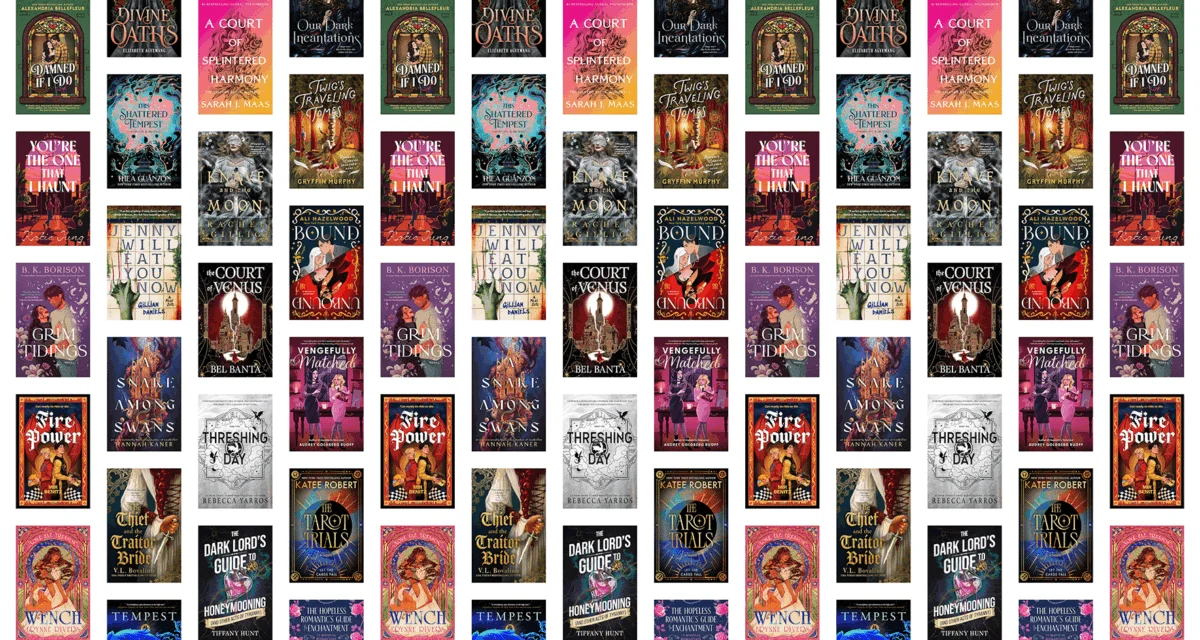
As the sweltering heat of summer dissipates into the crisp, gold-leafed promise of autumn, the publishing world is bracing for a seismic shift in the "romantasy" genre. No longer confined to the fringes of epic high fantasy, this hybrid category has solidified itself as the powerhouse of modern fiction. The upcoming release schedule for September and October 2026 reveals a sophisticated evolution: the genre is moving beyond standard "chosen one" narratives to embrace nuanced archetypes, dark academic settings, and a surprising, delightful infusion of speculative contemporary romance.

From the return of titan-tier series like Sarah J. Maas’s A Court of Thorns and Roses to the rise of genre-bending experiments that marry Formula One adrenaline with dragon-rider stakes, the landscape of autumn 2026 is defined by a bold, experimental energy.

The Evolution of the Romantasy Archetype
The contemporary romantasy reader is no longer satisfied with simple escapism; they demand complexity. This season, the "scoundrel" archetype is undergoing a metamorphosis. We are seeing a shift away from the traditional, brooding warlord toward the "knave"—a character who operates with ambiguity, wit, and moral fluidity.

Furthermore, the integration of formal systems—such as tarot, astrology, and rigid magical hierarchies—is becoming the industry standard. These systems provide a structured framework for high-stakes emotional payoffs. Perhaps most significantly, the "romcom-fantasy" crossover is officially hitting its stride. Authors are mining the history of classic romantic comedies—My Best Friend’s Wedding, Splash, and While You Were Sleeping—and injecting them with paranormal stakes, creating a sub-genre that feels simultaneously nostalgic and entirely fresh.

Chronology of Major Releases: September & October 2026
The release calendar is dense, reflecting the high demand for immersive, series-based storytelling.

Early September: The Scoundrels Arrive
- September 1: Rachel Gillig’s The Knave and the Moon (Orbit) arrives as the second installment of The Stonewater Kingdom. The narrative promises a subversion of the "damsel" trope, with a memory-wiped knave rising through tournament ranks to assist a captive bride.
- September 8: Victoria Aveyard debuts Tempest (Harper Voyager), bringing a "pirate queen" aesthetic to the Lyrian Sea. Simultaneously, Tiffany Hunt’s The Dark Lord’s Guide to Honeymooning (Scarlett Press) offers a comedic, high-stakes look at what happens after the "Dark Lord" captures the princess—spoiler: it involves marital counseling and demonic possession.
Mid-September: Dragons, Reapers, and High-Speed Stakes
- September 15: Mir Benitz’s Fire Power (Little, Brown) stands out as a unique genre-blend, pitching a "Formula One meets Fourth Wing" premise. Alongside this, B.K. Borison’s Grim Tidings (Avon) explores the metaphysical conflict between a burnt-out Grim Reaper and a persistent Guardian Angel.
- September 22: Katie Jung’s You’re the One That I Haunt (Pamela Dornan Books) promises a ghostly riff on the classic best-friend-wedding dilemma, while Alexandria Bellefleur’s Damned If I Do (Berkley) delivers a sapphic, reincarnation-based romp through the bureaucratic underworld.
Late September & October: Court Politics and Dark Academia
- September 29: V.L. Bovalino’s The Thief and the Traitor Bride (Forever) and Bel Banta’s The Court of Venus (Tor Books) anchor the end of the month, focusing on political intrigue and star-sign-based magic systems.
- October 6: Thea Guanzon returns with This Shattered Tempest (Harper Voyager), continuing the epic Hurricane Wars saga, while Ali Hazelwood’s Bound and Unbound (Berkley) collects her acclaimed paranormal novellas.
- October 27: The month concludes with the highly anticipated A Court of Splintered Harmony by Sarah J. Maas (Bloomsbury), setting the stage for the final act of the ACOTAR arc.
Supporting Data: The "Romantasy" Market Shift
Market analysts have noted a 40% increase in reader interest regarding "crossover" genres since Q1 2026. This data suggests that the core audience for fantasy is expanding. The success of titles like Fourth Wing and the enduring popularity of the ACOTAR series have effectively lowered the barrier to entry for readers who might otherwise have avoided "hard" fantasy.

The rise of "Dark Academia" in the fantasy space—represented this season by Elizabeth Agyemang’s Divine Oaths and Wanda Hellmund’s Our Dark Incantations—indicates that readers are looking for institutional settings that mirror their own lives, albeit with the addition of forbidden demonology and ancestral magic. The focus is shifting from "saving the world" to "surviving the institution," a theme that resonates deeply with the current demographics of the genre’s primary readership.

Industry Perspectives: The Shift Toward Quality and Craft
Publishing houses are responding to this demand by investing more heavily in high-production-value anthologies and deluxe editions. The Threshing Day collection (Rebecca Yarros, Red Tower Books), for instance, features bespoke color illustrations, signaling a trend where the physical book is marketed as a collectible object rather than merely a vessel for text.

"The reader today is looking for a complete experience," notes a senior editor at a major fantasy imprint. "They want the emotional punch of a romance novel, the world-building of a high-fantasy epic, and the aesthetic satisfaction of a well-designed hardback. We are no longer just selling stories; we are selling worlds that people want to inhabit."

Implications: The Future of the Genre
The trajectory for the remainder of 2026 suggests that the romantasy boom is far from a "bubble." Instead, it is becoming a foundational pillar of the publishing industry. As writers continue to experiment with blending contemporary tropes with high-fantasy settings, we can expect the following trends to take hold:

- Genre Fluidity: The lines between contemporary, historical, and fantasy will continue to blur. Readers will increasingly seek "mash-ups" that defy traditional categorization.
- Moral Ambiguity: The "villain-romance" sub-genre is moving toward more complex, redemption-adjacent narratives that challenge the reader’s perception of right and wrong.
- Intellectual Depth: The inclusion of complex magical systems (like the star-sign magic in Banta’s The Court of Venus) suggests that readers are ready for more "intellectual" fantasy that requires active engagement with the lore.
- Community-Driven Content: With authors like Katee Robert engaging directly with fans on social platforms (e.g., describing her protagonist as a "shadow mommy"), the barrier between author and reader continues to evaporate.
Conclusion
The autumn of 2026 represents a golden age for the imaginative reader. Whether it is the high-octane thrill of dragon racing or the quiet, haunting introspection of a reaper finding love, the genre is proving itself to be remarkably resilient and endlessly adaptable. As the leaves turn and the nights grow longer, the only question left for the avid reader is: which world will you choose to lose yourself in first? With such a robust list of titles, the romantasy landscape has firmly cemented its place at the heart of the modern literary canon.


 Muslim
 Jia Lissa