Asep Darmawan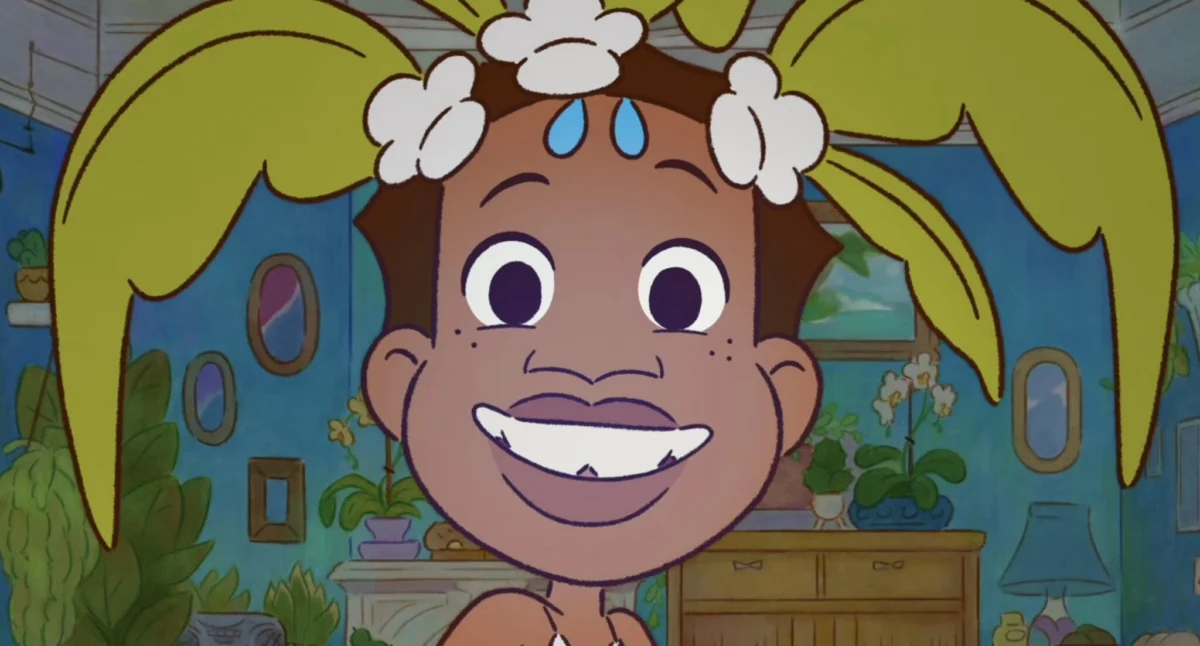
For over two decades, the Irish animation powerhouse Cartoon Saloon has cultivated a reputation for visual poetry. From the folklore-infused beauty of Song of the Sea to the harrowing, poignant realism of The Breadwinner, the Kilkenny-based studio has consistently pushed the boundaries of what hand-drawn animation can achieve. However, their latest project, Julián, represents a distinct evolution for the studio. Based on the beloved children’s book Julián Is a Mermaid by Jessica Love, this feature film is poised to be more than just another entry in a storied catalog; it is a profound exploration of identity, community, and the transformative power of being seen.
Ahead of its world premiere at the 2026 Annecy International Animation Film Festival, the film has already generated significant buzz. Directed by Louise Bagnall, Julián promises to bring a fresh, vibrant, and deeply empathetic lens to a story about a young boy whose fascination with mermaids becomes a vehicle for self-discovery.
A Visionary Adaptation: From Page to Screen
The original source material, Julián Is a Mermaid, is a slim, minimalist picture book. While it garnered critical acclaim and widespread love for its tender depiction of a young boy’s gender expression, its brevity posed a unique challenge for filmmakers. How does one expand a five-minute read into a feature-length cinematic experience without diluting its gentle, intimate soul?
For director Louise Bagnall, the answer lay in the "depth beneath the surface." The book’s power, she argues, is in its ambiguity and the emotional resonance of its characters. "The characters themselves are quite believable," Bagnall notes. "There’s something expressive and sensitive about the way they’re drawn, and I think the way the story is told leaves room for the reader to project their own understanding. For me, that showed there was potential to go into a bigger, deeper story."
To achieve this, the creative team made the deliberate decision to shift the narrative scope. Where the book captures a singular, fleeting afternoon, the film stretches that timeframe across an entire, sun-drenched summer. This expansion allows the audience to inhabit the world of Brooklyn—not as a static backdrop, but as a living, breathing character. We see the deli, the neighborhood rhythms, and the cast of local figures that orbit Julián’s life.
A Cultural Tapestry: Research and Representation
Authenticity was the cornerstone of the production. While Cartoon Saloon is a European studio, the setting of the film demanded a deep dive into the specific cultural fabric of a Dominican-American household in Brooklyn.
"We were trying to not just look at Brooklyn in isolation in terms of architecture," explains Bagnall. "We were looking at what it feels like to live there. What do the plastic bags look like from the shopkeeper? We wanted to capture the mundane details alongside the obvious ones."
This commitment to lived experience was bolstered by the involvement of screenwriter juliany tavernas, whose own heritage as a Dominican-American from Brooklyn provided the project with its emotional bedrock. The production team also engaged cultural consultants to ensure that the representation of the Dominican diaspora was nuanced and respectful. Even the COVID-19 pandemic, which curtailed initial plans for extensive in-person research, could not derail the team’s commitment. Through digital archives, interviews, and community consultation, the team reconstructed the sensory experience of a Brooklyn summer with meticulous care.
The "Ghibli" Influence and the Power of Fantasy
When discussing the film’s visual language, Bagnall is quick to cite the influence of Studio Ghibli, particularly the works of Hayao Miyazaki. While the film is distinctly its own creation, the DNA of Ponyo and My Neighbor Totoro is woven into its approach to magical realism.
"I do love Ponyo," Bagnall admits. "There’s this very pastel, crayon-y look to the world, as well as the kind of flat, cel-shaded characters. We looked at how to combine those textural elements in our backgrounds with the flat cel-shaded elements. You’ll see marker-style objects next to something that looks like it’s been traditionally animated."
Beyond the aesthetic, it is the philosophy of Ghibli that truly informs Julián. The film treats the boy’s imagination as a tangible reality. Whether the fantastical elements are "real" or metaphorical becomes secondary to the fact that they are emotionally true for the protagonist. By focusing on a narrative without a traditional villain, the film mirrors the gentle, character-driven stakes of Totoro, where the conflict arises not from an external force, but from the internal struggle of growth and acceptance.
The Cultural Climate: Why This Story Matters Now
The timing of Julián’s release is impossible to ignore. In the United States, the source book has faced intense scrutiny, landing on lists of the most banned books in the country due to its subject matter. In an era where legislative efforts often target the visibility of gender-nonconforming children, Julián stands as a defiant, albeit gentle, act of resistance.
Bagnall acknowledges the gravity of the current landscape but maintains that the goal of the film remains unchanged. "It didn’t really change what we were trying to achieve," she says. "But it underlined that, more than ever, we wanted to get this film made. It’s a film that talks about something joyful and hopeful, and I think people need that."
While Hollywood studios have increasingly been criticized for "watering down" LGBTQ+ themes to appease international markets or avoid controversy, Julián benefits from its international production structure. Working with partners in Europe and Canada, the team felt empowered to tell the story as it needed to be told, without the interference of corporate gatekeepers fearful of a "too-gay" protagonist.
A Universal Resonance: The Question of Labels
One of the most striking aspects of the film is its refusal to rely on clinical or restrictive labels. When asked whether she envisioned Julián as neurodivergent—given the character’s intense, hyper-focused passion for marine life—Bagnall gracefully pivots away from a definitive diagnosis.
"I’m going to resist the label because it would be doing a disservice to the film," she explains. "He’s really a kid who’s trying to express himself the best way he can and trying to figure out who he wants to be in the world. I want the film to connect across a lot of people and see themselves in him."
By avoiding a specific label, the film achieves a rare level of universality. It speaks to anyone who has ever felt "othered," anyone who has found solace in a special interest, and anyone who has had to navigate the delicate space between who they are and how the world perceives them.
The Role of Community: Zoe Saldaña’s Support
The project has received a significant boost in profile through the involvement of actress and producer Zoe Saldaña. For the production team, her support serves as a seal of cultural validation.
"Having her come onboard was really fantastic as a way of understanding that we had connected with the audience we wanted to reach," says Bagnall. Saldaña, who shares the Dominican-American heritage central to the film, found the screenplay to be deeply personal. Her involvement is not merely a celebrity endorsement; it is an acknowledgment of the film’s authenticity. By lending her platform to Julián, Saldaña has helped elevate a project that many in the industry were perhaps too timid to champion.
Implications: A Future for Inclusive Animation
As Julián heads toward its 2026 debut, its existence represents a significant milestone in modern animation. It demonstrates that there is a vast, hungry audience for stories that are culturally specific yet emotionally universal. It proves that animation, as a medium, is uniquely suited to capturing the interior lives of children, particularly those who are often silenced or misrepresented in mainstream media.
In the final analysis, Julián is a testament to the power of artistic courage. By staying true to the heart of Jessica Love’s book, Louise Bagnall and the team at Cartoon Saloon have created something that feels both timeless and urgently necessary. It is a film about the courage to be oneself, the magic of a supportive community, and the transformative power of love. In a world that often demands we conform, Julián offers a beautiful, shimmering reminder that the most radical thing you can do is simply be who you are.

 Sagoh
Sagoh
 Basiran