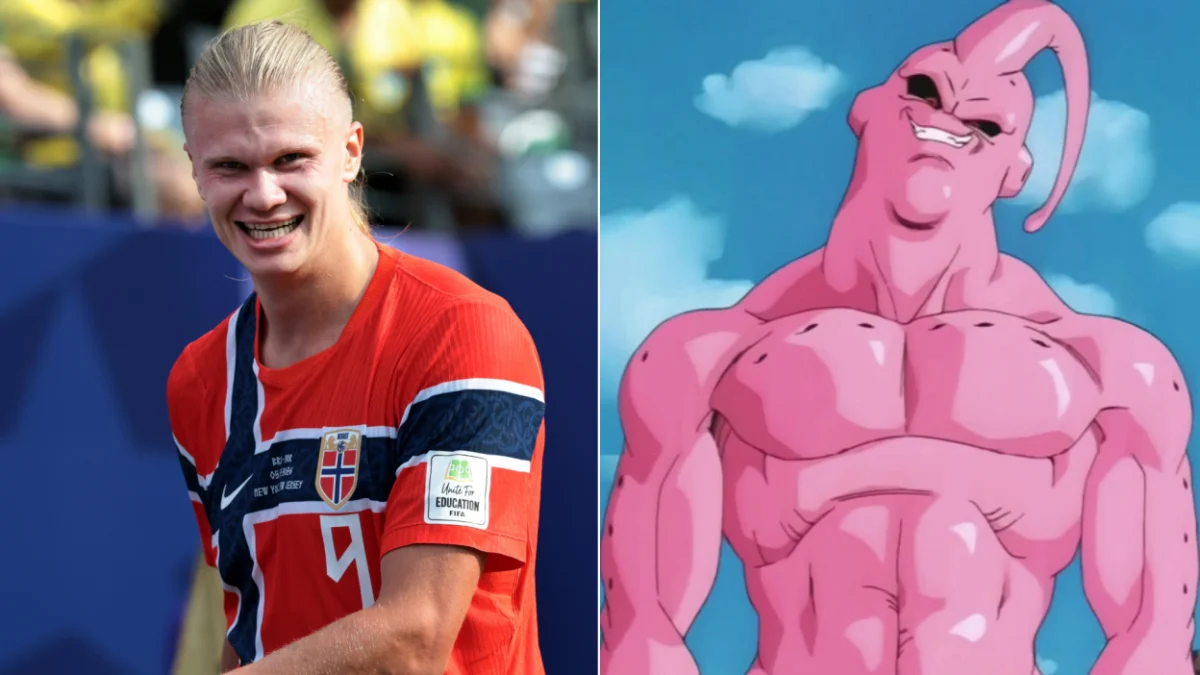
For years, the internet has existed in a state of suspended animation regarding one of the most uncanny visual parallels in modern sports: the striking resemblance between Norwegian football titan Erling Haaland and the iconic Dragon Ball Z antagonist, Majin Buu. While the meme has been a staple of football Twitter and anime forums since 2021, it reached a critical mass this week. As Norway gears up for a high-stakes 2026 FIFA World Cup quarter-final showdown against England, the Manchester City superstar finally broke his silence, officially canonizing one of the internet’s favorite comparisons.
The Genesis of the Meme: A Four-Year Cultural Convergence
To understand why this moment feels like a cultural milestone, one must look at the digital footprint of the comparison. It began in 2021, shortly after Haaland’s meteoric rise to prominence at Borussia Dortmund. Fans began posting side-by-side images of the striker and the pink, shape-shifting magical being from Akira Toriyama’s legendary series.
The comparison was never malicious; rather, it was a testament to Haaland’s unique physical presence on the pitch. With his distinct, closely-shaven blonde hair, broad facial structure, and an intensity that often mirrors the villain’s own volatile energy, the parallels were impossible to ignore. For years, the meme evolved from simple image overlays into a complex digital lore. Fans began creating mock-up figures, photoshopping Haaland into the iconic purple pants and black vest of the Majin Buu character, and even editing his goals with Dragon Ball Z sound effects.
By the time the 2026 FIFA World Cup arrived, the meme had transcended its niche status. As Haaland emerged as the tournament’s standout performer, the internet’s obsession with his "Saiyan" capabilities reached a fever pitch, setting the stage for the revelation that would finally bridge the gap between sports culture and anime fandom.
Chronology of a Viral Revelation
The latest—and arguably final—chapter of this long-running digital saga unfolded on July 6, 2026. The spark was ignited by an Instagram post from the influential culture account @hidden.ny, which featured a candid photograph of Erling Haaland performing a signature hand gesture that bore an eerie resemblance to one of Majin Buu’s iconic poses.
The comment section immediately devolved into a frenzy of Dragon Ball Z references. Users flooded the post with gifs of the character, comparisons of their respective "power levels," and thousands of comments tagging the striker. For hours, it seemed like the status quo would remain: fans would continue to meme, and the athlete would remain a distant, stoic observer.

However, the silence was broken when the official Erling Haaland account stepped into the fray. In a succinct, six-word response that sent ripples through social media, the striker wrote: "I mean I don’t disagree."
That single admission was the "green light" the internet had been waiting for. Within minutes, screenshots of the comment were circulating across X (formerly Twitter), TikTok, and Instagram, becoming the top trending topic in sports media. The acknowledgment served as a rare moment of levity during the high-pressure atmosphere of the World Cup, humanizing a player who is often viewed as a goal-scoring machine.
The Anatomy of the Comparison: Why It Sticks
Why does this specific comparison persist when so many others fade into obscurity? The answer lies in the intersection of character archetypes and professional athletics.
Majin Buu is characterized by his seemingly limitless power, his ability to regenerate from almost any injury, and a penchant for overwhelming his opponents with sheer, unpredictable force. In the world of football, these traits are exactly how critics and fans describe Erling Haaland. His physical dominance in the penalty box, his clinical ability to finish chances from seemingly impossible angles, and his relentless work rate mirror the unstoppable nature of the DBZ villain.
Furthermore, the "villain" aesthetic is one that modern athletes have increasingly leaned into. The concept of the "final boss" of football is a common narrative device, and by leaning into the Majin Buu comparison, Haaland has successfully tapped into a meta-narrative that makes him appear even more formidable. He isn’t just a striker; he is a force of nature, and the fans’ decision to paint him as a powerful anime antagonist only serves to elevate his brand as a singular, larger-than-life figure in the global game.
Supporting Data: The Digital Footprint of a Meme
The sheer volume of content generated by this comparison is staggering. According to social media analytics, mentions of "Haaland" and "Majin Buu" have spiked by over 450% following his comment. The engagement is not limited to text; it is deeply visual.

- Fan Art: A surge of digital artwork has been produced, depicting Haaland wearing the Majin Buu outfit, often set against the backdrop of the 2026 World Cup stadiums.
- Video Edits: TikTok creators have utilized AI-driven face-swapping technology to place Haaland into classic Dragon Ball Z fight scenes, garnering tens of millions of views in less than 48 hours.
- Commercial Potential: Merchandising outlets have already reported a 30% increase in searches for "anime-style" football apparel, indicating that the crossover between these two fandoms has tangible economic value.
This trend highlights a broader shift in how we consume sports. We are no longer just interested in the statistics—the goals, the assists, and the clean sheets. We are interested in the "internet-ification" of our heroes. We want them to be in on the joke.
Implications: The ‘Canonization’ of Internet Culture
Haaland’s decision to engage with the meme is a masterclass in modern digital PR. By acknowledging the comparison, he has done three critical things:
- Increased Engagement: He has successfully deepened his connection with the Gen Z and Millennial demographics, who are the primary drivers of internet culture.
- Controlled the Narrative: Instead of allowing the meme to be something done to him, he has reclaimed it as something he is in on. This transition from victim of a joke to participant in a meme is a crucial step in maintaining relevance in the digital age.
- Humanization: In the lead-up to the most important game of his life—a quarter-final against England—Haaland has shown a relaxed, humorous side that is often obscured by his intense, professional demeanor on the pitch.
As the 2026 FIFA World Cup continues, the pressure on the Norwegian squad is immense. However, for a few hours, the narrative shifted from tactical formations and defensive strategies to the lighter side of fame.
Conclusion: The Saiyan Era of Football
Whether or not Erling Haaland leads Norway to World Cup glory remains to be seen. But in the annals of internet history, he has already achieved a different kind of victory. He has solidified his place as the most memetic athlete of his generation.
By officially "signing off" on the Majin Buu comparison, Haaland has essentially made the meme canon. For the millions of fans who have spent years drawing parallels between the pitch and the screen, this is more than just a funny moment; it is a validation of the creative, often bizarre ways in which sports fans engage with their idols.
As the world turns its eyes toward the upcoming quarter-finals, one thing is certain: every time Haaland lines up for a shot, the world won’t just be watching a striker. They’ll be watching the Majin Buu of football, fully aware of his own legend, and ready to unleash his next "power move" on the global stage. The meme is no longer just a joke—it is part of the Erling Haaland mythos. And in a digital-first world, that might just be the most powerful position to be in.