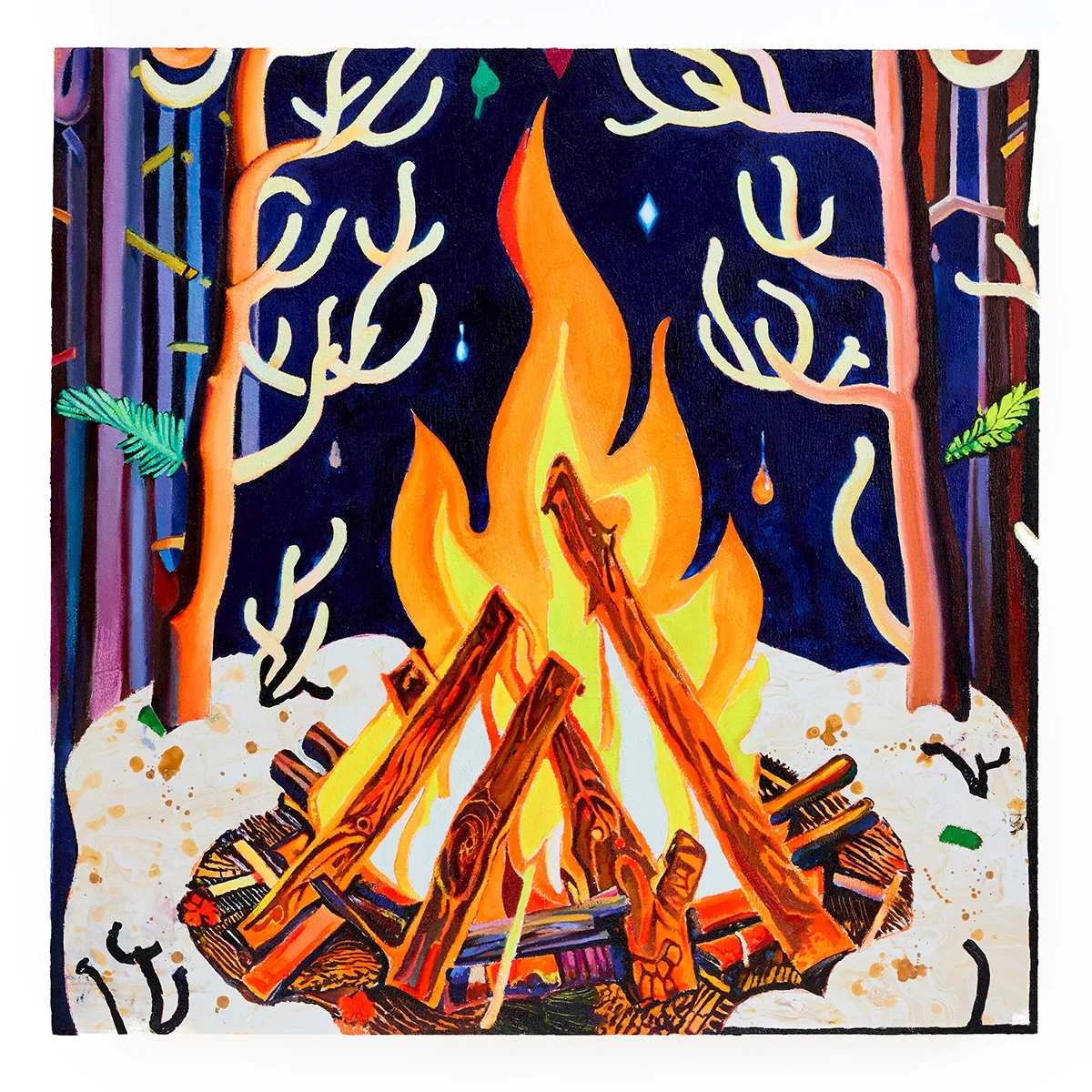
In the quiet landscape of contemporary American figurative painting, few artists bridge the gap between the tactile intensity of sculpture and the narrative depth of historical allegory as effectively as Caleb Weintraub. Based in Bloomington, Indiana, Weintraub has spent years refining a practice that defies the two-dimensional constraints of the canvas. His work is not merely painted; it is constructed, cast, and sculpted, resulting in heavily textured, saturated scenes that seem to push outward into the viewer’s physical space.
By blending the classical with the carnivalesque and the anachronistic, Weintraub has created a visual vocabulary that is as unsettling as it is captivating. His practice utilizes a complex array of materials—oil, acrylic, epoxy clay, aqua-resin, and foam—applied to shaped panels to create a hyper-real sense of depth.
The Evolution of a Sculptural Practice: A Chronology
To understand the trajectory of Weintraub’s work, one must look at his foundational training and the subsequent development of his "sculpted surface" technique.
Formative Years and Academic Roots
Weintraub’s technical proficiency is rooted in a rigorous academic background. Holding a Bachelor of Fine Arts from Boston University and a Master of Fine Arts from the University of Pennsylvania, he spent his early years mastering traditional figurative painting. However, the flat surface of the canvas eventually proved insufficient for his expanding vision.
The Shift to Three-Dimensionality
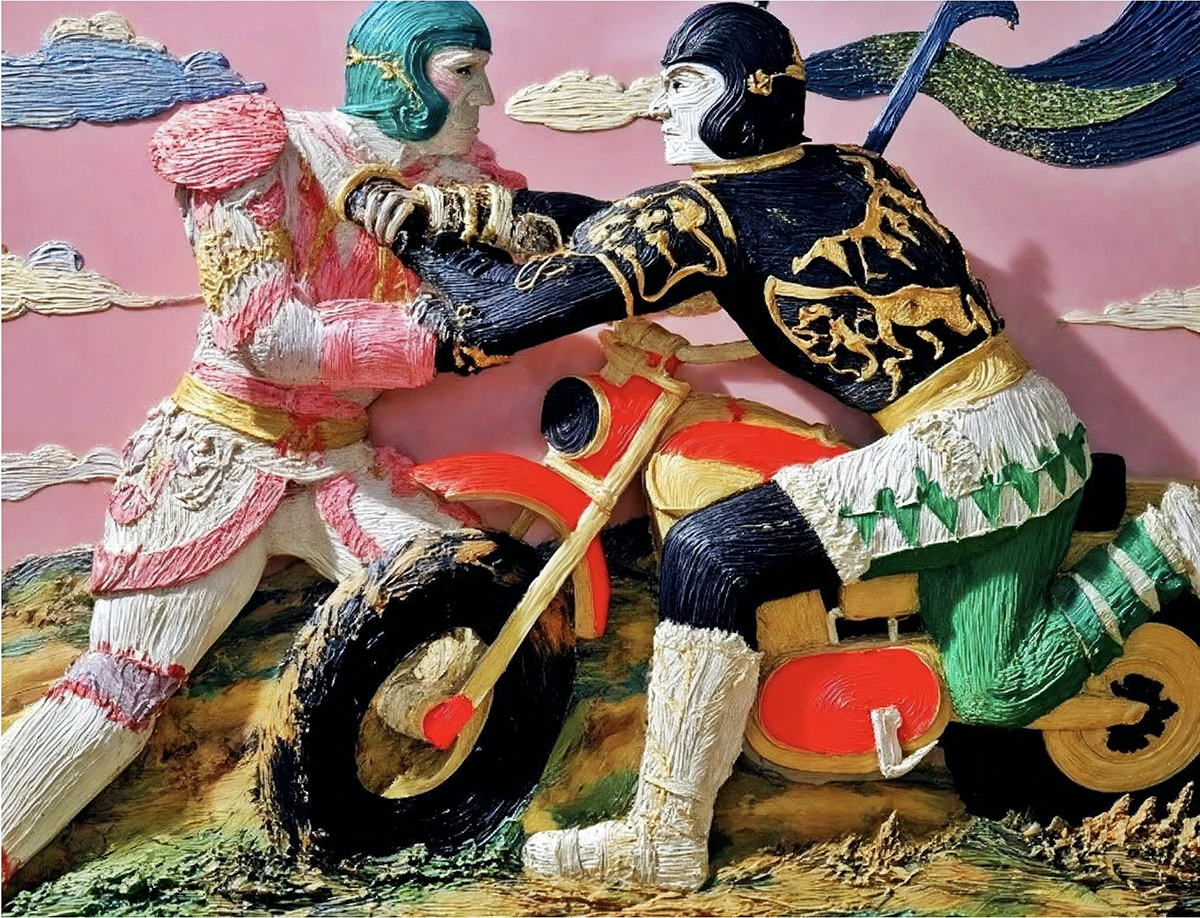
In the decade following his MFA, Weintraub began to experiment with the physical integrity of his supports. He moved away from standard rectangular frames, adopting shaped panels that mirror the irregular boundaries of his scenes. By incorporating epoxy clay and aqua-resin, he began to "cast" shadows directly onto the work, blurring the line between the painted image and the actual, physical shadow thrown by a relief surface.
The Integration of Salvaged Material
A critical turning point in his recent practice involves the incorporation of "recycled" art. Weintraub frequently utilizes salvaged paint—dried scraps peeled from abandoned palettes or cut from earlier, discarded canvases—to build his current compositions. This process of re-integration speaks to a cyclical view of artistic creation, where the history of the artist’s labor is physically embedded within the final work.
Anatomy of the Image: Thematic Underpinnings
Weintraub’s paintings operate as dioramas of the psyche. His work is characterized by a dissonance of symbols; he places medieval heraldry alongside the modern iconography of leather jackets and motorcycles.
The Aesthetics of Disruption
Weintraub describes his symbols as arriving "out of order." A martyr’s pose might hold a chainsaw, or a motorcycle gang might be depicted sharing a quiet meal at a holiday table. This juxtaposition is intentional. By stripping symbols of their original context—the saber from a reliquary, the motorcycle from the open road—Weintraub forces a new, often uneasy, dialogue between the viewer and the subject.
Animals as Messengers
In Weintraub’s visual taxonomy, the animal kingdom serves as an externalization of internal feeling. Birds appear as omens or witnesses, while snakes traverse the literal rubble of his sculpted landscapes. These figures exist in spaces that feel eerily familiar yet fundamentally "askew"—deserts and mountain divides that seem to repeat in endless, slightly altered variations.
Linguistic Play in Titling
The titles of his works—such as Clutch Decision, Parry Parry Pray, In Good Faith, and Flock and Awe—act as a secondary layer of narrative. They are a pastiche of sports commentary, action cinema tropes, and devotional religious language. These titles provide a linguistic anchor for the chaotic visual data, suggesting that the "closing of distance" in his work is achieved through the tension of a throttle, the sharpness of a fang, or the fragility of a feather.

Supporting Data: The Materiality of the Work
The technical execution of a Weintraub piece is a labor-intensive, multi-stage process. Understanding the material composition provides insight into the "encroaching" nature of his art.
- Substrates: Shaped wooden panels, often custom-cut to dictate the composition before a single brushstroke is applied.
- Mediums: A hybrid approach using oils for their luminosity and traditional depth, combined with acrylics for rapid, opaque layering.
- Sculptural Additives:
- Epoxy Clay: Used for structural, high-relief elements.
- Aqua-Resin: A non-toxic, water-based casting material that allows for fluid, organic shapes.
- Foam: Used to build volume without compromising the weight of the wall-mounted panel.
- Salvaged Fragments: Embedded segments of dried paint, creating a collage effect that adds a literal "layered history" to the surface.
Official Artist Statement and Thematic Implications
In his own words, Weintraub addresses the clumsy inheritance of human identity:
"The figures reach for force, selfhood, ceremony, or protection, and the inheritance is clumsy. It comes through what we wear and how we move, through emblems and tattoos and horses and motorcycles."
This sentiment captures the core implication of his work: that human identity is a patchwork of inherited symbols, rituals, and roles that never quite fit. We are, in Weintraub’s vision, actors in a perpetual ceremony, moving through landscapes of our own making, trying to find meaning in a world of discarded emblems and shifting realities.
Implications for Contemporary Figurative Art
The significance of Caleb Weintraub’s work lies in its rejection of digital-era flatness. In an age where image consumption is primarily screen-based and ethereal, Weintraub demands an embodied engagement. His work requires the viewer to stand in front of it to understand the way the light hits the relief, the way the shadow shifts as the observer moves, and the way the paint itself possesses a physical weight.
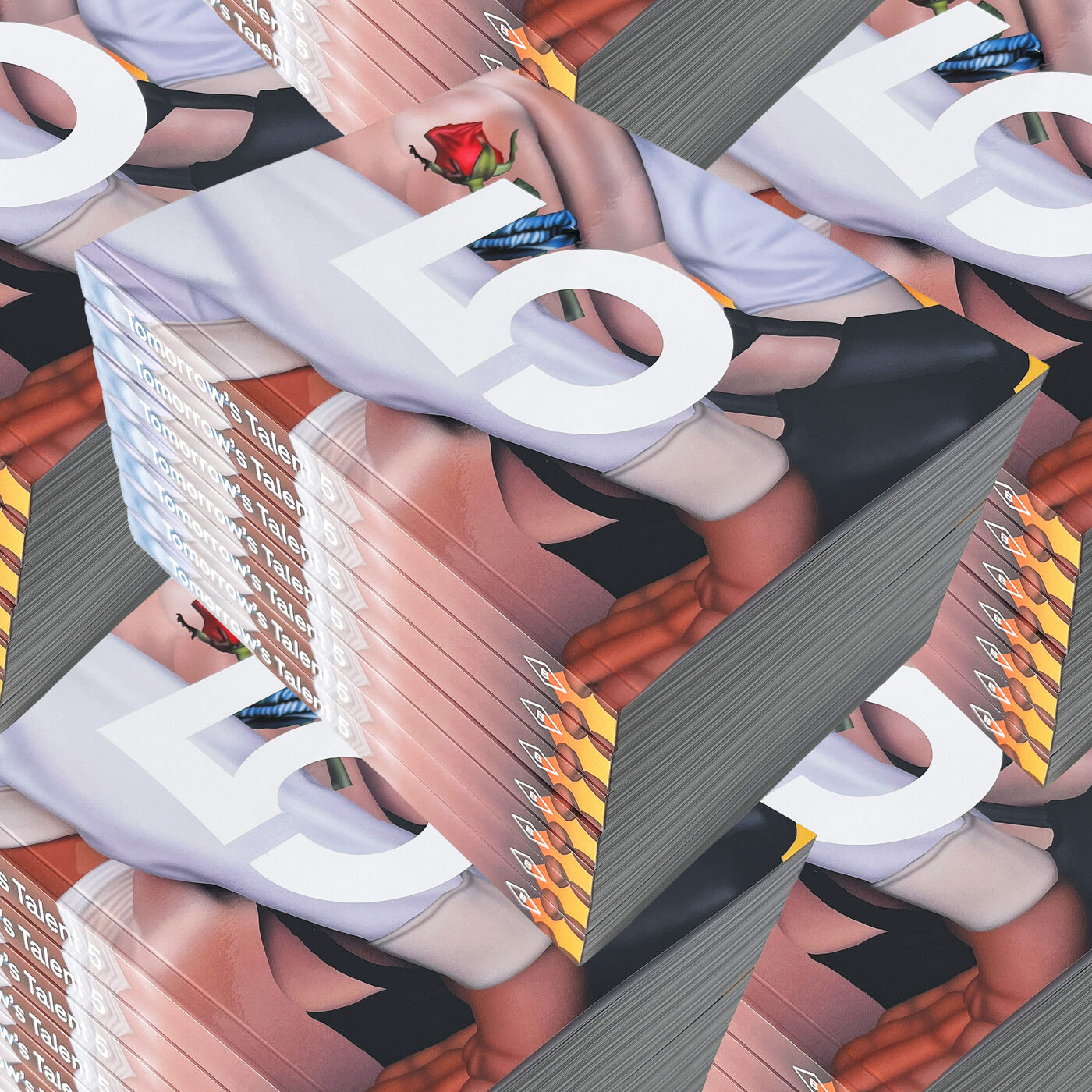
The Anachronistic Lens
By labeling his work as "distinctly anachronistic," Weintraub places himself outside the immediate demands of "trending" contemporary art. He is not interested in the instantaneous feedback loop of the internet; he is interested in the long-form resonance of the figure and the object. His practice suggests that the classical—the martyr, the heraldic pose, the ritual—is not dead, but merely waiting to be re-contextualized through the lens of modern, often absurd, daily life.
The Future of the Narrative Landscape
As Weintraub continues to evolve, his focus on "closing the distance" between the viewer and the image suggests a future for painting that is increasingly sculptural. If his recent works are any indication, we can expect a further blurring of the lines between painting and architecture. His landscapes, which are already "slightly disrupted and askew," serve as a poignant commentary on the instability of our own reality.
In conclusion, Caleb Weintraub’s work is a testament to the power of materiality. Through the meticulous application of paint, clay, and resin, he has built a world that is as uncomfortable as it is beautiful. He asks us to look at the "clumsy inheritance" of our own symbols—our tattoos, our emblems, our daily rituals—and recognize them for what they are: the tools we use to navigate a world that is constantly shifting beneath our feet. For the collector and the critic alike, Weintraub remains a vital voice in the conversation about what it means to be a figurative artist in the 21st century, proving that even in a digital world, there is no substitute for the physical, heavy, and haunting weight of a painted object.