

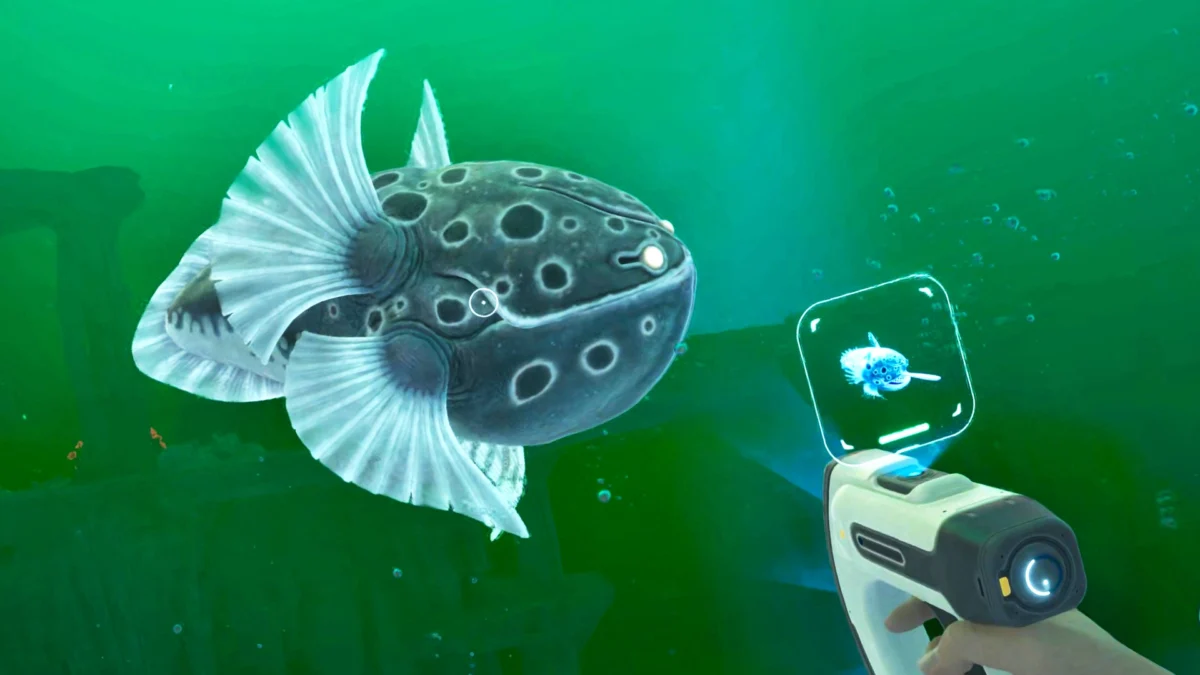
It has become an unfortunate, recurring theme in the modern gaming landscape: the excitement surrounding a highly anticipated sequel is dampened not by gameplay mechanics or graphics, but by the fine print. Subnautica 2, the upcoming successor to Unknown Worlds’ beloved underwater survival franchise, has found itself embroiled in a brewing controversy over its End User License Agreement (EULA).
As the gaming community grows increasingly sensitive to the "Stop Killing Games" movement—a campaign focused on the preservation of digital titles after servers are shut down—players are scrutinizing EULAs with newfound rigor. The recent discovery of restrictive clauses in the Subnautica 2 agreement has sparked a firestorm of debate, leading to a swift, if cautious, response from the development team.
The Core of the Controversy: What the Fine Print Says
The friction centers on a series of stipulations found within the Subnautica 2 Terms of Service (ToS) and EULA. While many of these clauses are standard boilerplate in the industry, their collective impact, when read by an increasingly privacy-conscious audience, has raised significant alarms.
1. The VPN Prohibition
Perhaps the most immediate point of contention is the clause explicitly forbidding the use of IP proxying or other methods to mask a user’s location. The EULA states that users may not "use IP proxying or other methods to disguise the location of your use or Device."
For the average consumer, a Virtual Private Network (VPN) is a standard tool for security and privacy. Prohibiting its use feels to many like an unnecessary encroachment on personal digital autonomy. While Unknown Worlds likely included this to prevent ban evasion or geo-restricted store exploits, it creates a friction point for legitimate players who rely on VPNs for connection stability or privacy.
2. The Ambiguity of "Social Norms"
The EULA includes a catch-all prohibition against "any acts prohibited by applicable laws or generally unacceptable by social norms." The ambiguity here is the primary issue. Because "social norms" are subjective, fluid, and vary wildly across cultures, this clause gives the publisher, Krafton, a dangerous amount of interpretive power. Critics argue that such vague language could be used to justify punitive actions against players for behavior that is not technically illegal but is deemed "unacceptable" by the company’s internal standards.
3. Intellectual Property and User-Generated Content
Ownership clauses are standard in modern software agreements, but the language in the Subnautica 2 EULA has drawn specific ire for its reach. The agreement asserts that any modifications, fan art, or derivative works based on the game are essentially the property of the publisher. While this is intended to protect the company’s IP, it creates a chilling effect on the modding community—the very lifeblood of the Subnautica experience.
4. Forced Arbitration
Perhaps the most legally significant clause is the waiver of the right to a judge or jury trial. By agreeing to the EULA, players agree to settle disputes through "arbitration on an individual basis." This effectively strips consumers of their ability to participate in class-action lawsuits, a common legal recourse for holding large corporations accountable for anti-consumer practices.
Chronology of the Discontent
The timeline of this controversy reflects the speed at which community sentiment can shift in the digital age.
- Initial Discovery: As the Subnautica 2 page went live and early documentation became available, members of the "Stop Killing Games" community began cross-referencing the EULA with broader industry trends.
- The Reddit Trigger: A post on the r/StopKillingGames subreddit served as the catalyst, highlighting the VPN and arbitration clauses as evidence of a tightening grip on player rights.
- The Community Backlash: Within days, the conversation migrated to Discord and Steam forums. Players questioned whether the developers at Unknown Worlds were being forced into these legal corners by their parent company, Krafton, or if this represented a shift in the studio’s own philosophy.
- The Studio Response: Recognizing the potential for a PR crisis, an Unknown Worlds representative entered the studio’s Discord server to provide clarity, distinguishing between the "legal language" of the EULA and the "practical intent" of the developers.
The Role of Krafton and the "Corporate Boilerplate" Defense
It is important to contextualize this situation within the current corporate landscape of gaming. Unknown Worlds, while maintaining its creative identity, is owned by Krafton, a global publishing powerhouse. Legal teams at such large entities often employ "maximum coverage" strategies, drafting EULAs that cover every conceivable liability, regardless of whether the studio actually intends to enforce those rules.
Legal experts often describe this as "defensive drafting." By including broad language regarding IP ownership and behavior, the legal team ensures that the company is protected in worst-case scenarios. However, this legal strategy frequently clashes with the reality of community management. When a developer says, "We will never ban you for X," but the EULA says, "We reserve the right to ban you for X," the resulting dissonance creates a crisis of trust.
Official Responses: Reassuring the Community
In an effort to quell the rising tide of negative sentiment, a developer from Unknown Worlds stepped into the public discourse via the studio’s Discord server. The response was designed to address the most critical concerns:
- Streaming and Content Creation: The developer clarified that the studio has no intention of penalizing creators for streaming the game on platforms like Twitch or YouTube. The restrictive language, they suggested, was not meant to target the content creator ecosystem.
- Linux and Steam Deck Support: A major point of worry was whether the "VPN/IP masking" clause would prevent Linux users—who often rely on different network configurations—from playing. The developer confirmed that the game is Steam Deck verified and that they have "nothing that runs outside of the game exe," aiming to allay fears of invasive kernel-level anti-cheat or restrictive network monitoring.
- Modding Policy: Perhaps most importantly, the developer clarified that the modding community remains safe. As long as modders do not attempt to monetize their work in a way that violates the studio’s core policies, they are free to continue their work. This is a vital concession, given the popularity of mods that allow for non-lethal (or lethal) interaction with the game’s creatures.
The Broader Implications: Where Do We Go From Here?
The Subnautica 2 EULA controversy is not an isolated incident; it is a microcosm of a larger power struggle between players and publishers. As the industry moves further toward "Games as a Service" (GaaS) models, the definition of ownership has become increasingly blurred.
The "Stop Killing Games" Context
The movement that brought this issue to light is fundamentally about the longevity of software. When a game is entirely reliant on server-side authentication and restrictive EULAs, the consumer is effectively leasing a product that can be deactivated at any time. By pushing back against these clauses, the community is demanding a seat at the table regarding the "end of life" cycle of their favorite games.
The Need for Transparency
The primary takeaway for developers should be the necessity of transparency. When a legal team writes a document that contradicts the company’s public-facing ethos, it creates a massive trust deficit. Future games would benefit from "Plain English" summaries of their EULAs—documents that clearly state what the company will and will not do, cutting through the dense, obfuscatory legalese that currently characterizes these agreements.
Modding as an Ethical Battleground
The Subnautica series is famous for its non-violent ethos, a design philosophy that the developers have defended vigorously. The fact that the community has already created mods to circumvent these design choices—and that the developers have acknowledged this as a valid expression of player agency—shows a healthy, if occasionally contentious, relationship between the studio and its fans. Protecting that relationship requires legal frameworks that explicitly protect the rights of modders rather than subsuming their work under corporate IP claims.
Conclusion: A Delicate Balance
The Subnautica 2 EULA situation is a reminder that in the eyes of the law, a game is a service, but in the eyes of the player, it is a personal experience. Unknown Worlds has taken the first step toward resolution by publicly distancing themselves from the more draconian interpretations of their own legal documents.
However, the "scare tactic" nature of these agreements remains a point of contention. Until publishers move toward more player-friendly, transparent, and enforceable contracts, incidents like this will continue to occur. For now, the players of Subnautica 2 can breathe a sigh of relief: their mods are safe, their streams are permitted, and the deep, mysterious waters of the game world remain open for exploration. Yet, the broader conversation regarding who truly "owns" our digital worlds is only just beginning.











No comments yet. Be the first to join the conversation!