

For the modern remote professional, the home office is a paradox. While it offers the freedom to design one’s own environment, it also creates a vacuum of accountability. Without the social pressure of an office or the physical cues of a professional workspace, bad habits—slouching, dehydration, and sedentary stagnation—become the default. Despite a decade of iterating on setups—investing in high-end gaming chairs, lumbar pillows, and ergonomic keyboards—the reality remains that equipment alone cannot fix the fundamental human tendency to lose track of time and posture.
Enter Isa, a sophisticated desktop device from German startup Deep Care. Unlike the myriad of software-based "nudge" apps that are easily ignored or dismissed, Isa is a physical presence. It is a dedicated piece of hardware designed to monitor the environmental and physical metrics of your workspace, operating entirely offline to provide a "privacy-first" approach to workplace wellness.
Main Facts: A New Frontier in Ergonomic Hardware
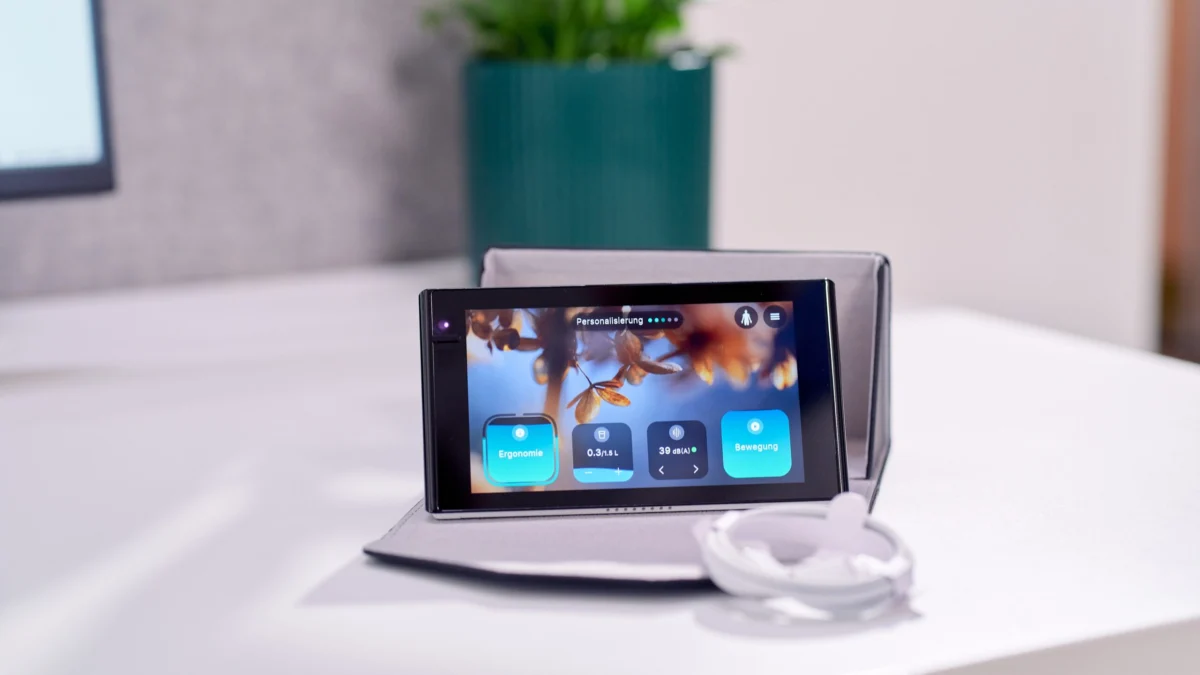
At its core, Isa resembles a sleek, modern table clock, featuring a 5.5-inch IPS HD screen that integrates seamlessly into a desk setup. Powered by a standard USB-C connection, it consumes a modest 2.45W of power, making it energy-efficient and unobtrusive.
The device’s primary innovation is its reliance on a Time-of-Flight (ToF) 3D depth sensor, the same sophisticated technology powering facial recognition on flagship smartphones. This sensor allows the device to track a user’s posture and movement within a range of 0.15 to 1.8 meters. By calculating the user’s position in 3D space, it provides real-time feedback on how they are sitting.

Crucially, Isa achieves this without a camera. In an era where "always-on" surveillance is a growing concern for home workers, Deep Care has made a strategic decision to avoid optical imaging entirely. This privacy-focused architecture is a significant differentiator in a market saturated with devices that require cloud connectivity and video processing.
Chronology: From Bosch Laboratories to the Home Office
The journey of Isa began within the walls of Bosch, where the three founders of Deep Care first honed their expertise in sensor technology and human-machine interaction. Recognizing the burgeoning need for professional-grade health monitoring outside of clinical settings, they spun out to form their own venture.
Initially, Deep Care focused its efforts on the B2B market, providing Isa to enterprise clients looking to improve the health and productivity of their hybrid workforce. By observing how office managers and HR departments utilized the data, the company identified a clear gap: employees were not just looking for "fitness trackers," but for environmental context to their work lives.
Following a successful initial deployment in the corporate sector, Deep Care recently pivoted toward the consumer retail market. This transition marks a critical milestone for the startup, testing whether the "wellness hardware" category can sustain a model that combines a premium upfront cost with a recurring subscription service.

Supporting Data: The Sensor Suite
Isa is far more than a posture coach; it is a holistic environmental monitor. Its internal hardware stack is remarkably dense for a device of its size:
- ToF 3D Sensor: Tracks posture, head position, and movement.
- ToF 1D Sensor: Assists with proximity and object detection.
- Environmental Sensors: Includes a barometer, light sensor, sound level meter, CO2/VoC (Volatile Organic Compounds) sensor, and temperature/humidity trackers.
- Internal Processing: A quad-core 2 GHz processor manages data locally, ensuring that the device functions without constant cloud reliance.
The user interface utilizes a visual language that is intuitive and effective. A "squircle" (a rounded square) ring on the screen fills or empties based on posture quality. When the user slouches or leans too far forward, the ring shifts from a healthy status color to a warning yellow or red. This haptic and visual feedback loop—often compared to the successful behavioral psychology of the Apple Watch—has proven to be a potent motivator for users to correct their stance instinctively.
Official Responses and Strategic Vision
Deep Care has been vocal about its long-term roadmap. During recent briefings, the company emphasized that while the current iteration focuses on posture and hydration, the hardware is capable of much more.
The company is currently exploring the integration of mental health tracking. By leveraging the existing sensor suite to monitor subtle, involuntary cues—such as changes in breathing patterns, chest movement, and, when combined with environmental data like noise levels and CO2 concentrations, a "stress-related score"—Deep Care aims to help users identify the environmental triggers of burnout.

When asked about the lack of global time zone support—a common criticism from users in Asia—the company acknowledged the limitation. Currently, Isa is optimized for EU and US time zones. However, the company maintains that software updates, which can be pushed via an optional Wi-Fi connection, will eventually expand the device’s functionality. This optional connectivity is the only time the device "speaks" to the outside world, and users retain the ability to disable it entirely for total isolation.
Implications: The Cost of Wellness
The shift toward a subscription model for hardware is never without controversy. Isa is priced at €299 ($354), a premium entry point for a desk accessory. Furthermore, the company employs two tiers of service:
- Core Plan (€4.99/month): Covers posture tracking, sitting habits, water intake, and a guided exercise library.
- Pro Plan (€7.99/month): Unlocks the full environmental suite, including CO2, noise, and light level analytics.
The implications for the consumer are clear: Isa is a long-term investment in one’s physical health. While the "mild shaming" of a vibrating desk clock might seem futuristic, the clinical reality is that sedentary behavior is a major contributor to chronic back pain and repetitive strain injuries.
However, there are technical trade-offs to the non-optical approach. Because the device uses depth sensors rather than a camera, it can occasionally be "fooled." A water bottle or a pet moving through the sensor’s field of view can register as a user, potentially skewing the data. While the device is generally smart enough to enter a "clock mode" when the user leaves the desk, there is no manual "pause" button—a feature that early adopters have suggested would be a welcome addition.

The Future of the "Smart Desk"
As we continue to navigate the blurred lines between home and office, the demand for hardware that advocates for our physical well-being will only increase. Deep Care’s Isa represents a shift away from the "data-for-data’s-sake" approach of many wearables and toward a more proactive, environmental design.
While the subscription cost and the minor calibration quirks are significant factors, the core value proposition remains strong. For the remote worker who has spent years struggling to maintain a healthy work-life balance, Isa provides a tangible, private, and effective mechanism for accountability. Whether this marks the birth of a new essential category of office hardware or remains a niche luxury for the wellness-obsessed, it is undeniably one of the most thoughtful responses to the challenges of the modern, sedentary workplace.
In conclusion, as the "always-on" era of the digital office continues to strain our physical health, tools like Isa offer a necessary intervention. By blending high-end sensor technology with a design philosophy that prioritizes privacy, Deep Care has created a device that does more than just track our habits—it invites us to be more conscious of the space we occupy while we work. Whether the market is ready to pay a monthly premium for better posture remains to be seen, but for those serious about their long-term health, the case for such a device is becoming increasingly compelling.












No comments yet. Be the first to join the conversation!