

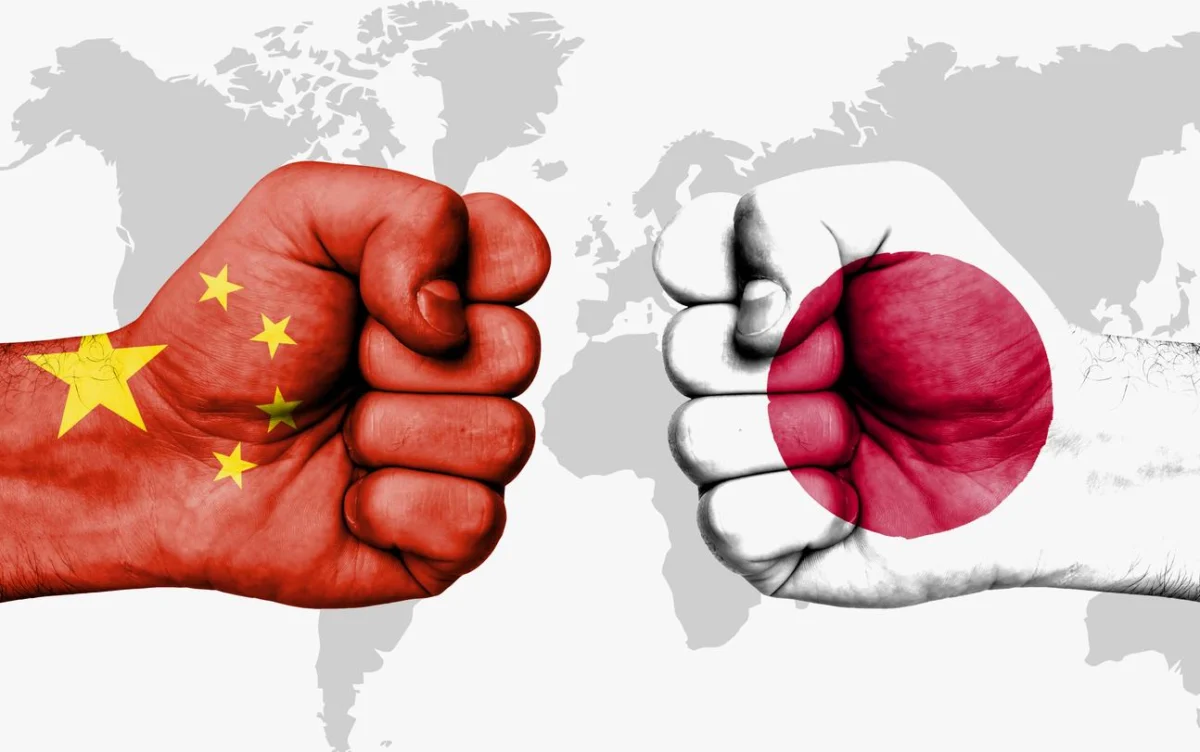
TOKYO — The Japanese government is signaling a profound shift in its security posture as it prepares to publish its 2026 defense white paper. Drafts of the report, obtained by media outlets, reveal a Tokyo increasingly anxious about the rapid erosion of regional stability, fueled by an assertive China, a nuclear-armed North Korea, and the deepening military entanglement between Beijing and Moscow.
As the Ministry of Defense prepares to present these findings to the Cabinet this July, the document serves as both an analytical assessment of the evolving threat environment and a clarion call for Tokyo to strengthen its alliance with the United States and other “like-minded” partners. The overarching message is clear: Japan can no longer rely on diplomatic status quo to ensure its sovereignty.
Main Facts: A Region Under Pressure
The draft white paper provides a granular look at the tactical provocations Japan faces daily. At the heart of Tokyo’s concern is the People’s Liberation Army (PLA) Navy’s increasing footprint in the Pacific.
The report highlights a pivotal moment from June of last year: the unprecedented simultaneous deployment of two Chinese aircraft carriers in the Pacific. For Japanese defense planners, this is not merely a training exercise; it is a demonstration of power projection intended to signal that the “First Island Chain”—which includes the Japanese archipelago—is no longer an impenetrable defensive perimeter.
Beyond naval power, the document cites specific, high-risk encounters. It details an “unusually close approach” by a Chinese fighter jet toward a Japanese Self-Defense Forces (JSDF) plane, an incident characterized by Tokyo as reckless. Furthermore, the report notes a December incident in which Chinese military aircraft directed radar at JSDF jets over international waters southeast of Okinawa. Such actions, often described as “gray-zone” activities, are seen by Tokyo as deliberate attempts to normalize Chinese military presence in Japan’s proximity.
Chronology of Escalation
To understand the urgency within the Japanese Defense Ministry, one must look at the recent timeline of events that have shaped the 2026 assessment:
- Mid-2023: A sustained uptick in Chinese naval sorties leads to the unprecedented dual-carrier deployment in the Pacific, testing Japan’s maritime domain awareness.
- Late 2023: Chinese military aircraft engage in provocative radar-locking maneuvers against JSDF assets near Okinawa, heightening the risk of accidental escalation.
- 2024–2025: China maintains a high-frequency tempo of military exercises around Taiwan, aimed at creating a new “new normal” of aerial and naval encirclement.
- Ongoing (2025–2026): Japan observes a steady increase in joint Russian-Chinese bomber patrols, extending from the East China Sea into the Pacific, signaling a strategic alignment that threatens Japan’s western flank.
Supporting Data: The Transparency Gap
A recurring theme in the white paper is the opacity of China’s defense spending. The draft criticizes Beijing for continuing to expand its military budget at a “high level without sufficient transparency.” This lack of clarity complicates regional security planning, as Japan is forced to prepare for worst-case scenarios without the benefit of reliable communication channels or mutual confidence-building measures.
Regarding North Korea, the report pulls no punches. It labels Pyongyang’s missile program as advancing at an “extremely rapid pace,” explicitly defining the regime as a “more serious and imminent threat than ever before.” The document further suggests that North Korea’s technical capabilities are being bolstered by its deepening cooperation with Russia—a development that has alarmed Tokyo, particularly given the potential for the exchange of missile technology for battlefield supplies in the Ukraine conflict.
Official Responses and Strategic Shifts
The Japanese government’s response to these threats is a departure from the post-war pacifist tradition. The white paper explicitly states that the challenges posed by China must be “dealt with through comprehensive national power and cooperation with allies and like-minded countries.”
The Pivot Toward "Comprehensive National Power"
This language marks a significant evolution in Tokyo’s defense philosophy. Japan is no longer focusing solely on military hardware; it is integrating its economic, technological, and diplomatic resources to counter regional pressure. This includes:
- The Ukraine Lesson: The draft includes a new chapter detailing evolving forms of warfare, drawing direct lessons from the Russian invasion of Ukraine. It warns that modern conflict involves large-scale, combined attacks using inexpensive, mass-produced drones alongside conventional artillery.
- Logistics and Sustainability: Recognizing the vulnerability of long-range supply chains, the report stresses the necessity of maintaining sufficient stockpiles and the ability to sustain combat operations during prolonged, high-intensity conflicts.
Implications: A New Era of Deterrence
The 2026 white paper serves as a precursor to a more robust, integrated Japanese defense strategy. The implications of this document are three-fold:
1. The Taiwan Nexus
The report confirms that Tokyo views the security of Taiwan as inseparable from the security of Japan. By detailing China’s normalization of military exercises around the island, the white paper signals that Tokyo is preparing for the possibility that a Taiwan contingency could rapidly spill over into Japanese territory. The focus on “combat capabilities” suggests that the JSDF is shifting its training focus toward high-end, anti-access/area-denial (A2/AD) operations.
2. The Sino-Russian Entente
The “serious concern” expressed over Chinese-Russian joint bomber patrols marks a shift in Japan’s strategic geography. Tokyo is now forced to monitor its northern and western maritime borders with the same level of intensity as its southern waters. This necessitates a more complex defense posture, requiring coordination not just with the United States, but with regional partners like South Korea and Australia, as well as European powers interested in Indo-Pacific stability.
3. The End of Strategic Ambiguity
By openly criticizing North Korea’s acceleration and China’s lack of transparency, Japan is moving away from the “strategic ambiguity” that defined its foreign policy for decades. The government is signaling to its domestic audience and international partners that the era of relying solely on the U.S. security umbrella is insufficient. Instead, Japan is positioning itself as a primary architect of regional security, investing in its own defense industry and technological resilience to ensure that any potential adversary views the cost of aggression as prohibitively high.
Conclusion: The Path Ahead
The upcoming white paper is more than a report; it is a strategic blueprint for a nation that recognizes the fragility of the status quo. As Tokyo integrates the lessons from the war in Ukraine and the increasing synergy between Beijing and Pyongyang, the emphasis on “comprehensive national power” will likely define Japanese policy for the remainder of the decade.
The challenge for Prime Minister Fumio Kishida’s government, and his successors, will be to balance this necessary military buildup with the diplomatic finesse required to avoid a regional arms race. However, the draft makes one thing clear: in the face of an unpredictable and increasingly integrated bloc of regional rivals, Japan has decided that the safest path to peace is to be unmistakably prepared for war.
As the Cabinet reviews the report this summer, the international community will be watching closely. Japan’s transition from a defensive-only stance to a proactive, alliance-based deterrent posture will be one of the most consequential developments in global geopolitics, fundamentally altering the security architecture of the Indo-Pacific for years to come.
Source: Draft assessment for the 2026 Defense White Paper. © KYODO.












No comments yet. Be the first to join the conversation!