

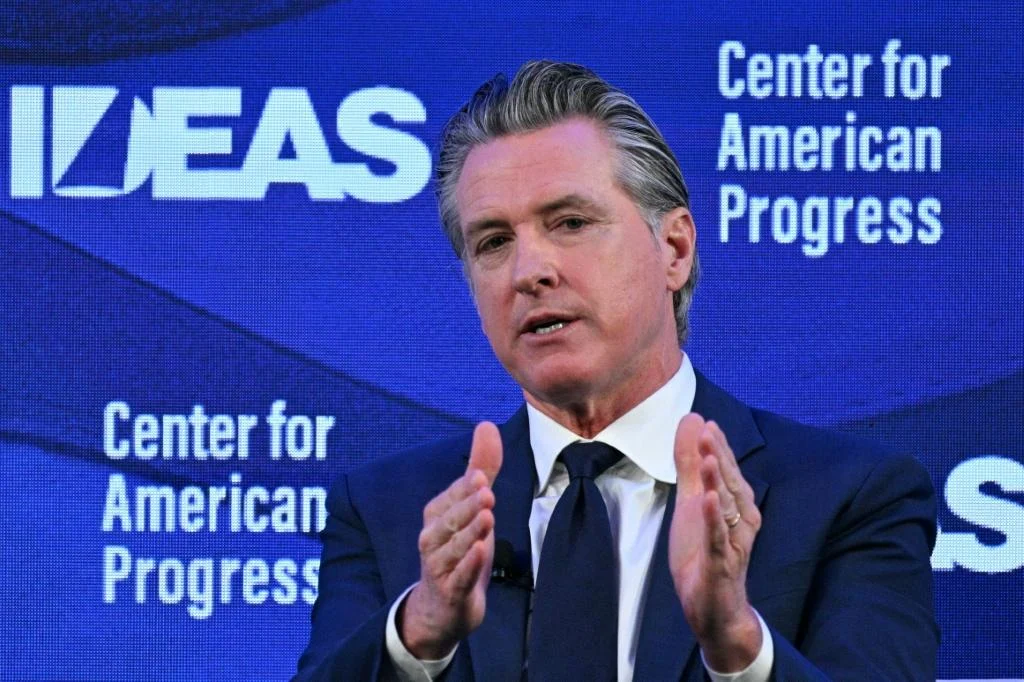
SACRAMENTO – In a move that positions California as the global testing ground for the future of labor, Governor Gavin Newsom issued a sweeping executive order on Thursday, mandating that state officials draft a comprehensive framework to mitigate the potentially catastrophic employment impacts of artificial intelligence. This directive marks the first time a U.S. state has formally acknowledged the existential threat AI poses to the traditional workforce, signaling a pivot toward proactive governance in an era of rapid technological upheaval.
The executive order mobilizes a coalition of state agencies, academic experts, labor unions, and industry titans. Their mandate is to construct a policy architecture covering severance standards, expanded employment insurance, large-scale worker retraining programs, and a sophisticated, real-time tracking system for layoffs specifically attributed to automated systems.
The Urgency of the Digital Pivot
Newsom’s initiative comes at a moment of profound anxiety for the American worker. As generative AI systems transition from academic curiosities to industrial workhorses, the scope of "at-risk" jobs has expanded from manual labor to high-level cognitive professions. Truck drivers, paralegals, software engineers, and administrative assistants now share a common vulnerability: the ability of machines to perform tasks once considered the exclusive domain of human intelligence.
"Businesses are going to make a fortune," Governor Newsom stated in an official release, emphasizing the need to decouple government revenue from traditional labor taxation. "That is why you cannot continue to have a payroll tax system that taxes jobs and then subsidizes automation."
For Newsom, who is widely viewed as a presumptive Democratic contender for the 2028 presidential election, the move is as much about political positioning as it is about economic policy. By framing California as a "first mover" in the governance of AI, Newsom is signaling that the state—the birthplace of the very technology causing the disruption—will not be a passive observer of its own economic displacement. "California has never sat back and watched as the future happened to us," the Governor remarked. "And we won’t start now."
Chronology of the AI Disruption
The impetus for this order did not arise in a vacuum. The trajectory of the current workforce crisis can be traced through a rapid succession of events:
- Late 2022: The public release of generative AI models marks the beginning of a paradigm shift, as companies realize the potential for automation in writing, coding, and design.
- Q1 2026: Challenger, Gray & Christmas report that the U.S. technology sector, the backbone of the California economy, slashed more than 52,000 jobs in the first three months of the year alone.
- April 2026: Meta, the parent company of Facebook, announces a reduction of its workforce by approximately 8,000 employees, citing a strategic pivot toward AI-integrated operations.
- Thursday: Governor Newsom signs the executive order, establishing the Task Force on AI and Future Employment (TAIFE), setting a six-month deadline for the initial draft of the regulatory framework.
The Economic Data: Is AI the Culprit or the Scapegoat?
The correlation between AI investment and job losses is undeniable, but the causation remains a subject of intense debate. While companies frequently cite the "efficiency gains" of artificial intelligence as the primary driver for layoffs, industry analysts offer a more nuanced perspective.
Many observers argue that corporations are utilizing the "AI narrative" as a convenient pretext for broader cost-cutting measures. By blaming the machine, executives can rationalize headcount reductions to shareholders while obfuscating the realities of quarterly earnings pressures or poor previous management decisions.
However, the raw data suggests that regardless of whether AI is the cause or the justification, the result is the same: a shrinking footprint for human labor in Silicon Valley. With the tech sector shedding over 50,000 roles in a single quarter, the state’s tax base is beginning to feel the strain. The challenge for Newsom’s task force will be to distinguish between "inevitable automation" and "opportunistic layoffs," and to craft a tax structure that does not penalize companies for hiring humans while simultaneously discouraging them from replacing people with bots.
Official Responses and Stakeholder Perspectives
The executive order has elicited a wide range of reactions from across the political and economic spectrum.
The Pro-Innovation Stance
Silicon Valley leaders, while generally supportive of technological freedom, are wary of heavy-handed regulation. Industry groups have cautioned that if California imposes too many mandates on companies, it could trigger a "brain drain," where AI firms relocate to states with more permissive labor environments. They argue that the focus should be on training programs rather than severance mandates or "robot taxes."
The Labor Perspective
Labor advocates have lauded the Governor’s move as a "long-overdue wake-up call." Union representatives argue that for too long, the benefits of technological efficiency have accrued entirely to capital holders, while the costs of displacement have been borne by the working class. They are pushing for "automation impact statements," where companies must prove they have considered the social cost of AI implementation before deploying new models.
The Global Context
California’s action is part of a larger, global conversation. From the European Union’s AI Act to regulatory discussions in Tokyo and London, governments are struggling to define the social contract for the 21st century. Some of the most prominent figures in the field, including Elon Musk and OpenAI’s Sam Altman, have gone on record suggesting that the sheer magnitude of AI-driven unemployment will necessitate a radical change in social safety nets, potentially including a Universal Basic Income (UBI).
Implications: A Reimagined Social Contract
The primary implication of Governor Newsom’s order is that the traditional "employment-for-wages" model may be approaching its expiration date. If machines can perform the tasks that once justified a 40-hour work week, the state must find a way to maintain the livelihood of its citizens without relying on the payroll tax system.
H3: The Future of Tax Policy
The Governor’s specific mention of the payroll tax is the most radical part of his proposal. Currently, most states rely on payroll taxes to fund social services like unemployment insurance and disability. If the labor force shrinks due to automation, these funds will dry up just as the need for them increases. Newsom is suggesting a move toward taxing the productivity of the machines themselves—an "automation levy" that could fund the very training programs required to keep workers relevant in an AI-driven economy.
H3: Redefining Work and Leisure
The long-term implication is a fundamental change in the definition of "work." If the displacement of labor is permanent rather than temporary, society must pivot toward a model where human value is not tied solely to economic output. As Musk and Altman have hinted, the state may eventually need to oversee a transition to a "leisure-based" economy, where basic survival is decoupled from industrial labor, allowing humans to pursue creative, social, and academic endeavors.
Conclusion: The California Experiment
As California moves forward with its plan, the world will be watching. If the state succeeds in creating a transition path for workers—one that balances the relentless pace of innovation with the necessity of human dignity—it could provide a blueprint for the rest of the nation and the world.
However, the risk of failure is high. Mismanaging the transition could stifle the very innovation that keeps California at the top of the global economy, or worse, leave a massive segment of the population without a means of support. Governor Newsom has set the wheels in motion, but the real work—the difficult, granular task of rewriting the rules of the 21st-century workplace—has only just begun. The "Silicon Frontier" is no longer just about building the future; it is about surviving it.












No comments yet. Be the first to join the conversation!