

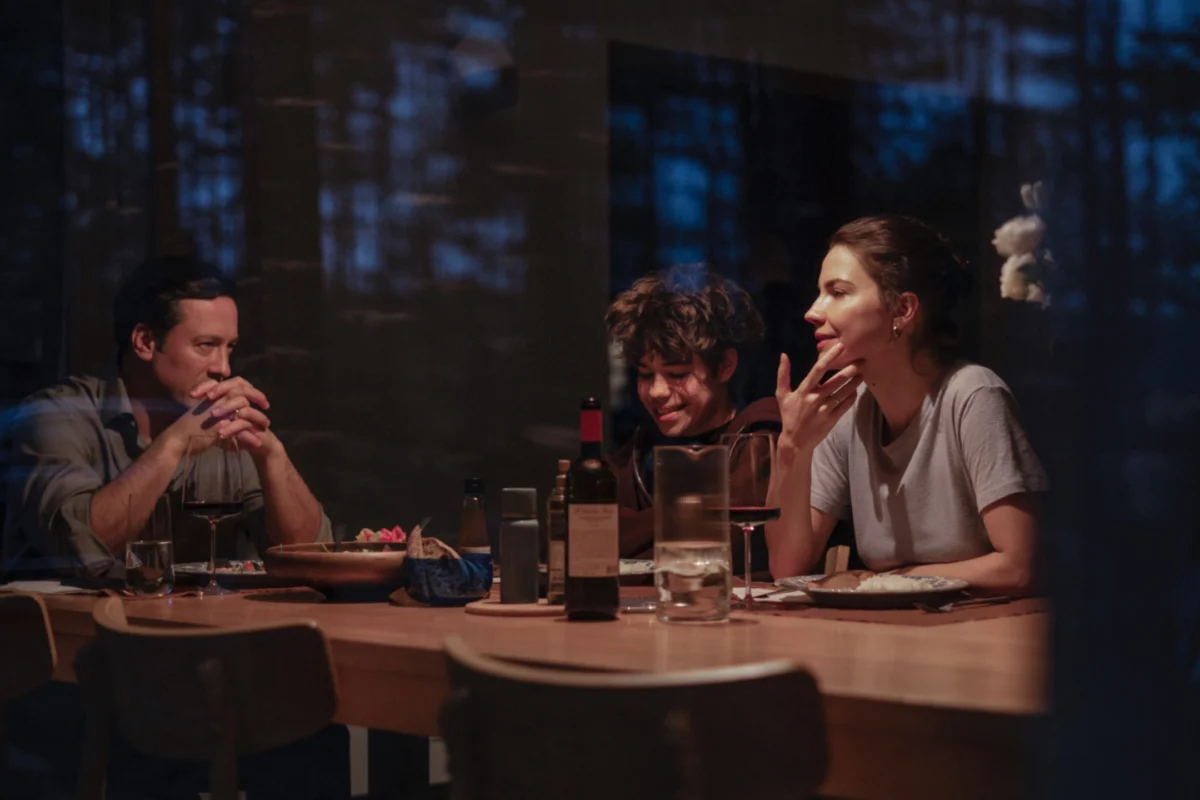
Nearly a decade after his harrowing family drama Loveless claimed the Jury Prize at the Cannes Film Festival, the world-renowned Russian auteur Andrey Zvyagintsev has emerged from a period of profound personal and political transformation. A two-time Academy Award nominee recognized for his razor-sharp critiques of systemic rot in films like Leviathan, Zvyagintsev is set to make a triumphant return to the Croisette. His latest project, Minotaur, is a modern-day parable that dissects the emotional and moral disintegration of a Russian businessman, a narrative woven against the backdrop of professional ruin, global instability, and the suffocating pressure of an extramarital affair.
Yet, this return is not merely a creative comeback; it is a testament to the resilience of an artist who has survived a near-death experience and the total fracturing of his homeland. In an exclusive conversation with Variety, Zvyagintsev reflects on the existential shift that has defined his life since the onset of the COVID-19 pandemic and his subsequent self-imposed exile from a nation now synonymous with war.
The Chronology of Disillusionment: From Moscow to Paris
The trajectory of Zvyagintsev’s recent years is one of radical severance. Following the success of Loveless, the director faced a medical crisis of devastating proportions. Stricken by a severe case of COVID-19, he spent months in a German clinic, including 40 days in a medically induced coma. Upon waking, he faced the sobering reality of having to relearn how to walk.
"When I left the clinic, I moved to France, and I decided to stay," Zvyagintsev explains. His residency in Paris has now stretched into its fourth year, marking a permanent break from his life in Russia. When asked if this was a purely political choice, the director’s response is unequivocal. "I have no desire, no interest, and no intention to live in a country that is at war with its neighbors."
The decision to remain in France represents more than just a change of address; it reflects the stark binary that many Russian intellectuals now face. Echoing the sentiments of Nobel Prize-winning journalist Dmitry Muratov, Zvyagintsev acknowledges the impossible choice: "To stay with your motherland but lose your freedom, or to stay with your freedom but lose your motherland." For Zvyagintsev, his path is etched in his actions rather than his rhetoric. "My actions are my language, and my language is cinema," he asserts, emphasizing that the necessity of speech has been superseded by the urgency of conduct.
Filming in the Shadow of the Draft
The production of Minotaur itself serves as a logistical reflection of the director’s current status. With the Russian government effectively blacklisting artists who oppose the invasion of Ukraine, filming within his home country was an impossibility. Zvyagintsev and his crew relocated to Latvia, a move he characterizes as a practical necessity driven by the aesthetic requirements of the film.
"From an architectural point of view, it was the best choice," he notes, though the subtext of the decision is clear. Minotaur is set in the volatile atmosphere of September 2022, a period defined by the announcement of a massive military draft in Russia. The film captures the frantic, desperate exodus of citizens fleeing to neighboring nations like Georgia, Armenia, and Kazakhstan.
Zvyagintsev intends for Minotaur to act as a mirror to the social fractures caused by the state’s militarization. "In the movie, we witness the political and social divisions that create two different groups in society," he says. However, the director remains protective of the film’s narrative arc, preferring that audiences encounter the work as a blank slate. "I dream that the audience enters the theater knowing absolutely nothing about the movie," he adds, underscoring his desire for the work to speak for itself without the baggage of pre-packaged interpretation.
Supporting Data: The Cost of Dissent
Zvyagintsev’s career has been an unrelenting autopsy of the Russian state under Vladimir Putin. From the bureaucratic cruelty of Leviathan to the domestic indifference depicted in Loveless, his body of work has consistently challenged the myths of the regime. The implication of his current exile is a fundamental shift in his perspective as a filmmaker.
He admits to feeling a growing distance from the day-to-day reality of life in Moscow, comparing his current view of Russia to looking through a "cloudy lens." As he continues to live abroad, the granular details of the Russian experience may become less accessible, yet this has not dampened his thematic resolve. "I am not afraid to keep making movies on the topics that concern me," he maintains.
His future projects, he suggests, may move away from contemporary Russian politics altogether. One proposed idea involves a deep dive into ancient Greece, focusing on the philosophical inquiries of Socrates as recorded by Plato. To Zvyagintsev, this is not an act of escapism but a return to the essential nature of human existence. "My movies are about human beings," he says. "Once there is a human being at the center, the topics will always be the same. It doesn’t matter which country they are in."
Official Responses and Industry Impact
The industry reaction to Minotaur has been one of high anticipation. As a Palme d’Or contender, Zvyagintsev’s presence at Cannes is a significant cultural marker. His return serves as a focal point for the broader debate regarding the role of exiled artists in the modern geopolitical landscape.
While the Russian state media has largely ignored or disparaged his work, the international critical community views him as the standard-bearer for a brand of "truth-telling" cinema that persists despite extreme adversity. His refusal to engage in polemical debates while focusing his energy on the screen highlights a shift in the way dissent is articulated in the 21st century: through the preservation of art rather than the escalation of political noise.
Implications: A Newfound Vitality
Perhaps the most striking takeaway from the director’s recent ordeal is his newfound sense of urgency. The brush with death—the months spent in a coma, the physical debilitation—has fundamentally altered his internal clock.
"I became lighter," Zvyagintsev reflects. "Everything became easier, because I know the light can go out at any second." This proximity to mortality has transformed him into a more daring and radical filmmaker. He describes himself as "hungrier" for work, motivated by a desire to produce projects in rapid succession. "I understood that you just have to be brave," he says, acknowledging the gap between the philosophy of courage and the reality of its execution. "It’s easy to say, but it’s hard to do."
As Minotaur prepares to face the critics and the audience at the Cannes Film Festival, it stands as a testament to the resilience of the artistic spirit under fire. Zvyagintsev has effectively traded the safety of a state-sanctioned career for the precariousness of exile, finding in that trade a liberation that is reflected in his renewed creative pace.
Whether Minotaur captures the top prize at Cannes or simply provokes the intense, uncomfortable conversations that have become the hallmark of Zvyagintsev’s filmography, the message is clear: he is not finished. He has shed the expectations of his past life and is embracing a future where his language—the language of cinema—remains the only truth he is willing to speak. In the face of global chaos, personal loss, and the collapse of his home, Andrey Zvyagintsev is moving faster than ever, driven by the realization that in a world where the light can go out at any second, the only thing that truly matters is the work left behind.










No comments yet. Be the first to join the conversation!