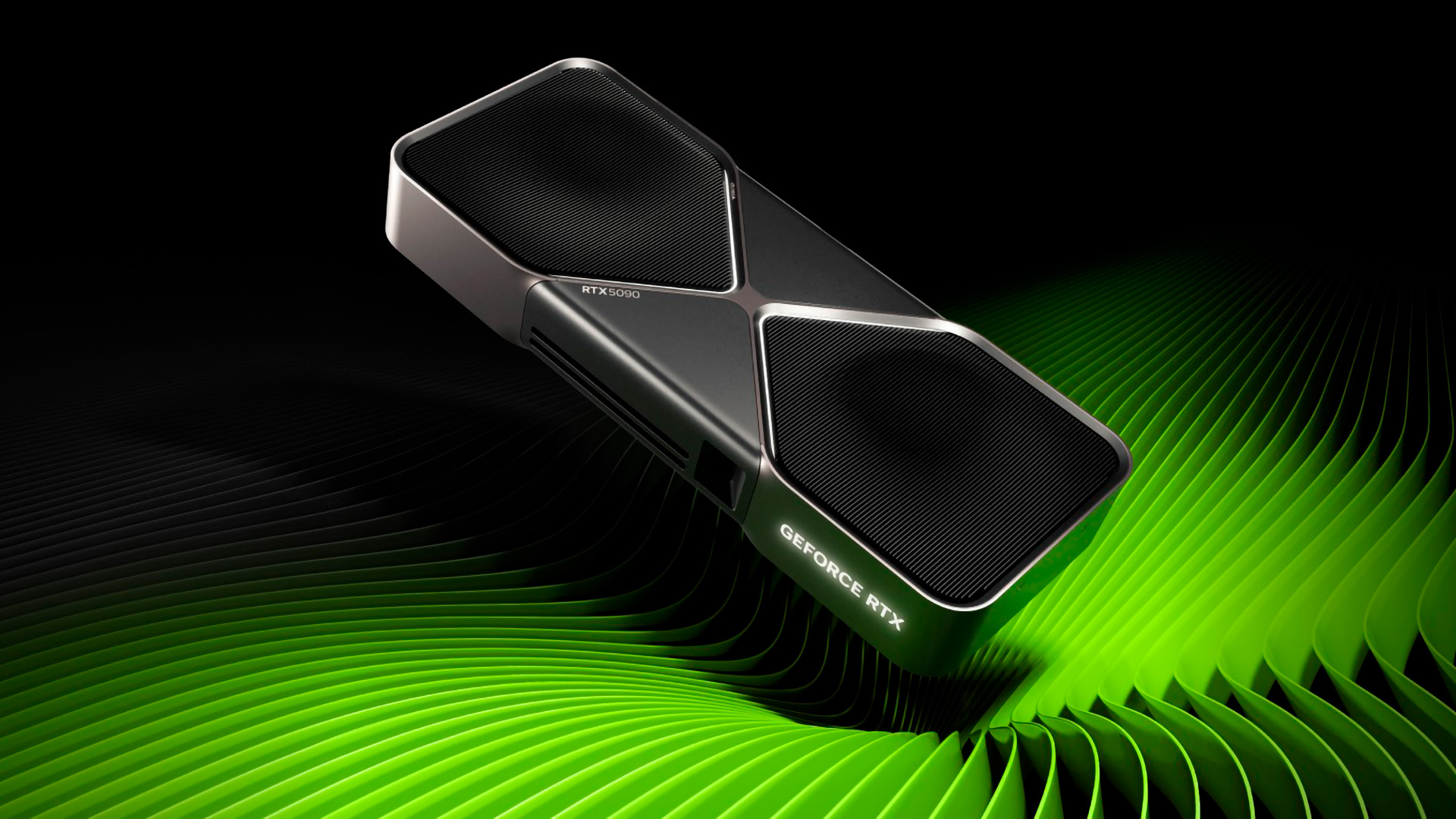
For enthusiasts and gamers, the promise of each new generation of graphics hardware is a ritual of anticipation. When Nvidia unveiled the GeForce RTX 5090 at last year’s Consumer Electronics Show (CES) with a manufacturer’s suggested retail price (MSRP) of $1,999, the market reacted with cautious optimism. It was a premium price tag, certainly, but one that aligned with the high-end enthusiast tier.
Fast forward less than two years, and that sense of optimism has been replaced by a sobering reality. The once-standard MSRP has been obliterated, not by consumer demand for gaming, but by the insatiable, industrial-scale appetite of the artificial intelligence sector. Today, a brand-new RTX 5090 frequently commands prices upwards of $5,000 in North American retail channels, representing a staggering 2.5x increase in cost. This trend is not an outlier confined to a single flagship model; it is a systemic shift affecting the entire RTX 50-series lineup, effectively pricing the average consumer out of the enthusiast market and threatening the viability of DIY PC building as a hobby.
A Chronology of Escalation: From MSRP to Market Anarchy
The timeline of this price surge is as rapid as it is alarming. At the launch of the Blackwell architecture, prices remained relatively tethered to Nvidia’s guidance. Throughout the first half of the lifecycle, early adopters could secure the flagship RTX 5090 for prices hovering near the $2,250 mark—a slight premium over MSRP, but within the realm of standard market fluctuation.
However, as the global push for generative AI accelerated, the demand for enterprise-grade compute power skyrocketed. Data centers, research institutions, and tech giants began competing for the same silicon wafers and memory components used to produce consumer-facing graphics cards. By mid-year, the scarcity of high-bandwidth memory (HBM) and advanced logic dies began to hit the consumer supply chain.
By the start of the current quarter, the "entry-level" enthusiast price for an RTX 5090 had doubled. Today, retailers like Newegg list base models, such as the Zotac Solid OC, at a staggering $4,999. While some bundles include peripheral sweeteners like a $60 game or a $145 power supply, the core cost of the GPU remains detached from its original value proposition. Specialty models, such as the ROG Astral 4X OC, are now being listed at $6,000, representing a 3x increase over the original MSRP—a figure that would have been considered impossible just twelve months ago.
The Global Perspective: A Worldwide Crisis
The crisis is not localized to North America. European markets are feeling the pinch even more acutely due to currency fluctuations and regional import logistics. In Germany, the MSI Gaming Trio OC variant is currently retailing for approximately 4,850 Euros (roughly $5,620). To put this into perspective, that same card was available for 2,249 Euros just one year ago. In a matter of weeks, some regional retailers saw prices jump by nearly 800 Euros overnight, signaling a chaotic supply chain where inventory is being snatched up by brokers before it can ever reach the hands of traditional gamers.

The ROG Astral 4X OC in Europe mirrors the stateside trend, selling for 5,300 Euros ($6,143). Compared to its price point of 2,870 Euros ($3,326) during the same period last year, it is clear that the "AI tax" is a global phenomenon that shows no signs of abating.
Supporting Data: The Ripple Effect Across the Lineup
While the RTX 5090 serves as the primary lightning rod for these price hikes, the remainder of the RTX 50-series has not been spared. The phenomenon follows a clear hierarchy: the higher the demand for the card’s specific memory configuration, the more aggressive the price hike.
- RTX 5060 Ti (16GB): This card has arguably suffered the most relative to its intended market segment. With an MSRP of $429, it is currently retailing for approximately $761—a 77% increase.
- RTX 5080: Positioned as the high-end alternative to the 5090, it has seen a 55% jump from its $999 MSRP to a current market price of $1,549.
- The Mid-Range (5060/5070 Ti): Both models have seen their prices balloon by roughly 50%. The RTX 5070 Ti, which launched at $749, is now consistently listed at $1,119. Even the modest RTX 5060 has climbed from $299 to nearly $450.
- The Entry-Level Floor: Even the "budget" RTX 5050, which launched at a consumer-friendly $249, has climbed to $299, a 20% increase that disproportionately hurts entry-level builders who are the most price-sensitive.
On average, the entire Blackwell family is now trading at roughly 160% of its launch MSRP. This is not merely inflation; it is the fundamental restructuring of the GPU market.
The Invisible Hand: Why This is Happening
The primary driver behind this volatility is the diversion of resources. The components required for these GPUs—specifically GDDR7 memory and the silicon dies themselves—are being prioritized for enterprise-grade AI accelerators.
Hardware enthusiasts are finding themselves at the bottom of the priority list. Manufacturers are under immense pressure to fulfill massive contracts for cloud service providers and AI startups. When a component can be sold into a high-margin enterprise contract that is critical to a company’s AI roadmap, the incentive to allocate that same component to a consumer-grade graphics card evaporates.
Furthermore, this is not happening in a vacuum. The broader PC ecosystem is under similar strain. RAM prices have surged by as much as 500% over the last year, and high-performance NVMe SSDs are seeing parallel cost increases. The synergy of these price hikes creates a "perfect storm" that makes the construction of a high-end gaming PC a venture that is becoming financially untenable for all but the most affluent enthusiasts.
Official Responses and Industry Silence
To date, Nvidia has remained largely quiet regarding the specific retail pricing of its board partners, maintaining that MSRP is a guideline and not a mandate. However, industry analysts suggest that the company is caught in a difficult balancing act. On one hand, Nvidia must satisfy the record-breaking demand from its AI division, which has become the primary engine of its revenue. On the other hand, the company risks alienating the very community that helped build its brand over the last two decades.
Board partners (AIBs) have offered little in the way of explanation, though internal reports suggest that the cost of raw materials and the scarcity of specialized components have forced their hands. Some manufacturers have attempted to mitigate the backlash by adding minor value-adds—such as the aforementioned power supplies or game codes—but these gestures do little to hide the underlying reality that the core product has become a luxury item.
Implications for the Future of PC Gaming
The long-term implications of this trend are profound. If the price of hardware continues to decouple from consumer reality, we are likely to see several shifts in the gaming landscape:
- The Rise of Cloud Gaming: As high-end hardware becomes prohibitively expensive, consumers may increasingly turn to cloud gaming services like GeForce Now or Xbox Cloud Gaming, shifting the hardware burden from the user to the data center.
- Stagnation of PC Hardware Adoption: If the average gamer cannot afford a new card, they will hold onto their existing hardware for longer. This extends the lifecycle of older GPUs, potentially slowing the pace of graphical innovation in video games, as developers must continue to optimize for aging hardware.
- The End of "DIY" as a Value Proposition: Historically, building a PC was seen as a way to get more performance per dollar than buying a console. With current GPU prices, that value proposition is effectively dead. A console—which remains price-stable—is becoming the only logical choice for millions of gamers.
Conclusion
The current state of the GPU market is a stark reminder of how quickly the priorities of a trillion-dollar industry can shift. While the AI revolution promises to reshape the world in ways we are only beginning to understand, the cost of that progress is currently being paid by the PC enthusiast. Whether this is a temporary bubble that will burst as supply catches up, or a permanent shift into a new era of high-cost hardware, remains to be seen. For now, the "silicon squeeze" continues, and the dream of a top-tier custom gaming rig is becoming an increasingly expensive luxury.